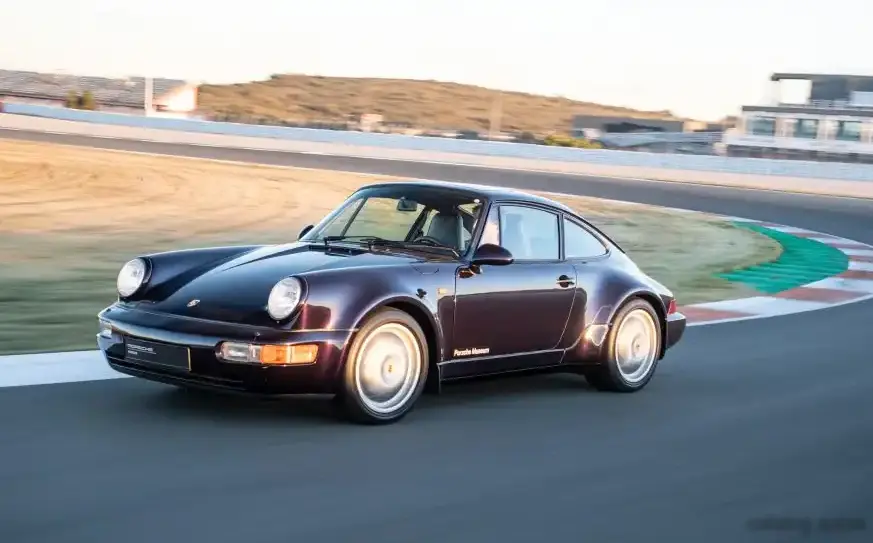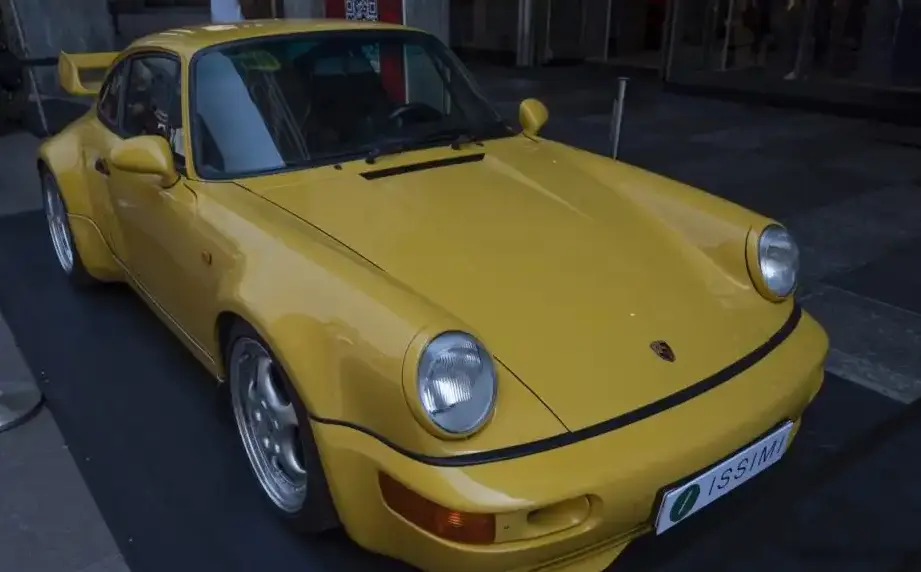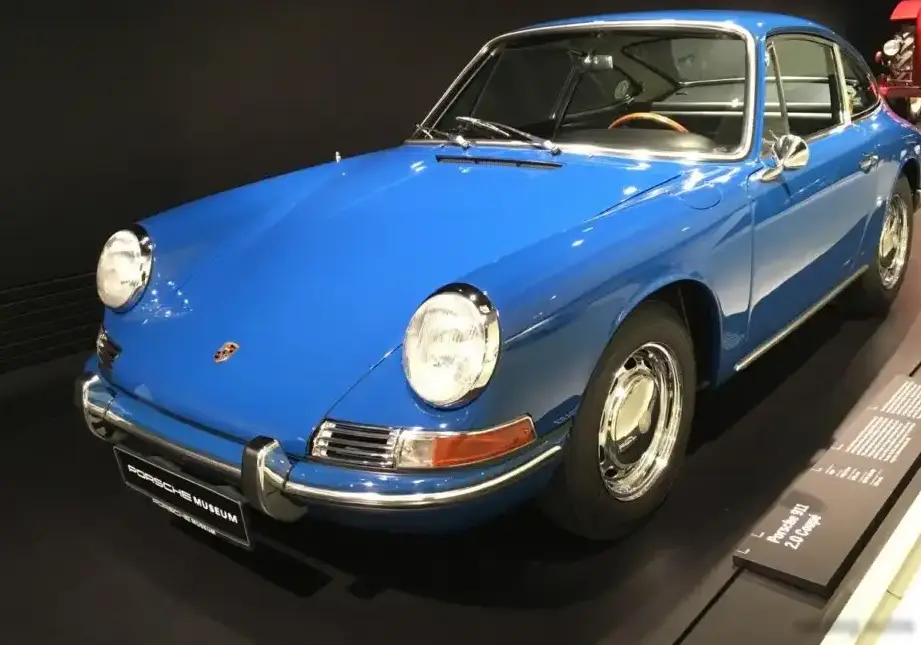
The Porsche 911 Coupe (F) 2.3 S, produced between 1972 and 1973, represents a pivotal point in the evolution of Porsche’s iconic sports car. Falling within the “F” series of the original 911 generation (1964-1973), the 2.3 S was positioned as a high-performance variant, bridging the gap between the standard 911T and the more potent 911 Carrera RS. It benefited from numerous refinements over earlier models, including a larger engine displacement and improved handling characteristics. This model is particularly significant as it showcased Porsche’s commitment to continuous improvement and laid the groundwork for future 911 iterations.
Technical Specifications
| Brand | Porsche |
| Model | 911 |
| Generation | 911 Coupe (F) |
| Type (Engine) | 2.3 S (190 Hp) |
| Start of production | 1972 |
| End of production | 1973 |
| Powertrain Architecture | Internal Combustion engine |
| Body type | Coupe |
| Seats | 4 |
| Doors | 2 |
| Fuel consumption (economy) – combined | 10.2 l/100 km |
| Fuel consumption (economy) – combined | 23.1 US mpg |
| Fuel consumption (economy) – combined | 27.7 UK mpg |
| Fuel consumption (economy) – combined | 9.8 km/l |
| Fuel Type | Petrol (Gasoline) |
| Acceleration 0 – 100 km/h | 7 sec |
| Acceleration 0 – 62 mph | 7 sec |
| Acceleration 0 – 60 mph | 6.7 sec |
| Maximum speed | 230 km/h |
| Maximum speed | 142.92 mph |
| Weight-to-power ratio | 5.7 kg/Hp |
| Weight-to-power ratio | 176.7 Hp/tonne |
| Weight-to-torque ratio | 5.1 kg/Nm |
| Weight-to-torque ratio | 194.4 Nm/tonne |
| Power | 190 Hp @ 6500 rpm |
| Power per litre | 81.2 Hp/l |
| Torque | 209 Nm @ 5200 rpm |
| Torque | 154.15 lb.-ft. @ 5200 rpm |
| Maximum engine speed | 7300 rpm |
| Engine layout | Rear, Longitudinal |
| Engine Model/Code | 911.53 |
| Engine displacement | 2341 cm3 |
| Engine displacement | 142.86 cu. in. |
| Number of cylinders | 6 |
| Engine configuration | Boxer |
| Cylinder Bore | 84 mm |
| Cylinder Bore | 3.31 in. |
| Piston Stroke | 70.4 mm |
| Piston Stroke | 2.77 in. |
| Compression ratio | 8.5:1 |
| Number of valves per cylinder | 2 |
| Fuel injection system | Multi-port manifold injection |
| Engine aspiration | Naturally aspirated engine |
| Valvetrain | SOHC |
| Engine oil capacity | 8 l |
| Engine oil capacity | 8.45 US qt |
| Engine oil capacity | 7.04 UK qt |
| Kerb Weight | 1075 kg |
| Kerb Weight | 2369.97 lbs |
| Max. weight | 1400 kg |
| Max. weight | 3086.47 lbs |
| Max load | 325 kg |
| Max load | 716.5 lbs |
| Trunk (boot) space – maximum | 200 l |
| Trunk (boot) space – maximum | 7.06 cu. ft. |
| Fuel tank capacity | 62 l |
| Fuel tank capacity | 16.38 US gal |
| Fuel tank capacity | 13.64 UK gal |
| Permitted trailer load with brakes (12%) | 600 kg |
| Permitted trailer load with brakes (12%) | 1322.77 lbs |
| Permitted trailer load without brakes | 480 kg |
| Permitted trailer load without brakes | 1058.22 lbs |
| Length | 4147 mm |
| Length | 163.27 in. |
| Width | 1610 mm |
| Width | 63.39 in. |
| Height | 1320 mm |
| Height | 51.97 in. |
| Wheelbase | 2271 mm |
| Wheelbase | 89.41 in. |
| Front track | 1372 mm |
| Front track | 54.02 in. |
| Rear (Back) track | 1354 mm |
| Rear (Back) track | 53.31 in. |
| Ride height (ground clearance) | 150 mm |
| Ride height (ground clearance) | 5.91 in. |
| Minimum turning circle (turning diameter) | 10.7 m |
| Minimum turning circle (turning diameter) | 35.1 ft. |
| Approach angle | 20° |
| Departure angle | 20° |
| Drivetrain Architecture | The Internal combustion engine (ICE) drives the rear wheels of the vehicle. |
| Drive wheel | Rear wheel drive |
| Number of gears and type of gearbox | 4 gears, manual transmission |
| Front suspension | Spring Strut, Wishbone |
| Rear suspension | Trailing arm |
| Front brakes | Ventilated discs, 282 mm |
| Rear brakes | Ventilated discs, 290 mm |
| Steering type | Steering rack and pinion |
| Tires size | 185/70 R15 |
| Wheel rims size | 6J x 15 |
Powertrain & Engine Architecture
The heart of the 911 2.3 S is its 2341 cc air-cooled, flat-six (Boxer) engine, designated the 911.53. This engine represented a significant upgrade from the 2.2-liter unit found in earlier models. The increase in displacement, achieved through a larger bore (84mm) and stroke (70.4mm), contributed to the higher power output of 190 horsepower at 6500 rpm and 209 Nm (154.15 lb-ft) of torque at 5200 rpm. The engine utilized Bosch mechanical fuel injection, a multi-port system that delivered precise fuel metering for improved performance and efficiency. The SOHC valvetrain, with two valves per cylinder, was a hallmark of Porsche’s engineering philosophy, prioritizing reliability and smooth operation. The engine’s rear-mounted, longitudinal configuration was a defining characteristic of the 911, influencing its handling dynamics. The 2.3 S was exclusively offered with a four-speed manual transmission, providing a direct and engaging driving experience.
Driving Characteristics
The 911 2.3 S offered a noticeably more spirited driving experience compared to the base 911T. The increased power and torque translated into quicker acceleration – approximately 6.7 seconds to 60 mph and a top speed of 142.92 mph. The manual transmission allowed for precise control over the engine’s power band. While not as raw or track-focused as the later Carrera RS, the 2.3 S provided a balanced blend of performance and usability. The rear-engine layout contributed to a unique handling feel, requiring driver awareness and skill, particularly when approaching the limits of adhesion. The suspension, featuring spring struts at the front and trailing arms at the rear, provided a firm but compliant ride, suitable for both road and occasional track use.
Equipment & Trim Levels
The 911 2.3 S was positioned as a premium offering within the 911 lineup. Standard features included comfortable seating for four, a well-appointed interior with wood trim, and a comprehensive instrument cluster. Exterior features included distinctive “S” badging and often, Fuchs alloy wheels. Optional extras included a sunroof, leather upholstery, and upgraded sound systems. The interior was relatively spartan by modern standards, but focused on functionality and driver engagement. The dashboard layout was clean and straightforward, with essential gauges readily visible.
Chassis & Braking
The 911 2.3 S utilized a robust chassis construction, featuring a monocoque steel body. The suspension system was designed to provide a balance between handling precision and ride comfort. The car was equipped with ventilated disc brakes on all four wheels, providing ample stopping power for its performance capabilities. Front brakes measured 282mm, while the rear brakes were slightly larger at 290mm. Steering was via a rack and pinion system, offering precise and responsive control. The 185/70 R15 tires provided adequate grip for the car’s weight and power.
Market Reception & Comparison
The 911 2.3 S was well-received by automotive critics and enthusiasts alike. It was praised for its improved performance, refined handling, and overall driving experience. Compared to the base 911T, the 2.3 S offered a significant performance upgrade, justifying its higher price tag. Compared to the upcoming Carrera RS, the 2.3 S was more comfortable and easier to drive on a daily basis, making it a more practical choice for many buyers. Fuel economy, while not a primary concern for sports car buyers of the era, was reasonable for its performance level. Reliability was generally good, although the air-cooled engine required regular maintenance to ensure optimal performance.
Legacy
The Porsche 911 2.3 S holds a significant place in Porsche’s history. It represented a crucial step in the evolution of the 911, showcasing Porsche’s commitment to continuous improvement and performance enhancement. Today, the 2.3 S is a highly sought-after classic car, prized by collectors and enthusiasts for its rarity, performance, and iconic design. Well-maintained examples command high prices in the used car market. The engine, while requiring regular maintenance, is known for its durability and longevity. The 911 2.3 S remains a testament to Porsche’s engineering prowess and a symbol of the golden age of sports car design.