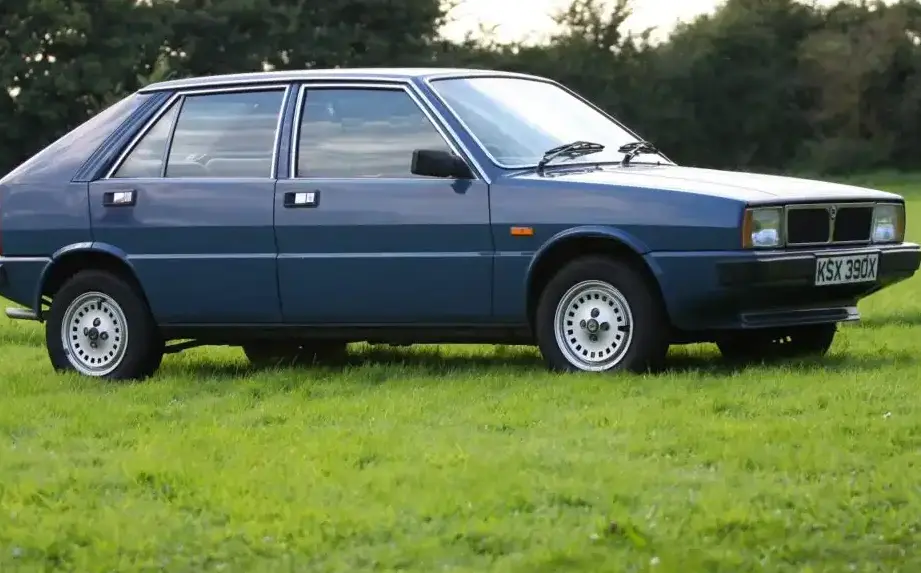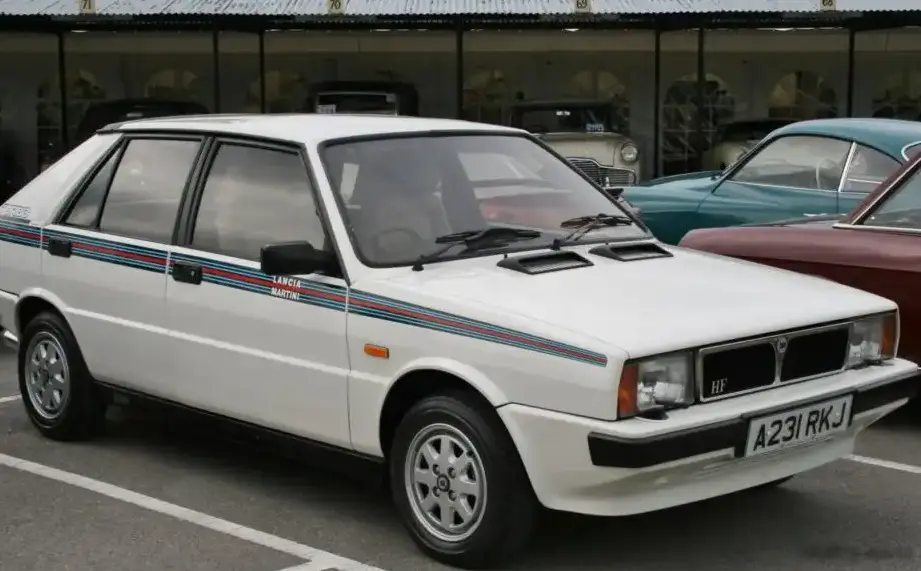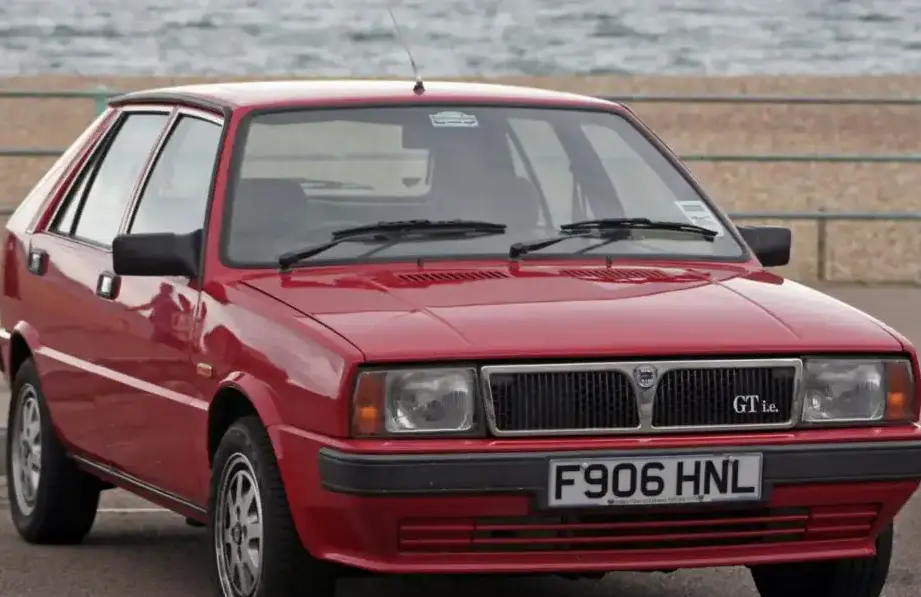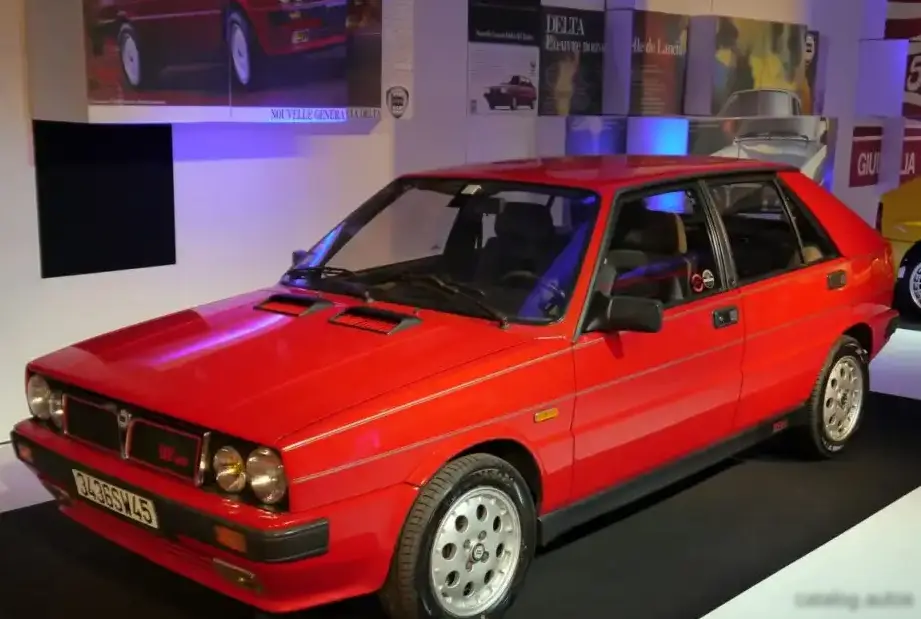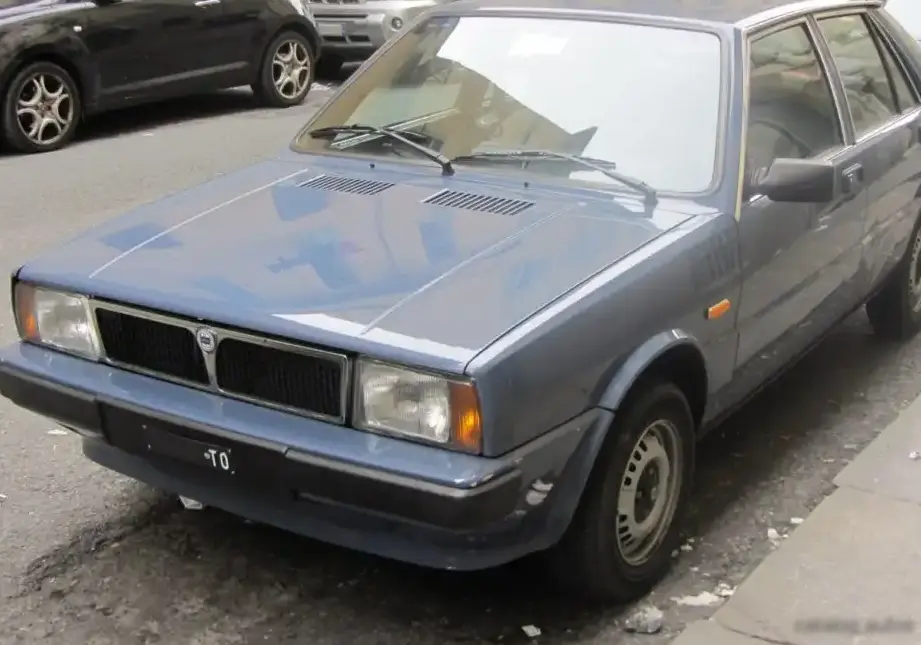
The Lancia Delta GT 1600, produced from November 1982 to May 1986, represented a significant step forward for the Italian automaker. Falling within the first generation (831 series) of the Delta, and benefitting from the 1982 facelift, the GT 1600 was positioned as a sporty, mid-range offering in the Delta lineup. It aimed to bridge the gap between the more basic entry-level models and the higher-performance, turbocharged variants that would later define the Delta’s racing pedigree. The Delta itself was a groundbreaking vehicle, lauded for its innovative design and engineering, and the GT 1600 played a crucial role in establishing the model’s popularity in European markets.
Technical Specifications
| Brand | Lancia |
| Model | Delta |
| Generation | Delta I (831, facelift 1982) |
| Type (Engine) | GT 1600 1.6 (105 Hp) |
| Start of production | November, 1982 |
| End of production | May, 1986 |
| Powertrain Architecture | Internal Combustion engine |
| Body type | Hatchback |
| Seats | 5 |
| Doors | 5 |
| Fuel consumption (urban) | 10.2 l/100 km (23.1 US mpg, 27.7 UK mpg, 9.8 km/l) |
| Fuel consumption (extra urban) | 6.3 l/100 km (37.3 US mpg, 44.8 UK mpg, 15.9 km/l) |
| Fuel Type | Petrol (Gasoline) |
| Acceleration 0 – 100 km/h | 10.2 sec |
| Acceleration 0 – 62 mph | 10.2 sec |
| Acceleration 0 – 60 mph | 9.7 sec |
| Maximum speed | 180 km/h (111.85 mph) |
| Weight-to-power ratio | 9.3 kg/Hp, 107.7 Hp/tonne |
| Weight-to-torque ratio | 7.2 kg/Nm, 138.5 Nm/tonne |
| Power | 105 Hp @ 5800 rpm |
| Power per litre | 66.2 Hp/l |
| Torque | 135 Nm @ 3300 rpm (99.57 lb.-ft. @ 3300 rpm) |
| Engine layout | Front, Transverse |
| Engine Model/Code | 831A4000 |
| Engine displacement | 1585 cm3 (96.72 cu. in.) |
| Number of cylinders | 4 |
| Engine configuration | Inline |
| Cylinder Bore | 84 mm (3.31 in.) |
| Piston Stroke | 71.5 mm (2.81 in.) |
| Compression ratio | 9.3:1 |
| Number of valves per cylinder | 2 |
| Fuel injection system | Carburettor |
| Engine aspiration | Naturally aspirated engine |
| Valvetrain | DOHC |
| Engine oil capacity | 5.3 l (5.6 US qt | 4.66 UK qt) |
| Coolant | 6 l (6.34 US qt | 5.28 UK qt) |
| Kerb Weight | 975 kg (2149.51 lbs.) |
| Max. weight | 1425 kg (3141.59 lbs.) |
| Max load | 450 kg (992.08 lbs.) |
| Trunk (boot) space – minimum | 260 l (9.18 cu. ft.) |
| Trunk (boot) space – maximum | 1000 l (35.31 cu. ft.) |
| Fuel tank capacity | 45 l (11.89 US gal | 9.9 UK gal) |
| Length | 3895 mm (153.35 in.) |
| Width | 1620 mm (63.78 in.) |
| Height | 1380 mm (54.33 in.) |
| Wheelbase | 2475 mm (97.44 in.) |
| Front track | 1400 mm (55.12 in.) |
| Rear (Back) track | 1400 mm (55.12 in.) |
| Minimum turning circle | 10.6 m (34.78 ft.) |
| Drivetrain Architecture | The Internal combustion engine (ICE) drives the front wheels of the vehicle. |
| Drive wheel | Front wheel drive |
| Number of gears and type of gearbox | 5 gears, manual transmission |
| Front suspension | Independent, type McPherson with coil spring and anti-roll bar |
| Rear suspension | McPherson, Transverse stabilizer |
| Front brakes | Disc |
| Rear brakes | Disc |
| Steering type | Steering rack and pinion |
| Tires size | 165/65 R14 |
| Wheel rims size | 5.5J x 14 |
Powertrain & Engine Architecture
The heart of the GT 1600 was the 831A4000 engine, a 1.6-liter inline-four cylinder unit. This engine, while not the most powerful in the Delta range, was known for its relative reliability and smooth operation. It featured a dual overhead camshaft (DOHC) valvetrain, operating two valves per cylinder. Unlike the later fuel-injected models, the GT 1600 utilized a carburetor for fuel delivery, a common practice for European cars of that era. This carburetor setup, while simpler than fuel injection, required periodic adjustment to maintain optimal performance. The engine produced 105 horsepower at 5800 rpm and 135 Nm (99.57 lb-ft) of torque at 3300 rpm. The engine was transversely mounted, a layout that maximized interior space and contributed to the Delta’s balanced handling. The GT 1600 was exclusively offered with a five-speed manual transmission, providing drivers with good control over the engine’s power band.
Driving Characteristics
The GT 1600 offered a balanced driving experience. While not a performance powerhouse, the 105 hp engine provided adequate power for everyday driving and spirited excursions. Acceleration from 0 to 60 mph took approximately 9.7 seconds, and the car could reach a top speed of 180 km/h (111.85 mph). The five-speed manual transmission allowed drivers to keep the engine in its optimal power range. Compared to the more powerful, turbocharged Delta variants, the GT 1600 felt less urgent, but it was also more forgiving and easier to drive. The gear ratios were well-chosen for both city and highway driving, providing a good balance between acceleration and fuel economy. The front-wheel-drive layout offered predictable handling, although it could exhibit some understeer when pushed hard.
Equipment & Trim Levels
The GT 1600 typically came equipped with a reasonable level of standard features for its time. Interior appointments included cloth upholstery, a basic instrument cluster, and a four-speaker stereo system. Power steering was often included, enhancing the driving experience. Optional extras included a sunroof, upgraded stereo systems, and metallic paint finishes. The interior design was functional and relatively modern for the early 1980s, with a focus on ergonomics and practicality. The GT 1600’s trim level sat comfortably in the middle of the Delta range, offering more features than the base models but lacking the luxury appointments of the higher-spec versions.
Chassis & Braking
The Delta’s chassis was a key element of its success. The GT 1600 featured independent suspension at all four wheels, with a McPherson strut setup at the front and a trailing arm arrangement at the rear. This suspension design provided a comfortable ride and good handling characteristics. Anti-roll bars were fitted to both the front and rear axles, further enhancing stability. The braking system consisted of disc brakes on all four wheels, providing adequate stopping power for the car’s weight and performance. The steering was a rack-and-pinion system, offering precise and responsive control.
Market Reception & Comparison
The Lancia Delta GT 1600 was generally well-received by automotive critics. It was praised for its stylish design, comfortable ride, and balanced handling. However, some critics noted that the engine lacked the punch of its turbocharged counterparts. Compared to other 1.6-liter hatchbacks of the era, the Delta GT 1600 offered a compelling combination of performance, practicality, and Italian flair. Fuel economy was respectable, averaging around 23.1 US mpg in the city and 37.3 US mpg on the highway. Reliability was generally good, although the carburetor required periodic maintenance. The GT 1600 offered a more affordable entry point into the Delta range, appealing to buyers who wanted a sporty and stylish hatchback without the higher price tag of the turbocharged models.
Legacy
The Lancia Delta GT 1600 remains a popular classic car today. Its relatively simple mechanicals and robust construction contribute to its long-term reliability. While finding well-maintained examples can be challenging, the GT 1600 offers a rewarding ownership experience for enthusiasts. The 831A4000 engine, while not particularly high-tech, is known for its durability and ease of repair. The Delta’s innovative design and engineering continue to be appreciated by car enthusiasts, and the GT 1600 represents a significant chapter in the model’s history. In the used car market, prices for GT 1600s vary depending on condition and originality, but they generally remain affordable, making them an accessible entry point into the world of classic Lancia ownership.