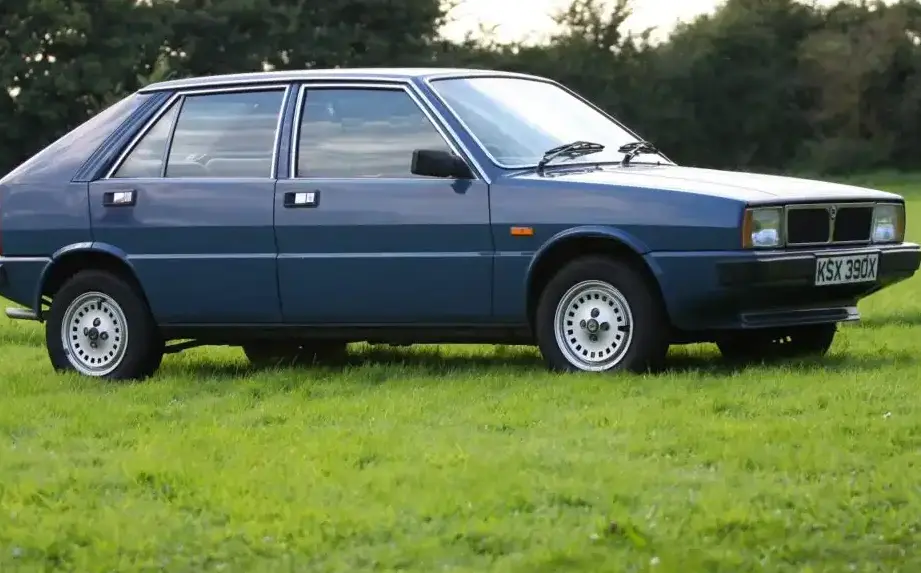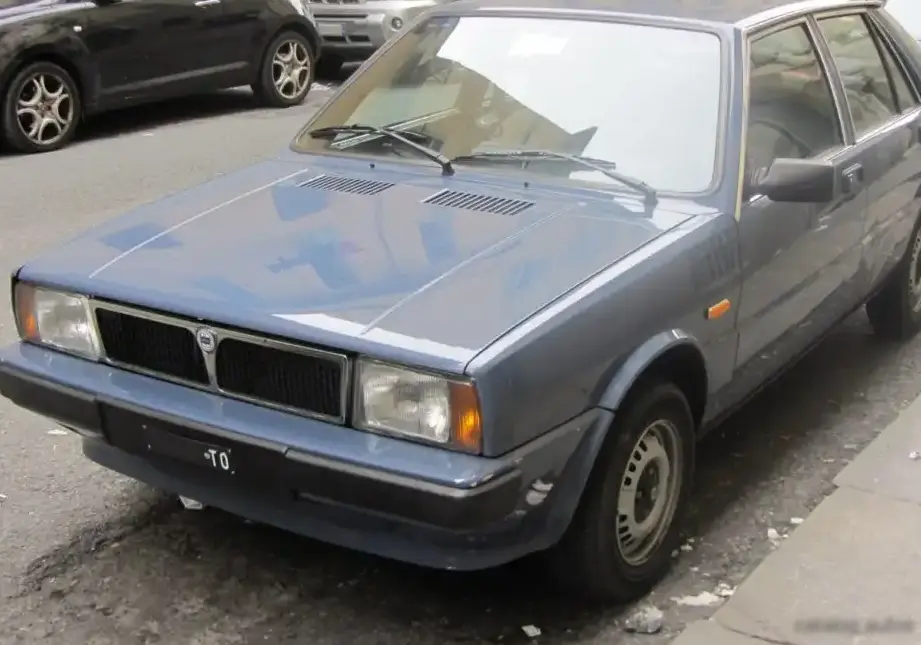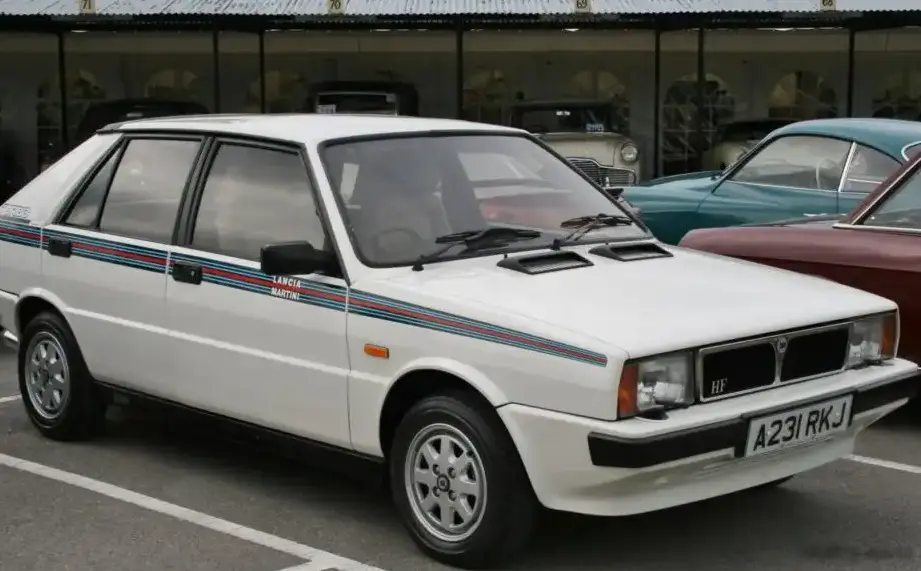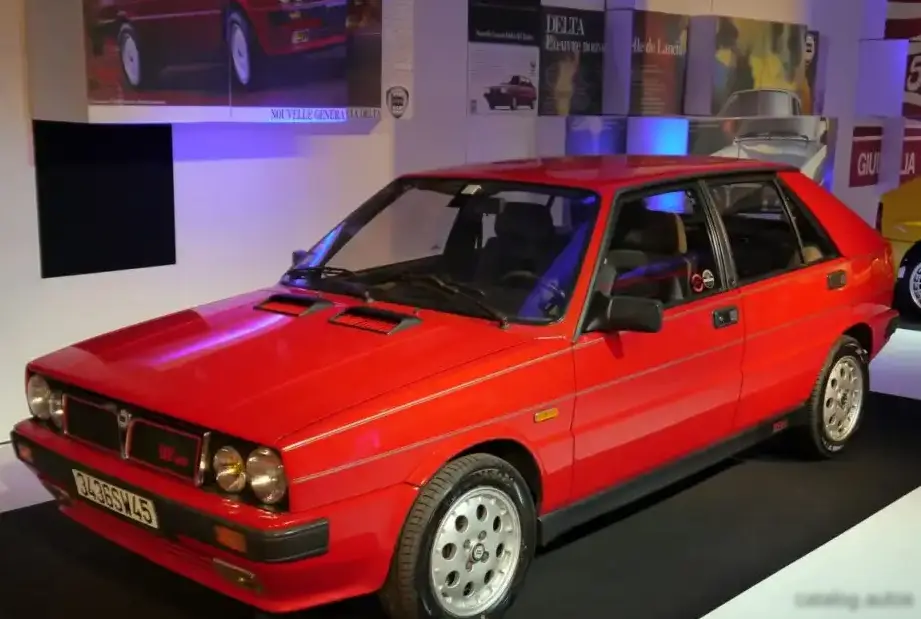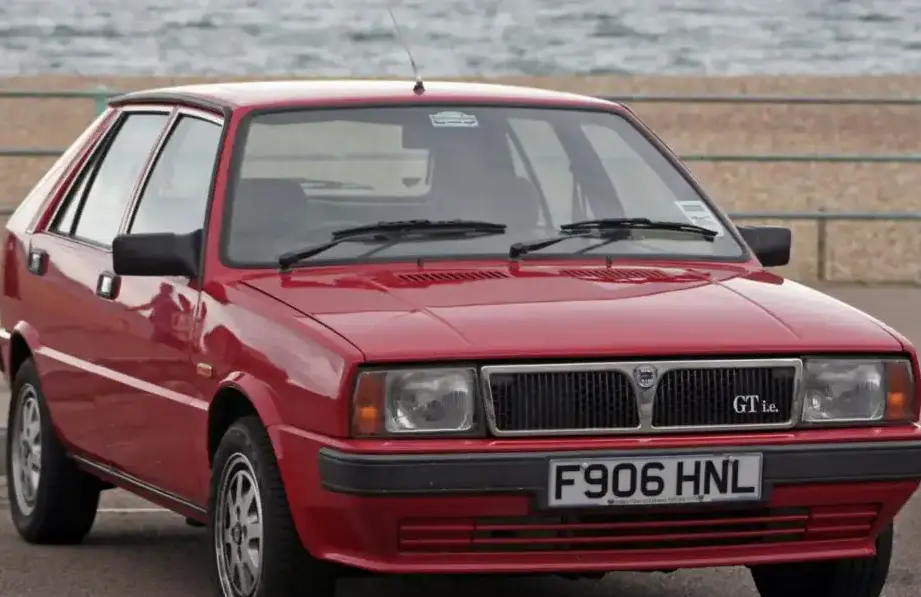
The Lancia Delta 1.3 (78 hp) represents an important entry point into the first generation (Type 831) of the Delta, produced from 1986 to 1991 following the model’s facelift. Positioned as the base model, it offered affordable access to the innovative and highly regarded Delta platform, which was a significant departure from Lancia’s traditionally more luxurious offerings. This variant played a crucial role in broadening the Delta’s appeal, making it a more mainstream choice in the European market. The Delta, overall, was a landmark vehicle for Lancia, showcasing a new focus on practicality and modern design while retaining a degree of Italian flair. This specific 1.3-liter version, while not the performance leader of the range, provided a reliable and economical option for buyers.
Technical Specifications
| Brand | Lancia |
| Model | Delta |
| Generation | Delta I (831, facelift 1986) |
| Type (Engine) | 1.3 (78 Hp) |
| Start of production | 1986 |
| End of production | 1991 |
| Powertrain Architecture | Internal Combustion engine |
| Body type | Hatchback |
| Seats | 5 |
| Doors | 5 |
| Fuel consumption (urban) | 8.7 l/100 km (27 US mpg, 32.5 UK mpg, 11.5 km/l) |
| Fuel consumption (extra urban) | 5.5 l/100 km (42.8 US mpg, 51.4 UK mpg, 18.2 km/l) |
| Fuel Type | Petrol (Gasoline) |
| Acceleration 0 – 100 km/h | 14.3 sec |
| Acceleration 0 – 62 mph | 14.3 sec |
| Acceleration 0 – 60 mph | 13.6 sec |
| Maximum speed | 163 km/h (101.28 mph) |
| Weight-to-power ratio | 12.1 kg/Hp, 82.5 Hp/tonne |
| Weight-to-torque ratio | 9 kg/Nm, 111.1 Nm/tonne |
| Power | 78 Hp @ 5800 rpm |
| Power per litre | 60 Hp/l |
| Torque | 105 Nm @ 3400 rpm (77.44 lb.-ft. @ 3400 rpm) |
| Engine layout | Front, Transverse |
| Engine Model/Code | 831A2000 |
| Engine displacement | 1301 cm3 (79.39 cu. in.) |
| Number of cylinders | 4 |
| Engine configuration | Inline |
| Cylinder Bore | 86.4 mm (3.4 in.) |
| Piston Stroke | 55.5 mm (2.19 in.) |
| Compression ratio | 9.5:1 |
| Number of valves per cylinder | 2 |
| Fuel injection system | Carburettor |
| Engine aspiration | Naturally aspirated engine |
| Valvetrain | SOHC |
| Engine oil capacity | 4.3 l (4.54 US qt | 3.78 UK qt) |
| Coolant | 6 l (6.34 US qt | 5.28 UK qt) |
| Kerb Weight | 945 kg (2083.37 lbs.) |
| Trunk (boot) space – minimum | 260 l (9.18 cu. ft.) |
| Trunk (boot) space – maximum | 1000 l (35.31 cu. ft.) |
| Fuel tank capacity | 57 l (15.06 US gal | 12.54 UK gal) |
| Permitted trailer load with brakes (12%) | 1000 kg (2204.62 lbs.) |
| Length | 3895 mm (153.35 in.) |
| Width | 1620 mm (63.78 in.) |
| Height | 1380 mm (54.33 in.) |
| Wheelbase | 2475 mm (97.44 in.) |
| Front track | 1400 mm (55.12 in.) |
| Rear (Back) track | 1400 mm (55.12 in.) |
| Front overhang | 750 mm (29.53 in.) |
| Rear overhang | 670 mm (26.38 in.) |
| Minimum turning circle | 10.5 m (34.45 ft.) |
| Drivetrain Architecture | The Internal combustion engine (ICE) drives the front wheels of the vehicle. |
| Drive wheel | Front wheel drive |
| Number of gears and type of gearbox | 5 gears, manual transmission |
| Front suspension | Independent, type McPherson with coil spring and anti-roll bar |
| Rear suspension | McPherson, Transverse stabilizer |
| Front brakes | Disc, 227 mm |
| Rear brakes | Drum, 185 mm |
| Steering type | Steering rack and pinion |
| Tires size | 165/70 R13 |
| Wheel rims size | 5J x 13 |
Powertrain & Engine Architecture
The Lancia Delta 1.3 was powered by the 831A2000 engine, a 1301cc inline-four cylinder unit. This engine, while relatively modest in output, was known for its durability and simplicity. It featured a single overhead camshaft (SOHC) valvetrain with two valves per cylinder. Fuel delivery was managed by a carburetor, a common feature for vehicles of this era, prioritizing cost-effectiveness over the more advanced fuel injection systems. The engine produced 78 horsepower at 5800 rpm and 105 Nm (77.44 lb-ft) of torque at 3400 rpm. The engine was transversely mounted, a layout that maximized interior space and contributed to the Delta’s compact footprint. The 5-speed manual transmission was the standard offering for this variant, providing a reasonable balance between fuel economy and drivability.
Driving Characteristics
The 1.3-liter Delta offered a practical and economical driving experience. Acceleration was not its strong suit, with a 0-60 mph time of around 13.6 seconds, but it was adequate for everyday commuting and urban driving. The carburetor-fed engine delivered smooth, if not particularly exciting, power delivery. The 5-speed manual transmission allowed drivers to keep the engine in its optimal power band, but the relatively low horsepower meant that frequent downshifts were necessary for overtaking or climbing hills. Compared to the more powerful 1.6-liter and 2.0-liter versions of the Delta, the 1.3 felt noticeably slower, but it also offered better fuel economy and a lighter feel in corners. The front-wheel-drive configuration provided predictable handling, although it lacked the all-weather capability of the later four-wheel-drive Delta Integrale models.
Equipment & Trim Levels
The 1.3-liter Delta was typically equipped with basic, yet functional, features. Standard equipment included cloth upholstery, a basic instrument cluster, and manual windows and door locks. Air conditioning and power steering were generally offered as optional extras. The interior design was functional and focused on practicality, with a relatively simple dashboard layout. Trim levels were fairly limited on the base model, with most options being standalone additions. The emphasis was on providing a well-built and reliable vehicle at an affordable price point.
Chassis & Braking
The Delta 1.3 utilized an independent McPherson strut suspension at the front, providing a comfortable ride and decent handling. The rear suspension also employed a McPherson strut design, incorporating a transverse stabilizer bar to reduce body roll. Braking duties were handled by disc brakes at the front and drum brakes at the rear. While adequate for the vehicle’s weight and performance, the drum brakes on the rear were a cost-saving measure and didn’t offer the same stopping power as disc brakes all around. The steering was a rack-and-pinion system, providing precise and responsive steering feel.
Market Reception & Comparison
The Lancia Delta 1.3 was generally well-received as an affordable and practical hatchback. Critics praised its spacious interior, comfortable ride, and build quality. However, the engine’s modest power output was often cited as a drawback. Compared to other hatchbacks in its class, such as the Volkswagen Golf and Ford Escort, the Delta offered a more distinctive Italian design and a reputation for reliability. The 1.6-liter Delta offered a noticeable performance upgrade, while the 2.0-liter versions provided even more power, but at a higher price point. The 1.3-liter model appealed to buyers who prioritized fuel economy and affordability over outright performance.
Legacy
The Lancia Delta 1.3, while not the most glamorous version of the Delta, remains a popular choice among classic car enthusiasts. The 831A2000 engine is known for its durability, and many examples are still on the road today. Parts availability can be a challenge, but the engine’s simplicity makes it relatively easy to maintain. The Delta’s innovative design and engineering continue to be appreciated, and it is widely regarded as a landmark vehicle in Lancia’s history. In the used car market, the 1.3-liter Delta represents an affordable entry point into Delta ownership, offering a taste of Italian automotive design and engineering without breaking the bank.