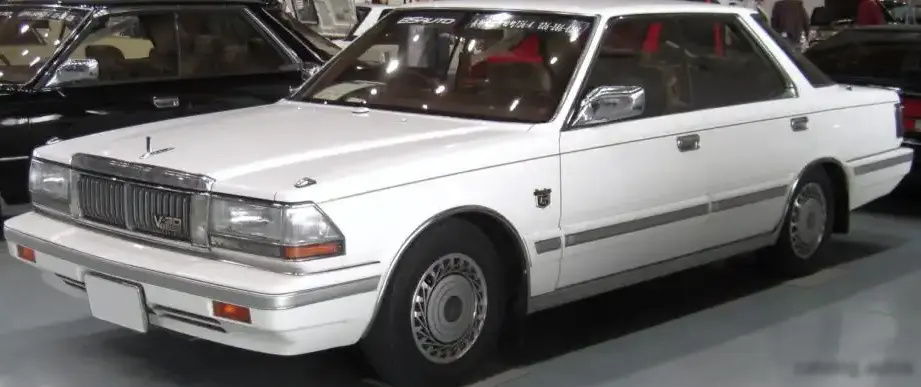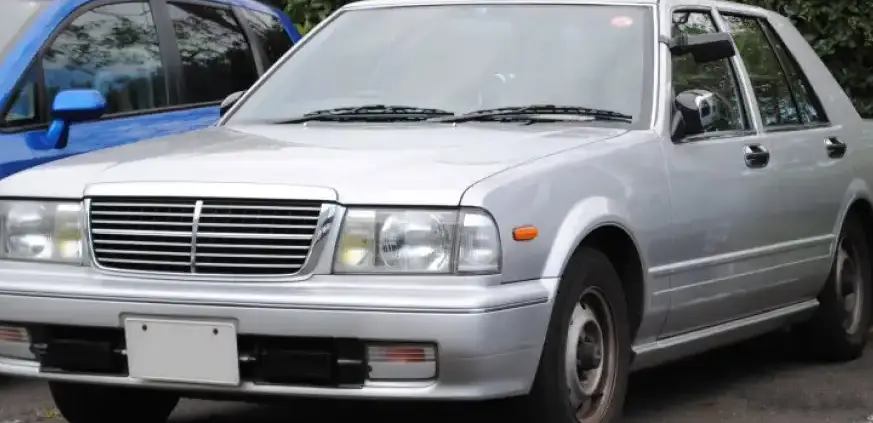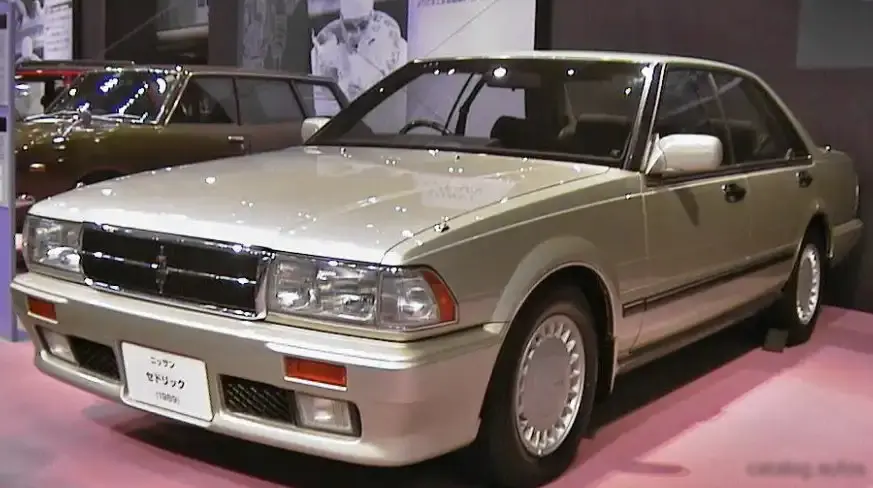
The Nissan Cedric Y31 2.8d Automatic, produced between 1987 and 1989, represented a somewhat unusual offering within the broader Y31 Cedric lineage. The Y31 generation, manufactured from 1987 to 1991, was a significant model for Nissan, embodying the company’s approach to comfortable, spacious, and reliable family transportation. While the Cedric traditionally catered to the Japanese domestic market (JDM) as a premium sedan, the 2.8d Automatic variant was positioned as a more economical, though less performance-oriented, option. It occupied the lower end of the Y31 spectrum, appealing to buyers prioritizing fuel efficiency and a smooth driving experience over outright speed. This model was primarily sold within Japan, with limited export to other markets.
Technical Specifications
| Brand | Nissan |
| Model | Cedric |
| Generation | Cedric (Y31) |
| Type (Engine) | 2.8d (94 Hp) Automatic |
| Start of production | 1987 |
| End of production | 1989 |
| Powertrain Architecture | Internal Combustion engine |
| Body type | Sedan |
| Seats | 5 |
| Doors | 4 |
| Fuel consumption (urban) | 9.9-13 l/100 km (23.8 – 18.1 US mpg, 28.5 – 21.7 UK mpg, 10.1 – 7.7 km/l) |
| Fuel consumption (extra urban) | 7.2-9.5 l/100 km (32.7 – 24.8 US mpg, 39.2 – 29.7 UK mpg, 13.9 – 10.5 km/l) |
| Fuel consumption (combined) | 9.5 l/100 km (24.8 US mpg, 29.7 UK mpg, 10.5 km/l) |
| Fuel Type | Diesel |
| Acceleration 0 – 100 km/h | 17.3 sec |
| Acceleration 0 – 62 mph | 17.3 sec |
| Acceleration 0 – 60 mph | 16.4 sec |
| Maximum speed | 161 km/h (100.04 mph) |
| Weight-to-power ratio | 15.9 kg/Hp, 63.1 Hp/tonne |
| Weight-to-torque ratio | 8.4 kg/Nm, 118.8 Nm/tonne |
| Power | 94 Hp @ 4800 rpm |
| Power per litre | 33.3 Hp/l |
| Torque | 177 Nm @ 2400 rpm (130.55 lb.-ft. @ 2400 rpm) |
| Engine layout | Front, Longitudinal |
| Engine displacement | 2825 cm3 (172.39 cu. in.) |
| Number of cylinders | 6 |
| Engine configuration | Inline |
| Cylinder Bore | 85 mm (3.35 in.) |
| Piston Stroke | 83 mm (3.27 in.) |
| Compression ratio | 21.2:1 |
| Number of valves per cylinder | 2 |
| Fuel injection system | Precombustion chamber injection |
| Engine aspiration | Naturally aspirated engine |
| Valvetrain | SOHC |
| Kerb Weight | 1490 kg (3284.89 lbs.) |
| Fuel tank capacity | 72 l (19.02 US gal | 15.84 UK gal) |
| Length | 4690 mm (184.65 in.) |
| Width | 1690 mm (66.54 in.) |
| Height | 1425 mm (56.1 in.) |
| Wheelbase | 2735 mm (107.68 in.) |
| Front track | 1440 mm (56.69 in.) |
| Rear track | 1450 mm (57.09 in.) |
| Ride height (ground clearance) | 160 mm (6.3 in.) |
| Drag coefficient (Cd) | 0.4 |
| Minimum turning circle | 11 m (36.09 ft.) |
| Drivetrain Architecture | The Internal combustion engine (ICE) drives the rear wheels of the vehicle. |
| Drive wheel | Rear wheel drive |
| Number of gears | 4 |
| Gearbox type | automatic transmission |
| Front brakes | Ventilated discs |
| Rear brakes | Disc |
| Steering type | Steering rack and pinion |
| Tires size | 195/70 R14 |
| Wheel rims size | 14 |
Powertrain & Engine Architecture
The heart of the Y31 2.8d was the Nissan SD28 diesel engine, a 2.8-liter inline-six cylinder unit. This engine, while not known for its high output, was valued for its durability and relatively good fuel economy. The 94 horsepower figure at 4800 rpm and 177 Nm (130.55 lb-ft) of torque at 2400 rpm were modest, even for the late 1980s. The SD28 utilized a precombustion chamber injection system, a common diesel technology of the era, which helped improve combustion efficiency and reduce noise compared to direct injection systems. The engine featured a single overhead camshaft (SOHC) valvetrain, operating two valves per cylinder. The four-speed automatic transmission was a standard offering, chosen to provide a comfortable and effortless driving experience, aligning with the Cedric’s overall character. This transmission was not particularly advanced, prioritizing smooth shifts over sporty responsiveness.
Driving Characteristics
The Y31 2.8d Automatic delivered a predictably relaxed driving experience. Acceleration was slow, with a 0-60 mph time of around 16.4 seconds. The focus was on providing a comfortable ride and adequate power for cruising. The automatic transmission, while smooth, lacked the responsiveness of manual gearboxes or more modern automatics. Gear ratios were optimized for fuel efficiency rather than performance. Compared to the gasoline-powered Y31 variants, particularly those equipped with the V6 engines, the 2.8d felt significantly less powerful. However, it offered a noticeable advantage in fuel economy, making it a practical choice for drivers covering long distances.
Equipment & Trim Levels
The 2.8d Automatic trim level typically included features such as power steering, central locking, and air conditioning as standard equipment. Interior upholstery was generally cloth, with a focus on durability and comfort. Dashboard configuration was relatively straightforward, with analog gauges and a simple audio system. Optional extras included power windows, upgraded audio systems, and a sunroof. The trim level was generally considered mid-range, offering a good balance of features and affordability. It wasn’t as lavishly equipped as the higher-spec Cedric models, but it provided a comfortable and well-equipped interior for its price point.
Chassis & Braking
The Y31 Cedric featured a traditional body-on-frame construction, contributing to its robust feel and durability. The suspension system consisted of independent front suspension with MacPherson struts and a live rear axle with leaf springs. This setup prioritized ride comfort over handling precision. Braking was accomplished via ventilated discs on the front wheels and discs on the rear, providing adequate stopping power for the vehicle’s weight and performance. Stabilizer bars were fitted to both the front and rear axles to reduce body roll during cornering.
Market Reception & Comparison
The Y31 2.8d Automatic received mixed reviews. Critics acknowledged its fuel efficiency and comfortable ride but criticized its lack of performance. Compared to the gasoline-powered Cedric variants, the diesel model was seen as a compromise, sacrificing performance for economy. However, it appealed to a specific segment of buyers who prioritized practicality and low running costs. The 2.8d offered better fuel economy than the larger gasoline engines, making it a popular choice for taxi drivers and those who frequently traveled long distances. Reliability was generally good, although diesel engines of this era required regular maintenance to prevent issues with the fuel injection system.
Legacy
The Nissan Cedric Y31 2.8d Automatic, while not a particularly iconic or sought-after model, holds a place in automotive history as a representative of Japanese engineering in the late 1980s. The SD28 diesel engine proved to be a durable and reliable powerplant, and many examples remain on the road today. In the used car market, these Cedrics are often valued for their affordability and simplicity. While they may not offer the performance or features of more modern vehicles, they provide a comfortable and reliable means of transportation. The Y31 Cedric, in all its variants, is remembered as a spacious, comfortable, and well-built sedan that catered to the needs of Japanese families.