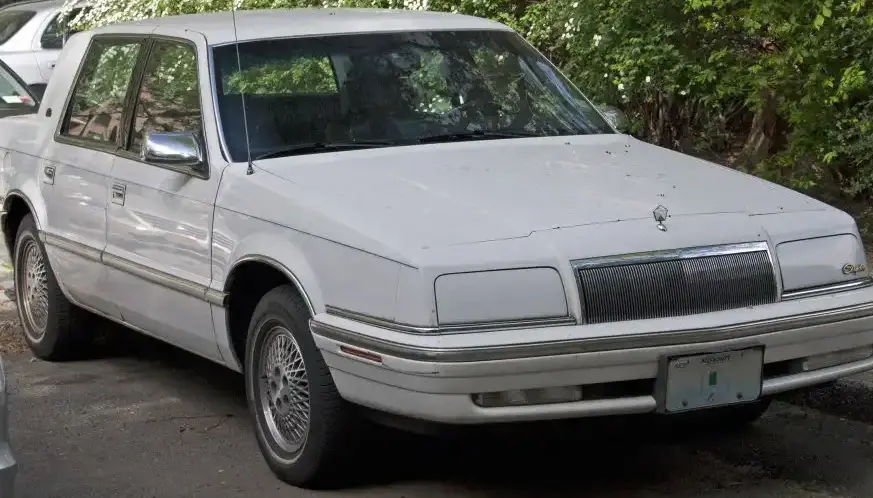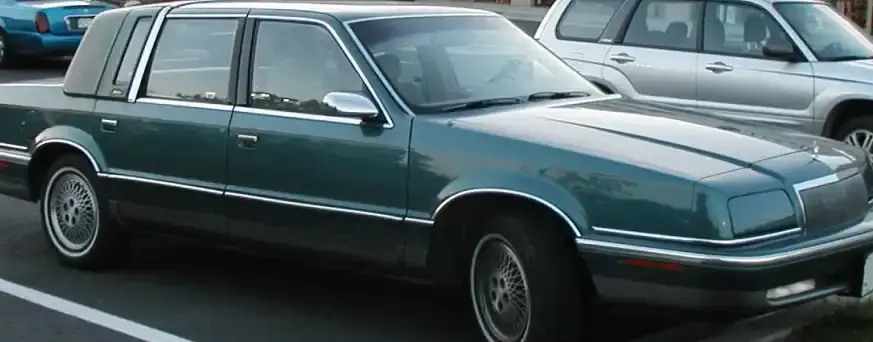
The Chrysler New Yorker Fifth Avenue, equipped with the 3.8-liter V6 engine producing 152 horsepower, marked a deliberate return to traditional American full-size luxury when it was introduced in 1991. Production continued through 1993, and this variant held a distinctive position within the New Yorker lineup, offering a balance of comfort, generous interior space, and a comparatively economical V6 powertrain. This stood in contrast to the larger, and often more expensive, V8 engines found in competing vehicles. Built on the Y-body platform – a rear-wheel drive chassis Chrysler had utilized for many years – the Fifth Avenue aimed to evoke the spirit of the classic New Yorkers produced from the 1930s through the 1960s, emphasizing a smooth ride and a roomy cabin. This generation represented a significant shift away from the K-car-based New Yorkers of the mid-1980s, signaling Chrysler’s renewed commitment to larger, more traditionally styled automobiles.
Technical Specifications
| Brand | Chrysler |
| Model | New Yorker |
| Generation | New Yorker Fifth Avenue |
| Engine Type | 3.8 V6 (152 Hp) |
| Start of production | 1991 |
| End of production | 1993 |
| Powertrain Architecture | Internal Combustion engine |
| Body type | Sedan |
| Seats | 5 |
| Doors | 4 |
| Fuel consumption (urban) | 17 l/100 km (13.8 US mpg) |
| Fuel consumption (extra urban) | 10 l/100 km (23.5 US mpg) |
| Fuel Type | Petrol (Gasoline) |
| Maximum speed | 200 km/h (124.27 mph) |
| Weight-to-power ratio | 10.6 kg/Hp |
| Weight-to-torque ratio | 5.9 kg/Nm |
| Power | 152 Hp @ 4400 rpm |
| Power per litre | 40.2 Hp/l |
| Torque | 276 Nm @ 3200 rpm (203.57 lb.-ft. @ 3200 rpm) |
| Engine layout | Front, Transverse |
| Engine displacement | 3778 cm3 (230.55 cu. in.) |
| Number of cylinders | 6 |
| Engine configuration | V-engine |
| Cylinder Bore | 96 mm (3.78 in.) |
| Piston Stroke | 87 mm (3.43 in.) |
| Compression ratio | 8.9:1 |
| Number of valves per cylinder | 2 |
| Fuel injection system | Multi-port manifold injection |
| Engine aspiration | Naturally aspirated engine |
| Valvetrain | OHC |
| Engine oil capacity | 4.3 l (4.54 US qt | 3.78 UK qt) |
| Kerb Weight | 1615 kg (3560.47 lbs.) |
| Trunk (boot) space | 465 l (16.42 cu. ft.) |
| Fuel tank capacity | 61 l (16.11 US gal | 13.42 UK gal) |
| Length | 5115 mm (201.38 in.) |
| Width | 1750 mm (68.9 in.) |
| Height | 1400 mm (55.12 in.) |
| Wheelbase | 2785 mm (109.65 in.) |
| Front track | 1465 mm (57.68 in.) |
| Rear track | 1465 mm (57.68 in.) |
| Drivetrain Architecture | Front wheel drive |
| Number of gears | 4 |
| Gearbox type | Automatic transmission |
| Front suspension | Coil spring |
| Rear suspension | Coil spring |
| Front brakes | Ventilated discs |
| Rear brakes | Disc |
| Assisting systems | ABS (Anti-lock braking system) |
| Steering type | Steering rack and pinion |
| Power steering | Hydraulic Steering |
| Tires size | 195/75 R14 |
Powertrain & Engine Architecture
The Chrysler New Yorker Fifth Avenue 3.8 V6 was powered by the 3778cc (230.55 cubic inch) Chrysler 3.8L engine, internally designated as the 3.8L EGK. This engine was a 60-degree V6, featuring a cast iron block and aluminum cylinder heads. It employed a multi-port fuel injection system, providing precise fuel delivery for improved efficiency and performance. The engine utilized an overhead camshaft (OHC) valvetrain with two valves per cylinder. The 8.9:1 compression ratio represented a compromise between performance and the ability to operate reliably on readily available 87 octane gasoline. Paired with this engine was a four-speed automatic transmission, derived from the Chrysler A727 unit, selected for its smooth operation and suitability for the car’s intended luxury cruising role. This transmission was electronically controlled, offering adaptive shifting based on driving conditions, further enhancing the driving experience.
Driving Characteristics
The 152 horsepower and 276 lb-ft of torque generated by the 3.8L V6 and automatic transmission combination provided adequate, though not particularly sporty, performance. Acceleration from 0 to 60 mph typically took around 9-10 seconds. The automatic transmission’s gear ratios were optimized for comfortable cruising, prioritizing smooth shifts over aggressive acceleration. Compared to the optional 318 cubic inch (5.2L) V8, the 3.8L offered significantly better fuel economy, but lacked the V8’s robust low-end torque and overall power. The front-wheel drive configuration contributed to predictable handling, but the New Yorker Fifth Avenue was primarily designed for a comfortable, isolated ride rather than spirited cornering. The steering, while hydraulically assisted, lacked the precision found in more performance-focused vehicles.
Equipment & Trim Levels
The New Yorker Fifth Avenue 3.8 V6 typically came well-equipped, reflecting its positioning as a luxury sedan. Standard features included air conditioning, power windows and locks, a tilt steering wheel, cruise control, and a premium sound system. Upholstery was typically cloth, though leather was available as an optional upgrade. The dashboard featured woodgrain trim and analog gauges, contributing to the car’s upscale ambiance. Optional extras included a sunroof, an upgraded sound system with a cassette player, and alloy wheels. The interior was designed to be spacious and comfortable, with ample legroom for both front and rear passengers, making it a pleasant environment for long journeys.
Chassis & Braking
The New Yorker Fifth Avenue utilized a traditional body-on-frame construction, providing a robust and durable chassis. Front suspension consisted of independent coil springs, while the rear employed a solid axle with coil springs. Braking duties were handled by ventilated discs at the front and solid discs at the rear. An anti-lock braking system (ABS) was standard, enhancing safety and control during emergency braking situations. The suspension was tuned for a soft, comfortable ride, prioritizing isolation from road imperfections over sporty handling. Stabilizer bars were fitted to both the front and rear axles to reduce body roll during cornering, improving stability.
Market Reception & Comparison
Critics generally praised the New Yorker Fifth Avenue for its spacious interior, comfortable ride, and traditional American styling. However, the 3.8L V6 engine was sometimes criticized for feeling underpowered, particularly when compared to the larger V8 engines offered in competing models such as the Buick Park Avenue and Ford Crown Victoria. Fuel economy was considered reasonable for a full-size sedan, averaging around 17 mpg in the city and 23 mpg on the highway. The 3.8L engine proved to be relatively reliable, though maintenance costs could be higher than some smaller, more modern engines. The automatic transmission was also generally reliable, but required regular fluid changes to ensure smooth operation.
Legacy
The Chrysler New Yorker Fifth Avenue 3.8 V6 remains a popular choice among collectors and enthusiasts seeking a classic American full-size sedan. The 3.8L V6 powertrain, while not known for its blistering performance, has proven to be reasonably durable and relatively easy to maintain. Parts availability is generally good, although some trim-specific components can be challenging to locate. Today, these vehicles are often appreciated for their comfortable ride, spacious interiors, and nostalgic appeal, representing a bygone era of American automotive design and engineering. The 3.8L engine, in various iterations, continued to be used by Chrysler for many years, solidifying its reputation as a reliable and versatile powerplant.