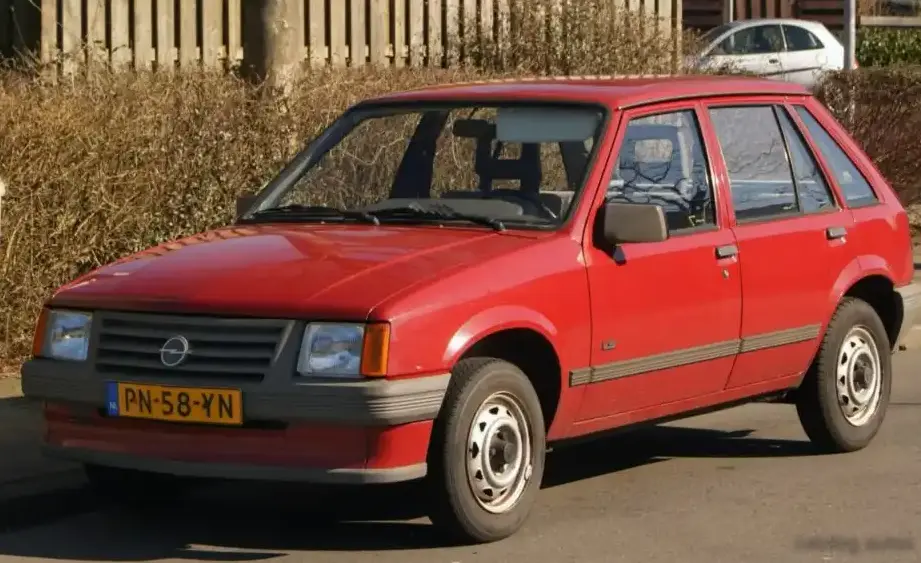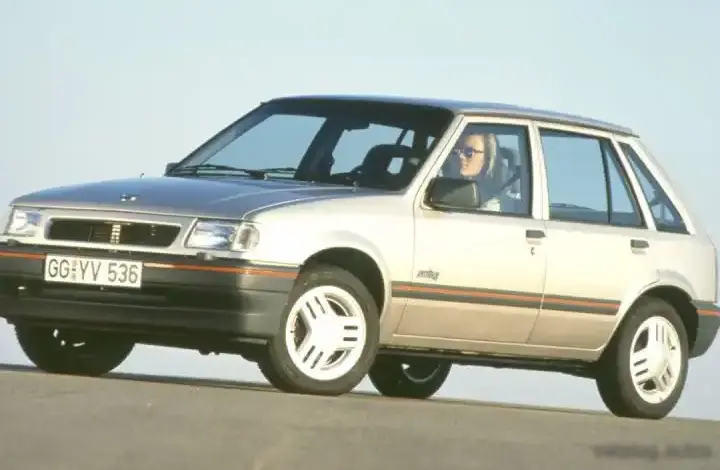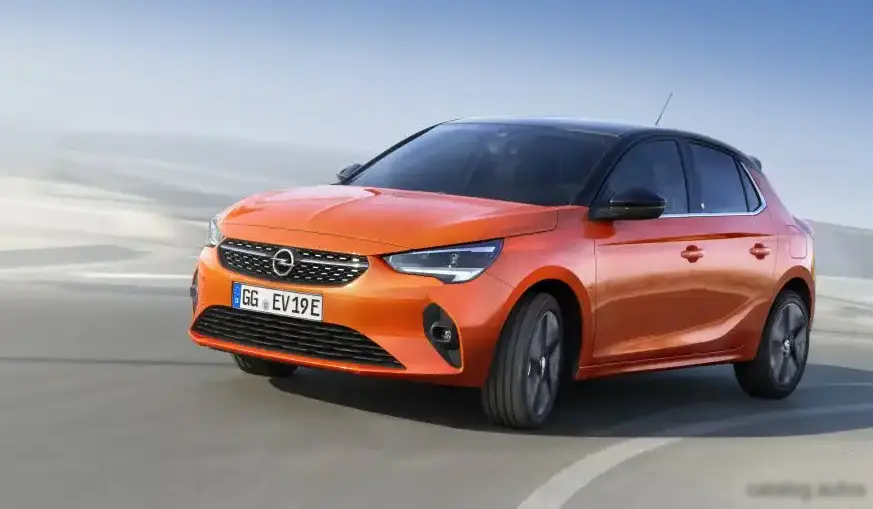
The Opel Corsa F 1.2 Turbo, producing 100 horsepower, was a key variant in the sixth generation of Opel’s popular supermini, produced from July 2019 to July 2023. Positioned as a mid-range offering within the Corsa F lineup, it aimed to balance fuel efficiency with a more engaging driving experience than the base 1.2-liter naturally aspirated engine. This model played a significant role in Opel’s strategy to modernize the Corsa, leveraging a new platform (CMP) and offering a more sophisticated powertrain option to appeal to a broader customer base in the European market. The Corsa F represented a departure from previous generations, sharing its underpinnings with the Peugeot 208 following the acquisition of Opel by the PSA Group (now Stellantis).
Technical Specifications
| Brand | Opel |
| Model | Corsa |
| Generation | Corsa F |
| Type (Engine) | 1.2 Turbo (100 Hp) |
| Start of production | July, 2019 |
| End of production | July, 2023 |
| Powertrain Architecture | Internal Combustion engine |
| Body type | Hatchback |
| Seats | 5 |
| Doors | 5 |
| Fuel consumption (urban) | 5.2-5.3 l/100 km (45.2 – 44.4 US mpg) |
| Fuel consumption (extra urban) | 3.6-3.7 l/100 km (65.3 – 63.6 US mpg) |
| Fuel consumption (combined) | 4.2-4.3 l/100 km (56 – 54.7 US mpg) |
| CO2 emissions | 96-98 g/km |
| Fuel Type | Petrol (Gasoline) |
| Acceleration 0 – 100 km/h | 9.9 sec |
| Acceleration 0 – 62 mph | 9.9 sec |
| Acceleration 0 – 60 mph | 9.4 sec |
| Maximum speed | 188 km/h (116.82 mph) |
| Emission standard | Euro 6d |
| Weight-to-power ratio | 10.9 kg/Hp |
| Weight-to-torque ratio | 5.3 kg/Nm |
| Power | 100 Hp @ 5500 rpm |
| Torque | 205 Nm @ 1750 rpm (151.2 lb.-ft. @ 1750 rpm) |
| Engine layout | Front, Transverse |
| Engine Model/Code | F12XHL |
| Engine displacement | 1199 cm3 (73.17 cu. in.) |
| Number of cylinders | 3 |
| Engine configuration | Inline |
| Compression ratio | 10.5:1 |
| Fuel injection system | Direct injection |
| Engine aspiration | Turbocharger, Intercooler |
| Engine oil capacity | 3.5 l (3.7 US qt | 3.08 UK qt) |
| Kerb Weight | 1090 kg (2403.04 lbs.) |
| Max. weight | 1620 kg (3571.49 lbs.) |
| Max load | 530 kg (1168.45 lbs.) |
| Trunk (boot) space – minimum | 309 l (10.91 cu. ft.) |
| Fuel tank capacity | 44 l (11.62 US gal | 9.68 UK gal) |
| Max. roof load | 70 kg (154.32 lbs.) |
| Permitted trailer load with brakes (12%) | 1200 kg (2645.55 lbs.) |
| Permitted trailer load without brakes | 580 kg (1278.68 lbs.) |
| Length | 4060 mm (159.84 in.) |
| Width with mirrors folded | 1765 mm (69.49 in.) |
| Width including mirrors | 1960 mm (77.17 in.) |
| Height | 1435 mm (56.5 in.) |
| Wheelbase | 2538 mm (99.92 in.) |
| Front track | 1501 mm (59.09 in.) |
| Rear (Back) track | 1500 mm (59.06 in.) |
| Drivetrain Architecture | Front wheel drive |
| Number of gears and type of gearbox | 6 gears, manual transmission |
| Tires size | 195/55 R16 |
| Wheel rims size | 6.5J x 16 |
Powertrain & Engine Architecture
The heart of the Corsa F 1.2 Turbo is the F12XHL engine, a 1.2-liter, three-cylinder turbocharged gasoline engine. This engine is part of Opel’s (and now Stellantis’) “Small Engine Family,” designed for modularity and efficiency. The F12XHL utilizes direct fuel injection, delivering fuel directly into the combustion chamber for improved combustion efficiency and reduced emissions. A single-scroll turbocharger with an intercooler provides forced induction, boosting power output. The engine features a timing chain for durability and reduced maintenance compared to timing belts. The 100 horsepower output is achieved at 5500 rpm, while peak torque of 205 Nm (151.2 lb-ft) is available from a low 1750 rpm, providing good responsiveness in everyday driving situations. The engine is paired with a six-speed manual transmission, offering precise gear changes and contributing to the car’s overall efficiency.
Driving Characteristics
The 1.2 Turbo 100 hp variant of the Corsa F offers a noticeable step up in performance compared to the base 1.2-liter naturally aspirated engine. Acceleration from 0 to 60 mph takes approximately 9.4 seconds, making it suitable for both city and highway driving. The turbocharger provides a good surge of power in the mid-range, making overtaking maneuvers easier. The six-speed manual transmission is well-matched to the engine’s characteristics, allowing drivers to keep the engine in its optimal power band. While not a sports car, the 1.2 Turbo offers a more engaging driving experience than the base model, with sufficient power for most everyday driving needs. Compared to higher-output versions of the Corsa F, such as those with more powerful turbo engines, this variant prioritizes fuel economy and affordability over outright performance.
Equipment & Trim Levels
The Corsa F 1.2 Turbo 100 hp typically came equipped with a reasonable level of standard features. These included air conditioning, a touchscreen infotainment system with Apple CarPlay and Android Auto compatibility, Bluetooth connectivity, and power windows. Safety features such as ABS, ESP (Electronic Stability Program), and multiple airbags were also standard. Higher trim levels offered additional features such as alloy wheels, a larger touchscreen display, a rearview camera, parking sensors, and climate control. Interior upholstery was typically cloth, with options for upgraded materials and designs on higher trims. Optional extras included a panoramic sunroof, heated seats, and advanced driver-assistance systems like lane departure warning and automatic emergency braking.
Chassis & Braking
The Corsa F utilizes a McPherson strut front suspension and a torsion beam rear suspension. This setup provides a good balance between ride comfort and handling. The torsion beam rear suspension is a cost-effective solution that minimizes weight and complexity. Braking on the 1.2 Turbo variant typically consisted of disc brakes on the front wheels and drum brakes on the rear wheels. The braking system is adequate for the car’s weight and performance, providing sufficient stopping power in most driving conditions. Stabilizer bars are fitted to both the front and rear axles to reduce body roll during cornering.
Market Reception & Comparison
The Opel Corsa F 1.2 Turbo was generally well-received by automotive critics. It was praised for its fuel efficiency, comfortable ride, and improved interior quality compared to previous generations. The 1.2 Turbo engine was considered a good compromise between performance and economy. Compared to the base 1.2-liter engine, the 1.2 Turbo offered a significant improvement in performance, making it a more enjoyable car to drive. However, some critics noted that the engine could be a bit noisy under hard acceleration. In terms of fuel economy, the 1.2 Turbo achieved combined fuel consumption figures of around 4.2-4.3 l/100 km (56-54.7 US mpg), making it a competitive option in its class. Compared to diesel variants, the 1.2 Turbo offered lower CO2 emissions and a more refined driving experience, although diesel models typically offered better fuel economy.
Legacy
The Opel Corsa F 1.2 Turbo has proven to be a relatively reliable powertrain. The F12XHL engine, while a three-cylinder, has demonstrated good durability. Common issues reported by owners are generally minor, such as turbocharger related problems or issues with the direct injection system. On the used car market, the Corsa F 1.2 Turbo represents a good value proposition, offering a well-equipped and fuel-efficient supermini at an affordable price. Its relatively low running costs and decent reliability make it a popular choice for first-time buyers and city commuters. The Corsa F, and specifically this 1.2 Turbo variant, helped to modernize Opel’s image and establish it as a competitive player in the European supermini segment.