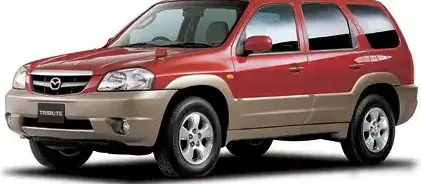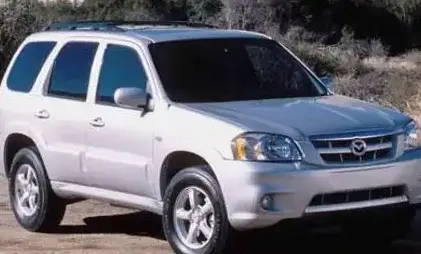
The Mazda Tribute II 3.0i V6 Automatic, produced between 2008 and 2011, represented the second generation of Mazda’s compact SUV offering. Built in collaboration with Ford – sharing a platform with the Ford Escape and Mercury Mariner – the Tribute II aimed to provide a more refined and powerful option within the competitive SUV segment. This particular variant, equipped with the 3.0-liter V6 engine and a six-speed automatic transmission, occupied the upper-mid-range of the Tribute lineup, offering a balance of performance, features, and practicality. It was primarily marketed towards families and individuals seeking a versatile vehicle with enhanced towing capacity and a more engaging driving experience than the base four-cylinder models.
Technical Specifications
| Brand | Mazda |
| Model | Tribute |
| Generation | Tribute II |
| Type (Engine) | 3.0i V6 (240 Hp) Automatic |
| Start of production | 2008 |
| End of production | 2011 |
| Powertrain Architecture | Internal Combustion engine |
| Body type | SUV |
| Seats | 5 |
| Doors | 5 |
| Fuel consumption (urban) | 12.4 l/100 km (19 US mpg) |
| Fuel consumption (extra urban) | 9.4 l/100 km (25 US mpg) |
| Fuel Type | Petrol (Gasoline) |
| Weight-to-power ratio | 6.4 kg/Hp |
| Weight-to-torque ratio | 5.1 kg/Nm |
| Power | 240 Hp @ 6550 rpm |
| Power per litre | 80.9 Hp/l |
| Torque | 302 Nm @ 4300 rpm (222.74 lb.-ft. @ 4300 rpm) |
| Engine layout | Front, Transverse |
| Engine displacement | 2967 cm3 (181.06 cu. in.) |
| Number of cylinders | 6 |
| Engine configuration | V-engine |
| Compression ratio | 10.3:1 |
| Number of valves per cylinder | 4 |
| Fuel injection system | Multi-port manifold injection |
| Engine aspiration | Naturally aspirated engine |
| Valvetrain | DOHC |
| Engine oil capacity | 5.7 l (6.02 US qt | 5.02 UK qt) |
| Coolant capacity | 9 l (9.51 US qt | 7.92 UK qt) |
| Kerb Weight | 1540 kg (3395.12 lbs) |
| Trunk (boot) space – minimum | 889 l (31.39 cu. ft) |
| Trunk (boot) space – maximum | 1903 l (67.2 cu. ft) |
| Fuel tank capacity | 66 l (17.44 US gal | 14.52 UK gal) |
| Permitted trailer load with brakes (12%) | 1565 kg (3450.23 lbs) |
| Length | 4442 mm (174.88 in) |
| Width including mirrors | 2065 mm (81.3 in) |
| Height | 1783 mm (70.2 in) |
| Wheelbase | 2619 mm (103.11 in) |
| Front track | 1542 mm (60.71 in) |
| Rear track | 1529 mm (60.2 in) |
| Ride height (ground clearance) | 213 mm (8.39 in) |
| Minimum turning circle | 11.2 m (36.75 ft) |
| Drivetrain Architecture | Front wheel drive |
| Number of gears | 6 |
| Gearbox type | Automatic transmission |
| Front suspension | Independent, McPherson with coil spring and anti-roll bar |
| Rear suspension | Independent multi-link spring suspension with stabilizer |
| Front brakes | Ventilated discs |
| Rear brakes | Drum |
| Assisting systems | ABS (Anti-lock braking system) |
| Steering type | Steering rack and pinion |
| Power steering | Electric |
| Tires size | 235/70 R16 |
| Wheel rims size | 16 |
Powertrain & Engine Architecture
The heart of the Tribute II 3.0i was the 3.0-liter Duratec 30 V6 engine. This engine, part of Ford’s Duratec family, featured a 60-degree V-angle and a cast iron block with aluminum cylinder heads. It utilized a multi-port fuel injection system, delivering fuel directly into the intake ports, and a double overhead camshaft (DOHC) valvetrain with four valves per cylinder. This configuration allowed for efficient combustion and a relatively broad powerband. The engine produced 240 horsepower at 6550 rpm and 302 Nm (222.74 lb-ft) of torque at 4300 rpm. The six-speed automatic transmission, a crucial component of this variant, was designed to provide smooth shifts and optimize fuel efficiency. It featured a torque converter and electronically controlled shifting, adapting to driving conditions and driver input.
Driving Characteristics
The 3.0i V6 Automatic Tribute offered a noticeable step up in performance compared to the base 2.5-liter four-cylinder models. Acceleration was brisk, and the engine provided ample power for highway merging and passing maneuvers. While not a sports SUV, the V6 delivered a more confident and engaging driving experience. The automatic transmission, while generally smooth, could sometimes feel hesitant during quick downshifts. The front-wheel-drive configuration provided predictable handling, but lacked the all-weather capability of available four-wheel-drive versions. The gear ratios were tuned for a balance of acceleration and fuel economy, with the sixth gear providing a comfortable cruising speed on the highway.
Equipment & Trim Levels
The 3.0i V6 Automatic typically came standard with features such as air conditioning, power windows and locks, a CD player with auxiliary input, and keyless entry. Higher trim levels, such as the Limited, added features like leather upholstery, a sunroof, heated front seats, and an upgraded audio system. Optional extras included a navigation system, a rear entertainment system, and alloy wheels. Interior materials were generally of good quality for the price point, with a focus on durability and practicality. The dashboard layout was straightforward and user-friendly, with clearly labeled controls.
Chassis & Braking
The Tribute II utilized a unibody construction, providing a good balance of rigidity and weight. The front suspension featured independent McPherson struts with coil springs and an anti-roll bar, while the rear suspension employed an independent multi-link setup with a stabilizer bar. This configuration aimed to provide a comfortable ride and predictable handling. Braking duties were handled by ventilated discs at the front and drum brakes at the rear. Anti-lock Braking System (ABS) was standard, enhancing safety during emergency braking situations. The steering was rack-and-pinion with electric power assist, offering a responsive and precise feel.
Market Reception & Comparison
The Mazda Tribute II 3.0i V6 Automatic was generally well-received by automotive critics. It was praised for its powerful engine, comfortable ride, and spacious interior. However, some reviewers noted that the automatic transmission could be slow to respond at times, and the fuel economy was not class-leading. Compared to the four-cylinder models, the V6 offered a significant performance upgrade, but at the cost of increased fuel consumption. Against competitors like the Honda CR-V and Toyota RAV4, the Tribute offered a more powerful engine option, but often lacked the same level of refinement and brand recognition.
Legacy
The Mazda Tribute II 3.0i V6 Automatic, while no longer in production, remains a relatively common sight on used car lots. The Duratec 30 V6 engine is generally considered to be reliable, although regular maintenance is crucial. Common issues include oil leaks and occasional sensor failures. The automatic transmission, if properly maintained, is also generally durable. Today, these Tributes represent an affordable and practical option for buyers seeking a spacious SUV with a capable V6 engine. Their relatively simple mechanical design makes them appealing to DIY mechanics, and parts availability remains good. However, potential buyers should be aware of the vehicle’s age and potential for wear and tear, and a thorough inspection is recommended before purchase.