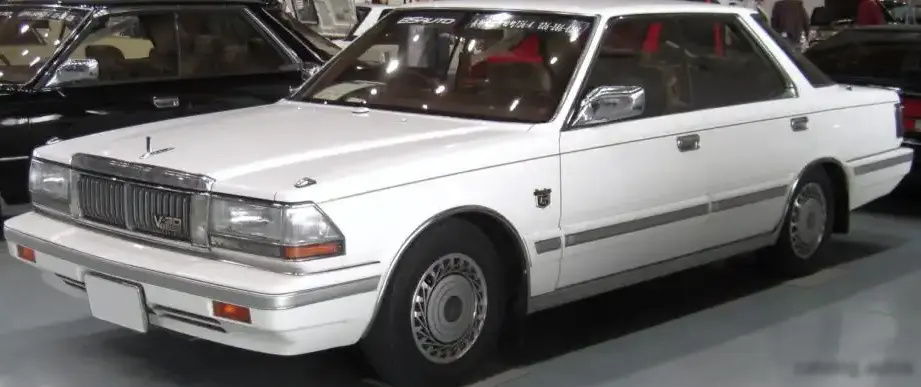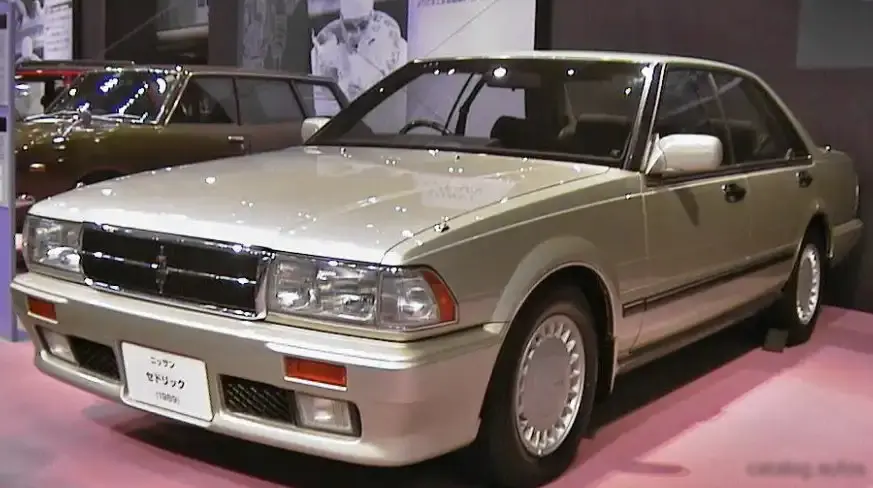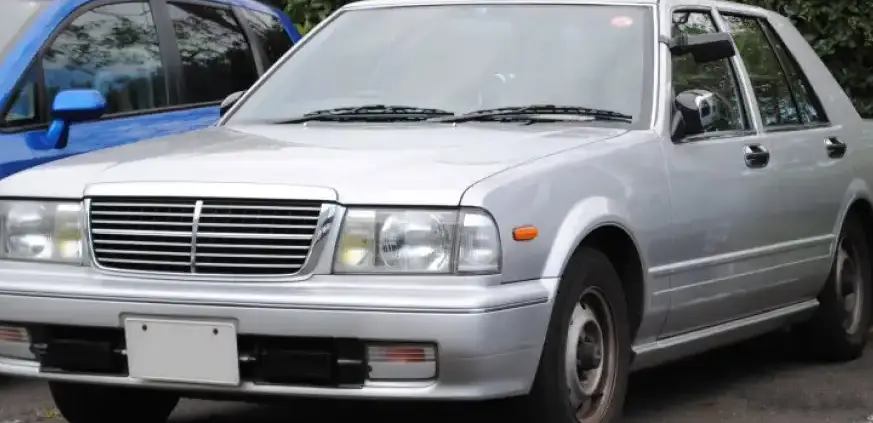
The Nissan Cedric Y31, particularly the 2.0i V6 (125 Hp) variant produced from 1991 to 1999, represents a significant iteration of Nissan’s long-running flagship sedan. Positioned as a comfortable and relatively affordable option within the Cedric lineup, this model catered to buyers seeking a spacious, well-equipped vehicle with a smooth driving experience. The Y31 generation, receiving a facelift in 1991, continued the Cedric’s tradition as a premium sedan primarily aimed at the Japanese domestic market (JDM), offering a blend of luxury and practicality. This 2.0L engine and 5-speed manual transmission combination occupied a middle ground in the Y31 range, offering a balance between performance and fuel efficiency compared to the larger displacement engines available.
Technical Specifications
| Brand | Nissan |
| Model | Cedric |
| Generation | Cedric (Y31, facelift 1991) |
| Type (Engine) | 2.0i V6 (125 Hp) |
| Start of production | 1991 |
| End of production | 1999 |
| Powertrain Architecture | Internal Combustion engine |
| Body type | Sedan |
| Seats | 5 |
| Doors | 4 |
| Fuel consumption (urban) | 10.4-13.6 l/100 km (22.6 – 17.3 US mpg, 27.2 – 20.8 UK mpg, 9.6 – 7.4 km/l) |
| Fuel consumption (extra urban) | 7.2-9.5 l/100 km (32.7 – 24.8 US mpg, 39.2 – 29.7 UK mpg, 13.9 – 10.5 km/l) |
| Fuel consumption (combined) | 9.7 l/100 km (24.2 US mpg, 29.1 UK mpg, 10.3 km/l) |
| Fuel Type | Petrol (Gasoline) |
| Acceleration 0 – 100 km/h | 11.5 sec |
| Acceleration 0 – 62 mph | 11.5 sec |
| Acceleration 0 – 60 mph | 10.9 sec |
| Maximum speed | 184 km/h (114.33 mph) |
| Weight-to-power ratio | 10.9 kg/Hp, 91.9 Hp/tonne |
| Weight-to-torque ratio | 8.1 kg/Nm, 122.8 Nm/tonne |
| Power | 125 Hp @ 6000 rpm |
| Power per litre | 62.6 Hp/l |
| Torque | 167 Nm @ 3200 rpm (123.17 lb.-ft. @ 3200 rpm) |
| Engine layout | Front, Longitudinal |
| Engine Model/Code | VG20 |
| Engine displacement | 1998 cm3 (121.93 cu. in.) |
| Number of cylinders | 6 |
| Engine configuration | V-engine |
| Cylinder Bore | 78 mm (3.07 in.) |
| Piston Stroke | 69.7 mm (2.74 in.) |
| Compression ratio | 9.5:1 |
| Number of valves per cylinder | 2 |
| Fuel injection system | Multi-port manifold injection |
| Engine aspiration | Naturally aspirated engine |
| Valvetrain | SOHC |
| Kerb Weight | 1360 kg (2998.29 lbs.) |
| Fuel tank capacity | 72 l (19.02 US gal | 15.84 UK gal) |
| Length | 4690 mm (184.65 in.) |
| Width | 1690 mm (66.54 in.) |
| Height | 1425 mm (56.1 in.) |
| Wheelbase | 2735 mm (107.68 in.) |
| Front track | 1440 mm (56.69 in.) |
| Rear track | 1450 mm (57.09 in.) |
| Ride height (ground clearance) | 155 mm (6.1 in.) |
| Drag coefficient (Cd) | 0.4 |
| Minimum turning circle | 11 m (36.09 ft.) |
| Drivetrain Architecture | Rear wheel drive |
| Number of gears | 5 |
| Gearbox type | Manual transmission |
| Front brakes | Ventilated discs |
| Rear brakes | Disc |
| Steering type | Steering rack and pinion |
Powertrain & Engine Architecture
The heart of the Cedric 2.0i is the VG20E engine, a 1.998-liter V6. This engine, part of Nissan’s VG series, is known for its smoothness and relative reliability. The VG20E utilizes a single overhead camshaft (SOHC) valvetrain operating two valves per cylinder. Fuel delivery is managed by a multi-port fuel injection system, contributing to improved efficiency and throttle response compared to earlier carbureted designs. The engine produces 125 horsepower at 6000 rpm and 167 Nm (123.17 lb-ft) of torque at 3200 rpm. Paired with a 5-speed manual transmission, the powertrain offered a reasonable balance of performance and driver engagement. The longitudinal engine layout and rear-wheel drive configuration were typical for Japanese sedans of this era, prioritizing driving dynamics and packaging efficiency.
Driving Characteristics
The 2.0i V6 with the 5-speed manual transmission provided a noticeably more engaging driving experience than the automatic variants. While not a sports car, the Cedric offered adequate acceleration, achieving 0-60 mph in approximately 10.9 seconds. The V6 engine delivered smooth, linear power delivery, making it well-suited for everyday driving. The manual gearbox allowed for greater control over the engine’s power band, particularly useful for navigating hilly terrain or overtaking. Compared to the larger 3.0-liter engines available in the Cedric lineup, the 2.0i offered less outright power, but its lighter weight and more responsive transmission contributed to a more nimble feel. The gear ratios were tuned for a balance of acceleration and fuel economy, with a relatively tall fifth gear for comfortable highway cruising.
Equipment & Trim Levels
The 2.0i V6 trim of the Y31 Cedric typically included features such as power windows, power steering, central locking, and an AM/FM radio. Higher trim levels offered upgrades like air conditioning, upgraded upholstery (often velour or cloth), and a more sophisticated audio system. The interior design emphasized comfort and spaciousness, with ample legroom for both front and rear passengers. Optional extras included a sunroof, alloy wheels, and upgraded sound systems. The dashboard layout was functional and straightforward, with clearly labeled controls and a comprehensive instrument cluster.
Chassis & Braking
The Cedric Y31 utilized a traditional body-on-frame construction, providing a comfortable ride and robust feel. The suspension consisted of independent front suspension with MacPherson struts and a multi-link rear suspension. The 2.0i variant typically featured ventilated disc brakes on the front wheels and disc brakes on the rear, providing adequate stopping power for its weight class. Stabilizer bars were fitted to both the front and rear axles to reduce body roll during cornering. The steering system employed a rack-and-pinion setup, offering precise and responsive steering feel.
Market Reception & Comparison
The Nissan Cedric Y31 2.0i V6 was generally well-received in the Japanese market as a comfortable, reliable, and reasonably priced sedan. Critics praised its smooth engine, spacious interior, and comfortable ride. Compared to competitors like the Toyota Crown and Honda Accord, the Cedric offered a more traditional, luxurious experience. The 2.0i variant was often seen as a good value proposition, offering a balance of performance and fuel economy. The automatic transmission versions were more popular, catering to buyers prioritizing convenience over driver engagement. Fuel economy figures were respectable for the time, averaging around 24.2 US mpg in combined driving conditions.
Legacy
The Nissan Cedric Y31, including the 2.0i V6 variant, has developed a following among enthusiasts of classic Japanese cars. The VG20E engine is known for its durability and relatively simple maintenance requirements. While finding parts can sometimes be challenging outside of Japan, the engine’s robust design ensures long-term reliability. Today, well-maintained Y31 Cedrics are sought after by collectors and enthusiasts who appreciate their classic styling, comfortable ride, and smooth V6 engine. The 2.0i manual transmission models are particularly desirable due to their engaging driving experience and relative rarity.