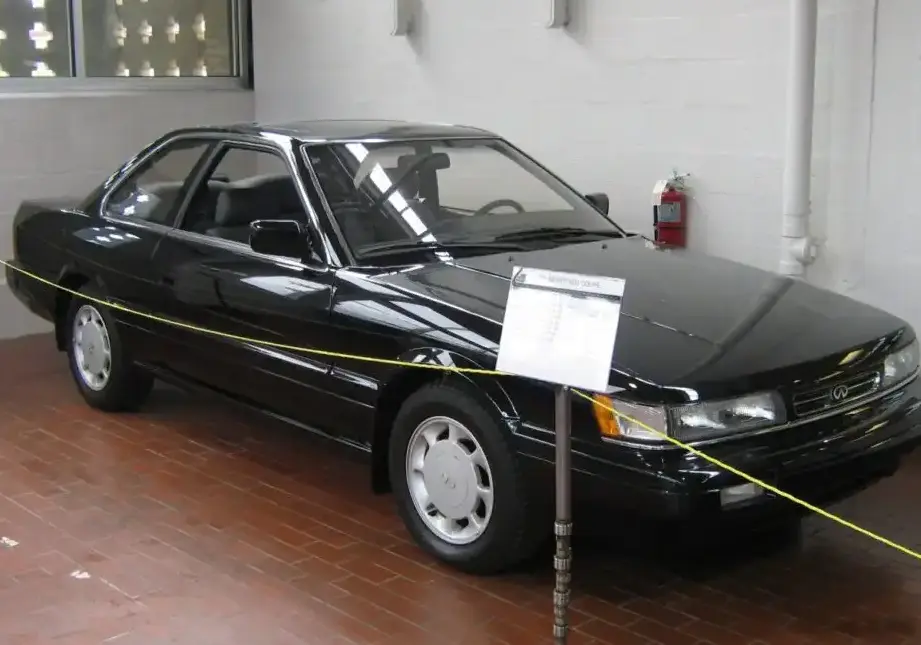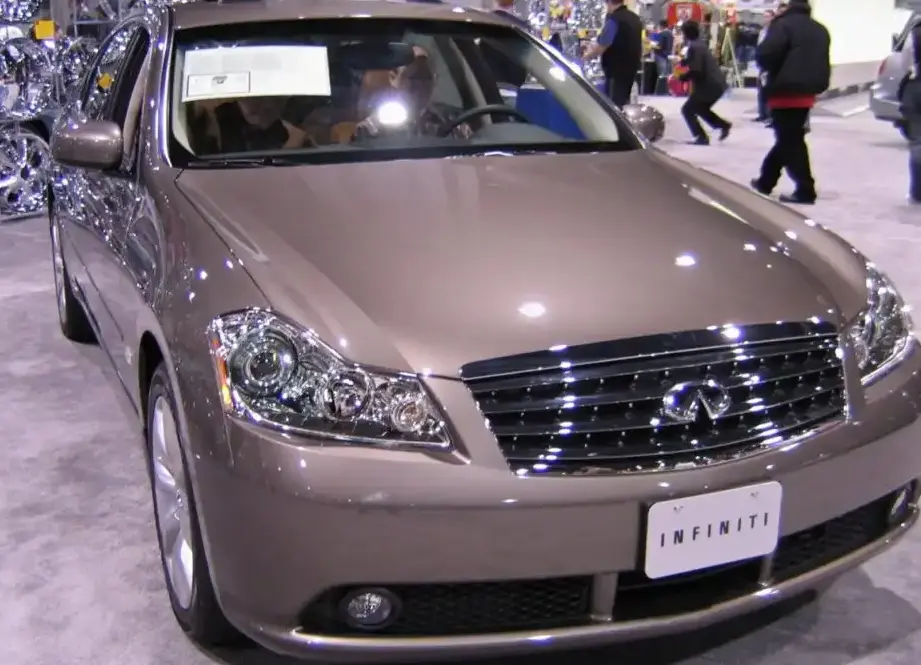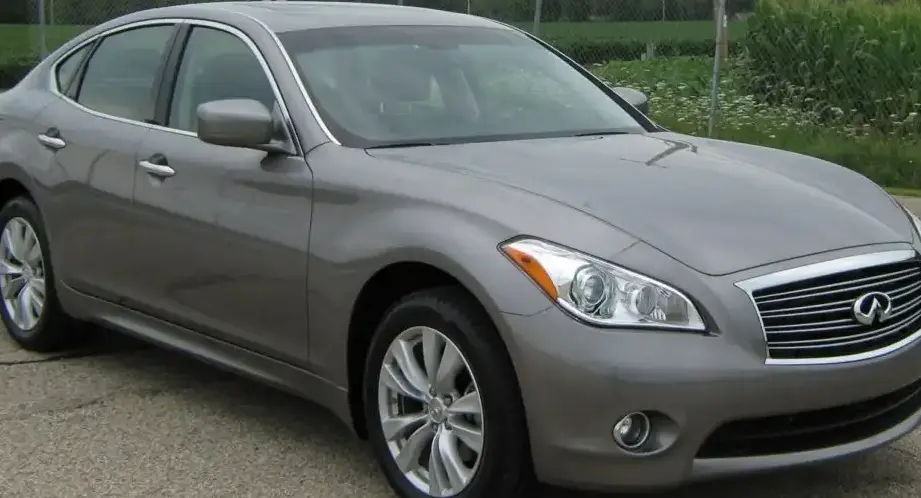
The Infiniti M56, produced from 2010 to 2019 as part of the fourth generation (Y51) of the Infiniti M series, represented a significant step upmarket for the brand. Positioned as the performance flagship of the M lineup, the M56 offered a compelling blend of luxury, technology, and robust V8 power. It was Infiniti’s direct competitor to established luxury sedans like the BMW 5 Series, Mercedes-Benz E-Class, and Lexus GS, aiming to provide a distinctive alternative with a focus on driving dynamics and value. The M56 was primarily marketed in North America, where larger displacement engines and rear-wheel-drive configurations were more readily accepted by consumers.
Technical Specifications
| Brand | Infiniti |
| Model | M |
| Generation | M IV (Y51) |
| Type (Engine) | M56 V8 (420 Hp) Automatic |
| Start of production | 2010 |
| End of production | 2019 |
| Powertrain Architecture | Internal Combustion engine |
| Body type | Sedan |
| Seats | 5 |
| Doors | 4 |
| Fuel consumption (urban) | 14.7 l/100 km (16 US mpg, 19.2 UK mpg, 6.8 km/l) |
| Fuel consumption (extra urban) | 9.4 l/100 km (25 US mpg, 30.1 UK mpg, 10.6 km/l) |
| Fuel Type | Petrol (Gasoline) |
| Weight-to-power ratio | 4.4 kg/Hp, 229.9 Hp/tonne |
| Weight-to-torque ratio | 3.2 kg/Nm, 309.3 Nm/tonne |
| Power | 420 Hp @ 6000 rpm |
| Power per litre | 75.6 Hp/l |
| Torque | 565 Nm @ 4400 rpm (416.72 lb.-ft. @ 4400 rpm) |
| Maximum engine speed | 6700 rpm |
| Engine layout | Front, Longitudinal |
| Engine Model/Code | VK56VD |
| Engine displacement | 5552 cm3 (338.8 cu. in.) |
| Number of cylinders | 8 |
| Engine configuration | V-engine |
| Cylinder Bore | 98 mm (3.86 in.) |
| Piston Stroke | 92 mm (3.62 in.) |
| Compression ratio | 11.5:1 |
| Number of valves per cylinder | 4 |
| Fuel injection system | Direct injection |
| Valvetrain | DOHC |
| Engine oil capacity | 6 l (6.34 US qt | 5.28 UK qt) |
| Coolant capacity | 10.9 l (11.52 US qt | 9.59 UK qt) |
| Kerb Weight | 1827 kg (4027.85 lbs.) |
| Max. weight | 2333 kg (5143.38 lbs.) |
| Max load | 506 kg (1115.54 lbs.) |
| Trunk (boot) space – minimum | 422 l (14.9 cu. ft.) |
| Fuel tank capacity | 76 l (20.08 US gal | 16.72 UK gal) |
| Length | 4945 mm (194.69 in.) |
| Width | 1844 mm (72.6 in.) |
| Height | 1501 mm (59.09 in.) |
| Wheelbase | 2901 mm (114.21 in.) |
| Front track | 1575 mm (62.01 in.) |
| Rear (Back) track | 1570 mm (61.81 in.) |
| Ride height (ground clearance) | 150 mm (5.91 in.) |
| Drag coefficient (Cd) | 0.27 |
| Minimum turning circle (turning diameter) | 11.2 m (36.75 ft.) |
| Drivetrain Architecture | Rear wheel drive |
| Number of gears and type of gearbox | 7 gears, automatic transmission |
| Front suspension | Double wishbone |
| Rear suspension | Independent multi-link spring suspension with stabilizer |
| Front brakes | Ventilated discs, 320.04×27.94 mm |
| Rear brakes | Ventilated discs, 307.34×15.24 mm |
| Assisting systems | ABS (Anti-lock braking system) |
| Steering type | Steering rack and pinion |
| Power steering | Electric Steering |
| Tires size | 245/50 R18 V; 245/40 R20 W |
| Wheel rims size | 8.0J x 18; 9.0J x 20 |
Powertrain & Engine Architecture
The heart of the M56 is the VK56VD 5.6-liter V8 engine. This naturally aspirated powerplant features Nissan’s Variable Valve Event and Lift (VVEL) technology, along with direct fuel injection. VVEL allows for precise control of valve timing and lift, optimizing engine performance and efficiency across the rev range. The engine produces 420 horsepower at 6000 rpm and 417 lb-ft of torque at 4400 rpm. The VK56VD is a robust engine known for its smooth power delivery and relatively simple maintenance requirements compared to some of its turbocharged competitors. The engine is longitudinally mounted, driving the rear wheels. The M56 exclusively utilized a 7-speed automatic transmission, designed to provide smooth and responsive shifts. This transmission was tuned to complement the V8’s power characteristics, offering both comfortable cruising and spirited acceleration.
Driving Characteristics
The M56 delivers a distinctly rear-wheel-drive experience. The 7-speed automatic transmission provides quick and seamless gear changes, contributing to a refined driving experience. While not as overtly sporty as some of its European rivals, the M56 offers ample power for confident highway passing and merging. The weight distribution, combined with the well-tuned suspension, results in predictable handling. Compared to the M37 (with its 3.7-liter V6), the M56 provides significantly more low-end torque and a more relaxed driving experience. The M56’s automatic transmission, while smooth, doesn’t offer the same level of driver engagement as a manual gearbox, but it prioritizes comfort and ease of use.
Equipment & Trim Levels
The M56 typically came well-equipped, even in its base form. Standard features included leather upholstery, a power-adjustable driver’s seat with memory function, a premium audio system, a navigation system, and a rearview camera. Higher trim levels added features such as ventilated front seats, a power-adjustable passenger seat, a panoramic sunroof, and advanced safety technologies like lane departure warning and blind-spot monitoring. Optional extras included a Bose premium sound system, and various cosmetic enhancements.
Chassis & Braking
The M56 utilizes a double wishbone front suspension and an independent multi-link rear suspension, providing a comfortable ride and good handling characteristics. Stabilizer bars are fitted to both axles to reduce body roll during cornering. The braking system consists of ventilated discs on all four wheels, providing ample stopping power. The M56’s ABS (Anti-lock Braking System) and electronic stability control further enhance safety. The suspension was tuned to balance comfort and handling, leaning towards a more comfortable ride quality than a purely performance-focused setup.
Market Reception & Comparison
The Infiniti M56 was generally well-received by automotive critics, who praised its powerful engine, comfortable ride, and luxurious interior. However, some reviewers noted that its styling was somewhat polarizing and that its fuel economy was not class-leading. Compared to the M37, the M56 offered a more refined and powerful driving experience, but at a higher price point. The M56’s fuel economy, averaging around 16 mpg in the city and 25 mpg on the highway, was typical for a V8-powered luxury sedan of its time. Reliability reports suggest that the VK56VD engine is generally reliable, although routine maintenance is essential.
Legacy
The Infiniti M56 represents a bold attempt by Infiniti to compete directly with the established German luxury brands. While it didn’t achieve the same sales volume as some of its rivals, it established Infiniti as a credible alternative in the luxury sedan segment. Today, the M56 remains a desirable used car, offering a compelling combination of power, luxury, and value. The VK56VD engine is known for its durability, making the M56 a potentially reliable choice for buyers seeking a powerful and comfortable luxury sedan. However, potential buyers should be aware of the higher maintenance costs associated with a V8 engine and the potential for age-related issues in older vehicles.