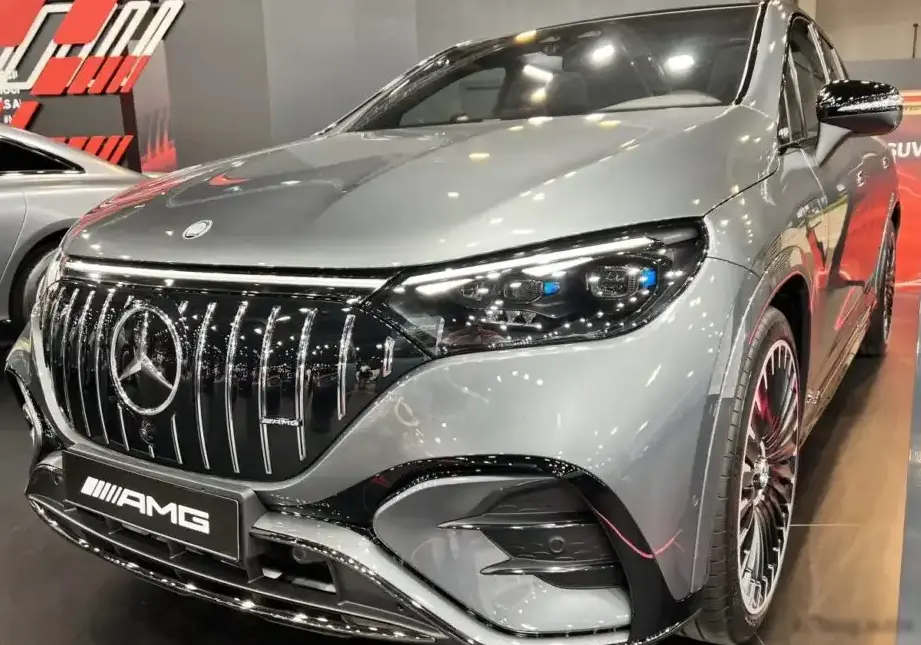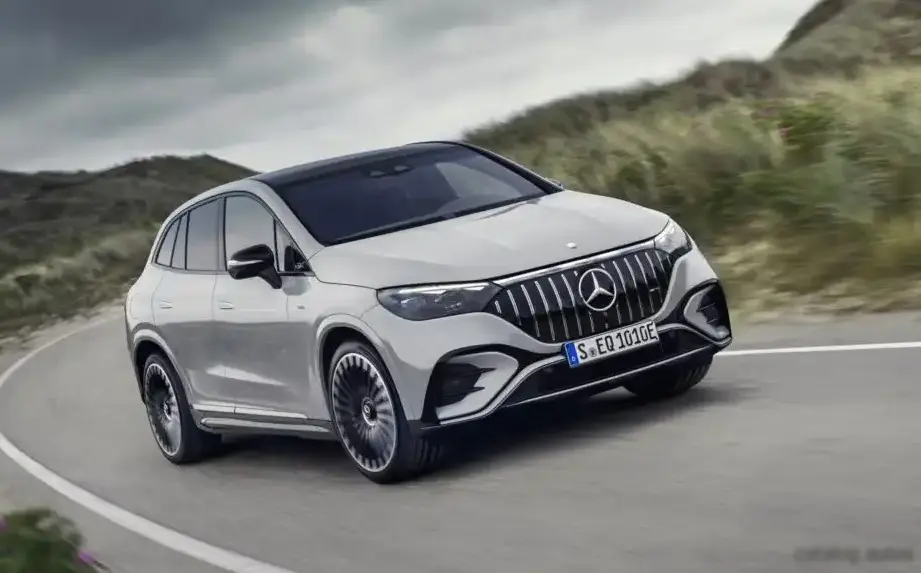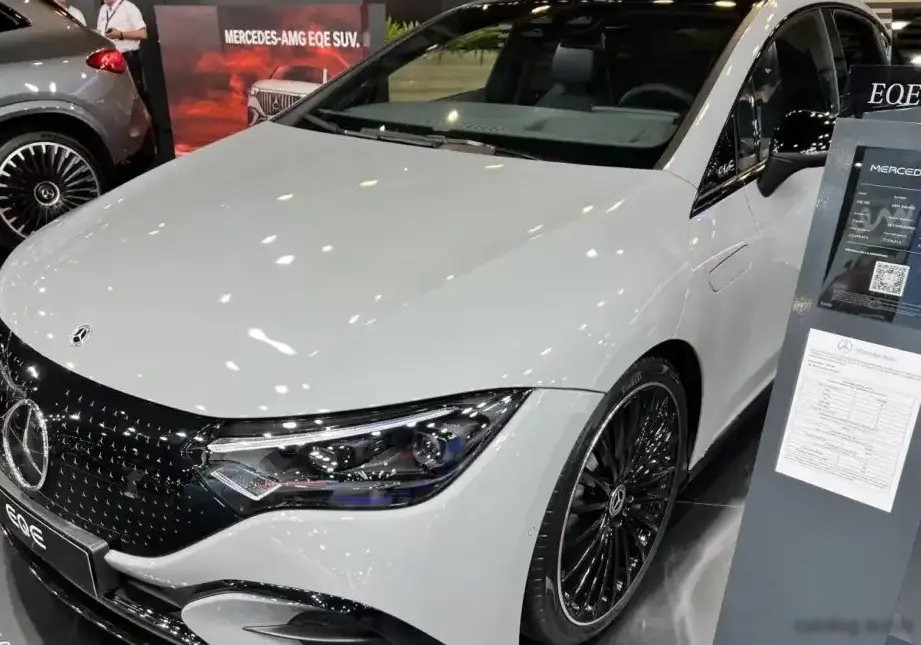
The Mercedes-Benz EQE 350 98 kWh, producing 292 horsepower, represents a key variant within the V295 EQE model range, launched in 2022 and continuing through May 2024. Positioned as a mid-range offering in the EQE lineup, it aimed to deliver a balance of performance, range, and luxury within the burgeoning electric vehicle market. The EQE, as a whole, serves as the executive-class counterpart to the more compact and sporty EQB and EQA, and a more accessible alternative to the flagship EQS. This particular variant was primarily targeted towards buyers seeking a comfortable and efficient electric sedan for daily commuting and longer journeys, prioritizing range and refinement over outright performance.
Technical Specifications
| Brand | Mercedes-Benz |
| Model | EQE |
| Generation | EQE (V295) |
| Type (Engine) | EQE 350 98 kWh (292 Hp) |
| Start of production | 2022 |
| End of production | May, 2024 |
| Powertrain Architecture | BEV (Electric Vehicle) |
| Body type | Sedan |
| Seats | 5 |
| Doors | 4 |
| Fuel Type | Electricity |
| Acceleration 0 – 100 km/h | 6.4 sec |
| Acceleration 0 – 62 mph | 6.4 sec |
| Acceleration 0 – 60 mph | 6.1 sec |
| Maximum speed | 210 km/h (130.49 mph) |
| Weight-to-power ratio | 7.9 kg/Hp, 126.4 Hp/tonne |
| Weight-to-torque ratio | 4.1 kg/Nm, 244.6 Nm/tonne |
| Gross battery capacity | 98 kWh |
| Net (usable) battery capacity | 89 kWh |
| Battery voltage | 328.5 V |
| Battery technology | Lithium nickel manganese cobalt oxides (Li-NMC) |
| Battery weight | 557 kg (1227.97 lbs) |
| Battery location | Below the floor |
| All-electric range (WLTP) | 550-639 km (341.75 – 397.06 mi) |
| Average Energy consumption (WLTP) | 16-18.8 kWh/100 km (25.75 – 30.26 kWh/100 mi) |
| Average Energy consumption (MPGe) | 131 – 111 |
| Average Energy consumption (km/kWh) | 6.3 – 5.3 |
| Average Energy consumption (mi/kWh) | 3.9 – 3.3 |
| Electric motor power | 292 Hp |
| Electric motor Torque | 565 Nm (416.72 lb.-ft.) |
| Electric motor model/code | EM0027 |
| Electric motor location | Rear axle, Transverse |
| Electric motor type | Synchronous |
| System power | 292 Hp |
| System torque | 565 Nm (416.72 lb.-ft.) |
| Kerb Weight | 2310 kg (5092.68 lbs) |
| Max. weight | 2880 kg (6349.31 lbs) |
| Max load | 570 kg (1256.63 lbs) |
| Trunk (boot) space – minimum | 430 l (15.19 cu. ft.) |
| Max. roof load | 100 kg (220.46 lbs) |
| Permitted trailer load with brakes (12%) | 750 kg (1653.47 lbs) |
| Permitted trailer load without brakes | 750 kg (1653.47 lbs) |
| Permitted towbar download | 75 kg (165.35 lbs) |
| Length | 4946 mm (194.72 in) |
| Width | 1961 mm (77.2 in) |
| Width including mirrors | 2103 mm (82.8 in) |
| Height | 1510 mm (59.45 in) |
| Wheelbase | 3120 mm (122.83 in) |
| Front track | 1632 mm (64.25 in) |
| Rear (Back) track | 1642 mm (64.65 in) |
| Front overhang | 896 mm (35.28 in) |
| Rear overhang | 930 mm (36.61 in) |
| Ride height (ground clearance) | 132 mm (5.2 in) |
| Drag coefficient (Cd) | 0.20 |
| Minimum turning circle (turning diameter) | 10.7 m (35.1 ft) |
| Approach angle | 13° |
| Departure angle | 16.1° |
| Ramp-over (brakeover) angle | 7.9° |
| Drivetrain Architecture | One electric motor drives the rear wheels. |
| Drive wheel | Rear wheel drive |
| Number of gears and type of gearbox | 1 gears, automatic transmission |
| Front suspension | Coil spring, Independent multi-link suspension, Transverse stabilizer, Air Suspension – Optional |
| Rear suspension | Independent multi-link spring suspension with stabilizer, Air Suspension – Optional |
| Front brakes | Ventilated discs |
| Rear brakes | Ventilated discs |
| Assisting systems | ABS (Anti-lock braking system), 4-wheel steering (4WS, active rear steering) |
| Steering type | Steering rack and pinion |
| Power steering | Electric Steering |
| Front wheel tires | 235/50 R19; 255/50 R19; 255/45 R19; 255/40 R20; 255/35 R21 |
| Rear wheel tires | 235/50 R19; 255/50 R19; 255/45 R19; 255/40 R20; 285/35 R20; 285/30 R21 |
| Front wheel rims | 8J x 19; 8.5J x 19; 9J x 20; 9J x 21 |
| Rear wheel rims | 8J x 19; 8.5J x 19; 9J x 20; 10J x 20; 10J x 21 |
Powertrain & Engine Architecture
The EQE 350 98 kWh utilizes a single rear-mounted electric motor (EM0027), producing 292 horsepower and 565 Nm (416.72 lb-ft) of torque. This synchronous motor is powered by a 98 kWh lithium-nickel-manganese-cobalt oxide (Li-NMC) battery pack, providing a usable capacity of 89 kWh. The battery is positioned under the vehicle floor, contributing to a low center of gravity and optimized weight distribution. The vehicle employs a single-speed automatic transmission, typical of electric vehicles, delivering seamless acceleration. The power electronics manage the flow of energy between the battery, motor, and other vehicle systems. The EQE benefits from 400V architecture, allowing for relatively fast DC fast-charging capabilities.
Driving Characteristics
The EQE 350 98 kWh offers a refined and comfortable driving experience. Acceleration from 0-60 mph takes approximately 6.1 seconds. While not as brisk as the higher-performance EQE variants, the 292 hp motor provides ample power for everyday driving and highway merging. The single-speed transmission ensures smooth, linear acceleration. The rear-wheel drive configuration contributes to balanced handling, although it may exhibit some understeer at the limit. Energy recuperation settings allow drivers to adjust the level of regenerative braking, enhancing efficiency and providing a one-pedal driving experience. Compared to the EQE 43 4MATIC, the 350 offers a more relaxed driving experience, prioritizing efficiency and comfort over outright performance.
Equipment & Trim Levels
The EQE 350 98 kWh typically came standard with features such as the Mercedes-Benz User Experience (MBUX) infotainment system with a large touchscreen display, a digital instrument cluster, premium upholstery, and a comprehensive suite of safety features including automatic emergency braking, lane keeping assist, and adaptive cruise control. Optional extras included a panoramic sunroof, advanced driver-assistance systems, premium sound systems, and various interior trim upgrades. Interior color schemes and material choices allowed for a degree of personalization. The standard upholstery was typically a high-quality synthetic leather, with genuine leather available as an upgrade.
Chassis & Braking
The EQE 350 features a multi-link suspension system at both the front and rear, providing a comfortable ride and good handling characteristics. Air suspension was available as an option, further enhancing ride quality and allowing for adjustable ride height. The braking system consists of ventilated discs on all four wheels, providing ample stopping power. Anti-lock braking system (ABS) and electronic stability control (ESC) are standard features. The EQE also offers optional 4-wheel steering, improving maneuverability at low speeds and stability at high speeds.
Market Reception & Comparison
The EQE 350 98 kWh was generally well-received by automotive critics, who praised its comfortable ride, spacious interior, and advanced technology. Its range of 550-639 km (341.75 – 397.06 mi) on the WLTP cycle was considered competitive within its segment. Compared to the EQE 43 4MATIC, the 350 offered a more affordable entry point into the EQE lineup, albeit with slightly reduced performance. Fuel economy, expressed as MPGe, ranged from 111 to 131, making it a highly efficient vehicle. Reliability reports have been generally positive, with few major issues reported.
Legacy
The EQE 350 98 kWh represents an important step in Mercedes-Benz’s transition to electric mobility. Its combination of luxury, technology, and efficiency has made it a popular choice among buyers seeking a premium electric sedan. On the used car market, these models hold their value relatively well, reflecting their build quality and desirable features. The powertrain, while not the most powerful in the EQE range, has proven to be reliable and durable, ensuring a long service life for owners. The EQE platform itself has set a benchmark for electric vehicle design and performance, influencing the development of future Mercedes-Benz electric models.