
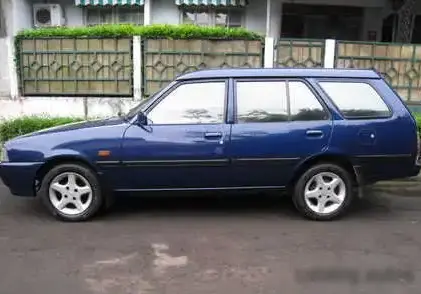
The Mazda Vantrend 1.4, producing 70 horsepower, represents a significant portion of the long-running Vantrend line, a practical and affordable station wagon produced by Mazda from 1977 to 2000. While the Vantrend existed in various configurations throughout its lifespan, the 1.4-liter variant served as a core offering, particularly in markets where fuel efficiency and low running costs were prioritized. This model occupied the entry-level position within the Vantrend range, appealing to families and businesses seeking a reliable and spacious vehicle without the expense of larger engines or higher trim levels. The Vantrend, based on Mazda’s B platform, was essentially a rebadged and adapted Ford Escort/Orion wagon for many years, reflecting Mazda’s partnership with Ford during this period.
Technical Specifications
| Brand | Mazda |
| Model | Vantrend |
| Generation | Vantrend |
| Type (Engine) | 1.4 (70 Hp) |
| Start of Production | 1977 |
| End of Production | 2000 |
| Powertrain Architecture | Internal Combustion Engine |
| Body Type | Station Wagon (Estate) |
| Fuel Type | Petrol (Gasoline) |
| Power | 70 Hp |
| Engine Aspiration | Naturally Aspirated |
Powertrain & Engine Architecture
The Mazda Vantrend 1.4 utilized a 1388cc (84.7 cubic inch) inline-four cylinder engine. This engine, while relatively simple in design, was known for its durability and ease of maintenance. The engine featured a single overhead camshaft (SOHC) valvetrain, operating two valves per cylinder. Fuel delivery was managed by a carburetor, typical for engines of this era and output. Later iterations of the Vantrend, particularly those produced in the 1990s, saw the introduction of multi-point fuel injection, though the 70hp version largely retained the carburetor setup. The engine’s relatively low compression ratio (typically around 8.8:1) contributed to its ability to run on lower octane fuel, a significant advantage in many markets. The transmission paired with the 1.4-liter engine was typically a four-speed manual, but a three-speed automatic transmission was also offered, though less common. The automatic transmission, while providing convenience, noticeably impacted acceleration and fuel economy.
Driving Characteristics
The Vantrend 1.4, with its 70 horsepower, was not designed for spirited performance. Acceleration was modest, with 0-60 mph times estimated to be around 14-16 seconds. The engine’s torque output, peaking at approximately 85 lb-ft, was sufficient for everyday driving, but struggling when fully loaded or tackling steep inclines. The automatic transmission, while smooth in operation, further reduced performance due to its less efficient power transfer and wider gear spacing. The gear ratios were optimized for fuel economy rather than acceleration. Compared to the slightly more powerful 1.6-liter Vantrend variants, the 1.4 felt noticeably slower, particularly when overtaking. However, the 1.4 offered a more relaxed driving experience, with less engine noise and vibration. The suspension, tuned for comfort, provided a reasonably smooth ride, although it could feel somewhat wallowy when cornering.
Equipment & Trim Levels
The Vantrend 1.4 typically represented the base trim level. Standard equipment generally included cloth upholstery, basic instrumentation (speedometer, fuel gauge, temperature gauge), and manually operated windows and door locks. Air conditioning was often an optional extra, as were power steering and a radio. Interior plastics were durable but utilitarian, reflecting the vehicle’s affordable positioning. The dashboard layout was functional and straightforward, prioritizing ease of use over aesthetic appeal. Later models saw the addition of features like central locking and electric windows as optional extras, but these were rarely standard on the 1.4-liter version. The rear seats typically offered a 60/40 split-folding configuration, providing flexibility for carrying both passengers and cargo.
Chassis & Braking
The Vantrend 1.4 utilized a relatively simple chassis design, featuring a MacPherson strut front suspension and a solid axle rear suspension with leaf springs. This setup prioritized cost-effectiveness and durability over sophisticated handling. Braking was typically accomplished with disc brakes on the front wheels and drum brakes on the rear wheels. The braking system was adequate for the vehicle’s weight and performance, but lacked the stopping power of more modern systems. Steering was typically unassisted, requiring more effort at low speeds. Stabilizer bars were often omitted on the base 1.4 model, contributing to a slightly increased degree of body roll in corners. The tires were typically narrow, prioritizing fuel economy and ride comfort over grip.
Market Reception & Comparison
The Mazda Vantrend 1.4 was generally well-received as a practical and affordable family vehicle. Critics praised its spacious interior, reliability, and low running costs. However, its modest performance and basic equipment levels were often noted. Compared to other station wagons in its class, such as the Ford Escort Estate and the Vauxhall Astra Estate, the Vantrend 1.4 offered a competitive price point and a reputation for durability. Fuel economy was a key selling point, with the 1.4-liter engine achieving around 35-40 mpg in mixed driving conditions. The automatic transmission version suffered a noticeable drop in fuel economy, typically around 30-35 mpg. Reliability was generally good, with the 1.4-liter engine proving to be robust and long-lasting. However, rust was a common issue, particularly in vehicles exposed to harsh weather conditions.
Legacy
The Mazda Vantrend 1.4, while not a performance icon, holds a significant place in automotive history as a practical and affordable family vehicle. The powertrain, while simple, proved to be remarkably durable, and many examples are still on the road today. In the used car market, the Vantrend 1.4 remains a popular choice for those seeking a reliable and inexpensive vehicle for commuting or light commercial use. Parts availability is generally good, thanks to the vehicle’s widespread production and the continued support from aftermarket suppliers. However, finding well-maintained examples can be challenging, as many vehicles have suffered from neglect or rust. The Vantrend 1.4 represents a bygone era of automotive design, prioritizing practicality and affordability over luxury and performance. It remains a testament to Mazda’s commitment to building reliable and accessible vehicles.
