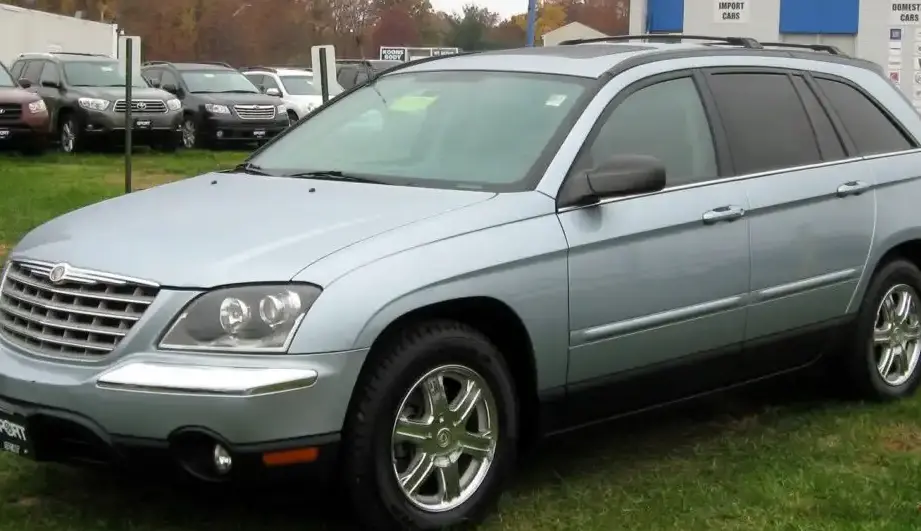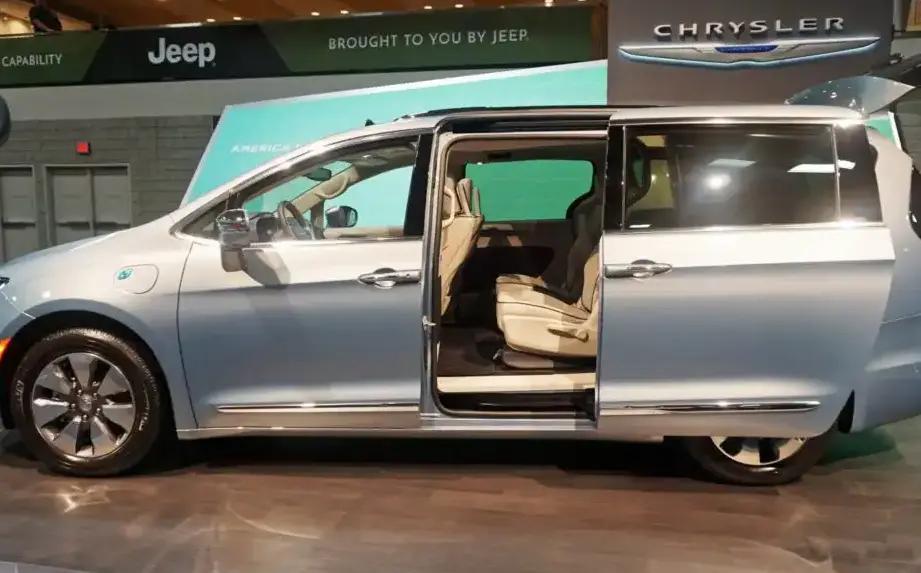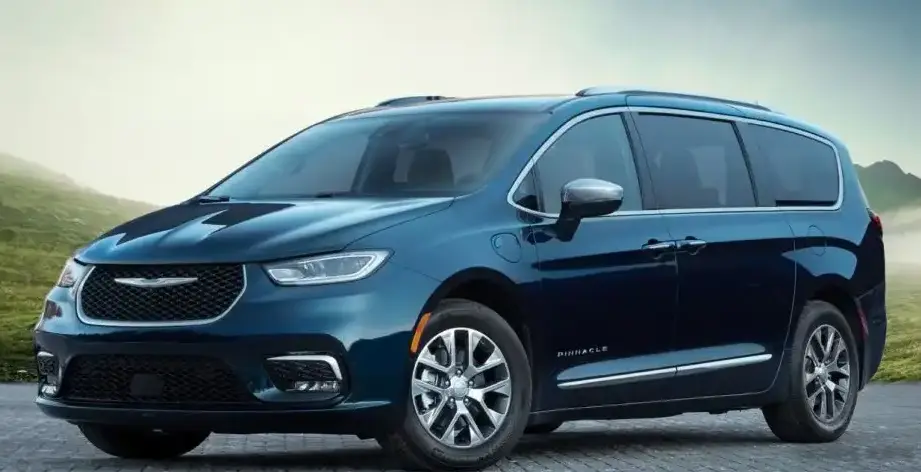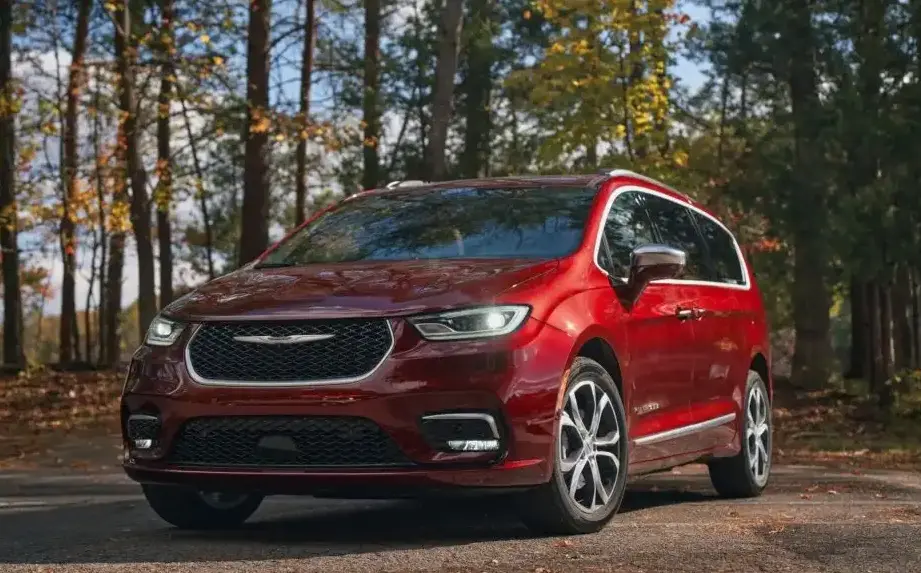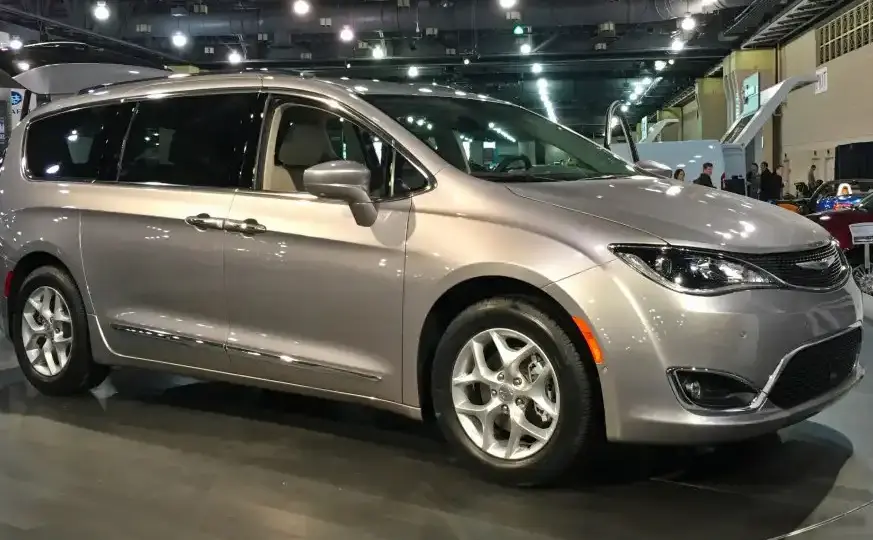
The Chrysler Pacifica 3.6 V6 Automatic, produced from 2016 to 2021, represents a significant entry in the modern minivan segment for the Chrysler brand. This iteration of the Pacifica, replacing the Town & Country, aimed to blend practicality with a more upscale driving experience. Positioned as a mainstream offering within the Pacifica lineup, the 3.6L V6 Automatic served as the standard powertrain for many model years, offering a balance between performance and fuel efficiency for families. It was a key component of Chrysler’s attempt to regain market share in a segment dominated by Honda and Toyota.
Technical Specifications
| Brand | Chrysler |
| Model | Pacifica (minivan) |
| Generation | Pacifica |
| Type (Engine) | 3.6 V6 (291 Hp) Automatic |
| Start of production | 2016 year |
| End of production | 2021 year |
| Powertrain Architecture | Internal Combustion engine |
| Body type | Minivan |
| Seats | 7-8 |
| Doors | 5 |
| Fuel consumption (economy) – urban | 12.3 l/100 km (19.1 US mpg, 23 UK mpg, 8.1 km/l) |
| Fuel consumption (economy) – extra urban | 8.4 l/100 km (28 US mpg, 33.6 UK mpg, 11.9 km/l) |
| Fuel consumption (economy) – combined | 10.7 l/100 km (22 US mpg, 26.4 UK mpg, 9.3 km/l) |
| Fuel Type | Petrol (Gasoline) |
| Weight-to-power ratio | 6.7 kg/Hp, 148.2 Hp/tonne |
| Weight-to-torque ratio | 5.5 kg/Nm, 180.8 Nm/tonne |
| Power | 291 Hp @ 6400 rpm |
| Power per litre | 80.7 Hp/l |
| Torque | 355 Nm @ 4000 rpm (261.83 lb.-ft. @ 4000 rpm) |
| Maximum engine speed | 6400 rpm |
| Engine layout | Front, Transverse |
| Engine Model/Code | Pentastar |
| Engine displacement | 3605 cm3 (219.99 cu. in.) |
| Number of cylinders | 6 |
| Engine configuration | V-engine |
| Cylinder Bore | 96 mm (3.78 in.) |
| Piston Stroke | 83 mm (3.27 in.) |
| Compression ratio | 11.3:1 |
| Number of valves per cylinder | 4 |
| Fuel injection system | Multi-port manifold injection |
| Engine aspiration | Naturally aspirated engine |
| Valvetrain | DOHC |
| Engine oil capacity | 4.7 l (4.97 US qt | 4.14 UK qt) |
| Coolant | 12.4 l (13.1 US qt | 10.91 UK qt) |
| Kerb Weight | 1964 kg (4329.88 lbs.) |
| Max. weight | 2724 kg (6005.39 lbs.) |
| Max load | 760 kg (1675.51 lbs.) |
| Trunk (boot) space – minimum | 915 l (32.31 cu. ft.) |
| Trunk (boot) space – maximum | 3979 l (140.52 cu. ft.) |
| Fuel tank capacity | 71.9 l (18.99 US gal | 15.82 UK gal) |
| Permitted trailer load with brakes (12%) | 1633 kg (3600.15 lbs.) |
| Length | 5176 mm (203.78 in.) |
| Width | 2022 mm (79.61 in.) |
| Width including mirrors | 2297 mm (90.43 in.) |
| Height | 1777 mm (69.96 in.) |
| Wheelbase | 3089 mm (121.61 in.) |
| Front track | 1735 mm (68.31 in.) |
| Rear (Back) track | 1736 mm (68.35 in.) |
| Front overhang | 960 mm (37.8 in.) |
| Rear overhang | 1127 mm (44.37 in.) |
| Ride height (ground clearance) | 131 mm (5.16 in.) |
| Drag coefficient (Cd) | 0.30 |
| Minimum turning circle (turning diameter) | 12.1 m (39.7 ft.) |
| Approach angle | 14.0° |
| Departure angle | 18.7° |
| Ramp-over (brakeover) angle | 12.5° |
| Drivetrain Architecture | The Internal combustion engine (ICE) drives the front wheels of the vehicle. |
| Drive wheel | Front wheel drive |
| Number of gears and type of gearbox | 9 gears, automatic transmission |
| Front suspension | Independent, type McPherson with coil spring and anti-roll bar |
| Rear suspension | Independent coil spring |
| Front brakes | Ventilated discs |
| Rear brakes | Disc |
| Assisting systems | ABS (Anti-lock braking system) |
| Steering type | Steering rack and pinion |
| Power steering | Electric Steering |
| Tires size | 235/65 R17; 235/60 R18; 245/50 R20 |
| Wheel rims size | 7J x 17; 7.5J x 18; 7.5J x 20 |
Powertrain & Engine Architecture
The heart of the Pacifica 3.6 V6 Automatic is Chrysler’s Pentastar 3.6-liter V6 engine. This engine, designated as the engine code, is a 60-degree V-engine featuring a dual overhead camshaft (DOHC) valvetrain with four valves per cylinder. It utilizes a multi-port fuel injection system, delivering fuel directly into the intake ports. The engine’s design prioritizes a balance of power and efficiency, employing variable valve timing (VVT) to optimize performance across the rev range. Paired with this engine is a ZF-sourced 9-speed automatic transmission. This transmission was chosen for its wide gear ratio spread, contributing to both improved fuel economy and responsive acceleration. The 9-speed’s programming is tuned for smooth shifts and optimized for the minivan’s weight and intended use.
Driving Characteristics
The 291 horsepower and 261 lb-ft of torque provided by the 3.6L V6 and 9-speed automatic combination deliver adequate performance for a minivan. Acceleration is brisk enough for everyday driving and highway merging, though it doesn’t offer the same level of urgency as some of the higher-output trims. The 9-speed transmission helps keep the engine in its optimal power band, but some drivers have noted occasional hunting for the right gear, particularly at lower speeds. Compared to the optional plug-in hybrid version, the 3.6L V6 offers a more traditional driving experience without the complexities of an electric powertrain. Against higher-trim Pacificas, the 3.6L automatic provides a more economical option, sacrificing some performance for improved fuel efficiency.
Equipment & Trim Levels
The 3.6L V6 Automatic powertrain was available across several Pacifica trim levels, including the LX, EX, and Touring. Standard features typically included air conditioning, a touchscreen infotainment system, and a rearview camera. Higher trims added features like leather upholstery, heated seats, a power liftgate, and advanced safety technologies. Optional extras included a rear-seat entertainment system, navigation, and premium audio systems. The interior generally featured durable materials and a focus on family-friendly functionality. The base LX trim was more spartan, while the Touring trim offered a more comprehensive set of features.
Chassis & Braking
The Pacifica utilizes an independent suspension system at all four wheels, with a McPherson strut setup in the front and a multi-link setup in the rear. This configuration provides a comfortable ride quality, absorbing bumps and irregularities in the road effectively. The braking system consists of ventilated discs at the front and solid discs at the rear, providing adequate stopping power for the vehicle’s weight. Anti-lock brakes (ABS) are standard, enhancing safety and control during emergency braking situations. The steering is electrically assisted, offering a light and responsive feel.
Market Reception & Comparison
The Chrysler Pacifica 3.6 V6 Automatic was generally well-received by critics, praised for its comfortable ride, spacious interior, and user-friendly features. Fuel economy was considered competitive for its class, averaging around 22 mpg combined. However, some reviewers noted the 9-speed transmission could be occasionally hesitant. Compared to the Honda Odyssey and Toyota Sienna, the Pacifica offered a more stylish design and a more refined interior, but some competitors were perceived as having slightly better reliability. The 3.6L V6 offered a more affordable entry point into the Pacifica lineup compared to the plug-in hybrid version, making it a popular choice for budget-conscious families.
Legacy
The Chrysler Pacifica 3.6 V6 Automatic has proven to be a relatively reliable powertrain, with few widespread mechanical issues reported. The Pentastar V6 engine has a long history of use in Chrysler vehicles and is generally considered durable. The 9-speed automatic transmission has received some criticism for early software glitches, but these were largely addressed through software updates. On the used car market, these Pacificas represent a good value for families seeking a spacious and comfortable minivan. Maintenance costs are generally reasonable, and parts availability is good. The Pacifica 3.6L V6 Automatic remains a viable option for those seeking a practical and affordable minivan.