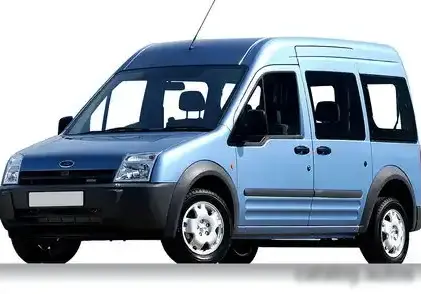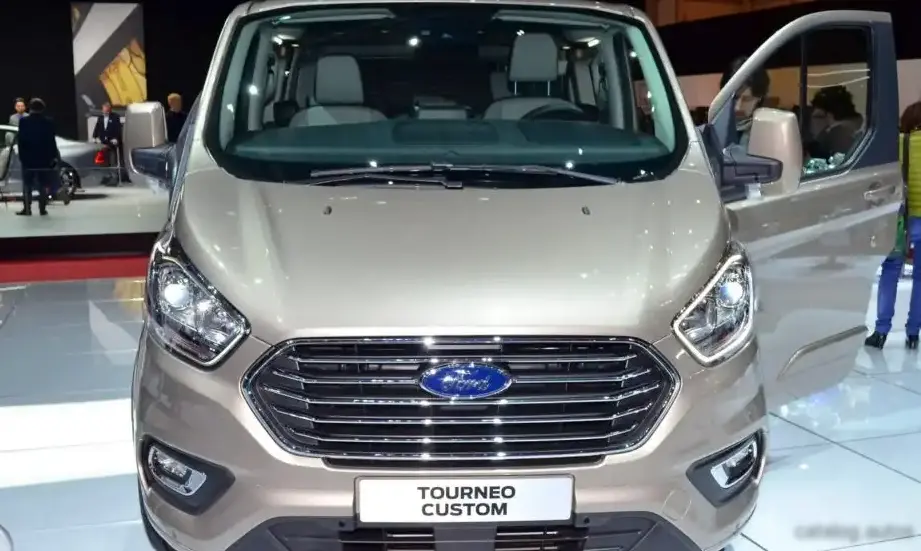
The Ford Tourneo Custom, specifically the first generation facelift model produced from 2018-2023, represents Ford’s entry into the European and increasingly global market for versatile passenger vans. The L1 variant, denoting the short wheelbase configuration, offered a balance between maneuverability and interior space. The 2.0 EcoBlue 185 horsepower Mild Hybrid engine, introduced in 2020, was positioned as a mid-range offering, bridging the gap between more economical base engines and higher-performance options. This configuration aimed to provide a compelling blend of fuel efficiency, adequate power for a fully loaded vehicle, and the benefits of mild hybridization technology. The Tourneo Custom competed directly with vehicles like the Volkswagen Multivan, Mercedes-Benz Vito, and Citroën SpaceTourer, appealing to families, shuttle services, and businesses requiring flexible transportation solutions.
Technical Specifications
| Brand | Ford |
| Model | Tourneo Custom |
| Generation | Tourneo Custom I (facelift 2018) L1 |
| Type (Engine) | 2.0 EcoBlue (185 Hp) Mild Hybrid |
| Start of production | 2020 |
| End of production | 2023 |
| Powertrain Architecture | MHEV (Mild Hybrid Electric Vehicle) |
| Body type | Van |
| Seats | 8-9 |
| Doors | 5 |
| Combined fuel consumption (WLTP) | 7.6 l/100 km (30.9 US mpg, 37.2 UK mpg, 13.2 km/l) |
| CO2 emissions (WLTP) | 198 g/km |
| Fuel Type | Diesel |
| Emission standard | Euro 6.2 |
| Weight-to-power ratio | 13.1 kg/Hp, 76.4 Hp/tonne |
| Weight-to-torque ratio | 5.8 kg/Nm, 171.4 Nm/tonne |
| Power | 185 Hp |
| Power per litre | 92.7 Hp/l |
| Torque | 415 Nm (306.09 lb.-ft.) |
| Engine layout | Front, Transverse |
| Engine Model/Code | BCFC |
| Engine displacement | 1995 cm3 (121.74 cu. in.) |
| Number of cylinders | 4 |
| Engine configuration | Inline |
| Number of valves per cylinder | 4 |
| Fuel injection system | Diesel Commonrail |
| Engine aspiration | Turbocharger, Intercooler |
| Engine oil capacity | 9.8 l (10.36 US qt, 8.62 UK qt) |
| Coolant | 11.2 l (11.83 US qt, 9.85 UK qt) |
| Kerb Weight | 2421 kg (5337.39 lbs.) |
| Max. weight | 3190 kg (7032.75 lbs.) |
| Max load | 769 kg (1695.35 lbs.) |
| Trunk (boot) space – minimum | 1200 l (42.38 cu. ft.) |
| Fuel tank capacity | 70 l (18.49 US gal, 15.4 UK gal) |
| AdBlue tank | 21 l (5.55 US gal, 4.62 UK gal) |
| Max. roof load | 150 kg (330.69 lbs.) |
| Permitted trailer load with brakes (12%) | 2100 kg (4629.71 lbs.) |
| Permitted trailer load without brakes | 750 kg (1653.47 lbs.) |
| Length | 4973 mm (195.79 in.) |
| Width | 1986 mm (78.19 in.) |
| Width with mirrors folded | 2032 mm (80 in.) |
| Width including mirrors | 2272 mm (89.45 in.) |
| Height | 1959-2039 mm (77.13 – 80.28 in.) |
| Wheelbase | 2933 mm (115.47 in.) |
| Front track | 1732-1752 mm (68.19 – 68.98 in.) |
| Rear (Back) track | 1735-1762 mm (68.31 – 69.37 in.) |
| Minimum turning circle | 11.6 m (38.06 ft.) |
| Drive wheel | Front wheel drive |
| Number of gears | 6 |
| Gearbox type | Manual transmission |
| Front brakes | Ventilated discs |
| Rear brakes | Ventilated discs |
| Tires size | 215/65 R16 |
| Wheel rims size | 6.5J x 16 |
INTRODUCTION
The Ford Tourneo Custom L1 2.0 EcoBlue 185 hp Mild Hybrid, launched in 2020, represents a significant update to Ford’s popular passenger van. Built on the 1HX0 platform, the facelifted Tourneo Custom brought revised styling, enhanced technology, and a new range of Euro 6.2 compliant engines. The 2.0 EcoBlue engine, part of Ford’s diesel engine family, was offered with a mild hybrid system to improve fuel economy and reduce emissions. This particular variant was aimed at buyers needing a versatile vehicle capable of carrying passengers or cargo, with a focus on practicality and running costs. It sat in the middle of the Tourneo Custom range, offering more power and refinement than the base engine options, but remaining more affordable than the higher-output versions.
Powertrain & Engine Architecture
The heart of this Tourneo Custom is the 2.0-liter EcoBlue BCFC diesel engine. This engine utilizes a common-rail direct fuel injection system, delivering fuel at extremely high pressure for optimized combustion. A turbocharger with an intercooler further enhances performance by forcing more air into the cylinders. The engine features four valves per cylinder, contributing to improved breathing and efficiency. The mild hybrid system consists of a 48-volt starter-generator, integrated with the engine. This system recovers energy during deceleration, storing it in a small battery. This stored energy can then be used to provide a power boost during acceleration, reducing the load on the engine and improving fuel economy. The 6-speed manual transmission was standard, chosen for its balance of efficiency and driver control. The engine’s architecture is designed for durability and reduced friction, contributing to its longevity and fuel efficiency.
Driving Characteristics
The 185 hp EcoBlue engine, paired with the 6-speed manual transmission, provides adequate performance for the Tourneo Custom L1. While not a sports van, it offers sufficient power for highway cruising and overtaking, even when fully loaded. The mild hybrid system provides a noticeable, though subtle, boost during acceleration, improving responsiveness. The gear ratios are well-chosen for everyday driving, with a focus on maximizing fuel efficiency. Compared to the lower-powered 130 hp version, the 185 hp model feels significantly more relaxed, particularly on inclines or when carrying a full passenger load. However, it doesn’t offer the same level of outright performance as the higher-output 170 hp or 185 hp automatic variants. The manual transmission allows for greater driver control, but requires more driver involvement than the automatic options.
Equipment & Trim Levels
The Tourneo Custom L1 2.0 EcoBlue 185 hp Mild Hybrid typically came equipped with a respectable level of standard features. These included air conditioning, power windows, central locking, and a basic audio system with Bluetooth connectivity. Higher trim levels, such as Titanium, added features like alloy wheels, a touchscreen infotainment system with navigation, parking sensors, and cruise control. Interior upholstery was typically cloth, with options for leather upgrades. Optional extras included a panoramic sunroof, rear parking camera, and various driver-assistance systems. The van’s modular seating arrangement allowed for flexible configuration, accommodating up to nine passengers depending on the chosen layout.
Chassis & Braking
The Tourneo Custom L1 utilizes a front-wheel-drive chassis with independent suspension at the front and a semi-independent twist beam suspension at the rear. This setup provides a comfortable ride quality, even on uneven surfaces. The front brakes are ventilated discs, providing ample stopping power. The rear brakes are also ventilated discs, a feature often reserved for higher trim levels or heavier-duty applications. Anti-lock Braking System (ABS) is standard, enhancing safety during emergency braking. Stabilizer bars are fitted to both the front and rear axles, reducing body roll during cornering. The steering is power-assisted, providing light and precise control.
Market Reception & Comparison
The Ford Tourneo Custom 2.0 EcoBlue 185 hp Mild Hybrid was generally well-received by critics. It was praised for its practicality, comfortable ride, and improved fuel efficiency thanks to the mild hybrid system. Compared to the lower-powered diesel variants, the 185 hp model offered a noticeable improvement in performance, making it a more appealing option for those frequently carrying passengers or cargo. Fuel economy figures of around 30.9 US mpg (WLTP) were competitive within its segment. Reliability reports suggest that the EcoBlue engine is generally robust, although the mild hybrid system can potentially add complexity and require specialized maintenance. Compared to rivals like the Volkswagen Multivan, the Tourneo Custom often offered a more affordable price point.
Legacy
The Ford Tourneo Custom 2.0 EcoBlue 185 hp Mild Hybrid has established itself as a reliable and versatile passenger van in the used car market. The EcoBlue engine, while not without its complexities, has proven to be relatively durable when properly maintained. The mild hybrid system, while not a revolutionary technology, contributes to improved fuel economy and reduced emissions. As a used vehicle, this variant offers a compelling value proposition, providing a spacious and practical transportation solution at a reasonable price. Its continued popularity in the used market is a testament to its overall quality and practicality.