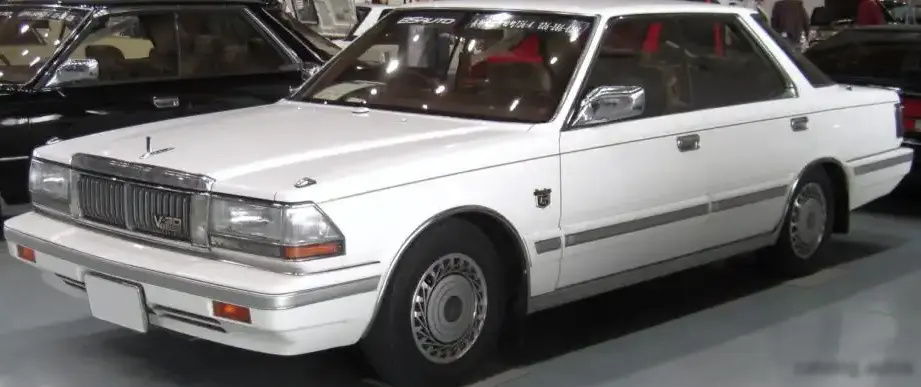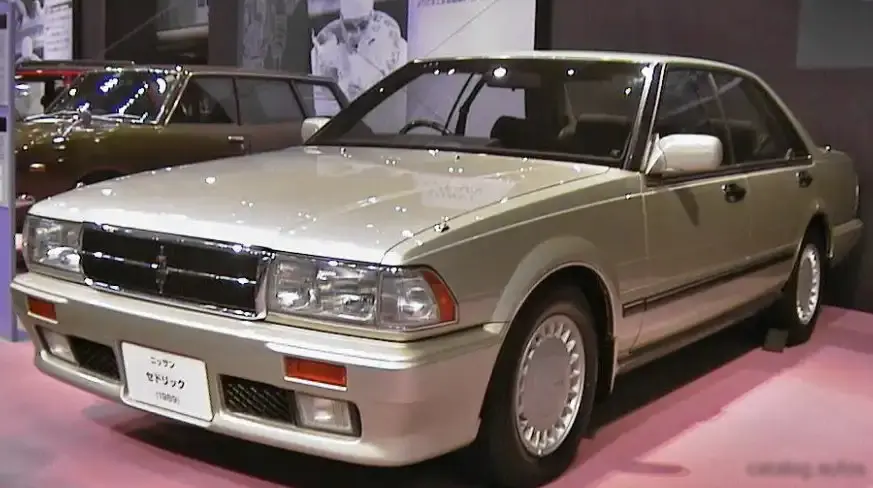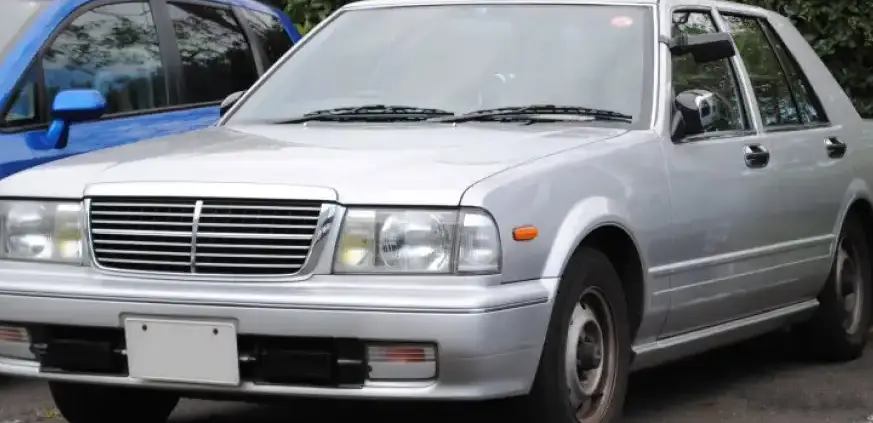
The Nissan Cedric Y31, specifically the 2.8d variant with an automatic transmission produced between 1999 and 2002, represents a later iteration of the long-running Cedric lineage. This facelifted Y31 model, introduced in 1991 and continuing through the early 2000s, primarily served the Japanese domestic market (JDM) as a comfortable and spacious full-size sedan. Positioned as a more economical alternative to the gasoline-powered versions, the 2.8d offered a balance of practicality and fuel efficiency, appealing to buyers prioritizing comfort and lower running costs over outright performance. It sat as a mid-range offering within the Y31 lineup, below the more powerful 3.0-liter gasoline engines but above the base 2.0-liter models.
Technical Specifications
| Brand | Nissan |
| Model | Cedric |
| Generation | Cedric (Y31, facelift 1991) |
| Type (Engine) | 2.8d (100 Hp) Automatic |
| Start of production | 1999 year |
| End of production | 2002 year |
| Powertrain Architecture | Internal Combustion engine |
| Body type | Sedan |
| Seats | 5 |
| Doors | 4 |
| Fuel consumption (urban) | 9.8-12.9 l/100 km (24 – 18.2 US mpg, 28.8 – 21.9 UK mpg, 10.2 – 7.8 km/l) |
| Fuel consumption (extra urban) | 7.2-9.5 l/100 km (32.7 – 24.8 US mpg, 39.2 – 29.7 UK mpg, 13.9 – 10.5 km/l) |
| Fuel consumption (combined) | 9.5 l/100 km (24.8 US mpg, 29.7 UK mpg, 10.5 km/l) |
| Fuel Type | Diesel |
| Acceleration 0 – 100 km/h | 16.8 sec |
| Acceleration 0 – 62 mph | 16.8 sec |
| Acceleration 0 – 60 mph | 16 sec |
| Maximum speed | 163 km/h (101.28 mph) |
| Weight-to-power ratio | 15.1 kg/Hp, 66.2 Hp/tonne |
| Weight-to-torque ratio | 8.5 kg/Nm, 117.9 Nm/tonne |
| Power | 100 Hp @ 4800 rpm |
| Power per litre | 35.4 Hp/l |
| Torque | 178 Nm @ 2400 rpm (131.29 lb.-ft. @ 2400 rpm) |
| Engine layout | Front, Longitudinal |
| Engine displacement | 2825 cm3 (172.39 cu. in.) |
| Number of cylinders | 6 |
| Engine configuration | Inline |
| Cylinder Bore | 85 mm (3.35 in.) |
| Piston Stroke | 83 mm (3.27 in.) |
| Compression ratio | 21.8:1 |
| Number of valves per cylinder | 2 |
| Fuel injection system | Precombustion chamber injection |
| Engine aspiration | Naturally aspirated engine |
| Valvetrain | SOHC |
| Kerb Weight | 1510 kg (3328.98 lbs.) |
| Fuel tank capacity | 72 l (19.02 US gal | 15.84 UK gal) |
| Length | 4690 mm (184.65 in.) |
| Width | 1690 mm (66.54 in.) |
| Height | 1425 mm (56.1 in.) |
| Wheelbase | 2735 mm (107.68 in.) |
| Front track | 1440 mm (56.69 in.) |
| Rear (Back) track | 1450 mm (57.09 in.) |
| Ride height (ground clearance) | 160 mm (6.3 in.) |
| Drag coefficient (Cd) | 0.4 |
| Minimum turning circle (turning diameter) | 11 m (36.09 ft.) |
| Drivetrain Architecture | The Internal combustion engine (ICE) drives the rear wheels of the vehicle. |
| Drive wheel | Rear wheel drive |
| Number of gears and type of gearbox | 4 gears, automatic transmission |
| Front brakes | Ventilated discs |
| Rear brakes | Disc |
| Steering type | Steering rack and pinion |
| Tires size | 195/70 R14 |
| Wheel rims size | 14 |
Powertrain & Engine Architecture
The heart of the Y31 2.8d is the Nissan RD28 diesel engine, a 2.8-liter inline-six cylinder powerplant. This engine utilizes a precombustion chamber injection system, a common design for diesel engines of the era, which improves combustion efficiency and reduces noise. The RD28 is a naturally aspirated engine, meaning it doesn’t employ a turbocharger or supercharger. It produces 100 horsepower at 4800 rpm and 178 Nm (131.29 lb-ft) of torque at 2400 rpm. The engine features a single overhead camshaft (SOHC) valvetrain, operating two valves per cylinder. The automatic transmission paired with this engine is a four-speed unit, designed for smooth and comfortable shifting rather than sporty performance. This transmission was chosen to complement the engine’s torque characteristics and the Cedric’s focus on relaxed cruising.
Driving Characteristics
The 2.8d automatic Cedric delivers a driving experience geared towards comfort and ease of use. Acceleration is deliberately unhurried, taking approximately 16.8 seconds to reach 100 km/h (62 mph). The four-speed automatic transmission is tuned for smooth transitions between gears, prioritizing fuel economy and minimizing harshness. Compared to the gasoline-powered Cedric variants, the 2.8d offers significantly more torque at lower engine speeds, making it well-suited for everyday driving and carrying passengers. However, it lacks the responsiveness and higher top speed of its gasoline counterparts. The gear ratios are optimized for cruising, with a focus on maintaining comfortable engine speeds at highway velocities. The rear-wheel-drive configuration provides a balanced feel, though it doesn’t offer the dynamic handling of more modern vehicles.
Equipment & Trim Levels
The Y31 Cedric 2.8d typically came equipped with a respectable level of standard features for its time. These included power windows, power steering, central locking, and air conditioning. Interior upholstery was generally cloth, with higher trim levels offering optional leather seating. The dashboard layout was functional and straightforward, featuring analog gauges and a simple audio system. Optional extras included an upgraded sound system, power-adjustable seats, and a sunroof. The overall interior ambiance was one of understated elegance and practicality, reflecting the Cedric’s positioning as a comfortable family sedan.
Chassis & Braking
The Y31 Cedric utilizes a traditional body-on-frame construction, providing a robust and durable chassis. The suspension system consists of independent front suspension with MacPherson struts and a solid rear axle with leaf springs. This setup prioritizes ride comfort over sporty handling. Braking duties are handled by ventilated discs on the front wheels and solid discs on the rear. The braking system is adequate for the vehicle’s weight and performance, but it lacks the advanced features found in more modern braking systems. Stabilizer bars were fitted to both the front and rear axles to reduce body roll during cornering.
Market Reception & Comparison
The Nissan Cedric 2.8d was generally well-received in the Japanese market as a practical and economical alternative to the gasoline-powered models. Critics praised its comfortable ride, spacious interior, and relatively low fuel consumption. However, its lack of performance was often noted. Compared to the 3.0-liter gasoline variants, the 2.8d offered significantly lower running costs but sacrificed acceleration and overall driving excitement. Against other diesel-powered sedans of the era, the Cedric 2.8d offered a compelling combination of comfort, space, and reliability.
Legacy
The Nissan Cedric Y31 2.8d, while not a performance icon, has proven to be a durable and reliable vehicle. The RD28 diesel engine is known for its longevity, and many examples are still on the road today. In the used car market, these Cedrics are appreciated for their classic styling, comfortable ride, and relatively simple mechanicals. Maintenance is generally straightforward, although sourcing parts can become increasingly challenging as the vehicle ages. The Y31 Cedric 2.8d represents a significant chapter in Nissan’s history, embodying the company’s commitment to building comfortable, reliable, and practical vehicles for the Japanese market.