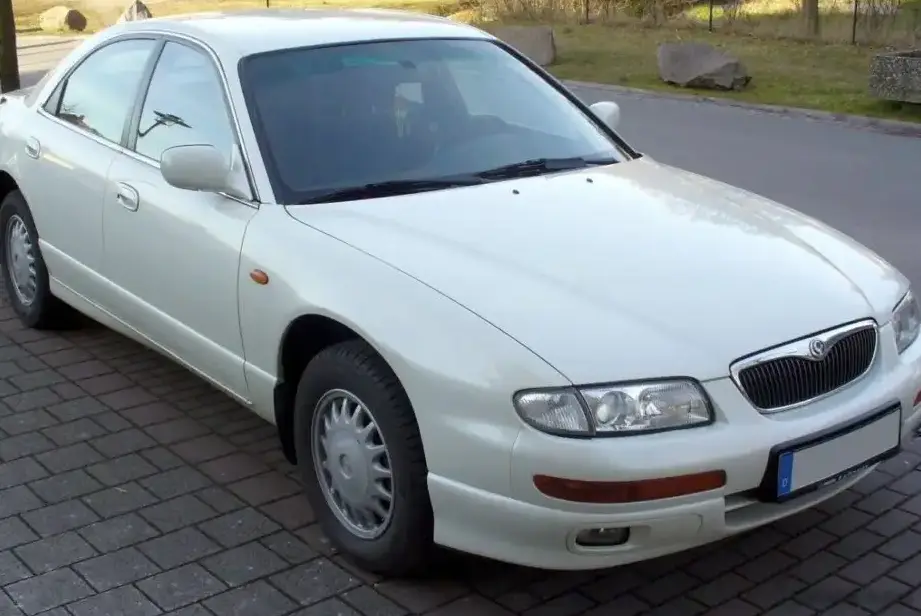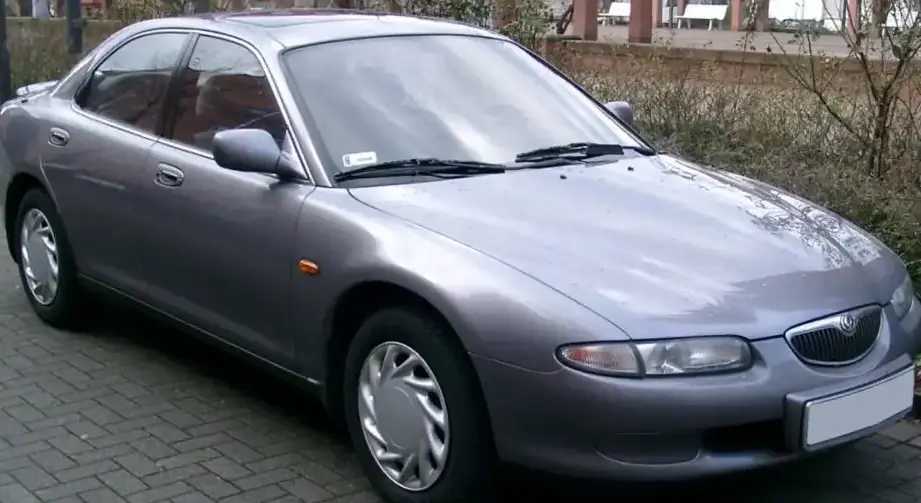
The Mazda Xedos 6, produced between 1994 and 2000, represented Mazda’s ambitious attempt to penetrate the European mid-size executive car segment. The “CA” designation refers to the initial generation of the Xedos 6. Within this generation, the 1.6 16V (107 hp) Automatic variant occupied the entry-level position in the lineup, offering a more affordable and fuel-efficient option compared to the higher-specification 2.0L and V6 models. It was primarily marketed in Europe and Japan, where Mazda sought to establish a reputation for sophisticated design and build quality, aiming to compete with established players like the Ford Mondeo, Opel Vectra, and Honda Accord.
Technical Specifications
| Brand | Mazda |
| Model | Xedos 6 |
| Generation | Xedos 6 (CA) |
| Type (Engine) | 1.6 16V (107 Hp) Automatic |
| Start of production | 1994 |
| End of production | 2000 |
| Powertrain Architecture | Internal Combustion engine |
| Body type | Sedan |
| Seats | 5 |
| Doors | 4 |
| Fuel consumption (urban) | 10.3 l/100 km (22.8 US mpg) |
| Fuel consumption (extra urban) | 5.7 l/100 km (41.3 US mpg) |
| Fuel Type | Petrol (Gasoline) |
| Acceleration 0 – 100 km/h | 13.2 sec |
| Acceleration 0 – 62 mph | 13.2 sec |
| Acceleration 0 – 60 mph | 12.5 sec |
| Maximum speed | 175 km/h (108.74 mph) |
| Weight-to-power ratio | 10.7 kg/Hp |
| Weight-to-torque ratio | 8.3 kg/Nm |
| Power | 107 Hp @ 6200 rpm |
| Power per litre | 67 Hp/l |
| Torque | 138 Nm @ 3600 rpm (101.78 lb.-ft. @ 3600 rpm) |
| Engine layout | Front, Transverse |
| Engine displacement | 1598 cm3 (97.52 cu. in.) |
| Number of cylinders | 4 |
| Engine configuration | Inline |
| Cylinder Bore | 78 mm (3.07 in.) |
| Piston Stroke | 83.6 mm (3.29 in.) |
| Compression ratio | 9:1 |
| Number of valves per cylinder | 4 |
| Fuel injection system | Multi-port manifold injection |
| Engine aspiration | Naturally aspirated engine |
| Valvetrain | OHC |
| Kerb Weight | 1140 kg (2513.27 lbs.) |
| Max. weight | 1645 kg (3626.6 lbs.) |
| Max load | 505 kg (1113.33 lbs.) |
| Trunk (boot) space – minimum | 390 l (13.77 cu. ft.) |
| Fuel tank capacity | 55 l (14.53 US gal | 12.1 UK gal) |
| Length | 4560 mm (179.53 in.) |
| Width | 1700 mm (66.93 in.) |
| Height | 1355 mm (53.35 in.) |
| Wheelbase | 2610 mm (102.76 in.) |
| Front track | 1480 mm (58.27 in.) |
| Rear (Back) track | 1490 mm (58.66 in.) |
| Drivetrain Architecture | The Internal combustion engine (ICE) drives the front wheels of the vehicle. |
| Drive wheel | Front wheel drive |
| Number of gears and type of gearbox | 4 gears, automatic transmission |
| Front suspension | Wishbone |
| Rear suspension | Trailing arm |
| Front brakes | Ventilated discs |
| Rear brakes | Disc |
| Assisting systems | ABS (Anti-lock braking system) |
| Steering type | Steering rack and pinion |
| Power steering | Hydraulic Steering |
| Tires size | 185/65 R14 |
| Wheel rims size | 14 |
Powertrain & Engine Architecture
The Xedos 6 1.6 Automatic was powered by Mazda’s F6 engine, specifically the B6 variant. This 1.6-liter inline-four cylinder engine featured a single overhead camshaft (SOHC) valvetrain with four valves per cylinder. The engine utilized multi-port fuel injection, a common setup for the time, to deliver fuel directly into the intake ports. The 16-valve configuration, combined with a compression ratio of 9:1, helped to produce a respectable 107 horsepower at 6200 rpm and 138 Nm (101.78 lb-ft) of torque at 3600 rpm. The engine’s design prioritized smooth operation and fuel efficiency over outright performance. The automatic transmission was a conventional four-speed unit, chosen to provide ease of use and comfort for the target demographic. It wasn’t known for particularly quick shifts, but it was generally considered reliable for its time.
Driving Characteristics
The 1.6L Automatic Xedos 6 offered a comfortable, but not particularly sporty, driving experience. Acceleration was adequate for everyday driving, with a 0-60 mph time of around 12.5 seconds. The automatic transmission, while smooth, did detract from the engine’s available power, resulting in a noticeable difference in performance compared to the five-speed manual version. Gear ratios were tuned for fuel economy and relaxed cruising, rather than aggressive acceleration. The engine felt somewhat strained when pushed hard, and overtaking maneuvers required careful planning. Compared to the 2.0L and V6 models, the 1.6 Automatic lacked the punch and responsiveness that more enthusiastic drivers would appreciate. However, it provided a more refined and less demanding driving experience for those prioritizing comfort and ease of use. The steering was light and precise, making it easy to maneuver in urban environments.
Equipment & Trim Levels
The 1.6 16V Automatic trim typically included features such as power steering, central locking, electric front windows, and an AM/FM radio. Air conditioning was often an optional extra, and its presence significantly increased the vehicle’s price. Interior upholstery was typically cloth, with a relatively simple dashboard layout. Higher trim levels, available with the larger engines, offered features like leather upholstery, a sunroof, and upgraded audio systems. The 1.6 Automatic was positioned as the entry point to the Xedos 6 range, so it generally lacked the more luxurious appointments found in the higher-spec models. Safety features were relatively basic for the time, including ABS brakes as standard equipment, but airbags were not always standard depending on the market.
Chassis & Braking
The Xedos 6 featured a front-wheel-drive layout with independent wishbone suspension at the front and a trailing arm suspension at the rear. This suspension setup provided a comfortable ride, absorbing bumps and imperfections in the road surface effectively. The front brakes were ventilated discs, offering good stopping power, while the rear brakes were solid discs. The ABS system helped to maintain steering control during emergency braking situations. The car’s weight of around 1140 kg (2513 lbs) was relatively light for its class, contributing to its decent handling characteristics. Stabilizer bars were fitted to both the front and rear axles to reduce body roll during cornering, although the effect was more pronounced in the higher-powered models.
Market Reception & Comparison
The Xedos 6 1.6 Automatic received mixed reviews from automotive critics. While praised for its comfortable ride, refined interior, and attractive styling, it was often criticized for its lack of performance and somewhat uninspiring driving dynamics. Fuel economy was considered reasonable for its class, but not exceptional. Compared to the 2.0L and V6 models, the 1.6 Automatic offered a more affordable entry point into the Xedos 6 range, but at the expense of performance and refinement. The 1.9 TDI diesel version, available in some markets, offered superior fuel economy and torque, but lacked the smoothness of the petrol engine. Reliability was generally good, although some owners reported issues with the automatic transmission over the long term, particularly with fluid changes and maintenance.
Legacy
The Mazda Xedos 6, while not a massive sales success, represented an important step for Mazda in terms of design and build quality. The 1.6 16V Automatic powertrain, while not particularly powerful, proved to be relatively reliable. Today, well-maintained examples are becoming increasingly sought after by classic car enthusiasts, particularly those looking for a stylish and comfortable cruiser. The automatic transmission, while not known for its sportiness, has proven durable for many owners when properly maintained. Parts availability can be a challenge, but the engine itself is generally considered to be robust and relatively easy to maintain. The Xedos 6 remains a stylish and comfortable cruiser, offering a unique alternative to more mainstream mid-size sedans of the 1990s, and a testament to Mazda’s design ambitions of the era.