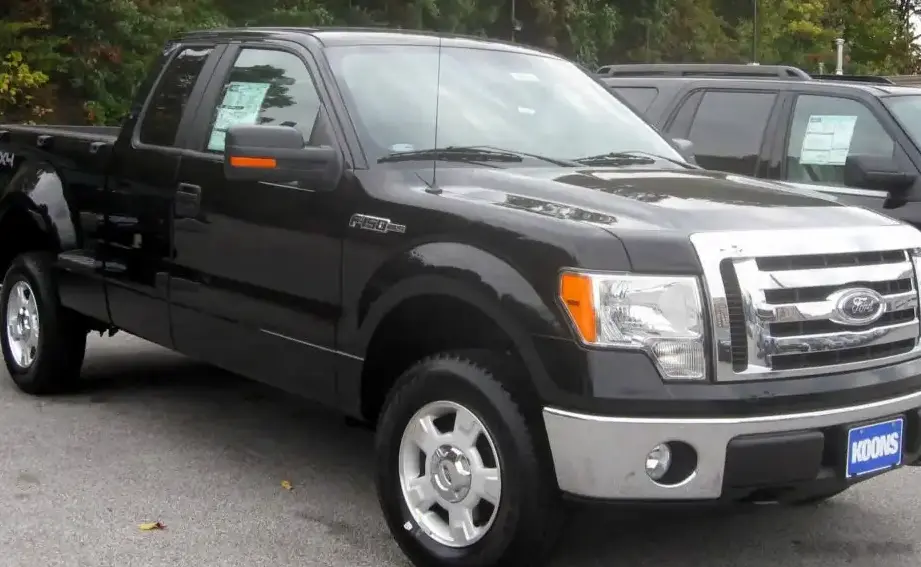
The Ford F-150 XII SuperCab, produced from 2011 to 2014, represented a significant evolution in the long-running F-Series lineage. This generation, internally designated as the F-150 XII, brought enhanced capability, refinement, and a new focus on fuel efficiency – particularly with the introduction of the EcoBoost engine family. The 3.5L V6 EcoBoost variant, producing 365 horsepower and paired with a six-speed automatic transmission, occupied a key position in the lineup, offering a compelling blend of power, towing capacity, and relative economy for the full-size pickup truck segment. It aimed to bridge the gap between the base V6 and the more powerful V8 options, appealing to buyers who needed substantial capability without the fuel consumption penalty of the larger engines.
Technical Specifications
| Brand | Ford |
| Model | F-Series F-150 |
| Generation | F-Series F-150 XII SuperCab |
| Type (Engine) | 3.5 V6 EcoBoost (365 Hp) Automatic |
| Start of production | 2011 |
| End of production | 2014 |
| Powertrain Architecture | Internal Combustion engine |
| Body type | Pick-up |
| Seats | 5-6 |
| Doors | 2 |
| Fuel consumption (urban) | 14.7 l/100 km (16 US mpg, 19.2 UK mpg, 6.8 km/l) |
| Fuel consumption (extra urban) | 10.7 l/100 km (22 US mpg, 26.4 UK mpg, 9.3 km/l) |
| Fuel consumption (combined) | 13.1 l/100 km (18 US mpg, 21.6 UK mpg, 7.6 km/l) |
| Fuel Type | Petrol (Gasoline) |
| Weight-to-power ratio | 6.7 kg/Hp, 150 Hp/tonne |
| Weight-to-torque ratio | 4.3 kg/Nm, 233.8 Nm/tonne |
| Power | 365 Hp @ 5000 rpm |
| Power per litre | 104.1 Hp/l |
| Torque | 569 Nm @ 2500 rpm (419.67 lb.-ft. @ 2500 rpm) |
| Engine layout | Front, Longitudinal |
| Engine displacement | 3507 cm3 (214.01 cu. in.) |
| Number of cylinders | 6 |
| Engine configuration | V-engine |
| Compression ratio | 10:1 |
| Number of valves per cylinder | 4 |
| Fuel injection system | Direct injection |
| Engine aspiration | Twin-Turbo, Intercooler |
| Valvetrain | DOHC, Ti-VCT |
| Engine oil capacity | 5.7 l (6.02 US qt | 5.02 UK qt) |
| Coolant capacity | 15.6 l (16.48 US qt | 13.73 UK qt) |
| Kerb Weight | 2434-2494 kg (5366.05 – 5498.33 lbs.) |
| Max. weight | 3719 kg (8198.99 lbs.) |
| Max load | 1225-1285 kg (2700.66 – 2832.94 lbs.) |
| Fuel tank capacity | 98 l (25.89 US gal | 21.56 UK gal) |
| Permitted trailer load with brakes (12%) | 5126 kg (11300.9 lbs.) |
| Length | 5890-6360 mm (231.89 – 250.39 in.) |
| Width | 2012 mm (79.21 in.) |
| Width including mirrors | 2464 mm (97.01 in.) |
| Height | 1900-1910 mm (74.8 – 75.2 in.) |
| Wheelbase | 3670-4143 mm (144.49 – 163.11 in.) |
| Front track | 1702 mm (67.01 in.) |
| Rear track | 1702 mm (67.01 in.) |
| Minimum turning circle | 14.3-15.9 m (46.92 – 52.17 ft.) |
| Drivetrain Architecture | Rear wheel drive |
| Number of gears | 6 |
| Gearbox type | Automatic transmission |
| Front suspension | Double wishbone |
| Rear suspension | Leaf spring |
| Front brakes | Ventilated discs, 351×34 mm |
| Rear brakes | Ventilated discs, 348×25 mm |
| Assisting systems | ABS (Anti-lock braking system) |
| Steering type | Steering rack and pinion |
| Power steering | Electric |
| Tires size | 255/70 R17; 265/60 R18; 275/55 R20 |
| Wheel rims size | 7.5J x 17; 7.5j x 18; 8.5J x 20 |
Powertrain & Engine Architecture
The heart of this F-150 variant is the 3.5L EcoBoost V6, Ford’s first foray into direct-injection, twin-turbocharged gasoline engines in a full-size truck. The engine, designated with codes like 3.5L Ti-VCT, utilizes a 60-degree V-angle configuration. Direct injection allows for precise fuel delivery, enhancing both power and efficiency. The twin turbochargers, a key element of the EcoBoost design, provide increased air intake to the engine, boosting horsepower and torque. The valvetrain employs double overhead camshafts (DOHC) with variable valve timing (Ti-VCT) on both intake and exhaust valves, optimizing engine performance across the rev range. The six-speed automatic transmission (6R80E) was specifically calibrated to handle the EcoBoost engine’s substantial torque output. This transmission featured a wide gear ratio spread, designed to balance acceleration, towing capability, and fuel economy.
Driving Characteristics
The 3.5L EcoBoost F-150 SuperCab offered a noticeably different driving experience compared to the traditional V8-powered models. While not possessing the low-end grunt of a larger displacement engine, the EcoBoost delivered strong and consistent acceleration, particularly in the mid-range. The twin turbos provided a relatively flat torque curve, making it well-suited for towing and hauling. The six-speed automatic transmission shifted smoothly and responsively, although some drivers noted a slight delay in downshifts. Compared to the 5.0L V8, the EcoBoost offered comparable power but with improved fuel economy. Against the base 3.7L V6, the EcoBoost provided a significant performance upgrade, making it a more capable all-around truck.
Equipment & Trim Levels
The 3.5L EcoBoost engine was available on several F-150 trim levels, including the XLT, Lariat, and King Ranch. Standard features on the XLT typically included air conditioning, power windows and locks, a basic audio system, and steel wheels. The Lariat trim added features like leather upholstery, heated front seats, a more advanced audio system, and alloy wheels. The King Ranch offered the highest level of luxury, with premium leather, wood trim, and a host of convenience features. Optional extras included a navigation system, a sunroof, and various towing packages. The SuperCab configuration provided additional passenger space compared to the regular cab models, with rear-hinged rear doors for easier access.
Chassis & Braking
The F-150 XII SuperCab utilized a fully boxed frame construction, providing a strong and rigid foundation. The front suspension featured an independent double wishbone design, while the rear suspension employed a traditional leaf spring setup. This combination offered a good balance of ride comfort and load-carrying capacity. Braking duties were handled by ventilated disc brakes on all four wheels, with ABS (Anti-lock Braking System) standard. The rear brakes were slightly smaller in diameter than the front brakes. Steering was rack-and-pinion with electric power assist, providing responsive and precise handling.
Market Reception & Comparison
The introduction of the 3.5L EcoBoost engine was met with generally positive reviews. Critics praised its combination of power, fuel efficiency, and towing capability. The EcoBoost F-150 quickly gained popularity among buyers who wanted a capable truck without the fuel consumption of a traditional V8. Fuel economy figures were notably better than those of the 5.0L V8, making it an attractive option for those who frequently drove long distances or used their trucks for work. Reliability proved to be generally good, although some early models experienced issues with the turbochargers and fuel injectors. Compared to the 3.7L V6, the EcoBoost offered a substantial performance upgrade, while the 5.0L V8 provided slightly more raw power but at the expense of fuel economy.
Legacy
The 3.5L EcoBoost engine proved to be a game-changer for the Ford F-150, paving the way for a wider adoption of turbocharged engines in the full-size truck segment. The engine has undergone several revisions and improvements over the years, and remains a popular choice for F-150 buyers today. On the used car market, the 2011-2014 EcoBoost F-150 SuperCab models are generally well-regarded, offering a good balance of price, performance, and features. Proper maintenance, including regular oil changes and inspections of the turbochargers and fuel system, is crucial for ensuring the long-term reliability of this powertrain. These trucks continue to be a viable option for buyers seeking a capable and relatively efficient full-size pickup.