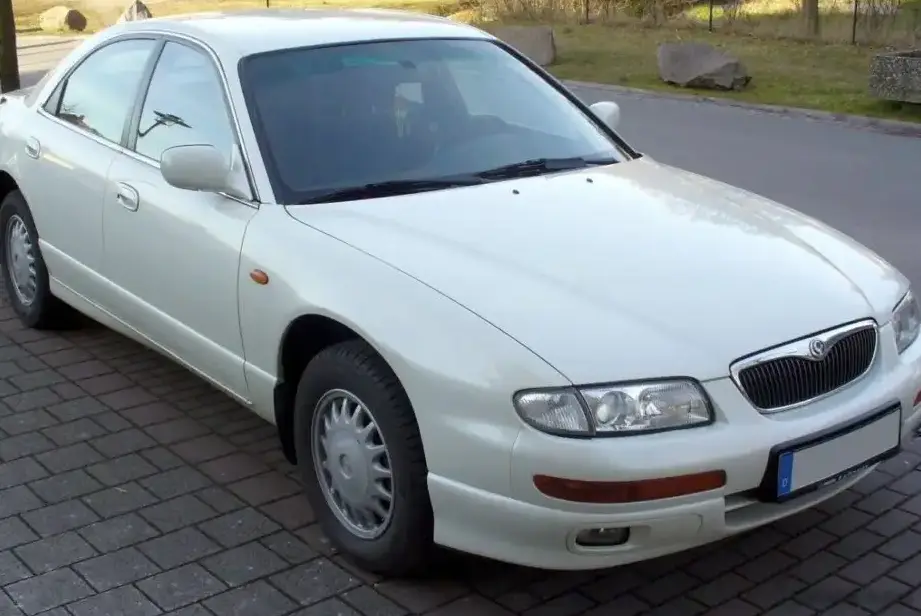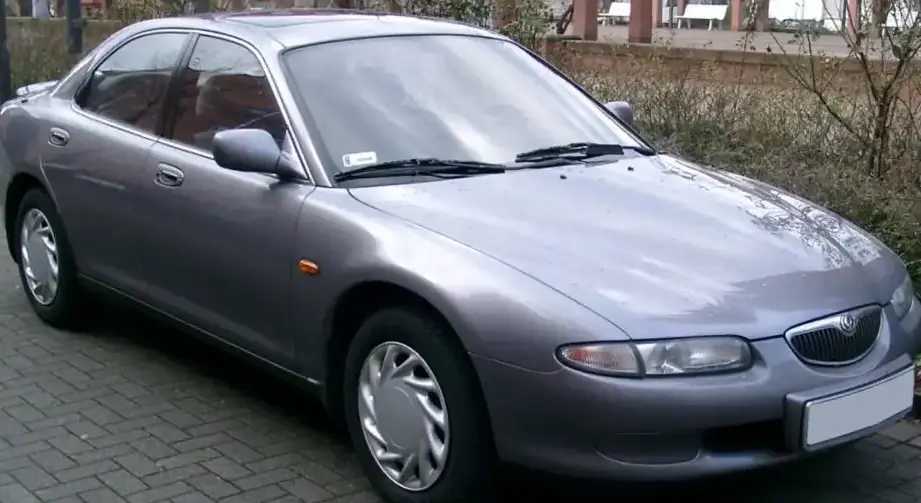
The Mazda Xedos 6, produced between 1995 and 1999, represented Mazda’s attempt to enter the premium, mid-size sedan market, primarily aimed at European consumers. Positioned above the Mazda 626, the Xedos 6 (chassis code CA) offered a more refined driving experience and a higher level of equipment. The 2.0 V6 variant, equipped with a 144 horsepower engine, was a key offering within the Xedos 6 lineup, balancing performance with relative affordability. It served as a step up from the base 1.8L models, offering a more potent engine for those seeking a more engaging drive. This model competed with vehicles like the Honda Accord, Toyota Camry, and Ford Mondeo in the European market.
Technical Specifications
| Brand | Mazda |
| Model | Xedos 6 |
| Generation | Xedos 6 (CA) |
| Type (Engine) | 2.0 V6 (144 Hp) |
| Start of production | 1995 |
| End of production | 1999 |
| Powertrain Architecture | Internal Combustion engine |
| Body type | Sedan |
| Seats | 5 |
| Doors | 4 |
| Fuel consumption (urban) | 12.5 l/100 km (18.8 US mpg) |
| Fuel consumption (extra urban) | 7 l/100 km (33.6 US mpg) |
| Fuel Type | Petrol (Gasoline) |
| Acceleration 0 – 100 km/h | 9.3 sec |
| Acceleration 0 – 62 mph | 9.3 sec |
| Acceleration 0 – 60 mph | 8.8 sec |
| Maximum speed | 214 km/h (132.97 mph) |
| Weight-to-power ratio | 8.3 kg/Hp |
| Weight-to-torque ratio | 7 kg/Nm |
| Power | 144 Hp @ 6000 rpm |
| Power per litre | 72.2 Hp/l |
| Torque | 170 Nm @ 5000 rpm (125.39 lb.-ft. @ 5000 rpm) |
| Engine layout | Front, Transverse |
| Engine displacement | 1995 cm3 (121.74 cu. in.) |
| Number of cylinders | 6 |
| Engine configuration | V-engine |
| Cylinder Bore | 78 mm (3.07 in.) |
| Piston Stroke | 69.6 mm (2.74 in.) |
| Compression ratio | 9.5:1 |
| Number of valves per cylinder | 4 |
| Fuel injection system | Multi-port manifold injection |
| Engine aspiration | Naturally aspirated engine |
| Valvetrain | DOHC |
| Kerb Weight | 1190 kg (2623.5 lbs.) |
| Max. weight | 1710 kg (3769.9 lbs.) |
| Max load | 520 kg (1146.4 lbs.) |
| Trunk (boot) space – minimum | 390 l (13.77 cu. ft.) |
| Fuel tank capacity | 60 l (15.85 US gal | 13.2 UK gal) |
| Length | 4560 mm (179.53 in.) |
| Width | 1700 mm (66.93 in.) |
| Height | 1355 mm (53.35 in.) |
| Wheelbase | 2610 mm (102.76 in.) |
| Front track | 1470 mm (57.87 in.) |
| Rear (Back) track | 1480 mm (58.27 in.) |
| Drivetrain Architecture | The Internal combustion engine (ICE) drives the front wheels of the vehicle. |
| Drive wheel | Front wheel drive |
| Number of gears and type of gearbox | 5 gears, manual transmission |
| Front suspension | Wishbone |
| Rear suspension | Trailing arm |
| Front brakes | Ventilated discs |
| Rear brakes | Disc |
| Assisting systems | ABS (Anti-lock braking system) |
| Steering type | Steering rack and pinion |
| Power steering | Hydraulic Steering |
| Tires size | 195/60 R15 |
Powertrain & Engine Architecture
The heart of the Xedos 6 2.0 V6 is the KF-DE engine, a 1995cc, naturally aspirated V6. This engine utilized a 60-degree V-angle, contributing to a smoother power delivery and reduced vibrations compared to inline-six configurations. It featured multi-port fuel injection and a double overhead camshaft (DOHC) valvetrain, operating with four valves per cylinder. The engine’s 9.5:1 compression ratio was a compromise between performance and the fuel quality available in European markets. The 5-speed manual transmission was the standard offering for this variant, providing a direct connection between the engine and the front wheels. The transmission was chosen for its durability and relatively precise shift feel, although it wasn’t particularly sporty in its gearing.
Driving Characteristics
The 2.0 V6 Xedos 6 offered a noticeable step up in performance compared to the 1.8L models. The 144 horsepower and 170 Nm (125 lb-ft) of torque provided adequate acceleration, with a 0-60 mph time of around 8.8 seconds. While not a sports sedan, the V6 offered a smooth and refined driving experience. The engine delivered its power linearly, making it easy to modulate and providing good mid-range response. The manual transmission allowed for greater driver control, but the gear ratios were somewhat tall, prioritizing fuel economy over outright acceleration. Compared to the later, more powerful V6 variants, this 144 hp version felt less urgent, but it offered a better balance between performance and running costs.
Equipment & Trim Levels
The Xedos 6 2.0 V6 typically came well-equipped, reflecting its positioning as a premium offering. Standard features included power windows, central locking, power steering, and an anti-lock braking system (ABS). The interior featured comfortable cloth seats, although leather upholstery was available as an option. Air conditioning was standard, and higher trim levels could be equipped with features like a sunroof, upgraded audio system, and wood trim accents. The dashboard layout was clean and functional, prioritizing ergonomics and ease of use. The overall interior ambiance aimed for a sophisticated and understated feel.
Chassis & Braking
The Xedos 6 utilized a front-engine, front-wheel-drive layout. The suspension consisted of independent wishbones at the front and a trailing arm setup at the rear. This configuration provided a comfortable ride, absorbing bumps and imperfections in the road effectively. The braking system featured ventilated discs at the front and solid discs at the rear, providing adequate stopping power for the vehicle’s weight and performance. The hydraulic power steering offered a good balance between assistance and feedback, making the car easy to maneuver in both city and highway driving conditions.
Market Reception & Comparison
The Mazda Xedos 6 2.0 V6 was generally well-received by automotive critics. It was praised for its refined driving experience, comfortable interior, and good value for money. However, some critics noted that the styling was somewhat conservative and lacked the visual flair of some of its competitors. Compared to the base 1.8L models, the 2.0 V6 offered a significant improvement in performance, justifying the higher price tag for those seeking a more engaging driving experience. Fuel economy was reasonable for a V6 engine of this era, averaging around 25-30 mpg on the combined cycle. Reliability was generally good, although some owners reported minor issues with the electrical system.
Legacy
The Mazda Xedos 6, while not a massive sales success, established Mazda as a contender in the premium mid-size sedan segment. The 2.0 V6 variant remains a relatively sought-after model among enthusiasts, appreciated for its smooth engine, comfortable ride, and understated elegance. The KF-DE V6 engine proved to be a durable and reliable unit, and well-maintained examples continue to provide years of service. Today, the Xedos 6 2.0 V6 represents a unique and often overlooked alternative to more common European and Japanese sedans of the 1990s, offering a blend of refinement, performance, and value that continues to appeal to discerning drivers.