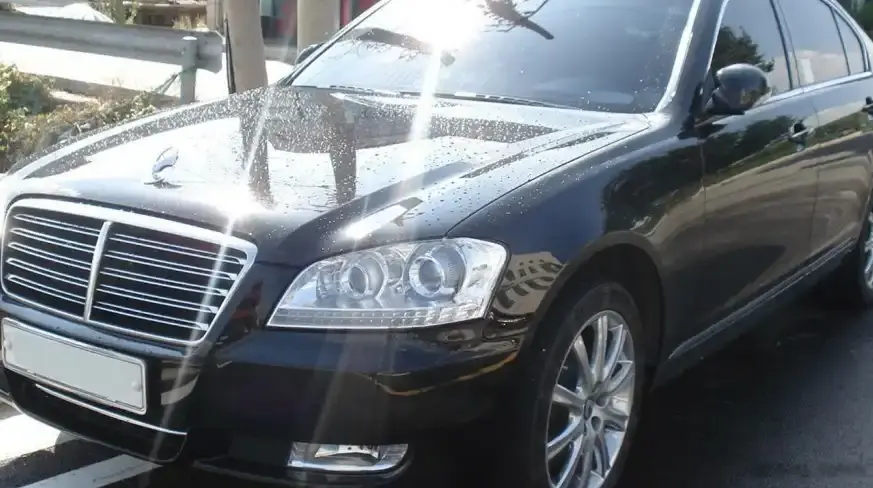
The SsangYong Chairman W (facelift 2011) 2.8, equipped with a 197 horsepower engine and a T-tronic automatic transmission, represents a significant iteration of SsangYong’s flagship luxury sedan. Produced from 2011 to 2017, this variant aimed to provide a blend of performance, comfort, and all-weather capability within the Chairman W range. Positioned as a mid-to-upper trim level, it offered a step up from the base models while remaining more accessible than the fully-optioned, higher-displacement versions. The Chairman W, in general, was SsangYong’s attempt to compete with established luxury brands, offering a spacious and well-equipped vehicle primarily targeted at the Korean domestic market, with limited export sales.
Technical Specifications
| Brand | SsangYong |
| Model | Chairman |
| Generation | Chairman W (facelift 2011) |
| Type (Engine) | 2.8 (197 Hp) 4WD T-tronic |
| Start of production | 2011 |
| End of production | 2017 |
| Powertrain Architecture | Internal Combustion engine |
| Body type | Sedan |
| Seats | 5 |
| Doors | 4 |
| Fuel consumption (urban) | 17 l/100 km (13.8 US mpg, 16.6 UK mpg, 5.9 km/l) |
| Fuel consumption (extra urban) | 9.2 l/100 km (25.6 US mpg, 30.7 UK mpg, 10.9 km/l) |
| Fuel consumption (combined) | 12.1 l/100 km (19.4 US mpg, 23.3 UK mpg, 8.3 km/l) |
| Fuel Type | Petrol (Gasoline) |
| Maximum speed | 195 km/h (121.17 mph) |
| Weight-to-power ratio | 9.9 kg/Hp, 101.1 Hp/tonne |
| Weight-to-torque ratio | 7.4 kg/Nm, 136 Nm/tonne |
| Power | 197 Hp @ 6000 rpm |
| Power per litre | 70.4 Hp/l |
| Torque | 265 Nm @ 4600 rpm (195.45 lb.-ft. @ 4600 rpm) |
| Engine layout | Front, Longitudinal |
| Engine Model/Code | G28D |
| Engine displacement | 2799 cm3 (170.81 cu. in.) |
| Number of cylinders | 6 |
| Engine configuration | Inline |
| Compression ratio | 10:1 |
| Number of valves per cylinder | 4 |
| Fuel injection system | Multi-port manifold injection |
| Engine aspiration | Naturally aspirated engine |
| Valvetrain | DOHC |
| Engine oil capacity | 7 l (7.4 US qt | 6.16 UK qt) |
| Coolant capacity | 11.5 l (12.15 US qt | 10.12 UK qt) |
| Kerb Weight | 1949 kg (4296.81 lbs.) |
| Max. weight | 2490 kg (5489.51 lbs.) |
| Max load | 541 kg (1192.7 lbs.) |
| Fuel tank capacity | 83 l (21.93 US gal | 18.26 UK gal) |
| Length | 5135 mm (202.17 in.) |
| Width | 1895 mm (74.61 in.) |
| Height | 1495 mm (58.86 in.) |
| Wheelbase | 2970 mm (116.93 in.) |
| Front track | 1600 mm (62.99 in.) |
| Rear track | 1590 mm (62.6 in.) |
| Front overhang | 945 mm (37.2 in.) |
| Rear overhang | 1220 mm (48.03 in.) |
| Ride height (ground clearance) | 175 mm (6.89 in.) |
| Minimum turning circle | 11.2 m (36.75 ft.) |
| Drive wheel | All wheel drive (4×4) |
| Number of gears | 7 |
| Gearbox type | Automatic transmission T-tronic |
| Front suspension | Independent multi-link suspension |
| Rear suspension | Independent multi-link suspension |
| Front brakes | Ventilated discs |
| Rear brakes | Ventilated discs |
| Assisting systems | ABS (Anti-lock braking system) |
| Steering type | Steering rack and pinion |
| Power steering | Electric Steering |
| Tires size | 245/45 R19 |
| Wheel rims size | 19 |
Powertrain & Engine Architecture
The heart of the Chairman W 2.8 is the G28D engine, a 2.8-liter inline-six cylinder gasoline engine. This engine utilizes a naturally aspirated configuration and a multi-port fuel injection system. The DOHC (Double Overhead Camshaft) valvetrain, with four valves per cylinder, contributes to efficient cylinder filling and improved performance. The engine produces 197 horsepower at 6000 rpm and 265 Nm (195.45 lb-ft) of torque at 4600 rpm. The T-tronic automatic transmission, a 7-speed unit, was designed to provide smooth and responsive shifting. While not a dual-clutch system, it offered a reasonable balance between comfort and performance for the target market. The engine’s longitudinal mounting and the all-wheel-drive system contribute to balanced handling and improved traction, particularly in adverse weather conditions.
Driving Characteristics
The 2.8-liter engine and T-tronic transmission combination in the Chairman W delivers adequate, but not exhilarating, performance. Acceleration is respectable, but the vehicle’s considerable weight (1949 kg / 4296.81 lbs) limits outright speed. The T-tronic transmission is programmed for comfort, with gear changes generally smooth and unobtrusive. Compared to the larger displacement engines offered in the Chairman W range, this variant prioritizes fuel efficiency and a more relaxed driving experience. Manual gear selection is available, but the transmission isn’t particularly sporty in its response. The all-wheel-drive system provides enhanced stability and grip, making it a confident cruiser in various conditions.
Equipment & Trim Levels
The Chairman W 2.8 typically came equipped with a generous array of standard features, reflecting its luxury positioning. These included leather upholstery, power-adjustable front seats (often with heating and ventilation), a premium audio system, automatic climate control, and a sunroof. Optional extras could include navigation, rear seat entertainment, and upgraded interior trim materials. The facelifted 2011 model received subtle styling updates, including revised front and rear fascias, and interior enhancements. The overall interior design emphasized spaciousness and comfort, with a focus on providing a relaxing environment for both driver and passengers.
Chassis & Braking
The Chairman W utilizes an independent multi-link suspension system at both the front and rear, designed to provide a comfortable ride and good handling characteristics. Ventilated disc brakes are fitted on all four wheels, providing adequate stopping power for the vehicle’s weight. An ABS (Anti-lock Braking System) is standard. The steering is rack and pinion with electric power assistance, offering a reasonable level of feedback and ease of use. The relatively large 19-inch wheels and 245/45 R19 tires contribute to both the vehicle’s appearance and its grip levels.
Market Reception & Comparison
The SsangYong Chairman W, including the 2.8 variant, received mixed reviews. Critics generally praised the vehicle’s spacious interior, comfortable ride, and generous equipment levels. However, it was often criticized for its somewhat dated design, lack of brand recognition, and relatively uninspiring driving dynamics compared to established European luxury brands. The 2.8-liter engine offered a better fuel economy compared to the larger V6 options, but at the expense of performance. Reliability reports were generally positive, but parts availability could be an issue outside of South Korea.
Legacy
The SsangYong Chairman W, while not a commercial success on a global scale, remains a notable vehicle in the company’s history. The 2.8-liter engine and T-tronic transmission combination proved to be reasonably reliable, and well-maintained examples continue to be found on the used car market. The Chairman W represents SsangYong’s ambition to compete in the luxury segment, and it offered a unique alternative to more mainstream offerings. Today, it’s often appreciated by enthusiasts seeking a spacious, comfortable, and relatively affordable luxury sedan with all-wheel-drive capability.