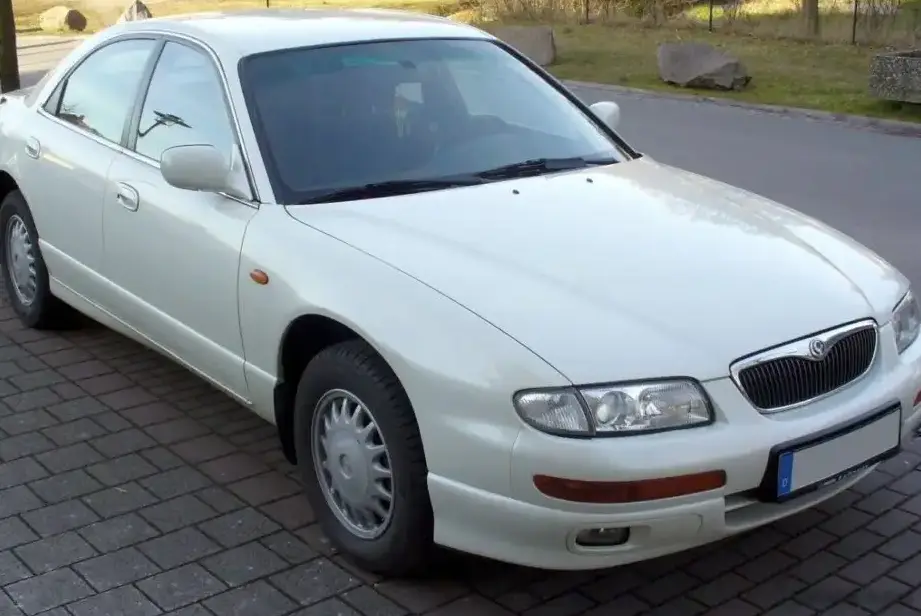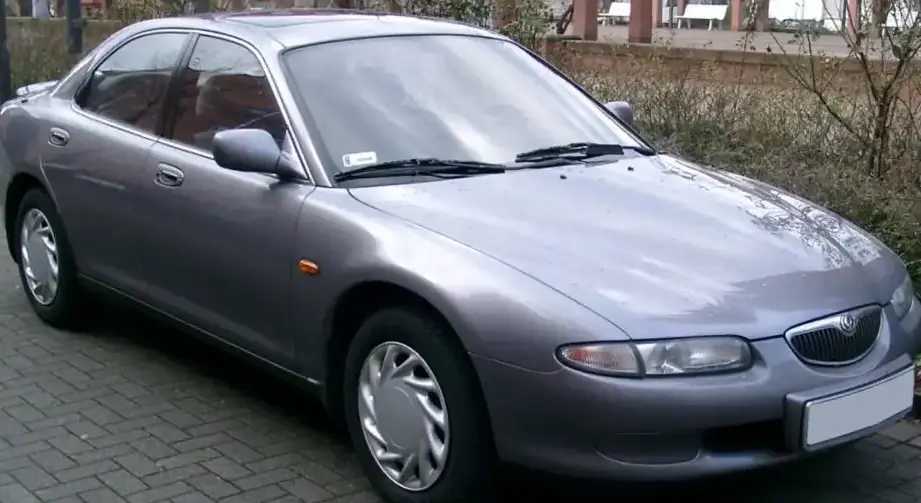
The Mazda Xedos 6, produced between 1992 and 1994 (designated chassis code CA), represented Mazda’s foray into the burgeoning entry-level luxury sedan segment. Positioned above the Mazda 626, the Xedos 6 aimed to compete with European rivals like the BMW 3 Series and Audi 80, offering a blend of sophisticated styling, a comfortable interior, and a range of modern features. The 2.0 V6 variant, producing 160 horsepower, was a key offering in the Xedos 6 lineup, representing a step up in performance and refinement from the base 1.6L and 1.8L four-cylinder models. It was primarily marketed in Europe and Japan, with limited availability in other markets.
Technical Specifications
| Brand | Mazda |
| Model | Xedos 6 |
| Generation | Xedos 6 (CA) |
| Type (Engine) | 2.0 V6 (160 Hp) |
| Start of production | 1992 |
| End of production | 1994 |
| Powertrain Architecture | Internal Combustion engine |
| Body type | Sedan |
| Seats | 5 |
| Doors | 4 |
| Fuel Type | Petrol (Gasoline) |
| Weight-to-power ratio | 7.7 kg/Hp, 130.1 Hp/tonne |
| Weight-to-torque ratio | 6.8 kg/Nm, 146.3 Nm/tonne |
| Power | 160 Hp @ 6500 rpm |
| Power per litre | 80.2 Hp/l |
| Torque | 180 Nm @ 5500 rpm (132.76 lb.-ft. @ 5500 rpm) |
| Engine layout | Front, Transverse |
| Engine displacement | 1995 cm3 (121.74 cu. in.) |
| Number of cylinders | 6 |
| Engine configuration | V-engine |
| Cylinder Bore | 78 mm (3.07 in.) |
| Piston Stroke | 69.6 mm (2.74 in.) |
| Compression ratio | 10:1 |
| Number of valves per cylinder | 4 |
| Fuel injection system | Multi-port manifold injection |
| Engine aspiration | Naturally aspirated engine |
| Valvetrain | DOHC |
| Kerb Weight | 1230 kg (2711.69 lbs.) |
| Trunk (boot) space – minimum | 390 l (13.77 cu. ft.) |
| Fuel tank capacity | 60 l (15.85 US gal | 13.2 UK gal) |
| Length | 4560 mm (179.53 in.) |
| Width | 1700 mm (66.93 in.) |
| Height | 1355 mm (53.35 in.) |
| Wheelbase | 2610 mm (102.76 in.) |
| Front track | 1480 mm (58.27 in.) |
| Rear (Back) track | 1490 mm (58.66 in.) |
| Drivetrain Architecture | The Internal combustion engine (ICE) drives the front wheels of the vehicle. |
| Drive wheel | Front wheel drive |
| Number of gears and type of gearbox | 5 gears, manual transmission |
| Front suspension | Wishbone |
| Rear suspension | Trailing arm |
| Front brakes | Ventilated discs |
| Rear brakes | Disc |
| Assisting systems | ABS (Anti-lock braking system) |
| Steering type | Steering rack and pinion |
| Power steering | Hydraulic Steering |
| Tires size | 195/60 R15 |
Powertrain & Engine Architecture
The heart of the Xedos 6 2.0 V6 was the Mazda JE engine, a 1995cc, naturally aspirated V6. This engine utilized a 60-degree V-angle, contributing to a relatively compact engine bay footprint. It featured a dual overhead camshaft (DOHC) valvetrain with four valves per cylinder, enhancing breathing and high-rpm performance. Fuel delivery was managed by a multi-port fuel injection system, providing precise fuel metering for optimal combustion. The JE engine was known for its smooth operation and relatively refined character, a departure from some of Mazda’s earlier, more raw engines. The 5-speed manual transmission was the standard offering, providing direct control over the engine’s power. The transmission was designed to handle the V6’s torque output and offered a reasonably engaging driving experience.
Driving Characteristics
The 160 hp V6 in the Xedos 6 provided a noticeable performance upgrade over the lower-displacement engines. Acceleration was brisk, with a 0-60 mph time estimated around 8.5-9.0 seconds. While not a sports car, the Xedos 6 2.0 V6 offered sufficient power for comfortable highway cruising and overtaking. The manual transmission allowed drivers to exploit the engine’s powerband, although the gear ratios were somewhat tall, prioritizing fuel economy over outright acceleration. Compared to the 1.8L models, the V6 offered a more relaxed driving experience, with less need to rev the engine aggressively. The front-wheel-drive layout, while competent, didn’t offer the same level of handling precision as rear-wheel-drive competitors.
Equipment & Trim Levels
The Xedos 6 2.0 V6 typically came well-equipped, reflecting its positioning as a near-luxury vehicle. Standard features often included power windows, power steering, central locking, an adjustable steering column, and a decent audio system. Interior upholstery was typically cloth, but leather options were available. Higher trim levels added features like alloy wheels, a sunroof, and upgraded audio systems. The dashboard layout was clean and functional, with a focus on ergonomics. Air conditioning was a common feature, and some models included automatic climate control.
Chassis & Braking
The Xedos 6 utilized a front-engine, front-wheel-drive layout. Suspension consisted of independent wishbones at the front and a trailing arm setup at the rear. This configuration provided a comfortable ride, although it wasn’t particularly sporty. The braking system featured ventilated discs at the front and solid discs at the rear, providing adequate stopping power. Anti-lock brakes (ABS) were standard, enhancing safety. Steering was rack-and-pinion with hydraulic power assistance, offering a light and precise feel.
Market Reception & Comparison
The Mazda Xedos 6 was generally well-received by automotive critics, who praised its stylish design, comfortable interior, and refined engine. The 2.0 V6 variant was considered the sweet spot in the lineup, offering a good balance of performance and fuel economy. However, it faced stiff competition from established European brands. Critics noted that the Xedos 6’s handling wasn’t as sharp as some of its rivals, and the interior quality, while good, didn’t quite match the standards set by BMW or Audi. Fuel economy was respectable for a V6 engine of that era, averaging around 25-30 mpg on the highway.
Legacy
The Mazda Xedos 6, while a relatively short-lived model, represented an important step in Mazda’s evolution as a brand. It demonstrated Mazda’s ability to produce a sophisticated and well-equipped sedan that could compete with European rivals. The JE V6 engine proved to be a reliable and durable powerplant, and many examples are still on the road today. In the used car market, the Xedos 6 2.0 V6 is appreciated by enthusiasts for its unique styling, smooth engine, and relative affordability. Maintenance costs are generally reasonable, although sourcing parts can sometimes be challenging due to the car’s age and limited production run. The Xedos 6 remains a distinctive and often overlooked gem from the early 1990s.