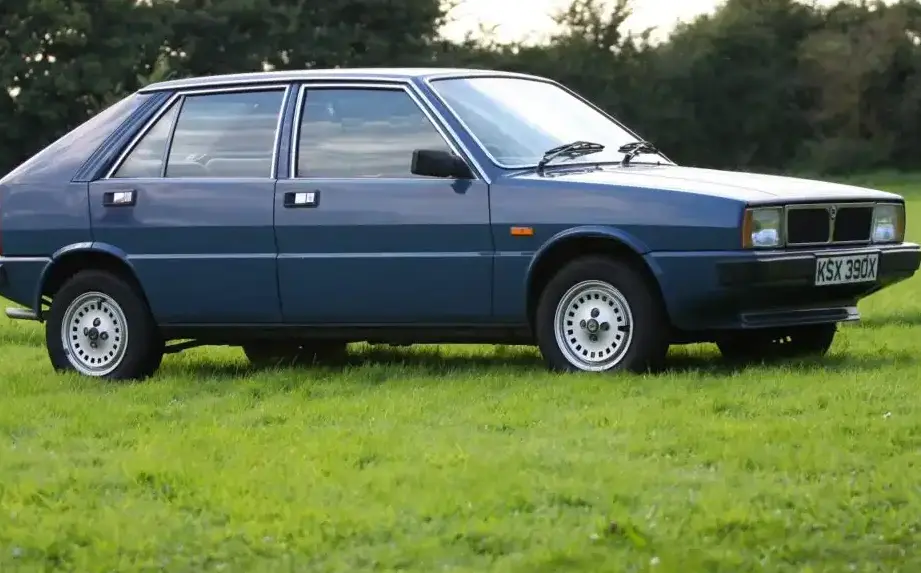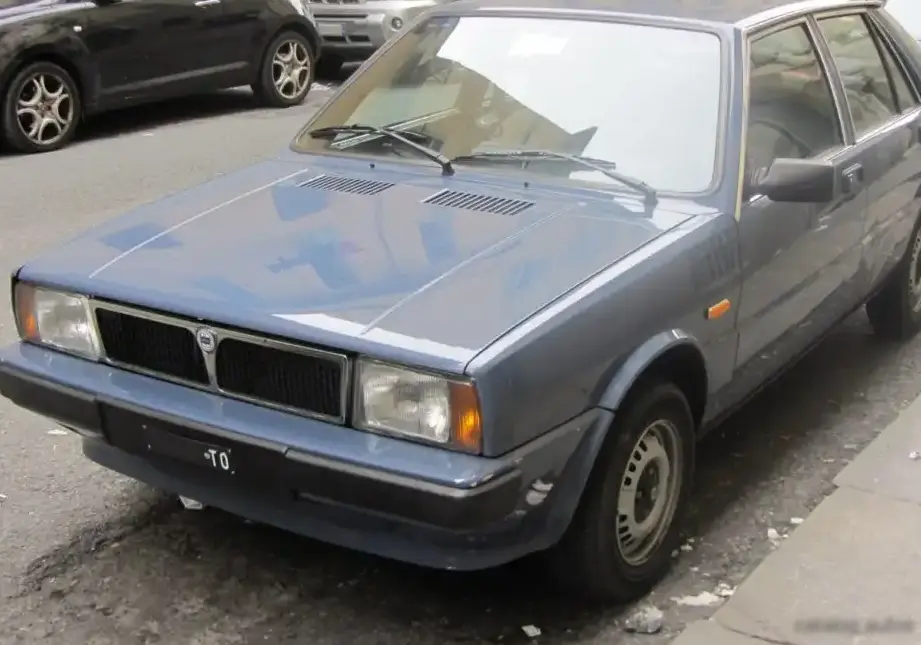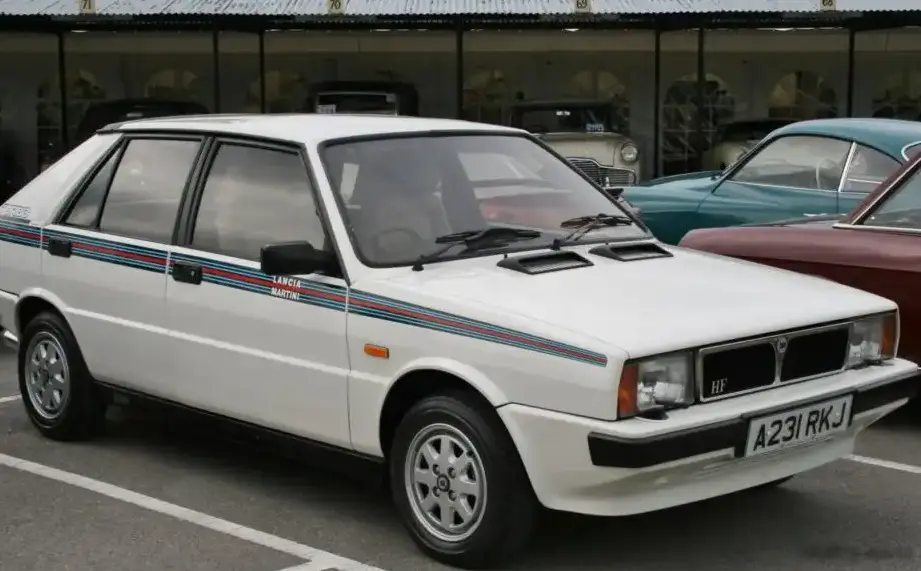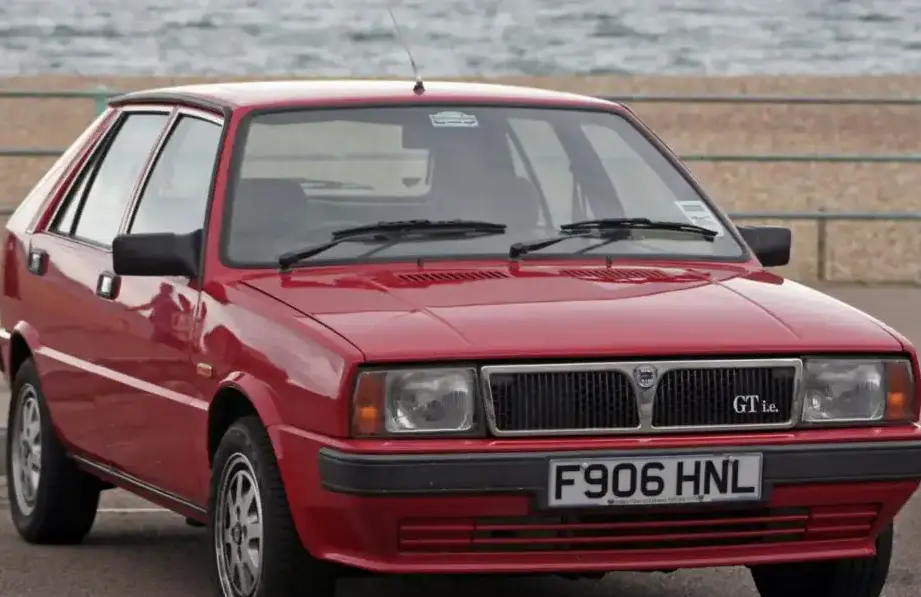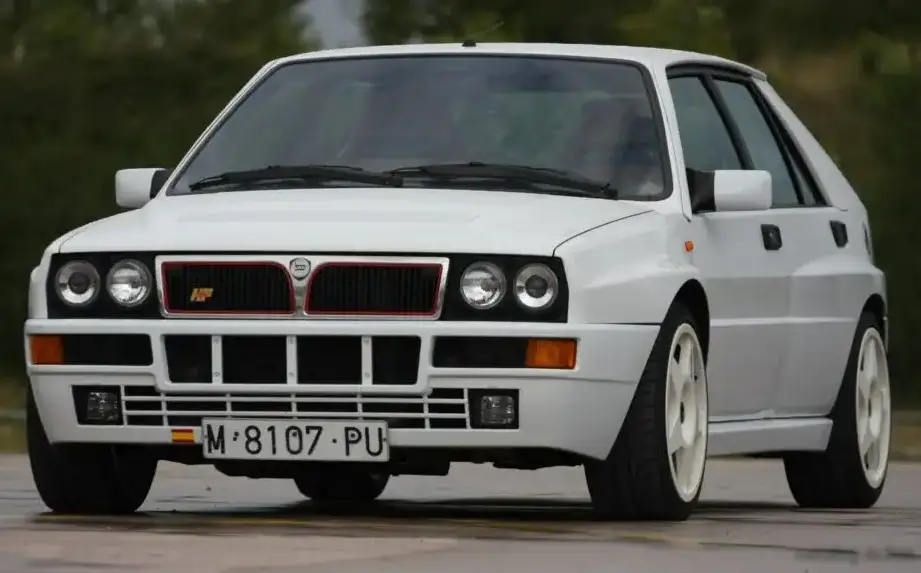
The Lancia Delta HF Integrale Evo 2.0 8V, produced from September 1991 to 1993, represents the pinnacle of the first-generation Delta’s development. This high-performance hatchback was a direct descendant of the successful rally cars that dominated the World Rally Championship in the late 1980s and early 1990s. The “Evo” designation signified further refinements to the already potent Integrale, focusing on improved performance, handling, and aesthetics. Built on the 831 series chassis (with the 1991 facelift), the 2.0 8V model occupied the top tier of the Delta range, offering a thrilling driving experience and cementing the Delta’s status as an icon of Italian automotive engineering.
Technical Specifications
| Brand | Lancia |
| Model | Delta |
| Generation | Delta I (831, facelift 1991) |
| Type | HF Integrale Evo 2.0 8V (177 Hp) 4WD |
| Start of production | September, 1991 |
| End of production | 1993 |
| Powertrain Architecture | Internal Combustion engine |
| Body type | Hatchback |
| Seats | 5 |
| Doors | 5 |
| Fuel consumption (urban) | 10.8 l/100 km (21.8 US mpg, 26.2 UK mpg, 9.3 km/l) |
| Fuel consumption (extra urban) | 8.2 l/100 km (28.7 US mpg, 34.4 UK mpg, 12.2 km/l) |
| Fuel Type | Petrol (Gasoline) |
| Acceleration 0 – 100 km/h | 6.9 sec |
| Acceleration 0 – 62 mph | 6.9 sec |
| Acceleration 0 – 60 mph | 6.6 sec |
| Maximum speed | 212 km/h (131.73 mph) |
| Weight-to-power ratio | 7.2 kg/Hp, 139 Hp/tonne |
| Weight-to-torque ratio | 4.4 kg/Nm, 227.8 Nm/tonne |
| Power | 177 Hp @ 5250 rpm |
| Power per litre | 88.7 Hp/l |
| Torque | 290 Nm @ 2750 rpm (213.89 lb.-ft. @ 2750 rpm) |
| Engine layout | Front, Transverse |
| Engine Model/Code | 831C5046 |
| Engine displacement | 1995 cm3 (121.74 cu. in.) |
| Number of cylinders | 4 |
| Engine configuration | Inline |
| Cylinder Bore | 84 mm (3.31 in.) |
| Piston Stroke | 90 mm (3.54 in.) |
| Compression ratio | 7.5:1 |
| Number of valves per cylinder | 2 |
| Fuel injection system | Multi-port manifold injection |
| Engine aspiration | Turbocharger, Intercooler |
| Valvetrain | DOHC |
| Engine oil capacity | 5.3 l (5.6 US qt, 4.66 UK qt) |
| Coolant capacity | 6.2 l (6.55 US qt, 5.46 UK qt) |
| Kerb Weight | 1273 kg (2806.48 lbs.) |
| Max. weight | 1750 kg (3858.09 lbs.) |
| Max load | 477 kg (1051.6 lbs.) |
| Trunk (boot) space – minimum | 200 l (7.06 cu. ft.) |
| Trunk (boot) space – maximum | 940 l (33.2 cu. ft.) |
| Fuel tank capacity | 55 l (14.53 US gal, 12.1 UK gal) |
| Permitted trailer load with brakes (12%) | 1150 kg (2535.32 lbs.) |
| Permitted trailer load without brakes | 550 kg (1212.54 lbs.) |
| Length | 3900 mm (153.54 in.) |
| Width | 1770 mm (69.69 in.) |
| Height | 1365 mm (53.74 in.) |
| Wheelbase | 2480 mm (97.64 in.) |
| Front track | 1502 mm (59.13 in.) |
| Rear track | 1500 mm (59.06 in.) |
| Front overhang | 765 mm (30.12 in.) |
| Rear overhang | 655 mm (25.79 in.) |
| Minimum turning circle | 10.4 m (34.12 ft.) |
| Drivetrain Architecture | All wheel drive (4×4) |
| Number of gears | 5 |
| Gearbox type | Manual transmission |
| Front suspension | Independent, McPherson with coil spring and anti-roll bar |
| Rear suspension | McPherson, Transverse stabilizer |
| Front brakes | Ventilated discs, 281 mm |
| Rear brakes | Disc, 251 mm |
| Assisting systems | ABS (Anti-lock braking system) |
| Steering type | Steering rack and pinion |
| Power steering | Hydraulic |
| Tires size | 205/50 R15 |
| Wheel rims size | 7.5J x 15 |
Powertrain & Engine Architecture
The heart of the Delta HF Integrale Evo 2.0 8V is the 831C5046 engine, a 1,995 cc inline-four cylinder powerplant. This engine builds upon the earlier 2.0-liter units, featuring a Garrett T25 turbocharger with an intercooler to boost power output to 177 horsepower at 5,250 rpm and 290 Nm (213.89 lb-ft) of torque at 2,750 rpm. The engine utilizes multi-port fuel injection and a dual overhead camshaft (DOHC) valvetrain with two valves per cylinder. The 7.5:1 compression ratio was a compromise to handle the increased boost pressure. The engine is transversely mounted, contributing to the car’s balanced handling. Power is delivered to all four wheels via a robust five-speed manual transmission, specifically chosen for its durability and ability to handle the engine’s torque. The transmission’s gear ratios were optimized for both acceleration and cruising, providing a good balance between performance and fuel efficiency.
Driving Characteristics
The Delta Integrale Evo 2.0 8V delivers a distinctly engaging driving experience. While not as brutally fast as later, more powerful Evoluzione models, the 8V offers a more accessible and manageable power delivery. The turbocharger provides a noticeable surge of acceleration, but it’s less prone to the sudden boost spikes that characterized some earlier turbocharged cars. The all-wheel-drive system provides excellent traction, particularly on loose surfaces, making the car feel planted and secure. The manual transmission requires a firm hand, but the shift quality is precise. Compared to the later 16V version, the 8V feels slightly less responsive at higher engine speeds, but it offers a broader, more usable torque curve. The car’s relatively short wheelbase and well-tuned suspension contribute to its nimble handling, making it a joy to drive on winding roads.
Equipment & Trim Levels
The HF Integrale Evo 2.0 8V was generously equipped, reflecting its position as the flagship model. Standard features included power windows, central locking, and a basic audio system. The interior was typically trimmed with Recaro sport seats upholstered in a combination of Alcantara and fabric. The dashboard featured a distinctive layout with analog gauges for oil pressure and turbo boost. Optional extras included air conditioning, a sunroof, and upgraded audio systems. The exterior was distinguished by its wider wheel arches, unique front and rear spoilers, and distinctive alloy wheels. The color palette was typically bold, with options like Rosso Corsa (red) and Bianco Perlato (pearl white) being popular choices.
Chassis & Braking
The Delta Integrale Evo 2.0 8V features a McPherson strut suspension system at both the front and rear, with coil springs and anti-roll bars. The suspension was specifically tuned to provide a balance between comfort and handling. The car’s chassis was reinforced to handle the increased power and stresses of all-wheel drive. Braking duties are handled by ventilated discs at the front and solid discs at the rear. An anti-lock braking system (ABS) was standard, enhancing safety and control. The braking system was generally considered effective, providing ample stopping power for a car of its weight and performance.
Market Reception & Comparison
The Lancia Delta HF Integrale Evo 2.0 8V was widely praised by automotive journalists for its performance, handling, and rally-bred pedigree. Critics lauded its all-wheel-drive system, responsive engine, and engaging driving experience. Compared to the 16V version, the 8V was often seen as a more practical and user-friendly option, offering a similar level of performance with a slightly more forgiving nature. Fuel economy was reasonable for a high-performance car of its era, averaging around 22 mpg in mixed driving. Reliability was generally good, although the turbocharger and associated components required regular maintenance.
Legacy
The Lancia Delta HF Integrale Evo 2.0 8V remains a highly sought-after classic car. Its rally heritage, distinctive styling, and engaging driving experience have cemented its status as an icon of the 1990s. Well-maintained examples are increasingly valuable, attracting collectors and enthusiasts alike. The engine and transmission are generally robust, but regular maintenance is essential to ensure long-term reliability. Today, the Delta Integrale Evo 2.0 8V is remembered as a true driver’s car, offering a unique and rewarding driving experience that few modern cars can match.