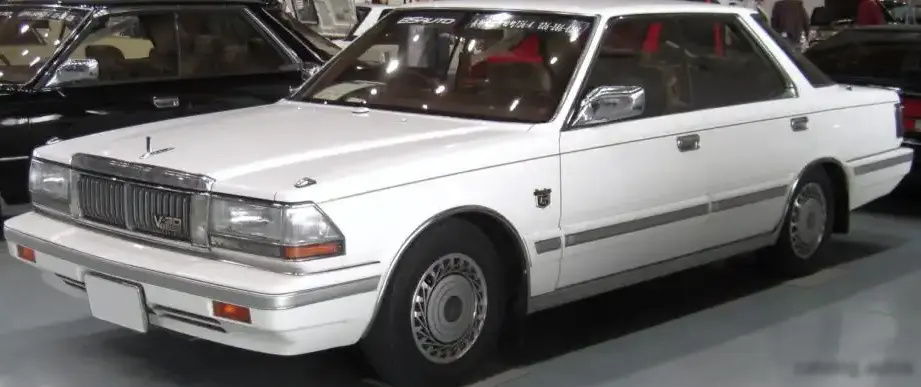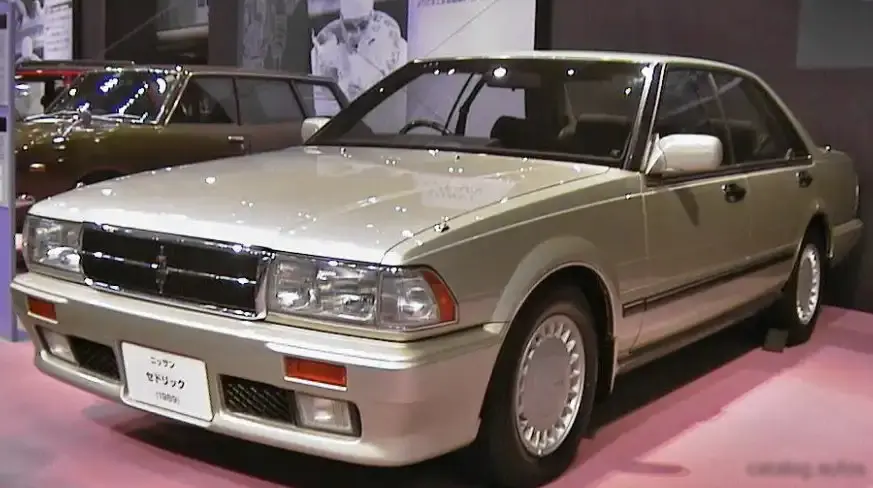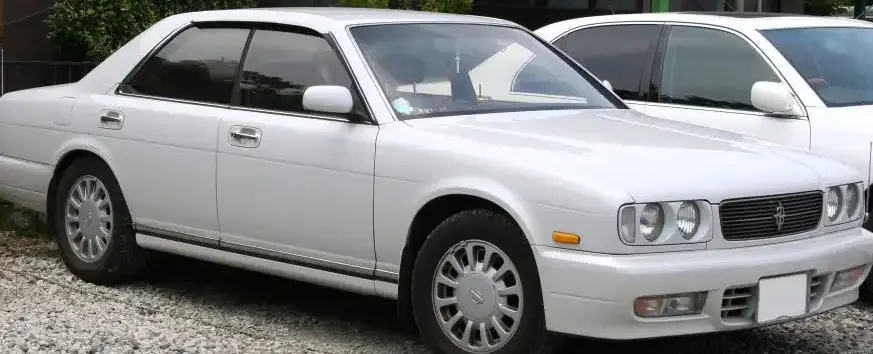
The Nissan Cedric Y32 3.0i V6 24V Turbo, produced between 1991 and 1995, represented a high-performance variant within the broader Y32 Cedric lineage. The Y32 generation, spanning from 1989 to 1995, was a significant model for Nissan, embodying Japanese luxury and technological advancement. This particular iteration, equipped with the potent 3.0-liter turbocharged V6 engine and a four-speed automatic transmission, was positioned as a premium offering, appealing to buyers seeking a blend of comfort, performance, and sophisticated technology. It primarily served the Japanese domestic market (JDM), where large, comfortable sedans with powerful engines were highly valued.
Technical Specifications
| Brand | Nissan |
| Model | Cedric |
| Generation | Cedric (Y32) |
| Type (Engine) | 3.0i V6 24V Turbo (255 Hp) Automatic |
| Start of production | 1991 |
| End of production | 1995 |
| Powertrain Architecture | Internal Combustion engine |
| Body type | Sedan |
| Seats | 5 |
| Doors | 4 |
| Fuel consumption (combined) | 9.7 l/100 km (24.2 US mpg, 29.1 UK mpg, 10.3 km/l) |
| Fuel Type | Petrol (Gasoline) |
| Maximum speed | 240 km/h (149.13 mph) |
| Weight-to-power ratio | 6.4 kg/Hp, 156.4 Hp/tonne |
| Weight-to-torque ratio | 4.8 kg/Nm, 210.4 Nm/tonne |
| Power | 255 Hp @ 6000 rpm |
| Power per litre | 86.1 Hp/l |
| Torque | 343 Nm @ 3200 rpm (252.98 lb.-ft. @ 3200 rpm) |
| Engine layout | Front, Longitudinal |
| Engine displacement | 2960 cm3 (180.63 cu. in.) |
| Number of cylinders | 6 |
| Engine configuration | V-engine |
| Cylinder Bore | 87 mm (3.43 in.) |
| Piston Stroke | 83 mm (3.27 in.) |
| Compression ratio | 8.5:1 |
| Number of valves per cylinder | 4 |
| Fuel injection system | Multi-port manifold injection |
| Engine aspiration | Turbocharger |
| Valvetrain | DOHC |
| Kerb Weight | 1630 kg (3593.53 lbs.) |
| Max. weight | 1905 kg (4199.81 lbs.) |
| Max load | 275 kg (606.27 lbs.) |
| Fuel tank capacity | 80 l (21.13 US gal | 17.6 UK gal) |
| Length | 4780 mm (188.19 in.) |
| Width | 1745 mm (68.7 in.) |
| Height | 1410 mm (55.51 in.) |
| Wheelbase | 2760 mm (108.66 in.) |
| Front track | 1500 mm (59.06 in.) |
| Rear (Back) track | 1495 mm (58.86 in.) |
| Drivetrain Architecture | The Internal combustion engine (ICE) drives the rear wheels of the vehicle. |
| Drive wheel | Rear wheel drive |
| Number of gears and type of gearbox | 4 gears, automatic transmission |
| Front suspension | Coil spring |
| Rear suspension | Coil spring |
| Front brakes | Ventilated discs |
| Rear brakes | Ventilated discs |
| Assisting systems | ABS (Anti-lock braking system) |
| Steering type | Steering rack and pinion |
| Power steering | Hydraulic Steering |
| Tires size | 205/65 R15 V |
Powertrain & Engine Architecture
The heart of the Y32 3.0i Turbo was the VG30DETT engine, a 2,960cc (180.6 cu in) V6. This engine was a derivative of Nissan’s well-regarded VG series, known for its smoothness and durability. The “DETT” designation signifies a dual overhead camshaft (DOHC) cylinder head, multi-point fuel injection, and twin turbochargers. The turbochargers were relatively small, designed to minimize turbo lag and provide a broad torque curve. The engine utilized a cast iron block and aluminum cylinder heads. The four-speed automatic transmission, typically the 4AT unit, was chosen for its smoothness and ease of use, aligning with the Cedric’s luxury positioning. While not known for its sporting character, the 4AT was a reliable unit capable of handling the engine’s output.
Driving Characteristics
The Y32 3.0i Turbo offered a distinctly grand touring experience. The automatic transmission, while smooth, did result in some power loss compared to the available manual transmission options in other Cedric variants. Acceleration was brisk, with the turbochargers providing a noticeable surge of power in the mid-range. The rear-wheel-drive configuration contributed to a balanced feel, although the car’s considerable weight (1,630 kg / 3,593.5 lbs) meant it wasn’t particularly agile. The gear ratios of the 4AT were geared towards comfortable cruising rather than outright performance. Compared to the naturally aspirated 3.0-liter versions, the turbo model offered significantly more power and torque, resulting in a more effortless driving experience, especially when overtaking or climbing hills.
Equipment & Trim Levels
The 3.0i Turbo variant of the Cedric Y32 was typically well-equipped, reflecting its premium status. Standard features often included power windows, power locks, power steering, air conditioning, and a high-quality audio system. Interior upholstery was typically cloth or leather, with woodgrain trim accents. Higher trim levels offered features such as power-adjustable seats, a sunroof, and more advanced audio systems. The dashboard layout was functional and elegant, typical of Japanese luxury cars of the era. Optional extras could include a navigation system (a relatively new technology at the time) and upgraded sound systems.
Chassis & Braking
The Y32 Cedric featured a traditional body-on-frame construction, contributing to its robust feel and comfortable ride. Suspension consisted of coil springs and shock absorbers all around. The front suspension utilized a MacPherson strut design, while the rear employed a multi-link setup. Braking was handled by ventilated disc brakes on all four wheels, supplemented by an Anti-lock Braking System (ABS). The ABS system was a significant safety feature for the time. Steering was rack and pinion, with hydraulic power assistance. The tires were typically 205/65 R15, providing a good balance of comfort and grip.
Market Reception & Comparison
The Nissan Cedric Y32 3.0i Turbo was generally well-received in the Japanese market. Critics praised its smooth engine, comfortable ride, and luxurious interior. However, some noted that the automatic transmission dulled the engine’s performance potential. Compared to other trims, such as the naturally aspirated 3.0-liter or the 2.0-liter models, the turbo variant offered a significant performance upgrade, but at a higher price point. Fuel economy, at 9.7 l/100 km (24.2 US mpg), was reasonable for a car of its size and performance. Reliability was generally good, although the turbocharger system did add a layer of complexity compared to the naturally aspirated engines.
Legacy
The Nissan Cedric Y32 3.0i Turbo remains a sought-after classic car, particularly within the JDM enthusiast community. The VG30DETT engine is known for its potential for modification and tuning. While the car is now over 25 years old, many examples remain in good condition, thanks to the generally high standards of maintenance in Japan. The Y32 Cedric, and particularly the 3.0i Turbo variant, represents a high point in Japanese luxury car design and engineering. Its blend of comfort, performance, and technology continues to appeal to collectors and enthusiasts today. Finding parts can be challenging outside of Japan, but a dedicated aftermarket and online communities help to keep these cars on the road.