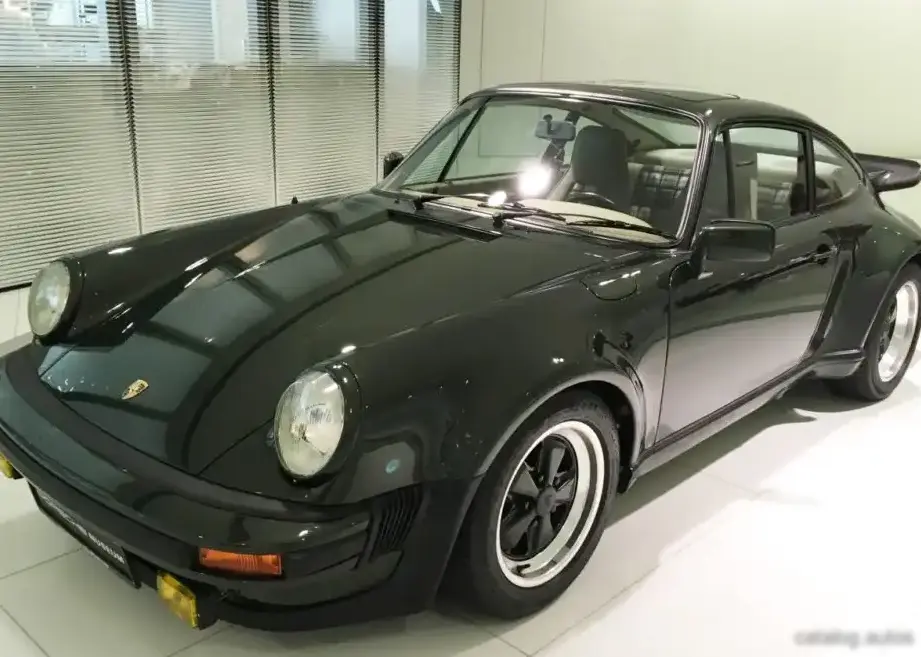
The Porsche 911 Coupe (Type 930) 3.0 Turbo, produced between 1975 and 1977, represents a pivotal moment in the evolution of the iconic 911. This model was the first production 911 to feature turbocharging, a technology previously reserved for Porsche’s racing program. It was built on the 911 (930) platform, and marked a significant leap in performance, establishing the “Turbo” moniker as a performance benchmark within the 911 lineage. The 3.0 Turbo was positioned as the flagship model, offering a substantial performance upgrade over the standard 911 Carrera models. It was primarily sold in Europe and North America, catering to enthusiasts seeking the ultimate in Porsche performance.
Technical Specifications
| Brand | Porsche |
| Model | 911 |
| Generation | 911 Coupe (Type 930) |
| Type (Engine) | 3.0 Turbo (260 Hp) |
| Start of production | 1975 |
| End of production | 1977 |
| Powertrain Architecture | Internal Combustion engine |
| Body type | Coupe |
| Seats | 4 |
| Doors | 2 |
| Fuel Type | Petrol (Gasoline) |
| Acceleration 0 – 100 km/h | 5.5 sec |
| Acceleration 0 – 62 mph | 5.5 sec |
| Acceleration 0 – 60 mph | 5.2 sec |
| Maximum speed | 250 km/h (155.34 mph) |
| Weight-to-power ratio | 4.4 kg/Hp, 228.1 Hp/tonne |
| Weight-to-torque ratio | 3.3 kg/Nm, 300.9 Nm/tonne |
| Power | 260 Hp @ 5500 rpm |
| Power per litre | 86.9 Hp/l |
| Torque | 343 Nm @ 4000 rpm (252.98 lb.-ft. @ 4000 rpm) |
| Maximum engine speed | 6800 rpm |
| Engine layout | Rear, Longitudinal |
| Engine Model/Code | 930.50 |
| Engine displacement | 2993 cm3 (182.64 cu. in.) |
| Number of cylinders | 6 |
| Engine configuration | Boxer |
| Cylinder Bore | 95 mm (3.74 in.) |
| Piston Stroke | 70.4 mm (2.77 in.) |
| Compression ratio | 6.5:1 |
| Number of valves per cylinder | 2 |
| Fuel injection system | Multi-port manifold injection |
| Engine aspiration | Turbocharger |
| Valvetrain | SOHC |
| Engine oil capacity | 10 l (10.57 US qt | 8.8 UK qt) |
| Kerb Weight | 1140-1195 kg (2513.27 – 2634.52 lbs.) |
| Max. weight | 1525 kg (3362.05 lbs.) |
| Max load | 330-385 kg (727.53 – 848.78 lbs.) |
| Fuel tank capacity | 80 l (21.13 US gal | 17.6 UK gal) |
| Max. roof load | 35 kg (77.16 lbs.) |
| Length | 4291 mm (168.94 in.) |
| Width | 1775 mm (69.88 in.) |
| Height | 1304-1320 mm (51.34 – 51.97 in.) |
| Wheelbase | 2272 mm (89.45 in.) |
| Front track | 1438 mm (56.61 in.) |
| Rear (Back) track | 1511 mm (59.49 in.) |
| Ride height (ground clearance) | 157-120 mm (6.18 – 4.72 in.) |
| Approach angle | 14.3-15° |
| Departure angle | 16-17° |
| Drivetrain Architecture | The Internal combustion engine (ICE) drives the rear wheels of the vehicle. |
| Drive wheel | Rear wheel drive |
| Number of gears and type of gearbox | 4 gears, manual transmission |
| Front suspension | Spring Strut, Wishbone |
| Rear suspension | Trailing arm |
| Front brakes | Ventilated discs, 282.5 mm |
| Rear brakes | Ventilated discs, 290 mm |
| Steering type | Steering rack and pinion |
Introduction
The 930, as it’s commonly known, was a landmark achievement for Porsche. Prior to its introduction, the 911 had established itself as a capable sports car, but the addition of turbocharging elevated it to a new level of performance. The 3.0-liter Turbo was the first iteration, and it served as a proving ground for the technology that would define future 911 Turbo models. Production ran from 1975 to 1977, with approximately 408 units built. The car’s distinctive flared wheel arches, large rear spoiler, and aggressive styling set it apart from other 911 variants, signaling its performance intent. It was a relatively exclusive vehicle, aimed at buyers who demanded the highest levels of performance and were willing to pay a premium for it.
Powertrain & Engine Architecture
The heart of the 930 Turbo is its 2993cc air-cooled, flat-six engine, designated the 930.50. This engine utilized a single KKK turbocharger, which significantly increased power output compared to the naturally aspirated 911 Carrera. The engine featured a relatively low 6.5:1 compression ratio, necessary to withstand the stresses of turbocharging. Fuel delivery was handled by Bosch K-Jetronic mechanical fuel injection, a system known for its precision and reliability. The engine employed a single overhead camshaft (SOHC) valvetrain, operating two valves per cylinder. The turbocharger itself was a relatively simple design by modern standards, but it was highly effective in boosting power. The 930 Turbo was exclusively offered with a four-speed manual transmission, designed to handle the increased torque output. The transmission featured a robust design, but its relatively limited number of gears meant that the engine often operated at higher RPMs during highway cruising.
Driving Characteristics
The 930 Turbo offered a dramatically different driving experience compared to other 911 models of the time. The turbocharger provided a significant boost in power, resulting in exhilarating acceleration. However, the power delivery was not linear; there was a noticeable “turbo lag” before the boost engaged, requiring drivers to anticipate and manage the power delivery. The four-speed manual transmission required skillful operation to keep the engine in its optimal power band. The car’s suspension was firm, providing excellent handling and stability, but it could also be unforgiving on rough roads. The combination of powerful engine, rear-wheel drive, and relatively short wheelbase made the 930 Turbo a challenging car to drive at the limit, demanding respect and skill from the driver. Compared to the standard Carrera, the Turbo offered significantly faster acceleration and a higher top speed, but it also sacrificed some of the Carrera’s everyday usability.
Equipment & Trim Levels
The 930 Turbo was relatively sparsely equipped compared to modern luxury cars, but it did offer a number of features considered desirable at the time. Standard equipment included leatherette upholstery, a leather steering wheel, and a basic sound system. Optional extras included air conditioning, power windows, and a sunroof. The interior design was functional and focused on the driving experience, with a minimalist dashboard layout and supportive bucket seats. The exterior was characterized by its flared wheel arches, which accommodated wider tires, and a prominent rear spoiler, which provided increased downforce at high speeds. The car was typically finished in one of a limited range of colors, with silver, black, and white being the most popular choices.
Chassis & Braking
The 930 Turbo utilized a modified version of the standard 911 chassis, with several enhancements to improve handling and stability. The suspension featured stiffer springs and dampers, and the rear track was widened to accommodate the wider tires. The car was equipped with ventilated disc brakes on all four wheels, providing excellent stopping power. The braking system was not equipped with ABS, requiring drivers to rely on their own skill and judgment to avoid wheel lockup. The steering was a rack-and-pinion system, providing precise and responsive handling. The car’s relatively lightweight construction, combined with its powerful engine and effective suspension, resulted in a dynamic and engaging driving experience.
Market Reception & Comparison
The 930 Turbo was widely praised by automotive journalists for its exceptional performance and handling. However, it was also criticized for its challenging driving characteristics and relatively high price. Compared to the standard 911 Carrera, the Turbo offered a significant performance advantage, but it was also more expensive to purchase and maintain. The Turbo’s turbo lag and demanding handling required a skilled driver to fully exploit its potential. The car’s fuel economy was also relatively poor, reflecting its high-performance nature. Despite these drawbacks, the 930 Turbo quickly became a highly sought-after model, establishing the “Turbo” name as a symbol of Porsche performance.
Legacy
The Porsche 930 Turbo is now considered a classic sports car and a highly collectible item. Its pioneering use of turbocharging in a production 911 paved the way for future generations of Turbo models. The 930 Turbo’s engine, while relatively simple by modern standards, proved to be remarkably durable and reliable when properly maintained. Today, well-maintained examples of the 930 Turbo command high prices in the collector car market, reflecting their historical significance and enduring appeal. The car remains a testament to Porsche’s engineering prowess and its commitment to performance.