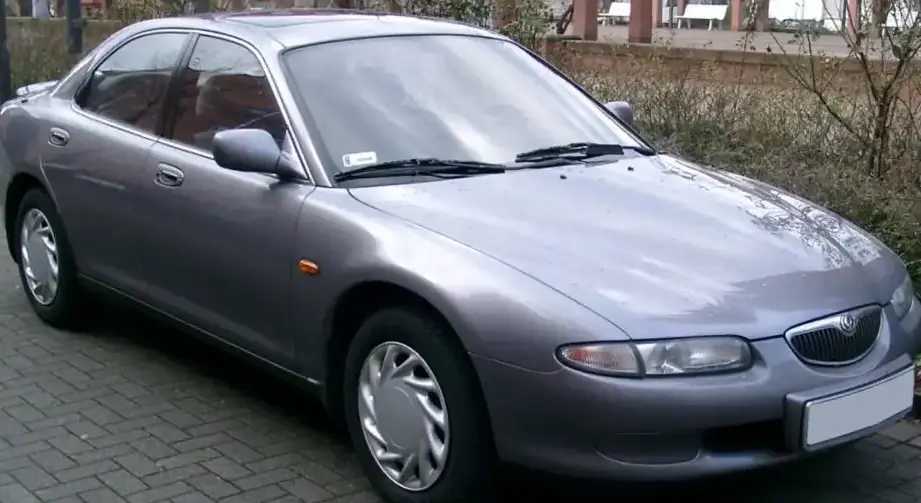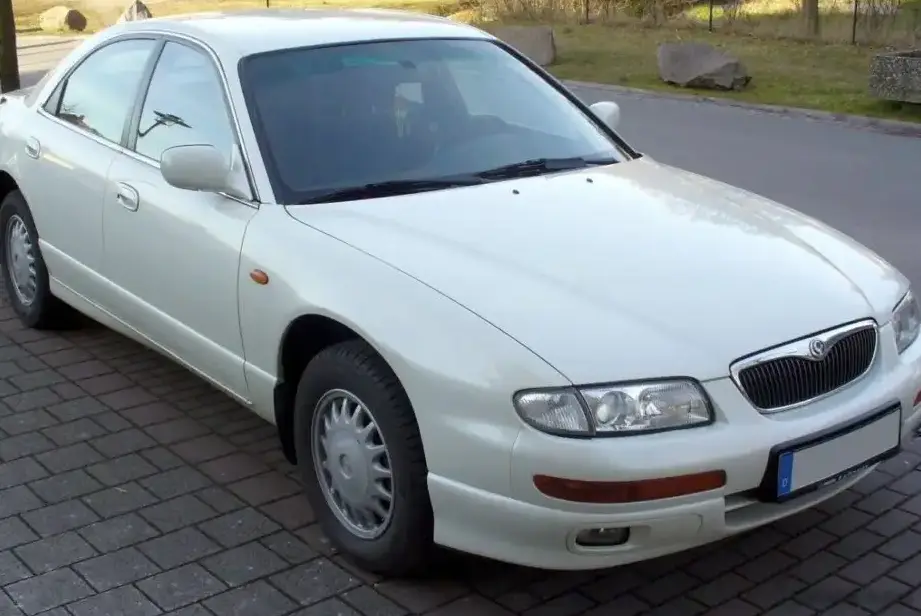
The Mazda Xedos 9, produced between 1993 and 2001, represented Mazda’s foray into the premium, near-luxury sedan segment. Specifically, the 2.3i V6 24V Miller Cycle variant, powered by the KL-ZE engine, was the flagship model of the TA series. Positioned as the top-of-the-line Xedos 9, it aimed to compete with established European brands like BMW and Audi, offering a blend of performance, refinement, and distinctive styling. The Xedos line was sold primarily in Japan and Europe, and was not officially offered in the North American market. It was a significant vehicle for Mazda, showcasing their engineering capabilities and design ambitions during the 1990s.
Technical Specifications
| Brand | Mazda |
| Model | Xedos 9 |
| Generation | Xedos 9 (TA) |
| Type (Engine) | 2.3 i V6 24V Miller Cycle (211 Hp) |
| Start of production | 1993 |
| End of production | 2001 |
| Powertrain Architecture | Internal Combustion engine |
| Body type | Sedan |
| Seats | 5 |
| Doors | 4 |
| Fuel consumption (urban) | 11 l/100 km (21.4 US mpg) |
| Fuel consumption (extra urban) | 6.3 l/100 km (37.3 US mpg) |
| Fuel consumption (combined) | 8.1 l/100 km (29 US mpg) |
| Fuel Type | Petrol (Gasoline) |
| Acceleration 0 – 100 km/h | 9.5 sec |
| Acceleration 0 – 62 mph | 9.5 sec |
| Acceleration 0 – 60 mph | 9 sec |
| Maximum speed | 230 km/h (142.92 mph) |
| Weight-to-power ratio | 7.1 kg/Hp |
| Weight-to-torque ratio | 5.2 kg/Nm |
| Power | 211 Hp @ 5300 rpm |
| Torque | 290 Nm @ 3700 rpm (213.89 lb.-ft. @ 3700 rpm) |
| Engine layout | Front, Transverse |
| Engine displacement | 2255 cm3 (137.61 cu. in.) |
| Number of cylinders | 6 |
| Engine configuration | V-engine |
| Cylinder Bore | 80.3 mm (3.16 in.) |
| Piston Stroke | 74.2 mm (2.92 in.) |
| Compression ratio | 10:1 |
| Number of valves per cylinder | 4 |
| Fuel injection system | Multi-port manifold injection |
| Engine aspiration | Naturally aspirated engine |
| Valvetrain | DOHC |
| Kerb Weight | 1500 kg (3306.93 lbs.) |
| Max. weight | 1985 kg (4376.18 lbs.) |
| Max load | 485 kg (1069.24 lbs.) |
| Trunk (boot) space – minimum | 430 l (15.19 cu. ft.) |
| Fuel tank capacity | 68 l (17.96 US gal | 14.96 UK gal) |
| Length | 4825 mm (189.96 in.) |
| Width | 1770 mm (69.69 in.) |
| Height | 1395 mm (54.92 in.) |
| Wheelbase | 2760 mm (108.66 in.) |
| Front track | 1530 mm (60.24 in.) |
| Rear (Back) track | 1530 mm (60.24 in.) |
| Drivetrain Architecture | The Internal combustion engine (ICE) drives the front wheels of the vehicle. |
| Drive wheel | Front wheel drive |
| Number of gears and type of gearbox | 4 gears, automatic transmission |
| Front suspension | Double wishbone |
| Rear suspension | Several levers and rods |
| Front brakes | Ventilated discs |
| Rear brakes | Disc |
| Assisting systems | ABS (Anti-lock braking system) |
| Steering type | Steering rack and pinion |
| Power steering | Hydraulic Steering |
| Tires size | 205/65 R15 V |
Powertrain & Engine Architecture
The heart of the Xedos 9 2.3i was the KL-ZE engine, a 2.3-liter V6 utilizing Mazda’s Miller cycle technology. This cycle, differing from the conventional Otto cycle, delays the closing of the intake valves, resulting in a lower compression ratio and reduced pumping losses. This design aimed to improve fuel efficiency and reduce emissions without sacrificing power. The engine featured a dual overhead camshaft (DOHC) valvetrain with four valves per cylinder, and a multi-port fuel injection system. Producing 211 horsepower at 5300 rpm and 290 Nm (213.89 lb-ft) of torque at 3700 rpm, the KL-ZE provided brisk acceleration for its time. The engine was transversely mounted in the front of the vehicle. The four-speed automatic transmission was specifically tuned to complement the engine’s characteristics, prioritizing smooth shifts and comfortable cruising. While a five-speed manual transmission was available on some Xedos 9 models, the automatic was the more common choice, particularly for the higher-spec 2.3i V6.
Driving Characteristics
The Xedos 9 2.3i V6 with the automatic transmission offered a refined and comfortable driving experience. The Miller cycle engine delivered a smooth and linear power delivery, making it well-suited for everyday driving. While not overtly sporty, the 9.5-second 0-60 mph acceleration was respectable for a front-wheel-drive sedan of its era. The automatic transmission, while not offering the engagement of a manual, provided seamless gear changes and contributed to the car’s overall ease of use. Compared to the lower-displacement 1.8L four-cylinder Xedos 9 variants, the 2.3i V6 offered significantly more power and torque, resulting in noticeably improved acceleration and highway passing ability. However, it wasn’t as fuel-efficient as the smaller engine. The front-wheel-drive configuration, while common for its class, could exhibit some torque steer under hard acceleration.
Equipment & Trim Levels
The 2.3i V6 represented the highest trim level of the Xedos 9. Standard features typically included leather upholstery, power-adjustable front seats, climate control, a premium sound system, and alloy wheels. Power windows, power mirrors, and central locking were also standard. Optional extras could include a sunroof, upgraded audio systems, and metallic paint finishes. The interior design emphasized a clean and minimalist aesthetic, with a focus on quality materials and comfortable ergonomics. The dashboard layout was driver-focused, with easy-to-read gauges and logically placed controls.
Chassis & Braking
The Xedos 9 featured a front independent suspension with double wishbones, providing a comfortable ride and good handling characteristics. The rear suspension utilized a multi-link setup, further enhancing ride quality and stability. Braking duties were handled by ventilated discs at the front and solid discs at the rear. An Anti-lock Braking System (ABS) was standard, improving braking performance and safety. The steering was a rack-and-pinion system with hydraulic power assistance, offering precise and responsive steering feel. The Xedos 9 rode on 205/65 R15 tires, providing a good balance of comfort and grip.
Market Reception & Comparison
The Mazda Xedos 9 was generally well-received by automotive critics, who praised its stylish design, refined interior, and smooth engine. The 2.3i V6 variant was particularly lauded for its performance and overall sophistication. However, some critics noted that the Xedos 9 lacked the brand recognition and prestige of its European competitors. Compared to the 1.8L Xedos 9 models, the 2.3i V6 offered a significant performance upgrade but came at a higher price point and with slightly lower fuel economy. The 2.3i V6 also offered a more luxurious experience than the base models, justifying its position as the flagship trim.
Legacy
The Mazda Xedos 9, while not a massive sales success, remains a fondly remembered vehicle among enthusiasts. The KL-ZE engine, while not without its quirks, proved to be a relatively reliable powerplant when properly maintained. Common issues included oil leaks and occasional sensor failures. Today, well-maintained examples of the Xedos 9 2.3i V6 are becoming increasingly collectible, appealing to those seeking a unique and stylish 1990s sedan. Parts availability can be a challenge, but a dedicated community of owners and enthusiasts helps to keep these cars on the road. The Xedos 9 demonstrated Mazda’s ambition to compete in the premium segment and paved the way for future models like the Mazda 6 and Mazda 3.