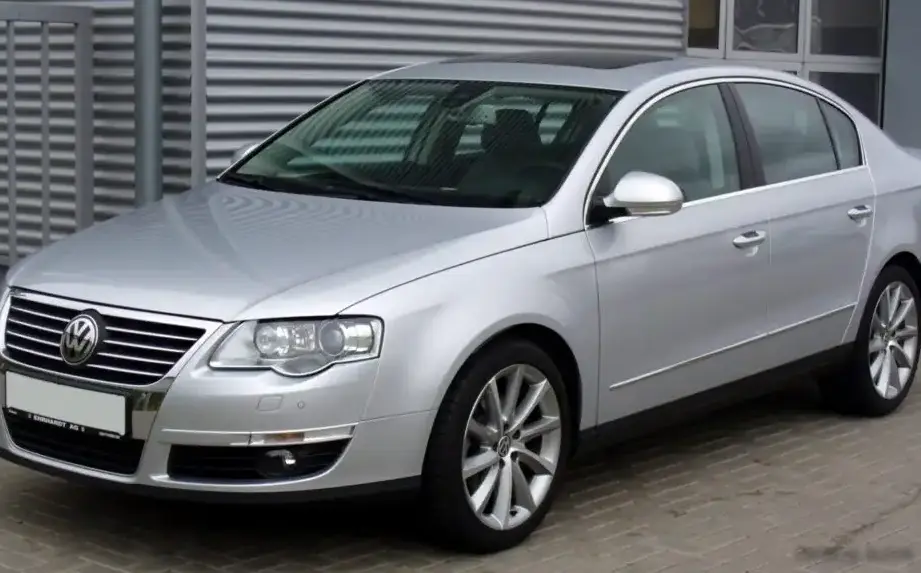
The Volkswagen Passat B6 2.0 TDI (170 hp) represents a significant iteration of Volkswagen’s mid-size offering, produced between March 2008 and July 2010. Positioned as a mainstream, efficient option within the B6 generation (2005-2010), this variant aimed to balance performance with fuel economy, appealing to a broad range of European drivers. It was a key model in Volkswagen’s lineup, competing directly with vehicles like the Ford Mondeo, Opel/Vauxhall Insignia, and Peugeot 407. The B6 Passat, built on the Volkswagen Group’s B6 platform (shared with the Audi A4 and Škoda Superb of the era), offered a more refined and technologically advanced package compared to its predecessor.
Technical Specifications
| Brand | Volkswagen |
| Model | Passat |
| Generation | Passat (B6) |
| Type (Engine) | 2.0 TDI (170 Hp) |
| Start of production | March, 2008 |
| End of production | July, 2010 |
| Powertrain Architecture | Internal Combustion engine |
| Body type | Sedan |
| Seats | 5 |
| Doors | 4 |
| Fuel consumption (urban) | 7.4 l/100 km (31.8 US mpg) |
| Fuel consumption (extra urban) | 4.6 l/100 km (51.1 US mpg) |
| Fuel consumption (combined) | 5.6 l/100 km (42 US mpg) |
| CO2 emissions | 146 g/km |
| Fuel Type | Diesel |
| Acceleration 0 – 100 km/h | 8.6 sec |
| Acceleration 0 – 62 mph | 8.6 sec |
| Acceleration 0 – 60 mph | 8.2 sec |
| Maximum speed | 223 km/h (138.57 mph) |
| Emission standard | Euro 5 |
| Weight-to-power ratio | 8.1 kg/Hp |
| Weight-to-torque ratio | 3.9 kg/Nm |
| Power | 170 Hp @ 4200 rpm |
| Torque | 350 Nm @ 1750-2500 rpm (258.15 lb.-ft.) |
| Engine layout | Front, Transverse |
| Engine Model/Code | CBBB |
| Engine displacement | 1968 cm3 (120.09 cu. in.) |
| Number of cylinders | 4 |
| Engine configuration | Inline |
| Cylinder Bore | 81 mm (3.19 in.) |
| Piston Stroke | 95.5 mm (3.76 in.) |
| Compression ratio | 16.5:1 |
| Number of valves per cylinder | 4 |
| Fuel injection system | Diesel Commonrail |
| Engine aspiration | Turbocharger, Intercooler |
| Valvetrain | DOHC |
| Engine oil capacity | 4 l (4.23 US qt | 3.52 UK qt) |
| Kerb Weight | 1380 kg (3042.38 lbs.) |
| Max. weight | 2090 kg (4607.66 lbs.) |
| Max load | 710 kg (1565.28 lbs.) |
| Trunk (boot) space – minimum | 565 l (19.95 cu. ft.) |
| Trunk (boot) space – maximum | 1091 l (38.53 cu. ft.) |
| Fuel tank capacity | 70 l (18.49 US gal | 15.4 UK gal) |
| Max. roof load | 100 kg (220.46 lbs.) |
| Permitted trailer load with brakes (8%) | 2000 kg (4409.25 lbs.) |
| Permitted trailer load with brakes (12%) | 1800 kg (3968.32 lbs.) |
| Permitted trailer load without brakes | 750 kg (1653.47 lbs.) |
| Permitted towbar download | 90 kg (198.42 lbs.) |
| Length | 4765 mm (187.6 in.) |
| Width | 1820 mm (71.65 in.) |
| Width including mirrors | 1991 mm (78.39 in.) |
| Height | 1472 mm (57.95 in.) |
| Wheelbase | 2709 mm (106.65 in.) |
| Front track | 1552 mm (61.1 in.) |
| Rear (Back) track | 1551 mm (61.06 in.) |
| Front overhang | 965 mm (37.99 in.) |
| Rear overhang | 1091 mm (42.95 in.) |
| Ride height (ground clearance) | 114 mm (4.49 in.) |
| Drag coefficient (Cd) | 0.281 |
| Minimum turning circle | 11.4 m (37.4 ft.) |
| Approach angle | 14.4° |
| Departure angle | 12.6° |
| Ramp-over angle | 10.8° |
| Drivetrain Architecture | Front wheel drive |
| Drive wheel | Front wheel drive |
| Number of gears | 6 |
| Type of gearbox | Manual transmission |
| Front suspension | Spring Strut |
| Rear suspension | Coil spring |
| Front brakes | Ventilated discs |
| Rear brakes | Disc |
| Assisting systems | ABS (Anti-lock braking system) |
| Steering type | Steering rack and pinion |
| Power steering | Electric Steering |
| Tires size | 215/55 R16 |
| Wheel rims size | 6.5J x 16 |
INTRODUCTION
The Volkswagen Passat B6 2.0 TDI (170 hp) was a popular choice in the European market, offering a compelling blend of practicality, comfort, and fuel efficiency. Introduced in 2008 as part of the B6 facelift, this variant utilized the CBBB engine code, a 2.0-liter turbocharged direct injection diesel engine. It sat in the mid-range of the Passat lineup, offering a step up in performance from the lower-powered TDI options while remaining more accessible than the more expensive and performance-oriented models. The B6 Passat aimed to elevate Volkswagen’s image, offering a more premium feel and improved build quality compared to previous generations.
Powertrain & Engine Architecture
The heart of the Passat B6 2.0 TDI (170 hp) is the CBBB engine, a four-cylinder, 1968cc turbocharged diesel engine. This engine is a member of Volkswagen’s common rail TDI family, utilizing piezo injectors for precise fuel delivery. The engine features a variable geometry turbocharger (VGT) and an intercooler to enhance performance and efficiency. The 16.5:1 compression ratio is typical for a diesel engine, contributing to its thermal efficiency. The engine produces 170 horsepower at 4200 rpm and a substantial 350 Nm (258 lb-ft) of torque between 1750 and 2500 rpm. This broad torque curve provides strong acceleration and effortless cruising. The engine is transversely mounted in the front of the vehicle. The 6-speed manual transmission was standard, offering precise shifts and contributing to the car’s overall efficiency. While a Direct-Shift Gearbox (DSG) was available as an option on some trims, the manual was common on this specific variant.
Driving Characteristics
The 2.0 TDI (170 hp) Passat B6 delivers a composed and refined driving experience. The ample torque allows for brisk acceleration, with 0-60 mph times around 8.2 seconds. The manual transmission provides good control, although the gear ratios are geared towards fuel efficiency rather than outright performance. Compared to the lower-powered 1.9 TDI variants, the 2.0 TDI offers noticeably more punch, making overtaking and highway driving less of an effort. However, it doesn’t possess the sporty character of the higher-output petrol engines or the more powerful TDI models. The suspension provides a comfortable ride, absorbing bumps and imperfections in the road well. Steering is precise and well-weighted, providing a confident feel. The overall driving experience is geared towards comfort and practicality, making it an excellent long-distance cruiser.
Equipment & Trim Levels
The Passat B6 2.0 TDI (170 hp) typically came equipped with a reasonable level of standard features. These included air conditioning, power windows, central locking, and an integrated audio system. Higher trim levels, such as Trendline, Comfortline, and Highline, added features like alloy wheels, automatic climate control, a multi-function steering wheel, and upgraded upholstery. Optional extras included a sunroof, leather seats, a navigation system, and parking sensors. Interior upholstery was typically cloth, with leather available as an upgrade. The dashboard layout was functional and well-designed, with clear instrumentation and intuitive controls.
Chassis & Braking
The Passat B6 utilizes a MacPherson strut front suspension and a multi-link rear suspension, providing a good balance of ride comfort and handling. The front brakes are ventilated discs, while the rear brakes are solid discs. ABS (Anti-lock Braking System) is standard, enhancing safety and stability. The chassis is robust and well-engineered, providing a solid foundation for the car’s performance. Stabilizer bars are fitted to both the front and rear axles to reduce body roll during cornering. The weight distribution is relatively balanced, contributing to the car’s neutral handling characteristics.
Market Reception & Comparison
The Passat B6 2.0 TDI (170 hp) was well-received by critics and consumers alike. It was praised for its fuel efficiency, comfortable ride, and spacious interior. Compared to the lower-powered TDI variants, the 170 hp version offered a significant improvement in performance, making it a more appealing option for drivers who frequently travel long distances or carry passengers. However, some critics noted that the engine could be somewhat noisy under hard acceleration. Compared to petrol-powered Passats, the TDI offered significantly better fuel economy, making it a more economical choice for many drivers. The manual transmission was generally well-regarded, although some preferred the convenience of the DSG gearbox.
Legacy
The Volkswagen Passat B6 2.0 TDI (170 hp) remains a popular choice in the used car market today. The CBBB engine is generally considered to be reliable, although regular maintenance is essential. Common issues include potential problems with the turbocharger, fuel injectors, and the dual-mass flywheel. Despite these potential issues, the engine is known for its longevity and durability. The B6 Passat’s reputation for build quality and reliability has helped it maintain its value over time. It continues to be a practical and affordable option for drivers seeking a comfortable and fuel-efficient mid-size sedan.