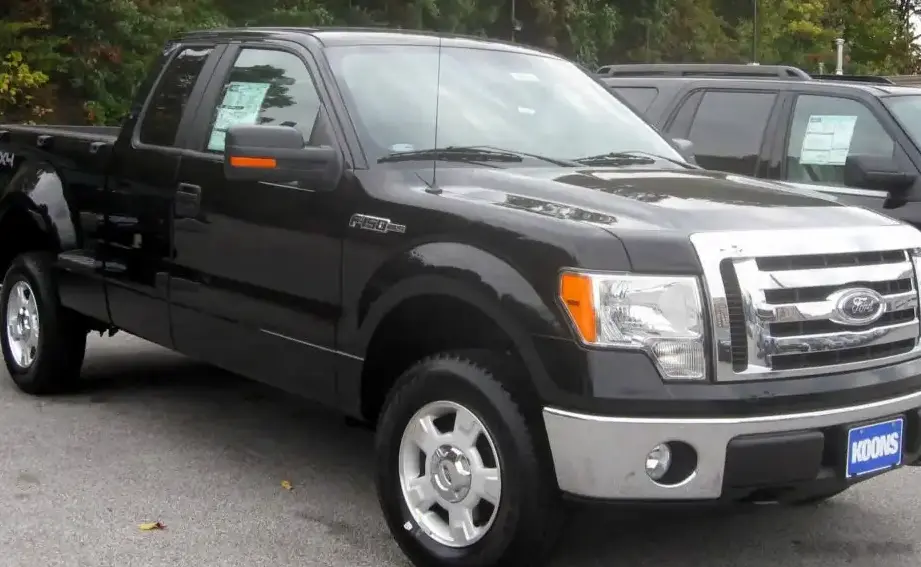
The Ford F-150 XII SuperCab, produced from 2008 to 2010, represented the twelfth generation of Ford’s immensely popular F-Series pickup truck. This iteration continued the F-150’s dominance in the full-size pickup segment in North America, offering a blend of capability, comfort, and technology. The 4.6-liter V8 engine paired with an automatic transmission was a mainstay of the lineup, positioned as a strong value proposition for buyers needing substantial towing and hauling capacity without the premium price tag of the higher-output engines. This configuration found a broad customer base, from contractors and tradespeople to families requiring a versatile vehicle.
Technical Specifications
| Brand | Ford |
| Model | F-Series F-150 |
| Generation | F-Series F-150 XII SuperCab |
| Type (Engine) | 4.6 V8 (292 Hp) Automatic |
| Start of production | October, 2008 |
| End of production | 2010 |
| Powertrain Architecture | Internal Combustion engine |
| Body type | Pick-up |
| Seats | 5-6 |
| Doors | 2 |
| Fuel consumption (urban) | 15.7 l/100 km (15 US mpg, 18 UK mpg, 6.4 km/l) |
| Fuel consumption (extra urban) | 11.8 l/100 km (19.9 US mpg, 23.9 UK mpg, 8.5 km/l) |
| Fuel Type | Petrol (Gasoline) |
| Power | 292 Hp @ 5700 rpm |
| Power per litre | 63.4 Hp/l |
| Torque | 434 Nm @ 4000 rpm (320.1 lb.-ft. @ 4000 rpm) |
| Engine layout | Front, Longitudinal |
| Engine displacement | 4606 cm3 (281.08 cu. in.) |
| Number of cylinders | 8 |
| Engine configuration | V-engine |
| Cylinder Bore | 90.17 mm (3.55 in.) |
| Piston Stroke | 90.17 mm (3.55 in.) |
| Compression ratio | 9.8:1 |
| Number of valves per cylinder | 3 |
| Fuel injection system | Multi-port manifold injection |
| Engine aspiration | Naturally aspirated engine |
| Valvetrain | SOHC |
| Engine oil capacity | 5.7 l (6.02 US qt | 5.02 UK qt) |
| Coolant | 15 l (15.85 US qt | 13.2 UK qt) |
| Max. weight | 3084 kg (6799.06 lbs.) |
| Trunk (boot) space – minimum | 1572 l (55.51 cu. ft.) |
| Trunk (boot) space – maximum | 1855 l (65.51 cu. ft.) |
| Fuel tank capacity | 98 l (25.89 US gal | 21.56 UK gal) |
| Permitted trailer load with brakes (12%) | 4309 kg (9499.72 lbs.) |
| Length | 5585-5885 mm (219.88 – 231.69 in.) |
| Width | 2004 mm (78.9 in.) |
| Width with mirrors folded | 2123 mm (83.58 in.) |
| Width including mirrors | 2464 mm (97.01 in.) |
| Height | 1816-1890 mm (71.5 – 74.41 in.) |
| Wheelbase | 3366-3670 mm (132.52 – 144.49 in.) |
| Ride height (ground clearance) | 208-213 mm (8.19 – 8.39 in.) |
| Minimum turning circle (turning diameter) | 13.3-14.3 m (43.64 – 46.92 ft.) |
| Approach angle | 21.1-22.2° |
| Departure angle | 18.3-18.8° |
| Ramp-over (brakeover) angle | 15.7° |
| Drivetrain Architecture | The Internal combustion engine (ICE) drives the rear wheels of the vehicle. |
| Drive wheel | Rear wheel drive |
| Number of gears and type of gearbox | 6 gears, automatic transmission |
| Front suspension | Double wishbone |
| Rear suspension | Leaf spring |
| Front brakes | Ventilated discs, 330 mm |
| Rear brakes | Ventilated discs, 348 mm |
| Assisting systems | ABS (Anti-lock braking system) |
| Steering type | Steering rack and pinion |
| Power steering | Electric Steering |
| Tires size | 255/65 R17; 265/60 R18; 275/55 R20 |
| Wheel rims size | 17; 18; 20 |
Introduction
The 2008-2010 Ford F-150 SuperCab with the 4.6-liter V8 and automatic transmission occupied a crucial middle ground in the F-150 lineup. The SuperCab body style offered extended cab space, providing seating for up to six passengers, making it a popular choice for families and work crews. Built on the robust 1HX0 platform (also underpinning the Lincoln Mark LT), this F-150 variant aimed to deliver a balance of capability, comfort, and affordability. It served as a step up from the base 3.7-liter V6 models, offering significantly more power and towing capacity, while remaining more accessible than the more powerful 5.4-liter V8 or the diesel options.
Powertrain & Engine Architecture
The heart of this F-150 was the 4.6-liter Modular V8 engine, specifically the version designated as the 2V. This engine, part of Ford’s long-running Modular engine family, featured a cast iron block with aluminum cylinder heads. It utilized a single overhead camshaft (SOHC) design with three valves per cylinder (two intake, one exhaust). Fuel delivery was handled by a multi-port fuel injection system, providing precise fuel metering for optimal combustion. The 4.6L engine was known for its relatively smooth operation and decent low-end torque. The engine was paired with a 6-speed automatic transmission (6R75E), which offered improved fuel economy and smoother shifting compared to the older 4-speed automatics. The 6R75E was designed to handle the engine’s torque output effectively, providing adequate acceleration and towing performance.
Driving Characteristics
The 4.6-liter V8 and 6-speed automatic combination delivered a respectable driving experience. While not as quick as the larger 5.4-liter V8, the 4.6L provided sufficient power for everyday driving and typical towing duties. The automatic transmission was tuned for smooth shifts and generally responsive performance. The gear ratios were optimized for both fuel efficiency and towing capability. Compared to the manual transmission equipped F-150s, the automatic offered greater convenience, particularly in stop-and-go traffic. However, the manual transmission generally provided slightly better fuel economy and a more direct connection to the engine. The SuperCab configuration, while offering more passenger space, did add some weight compared to the regular cab models, slightly impacting acceleration and fuel economy.
Equipment & Trim Levels
The 4.6-liter V8 engine was available on several F-150 trim levels, including XL, XLT, and Lariat. The base XL trim offered a more utilitarian interior with vinyl upholstery and basic features. The XLT trim added features like cloth upholstery, power windows and locks, and an upgraded audio system. The Lariat trim represented the more luxurious option, offering leather upholstery, heated seats, and additional convenience features. Standard equipment across most trims included air conditioning, a CD player, and anti-lock brakes (ABS). Optional extras included a power sunroof, navigation system, and a premium sound system. The SuperCab configuration typically included split-folding rear seats, providing flexible cargo and passenger space.
Chassis & Braking
The F-150’s chassis was built around a fully boxed frame, providing a solid foundation for its robust construction. The front suspension utilized an independent double wishbone design, offering a comfortable ride and good handling characteristics. The rear suspension employed a traditional leaf spring setup, optimized for load-carrying capacity. Braking duties were handled by ventilated disc brakes on all four wheels, with ABS standard. The rear discs were slightly larger than the front, providing increased stopping power when hauling heavy loads. The steering system was a rack-and-pinion setup with electric power steering, offering responsive steering feel and reduced driver effort.
Market Reception & Comparison
The 4.6-liter V8 F-150 was generally well-received by critics and consumers alike. It was praised for its blend of power, fuel economy, and affordability. Compared to the 5.4-liter V8, the 4.6L offered a noticeable improvement in fuel economy, making it a more attractive option for buyers who didn’t require the maximum towing capacity. The 4.6L also proved to be a more reliable engine than the early iterations of the 5.4L, reducing potential maintenance costs. However, some critics noted that the 4.6L could feel underpowered when towing heavy loads or driving uphill. Compared to the diesel options, the 4.6L offered a lower initial purchase price but lacked the diesel’s superior torque and fuel efficiency.
Legacy
The 4.6-liter V8 engine, in general, has proven to be a durable and reliable powerplant. The 2V version used in the 2008-2010 F-150 is no exception. While not without its potential issues (such as timing chain wear and spark plug fouling), these engines are generally capable of reaching high mileage with proper maintenance. In the used car market, these F-150s represent a good value proposition, offering a capable and reliable truck at an affordable price. The 6-speed automatic transmission has also proven to be a robust unit, contributing to the overall longevity of these vehicles. The 2008-2010 F-150 SuperCab with the 4.6-liter V8 remains a popular choice for buyers seeking a versatile and dependable full-size pickup truck.