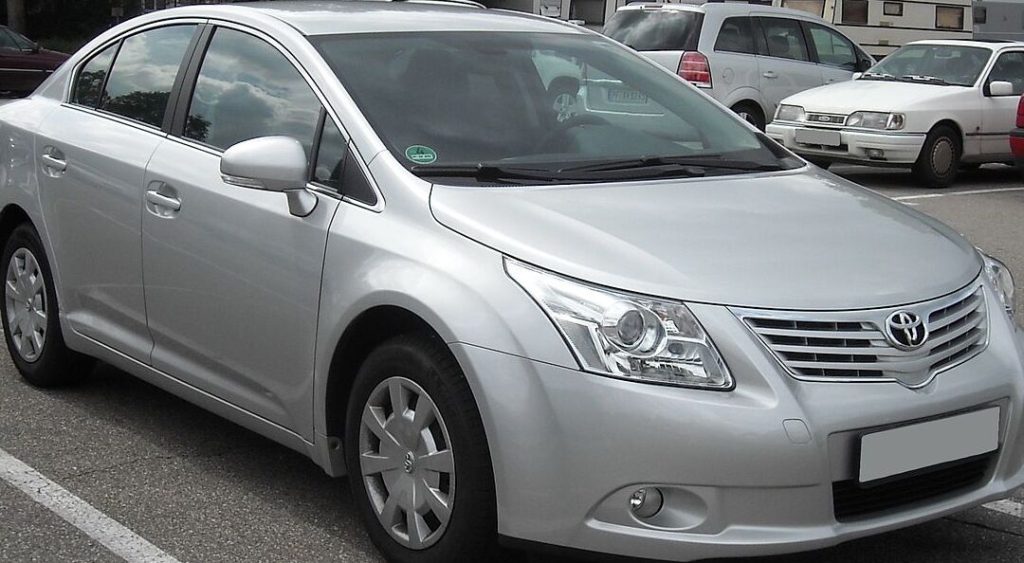
The Toyota Avensis III Wagon, specifically the facelifted model produced from 2012 to 2015, represented Toyota’s offering in the mid-size station wagon segment. The 1.6 Valvematic variant, producing 132 horsepower, was introduced as a more fuel-efficient and accessible option within the Avensis lineup. Positioned as an entry-level to mid-range trim, it aimed to attract buyers prioritizing practicality and economy over outright performance. This generation Avensis (designated T27) was primarily marketed in Europe, where the demand for wagons remained strong, and served as a competitor to vehicles like the Ford Mondeo Wagon, Volkswagen Passat Variant, and Opel/Vauxhall Insignia Sports Tourer.
Technical Specifications
| Brand | Toyota |
| Model | Avensis |
| Generation | Avensis III Wagon (facelift 2012) |
| Type (Engine) | 1.6 Valvematic (132 Hp) |
| Start of production | 2012 |
| End of production | 2015 |
| Powertrain Architecture | Internal Combustion engine |
| Body type | Station wagon (estate) |
| Seats | 5 |
| Doors | 5 |
| Fuel consumption (urban) | 8.5 l/100 km (27.7 US mpg, 33.2 UK mpg, 11.8 km/l) |
| Fuel consumption (extra urban) | 5.3 l/100 km (44.4 US mpg, 53.3 UK mpg, 18.9 km/l) |
| Fuel consumption (combined) | 6.5 l/100 km (36.2 US mpg, 43.5 UK mpg, 15.4 km/l) |
| Fuel Type | Petrol (Gasoline) |
| Acceleration 0 – 100 km/h | 10.6 sec |
| Acceleration 0 – 62 mph | 10.6 sec |
| Acceleration 0 – 60 mph | 10.1 sec |
| Maximum speed | 195 km/h (121.17 mph) |
| Emission standard | Euro 5 B |
| Weight-to-power ratio | 10.6 kg/Hp, 94.3 Hp/tonne |
| Weight-to-torque ratio | 8.8 kg/Nm, 114.3 Nm/tonne |
| Power | 132 Hp @ 6400 rpm |
| Power per litre | 82.6 Hp/l |
| Torque | 160 Nm @ 4400 rpm (118.01 lb.-ft. @ 4400 rpm) |
| Engine layout | Front, Transverse |
| Engine Model/Code | 1ZR-FAE |
| Engine displacement | 1598 cm3 (97.52 cu. in.) |
| Number of cylinders | 4 |
| Engine configuration | Inline |
| Cylinder Bore | 80.5 mm (3.17 in.) |
| Piston Stroke | 78.5 mm (3.09 in.) |
| Compression ratio | 10.7:1 |
| Number of valves per cylinder | 4 |
| Fuel injection system | Multi-port manifold injection |
| Engine aspiration | Naturally aspirated engine |
| Valvetrain | DOHC – Valvematic |
| Engine oil capacity | 4.2 l (4.44 US qt | 3.7 UK qt) |
| Coolant | 6.3 l (6.66 US qt | 5.54 UK qt) |
| Kerb Weight | 1400 kg (3086.47 lbs.) |
| Max. weight | 1970 kg (4343.11 lbs.) |
| Max load | 570 kg (1256.63 lbs.) |
| Trunk (boot) space – minimum | 543 l (19.18 cu. ft.) |
| Fuel tank capacity | 60 l (15.85 US gal | 13.2 UK gal) |
| Length | 4780 mm (188.19 in.) |
| Width | 1810 mm (71.26 in.) |
| Height | 1480 mm (58.27 in.) |
| Wheelbase | 2700 mm (106.3 in.) |
| Front track | 1550 mm (61.02 in.) |
| Rear (Back) track | 1540 mm (60.63 in.) |
| Drivetrain Architecture | Front wheel drive |
| Number of gears and type of gearbox | 6 gears, manual transmission |
| Front suspension | Independent, type McPherson with coil spring and anti-roll bar |
| Rear suspension | Double wishbone |
| Front brakes | Ventilated discs |
| Rear brakes | Disc |
| Assisting systems | ABS (Anti-lock braking system) |
| Steering type | Steering rack and pinion |
Powertrain & Engine Architecture
The heart of this Avensis variant is the 1ZR-FAE 1.6-liter inline-four engine. This engine is a member of Toyota’s ZR engine family, known for its reliability and efficiency. The 1ZR-FAE utilizes Toyota’s Valvematic technology, a continuously variable valve lift system. Valvematic allows for precise control of intake valve timing and lift, optimizing engine performance and fuel economy across a wider range of engine speeds. Unlike traditional VVT-i systems that primarily adjust valve timing, Valvematic directly alters the valve lift, resulting in improved combustion efficiency. The engine employs multi-port fuel injection and a compression ratio of 10.7:1. The 132 horsepower and 160 Nm (118 lb-ft) of torque are delivered through a six-speed manual transmission, which was the standard offering for this trim level. The transmission’s gear ratios were tuned for fuel efficiency and smooth operation, prioritizing comfortable cruising over sporty acceleration.
Driving Characteristics
The 1.6 Valvematic Avensis Wagon offered a comfortable and refined driving experience, but wasn’t designed for spirited performance. Acceleration from 0-60 mph took around 10.1 seconds, and top speed was limited to 195 km/h (121 mph). The engine felt adequate for everyday driving, providing sufficient power for highway merging and overtaking, but it lacked the punch of the higher-output 2.0-liter variants. The six-speed manual transmission was well-matched to the engine’s characteristics, offering smooth gear changes and helping to keep the engine in its optimal power band. Compared to the more powerful Avensis models, the 1.6L felt less strained during long journeys, contributing to a more relaxed driving experience. The suspension setup prioritized comfort, absorbing bumps and imperfections in the road effectively.
Equipment & Trim Levels
The 1.6 Valvematic trim typically included standard features such as air conditioning, power windows, power mirrors, a CD/radio system with auxiliary input, and basic safety equipment like ABS, airbags, and stability control. Higher trim levels, such as the Active and Style, added features like alloy wheels, automatic climate control, a touchscreen infotainment system, rear parking sensors, and cruise control. Interior upholstery was typically cloth, with options for upgraded materials on higher trims. The dashboard layout was functional and straightforward, prioritizing ease of use over stylistic flair.
Chassis & Braking
The Avensis Wagon featured a front-wheel-drive layout with an independent McPherson strut suspension at the front and a double wishbone suspension at the rear. This suspension setup provided a good balance between ride comfort and handling. The front brakes were ventilated discs, while the rear brakes were solid discs. ABS (Anti-lock Braking System) was standard, enhancing braking performance and safety. The steering was a rack-and-pinion system, providing precise and responsive steering feel.
Market Reception & Comparison
The 1.6 Valvematic Avensis Wagon was generally well-received by automotive critics as a practical and economical choice. It was praised for its fuel efficiency, comfortable ride, and spacious interior. However, some reviewers noted that the engine lacked the power and refinement of its competitors. Compared to the 2.0-liter Avensis models, the 1.6L offered significantly better fuel economy but at the expense of performance. The 1.6L also provided a more affordable entry point into the Avensis range, making it an attractive option for budget-conscious buyers. Against rivals like the Ford Mondeo and Volkswagen Passat, the Avensis offered a strong value proposition, particularly in terms of reliability and long-term ownership costs.
Legacy
The 1.6 Valvematic engine, while not the most powerful option in the Avensis lineup, proved to be a reliable and durable powertrain. The 1ZR-FAE engine is known for its longevity and relatively low maintenance costs. In the used car market, the 1.6L Avensis Wagon remains a popular choice for buyers seeking a practical, economical, and dependable station wagon. Its fuel efficiency and spacious interior continue to appeal to families and individuals who prioritize practicality over performance. While not a collector’s item, the 1.6 Valvematic Avensis Wagon represents a solid and well-engineered vehicle that has stood the test of time.