Technical Specifications
| Brand | Ford |
| Model | F-Series F-150 |
| Generation | F-Series F-150 XII SuperCab |
| Type (Engine) | 5.0 V8 (360 Hp) Automatic |
| Start of production | 2011 |
| End of production | 2014 |
| Powertrain Architecture | Internal Combustion engine |
| Body type | Pick-up |
| Seats | 5-6 |
| Doors | 2 |
| Fuel consumption (economy) – urban | 15.7 l/100 km (15 US mpg, 18 UK mpg, 6.4 km/l) |
| Fuel consumption (economy) – extra urban | 11.2 l/100 km (21 US mpg, 25.2 UK mpg, 8.9 km/l) |
| Fuel consumption (economy) – combined | 13.8 l/100 km (17 US mpg, 20.5 UK mpg, 7.2 km/l) |
| Fuel Type | Petrol (Gasoline) |
| Weight-to-power ratio | 6.5 kg/Hp, 153.5 Hp/tonne |
| Weight-to-torque ratio | 4.6 kg/Nm, 219.6 Nm/tonne |
| Power | 360 Hp @ 5500 rpm |
| Power per litre | 72.7 Hp/l |
| Torque | 515 Nm @ 4250 rpm (379.84 lb.-ft. @ 4250 rpm) |
| Engine layout | Front, Longitudinal |
| Engine displacement | 4949 cm3 (302.01 cu. in.) |
| Number of cylinders | 8 |
| Engine configuration | V-engine |
| Cylinder Bore | 92.2 mm (3.63 in.) |
| Piston Stroke | 92.71 mm (3.65 in.) |
| Compression ratio | 10.5:1 |
| Number of valves per cylinder | 4 |
| Fuel injection system | Multi-port manifold injection |
| Engine aspiration | Naturally aspirated engine |
| Valvetrain | DOHC, Ti-VCT |
| Engine oil capacity | 7.3 l (7.71 US qt | 6.42 UK qt) |
| Coolant | 16.1 l (17.01 US qt | 14.17 UK qt) |
| Kerb Weight | 2345-2481 kg (5169.84 – 5469.67 lbs.) |
| Max. weight | 3719 kg (8198.99 lbs.) |
| Max load | 1238-1374 kg (2729.32 – 3029.15 lbs.) |
| Fuel tank capacity | 98 l (25.89 US gal | 21.56 UK gal) |
| Permitted trailer load with brakes (12%) | 4354 kg (9598.93 lbs.) |
| Length | 5890-6360 mm (231.89 – 250.39 in.) |
| Width | 2012 mm (79.21 in.) |
| Width including mirrors | 2464 mm (97.01 in.) |
| Height | 1900-1910 mm (74.8 – 75.2 in.) |
| Wheelbase | 3670-4143 mm (144.49 – 163.11 in.) |
| Front track | 1702 mm (67.01 in.) |
| Rear (Back) track | 1702 mm (67.01 in.) |
| Minimum turning circle (turning diameter) | 14.3-15.9 m (46.92 – 52.17 ft.) |
| Drivetrain Architecture | The Internal combustion engine (ICE) drives the rear wheels of the vehicle. |
| Drive wheel | Rear wheel drive |
| Number of gears and type of gearbox | 6 gears, automatic transmission |
| Front suspension | Double wishbone |
| Rear suspension | Leaf spring |
| Front brakes | Ventilated discs, 351×34 mm |
| Rear brakes | Ventilated discs, 348×25 mm |
| Assisting systems | ABS (Anti-lock braking system) |
| Steering type | Steering rack and pinion |
| Power steering | Electric Steering |
| Tires size | 255/70 R17; 265/60 R18; 275/55 R20 |
| Wheel rims size | 7.5J x 17; 7.5j x 18; 8.5J x 20 |
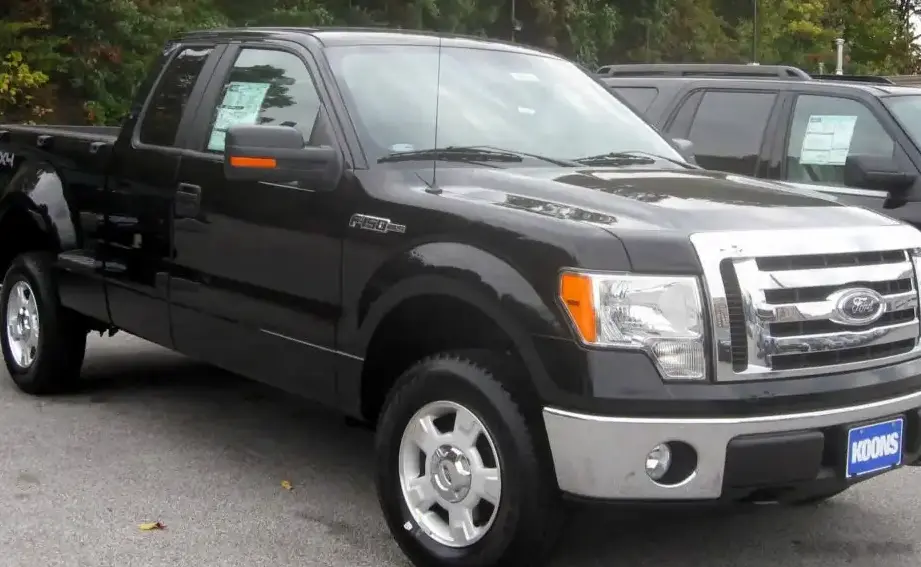
The 2011-2014 Ford F-150 SuperCab, representing the twelfth generation of Ford’s best-selling F-Series pickup, continued the lineage of a full-size, heavy-duty truck designed for a wide range of applications. The combination of the 5.0-liter V8 engine and an automatic transmission proved to be a popular configuration, striking a balance between capability and usability for both work and personal use. The SuperCab body style, offering extended passenger volume, made it a practical choice for families or work crews needing additional seating. This particular variant occupied a mid-to-upper position within the F-150 lineup, appealing to buyers who desired substantial power without the expense of the higher trim levels or the complexity of the EcoBoost engines.
Powertrain & Engine Architecture
The powertrain of this F-150 variant centered around the 5.0-liter Coyote V8 engine. This engine, designated as the 3V, featured a bore of 92.2mm and a stroke of 92.71mm, resulting in a total displacement of 4949cc (302.01 cubic inches). It employed a cast iron engine block with aluminum cylinder heads, incorporating dual overhead camshafts (DOHC) and twin independent variable camshaft timing (Ti-VCT). The Ti-VCT system dynamically adjusted valve timing to optimize performance and fuel efficiency across the engine’s operating range. Fuel delivery was managed by a multi-port fuel injection system. The engine generated 360 horsepower at 5500 rpm and 515 Nm (379.84 lb-ft) of torque at 4250 rpm. The engine was mounted longitudinally within the chassis. A six-speed automatic transmission was paired with the V8, providing smooth and efficient gear changes. This transmission was specifically calibrated to complement the V8’s power delivery, offering a balance between acceleration and fuel economy.
Driving Characteristics
The pairing of the 5.0L V8 and the six-speed automatic transmission delivered a robust and capable driving experience. While not offering the outright acceleration of the EcoBoost-equipped F-150s, the V8 provided ample power for towing, hauling, and everyday driving tasks. The automatic transmission offered smooth and predictable shifts, and the gear ratios were well-suited for both on-road and off-road conditions. Compared to F-150s equipped with a manual transmission, the automatic provided greater convenience, particularly in congested traffic. However, it did result in a slight decrease in fuel economy and a less direct connection to the engine. The weight-to-power ratio of 6.5 kg/Hp provided adequate acceleration, and the substantial torque output ensured strong pulling power. The standard rear-wheel-drive configuration provided a traditional truck feel, while the optional four-wheel-drive system enhanced traction in challenging conditions.
Equipment & Trim Levels
The SuperCab configuration offered extended rear seating, providing increased passenger space compared to the standard cab models. Standard features generally included air conditioning, power windows and locks, a basic audio system, and durable vinyl upholstery. Higher trim levels, such as the XLT and Lariat, added features like alloy wheels, upgraded audio systems, leather upholstery, and advanced safety technologies. Optional extras included a navigation system, a power sunroof, and various towing packages tailored to specific needs. The interior design prioritized functionality and durability, reflecting the truck’s work-oriented purpose. The dashboard layout was straightforward, with easily readable gauges and intuitive controls.
Chassis & Braking
The F-150 XII SuperCab utilized a traditional body-on-frame construction, providing a robust and durable platform. The front suspension featured an independent double wishbone design, while the rear suspension employed a conventional leaf spring setup. This combination offered a good compromise between ride comfort and load-carrying capacity. Braking was provided by ventilated disc brakes on all four wheels, with ABS (Anti-lock Braking System) included as standard equipment. The front brakes measured 351x34mm, while the rear brakes were 348x25mm. The steering system was a rack-and-pinion setup with electric power steering, providing responsive and precise handling.
Market Reception & Comparison
The 5.0L V8-equipped F-150 SuperCab was generally well-received by automotive critics and consumers. It was praised for its strong performance, comfortable ride quality, and spacious interior. Compared to the EcoBoost engines, the V8 offered a more traditional engine sound and feel, which appealed to some buyers. However, the EcoBoost engines typically delivered superior fuel economy. In comparison to the smaller V6 engines, the V8 provided significantly more power and towing capacity. Fuel economy averaged around 13.8 l/100 km (17 US mpg) in combined driving, which was typical for a full-size pickup truck of that era. Reliability was generally considered good, although some owners reported minor issues with the fuel injection system and the automatic transmission.
Legacy
The 5.0L Coyote V8 engine has proven to be a durable and reliable powerplant. The F-150 XII SuperCab equipped with this engine remains a popular choice in the used car market today. Its combination of power, practicality, and affordability makes it an attractive option for buyers seeking a capable and dependable pickup truck. While newer F-150 models offer more advanced technology and features, the twelfth-generation F-150 continues to hold its own as a capable workhorse and a testament to Ford’s long-standing tradition of building tough and reliable trucks. Consistent maintenance, including regular oil changes and transmission fluid flushes, is essential for ensuring the long-term reliability of this powertrain.