Technical Specifications
| Brand | Dacia |
| Model | Sandero |
| Generation | Sandero II |
| Type (Engine) | 1.5 dCi (75 Hp) FAP |
| Start of production | 2012 |
| End of production | 2015 |
| Powertrain Architecture | Internal Combustion engine |
| Body type | Hatchback |
| Seats | 5 |
| Doors | 5 |
| Fuel consumption (urban) | 4.3 l/100 km (54.7 US mpg, 65.7 UK mpg, 23.3 km/l) |
| Fuel consumption (extra urban) | 3.5 l/100 km (67.2 US mpg, 80.7 UK mpg, 28.6 km/l) |
| Fuel consumption (combined) | 3.8 l/100 km (61.9 US mpg, 74.3 UK mpg, 26.3 km/l) |
| CO2 emissions | 99 g/km |
| Fuel Type | Diesel |
| Acceleration 0 – 100 km/h | 14.6 sec |
| Acceleration 0 – 62 mph | 14.6 sec |
| Acceleration 0 – 60 mph | 13.9 sec |
| Maximum speed | 164 km/h (101.9 mph) |
| Emission standard | Euro 5 |
| Weight-to-power ratio | 13.8 kg/Hp, 72.6 Hp/tonne |
| Weight-to-torque ratio | 5.2 kg/Nm, 193.6 Nm/tonne |
| Power | 75 Hp @ 4000 rpm |
| Power per litre | 51.3 Hp/l |
| Torque | 200 Nm @ 1750 rpm (147.51 lb.-ft. @ 1750 rpm) |
| Engine layout | Front, Transverse |
| Engine Model/Code | K9K 612 |
| Engine displacement | 1461 cm3 (89.16 cu. in.) |
| Number of cylinders | 4 |
| Engine configuration | Inline |
| Cylinder Bore | 76 mm (2.99 in.) |
| Piston Stroke | 80.5 mm (3.17 in.) |
| Compression ratio | 15.5:1 |
| Number of valves per cylinder | 2 |
| Fuel injection system | Diesel Commonrail |
| Engine aspiration | Turbocharger, Intercooler |
| Valvetrain | SOHC |
| Engine oil capacity | 4.5 l (4.76 US qt | 3.96 UK qt) |
| Coolant capacity | 4.5 l (4.76 US qt | 3.96 UK qt) |
| Kerb Weight | 1033 kg (2277.38 lbs.) |
| Max. weight | 1590 kg (3505.35 lbs.) |
| Max load | 557 kg (1227.97 lbs.) |
| Trunk (boot) space – minimum | 320 l (11.3 cu. ft.) |
| Trunk (boot) space – maximum | 1200 l (42.38 cu. ft.) |
| Fuel tank capacity | 50 l (13.21 US gal | 11 UK gal) |
| Max. roof load | 80 kg (176.37 lbs.) |
| Permitted trailer load (braked) | 1100 kg (2425.08 lbs.) |
| Permitted trailer load (unbraked) | 550 kg (1212.54 lbs.) |
| Permitted towbar download | 75 kg (165.35 lbs.) |
| Length | 4057 mm (159.72 in.) |
| Width | 1733 mm (68.23 in.) |
| Width including mirrors | 1984 mm (78.11 in.) |
| Height | 1523 mm (59.96 in.) |
| Wheelbase | 2589 mm (101.93 in.) |
| Front track | 1497 mm (58.94 in.) |
| Rear track | 1486 mm (58.5 in.) |
| Front overhang | 818 mm (32.2 in.) |
| Rear overhang | 650 mm (25.59 in.) |
| Ride height (ground clearance) | 163 mm (6.42 in.) |
| Minimum turning circle | 10.68 m (35.04 ft.) |
| Drivetrain Architecture | Front wheel drive |
| Number of gears | 5 |
| Gearbox type | Manual transmission |
| Front suspension | Independent type McPherson, Transverse stabilizer |
| Rear suspension | Coil spring, Torsion |
| Front brakes | Ventilated discs, 258×22 mm |
| Rear brakes | Drum, 203 mm |
| Assisting systems | ABS (Anti-lock braking system) |
| Steering type | Steering rack and pinion |
| Power steering | Electric Steering |
| Tires size | 185/65 R15 |
| Wheel rims size | 6J x 15 |
Introduction
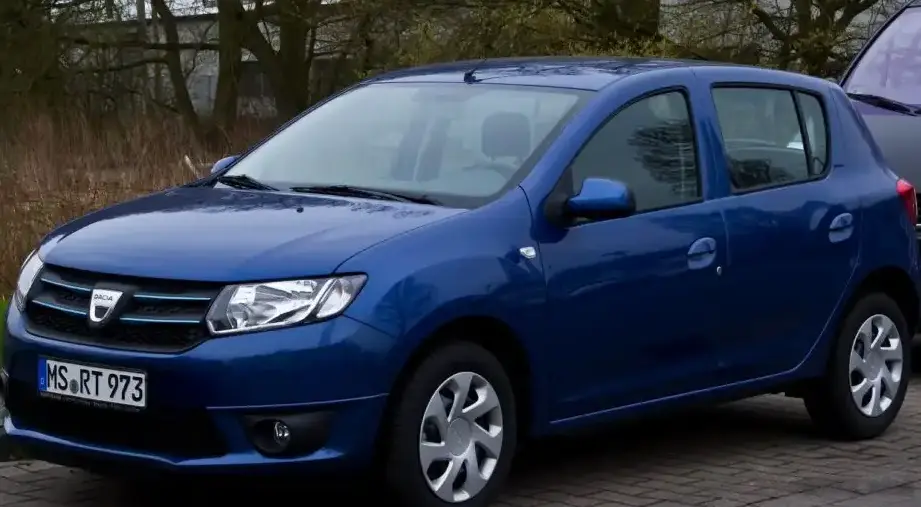
The Dacia Sandero II 1.5 dCi (75 Hp) FAP is a front-wheel-drive, five-door hatchback produced by the Romanian automaker Dacia between 2012 and 2015. This variant occupied the entry-level position within the Sandero II range, offering an economical diesel option for budget-conscious buyers. It was built on the Dacia/Renault B0 platform, also known as the 1HX0/A3 platform, shared with other Renault and Nissan models. The Sandero II represented a significant step forward for Dacia, offering improved build quality, interior space, and features compared to its predecessor, while still maintaining the brand’s core value proposition of affordability. The 1.5 dCi engine, a mainstay of the Dacia lineup, was chosen for its fuel efficiency and relatively low running costs, making it a popular choice in European markets.
Powertrain & Engine Architecture
The heart of the Sandero II 1.5 dCi (75 Hp) is the K9K 612 engine, a 1.5-liter inline-four cylinder diesel. This engine is part of the K9K family, developed jointly by Renault and Nissan. The 75 horsepower version utilizes a turbocharger with an intercooler to boost power and efficiency. Fuel is delivered via a Diesel Commonrail direct injection system, providing precise fuel metering for optimized combustion. The engine features a Single Overhead Camshaft (SOHC) valvetrain with two valves per cylinder. A Diesel Particulate Filter (DPF), denoted by the “FAP” in the model name, is included to reduce particulate matter emissions, meeting Euro 5 standards. The engine’s relatively simple design contributes to its reliability and ease of maintenance. The 5-speed manual transmission is the only gearbox option available with this engine configuration, prioritizing fuel economy over outright performance. The transmission is a standard, cable-operated unit, known for its durability and straightforward operation.
Driving Characteristics
The Sandero II 1.5 dCi (75 Hp) offers modest performance, geared towards practicality and fuel efficiency rather than spirited driving. With 75 horsepower and 200 Nm (147.51 lb.-ft.) of torque, acceleration from 0-60 mph takes around 13.9 seconds, and top speed is approximately 101.9 mph. The engine delivers its peak torque at a relatively low 1750 rpm, providing adequate pulling power for everyday driving situations, such as overtaking on the highway or climbing hills. However, the engine can feel strained when fully loaded or at higher speeds. The 5-speed manual transmission is well-matched to the engine’s characteristics, with gear ratios optimized for fuel economy. The gearshift action is generally smooth and precise. Compared to higher-powered Sandero II variants, such as those with the 90 hp version of the 1.5 dCi or the petrol engines, this 75 hp model feels noticeably slower and less refined. However, it excels in urban environments where its fuel efficiency and maneuverability are highly valued.
Equipment & Trim Levels
The 1.5 dCi (75 Hp) FAP typically represented the base trim level for the Sandero II. Standard equipment generally included power steering, central locking, electric front windows, and an ABS anti-lock braking system. Interior upholstery was typically cloth, with a functional but basic dashboard layout. Air conditioning was often an optional extra, as were features like a radio/CD player and alloy wheels. Safety features were relatively basic, with driver and passenger airbags being standard, but lacking more advanced systems like electronic stability control. The focus was on providing essential features at the lowest possible price point. Higher trim levels of the Sandero II offered upgrades such as air conditioning, upgraded audio systems, and more premium interior materials.
Chassis & Braking
The Sandero II utilizes a MacPherson strut independent suspension at the front and a coil spring torsion beam suspension at the rear. This setup provides a reasonable balance between ride comfort and handling. The front suspension incorporates a transverse stabilizer bar to reduce body roll during cornering. Braking duties are handled by ventilated discs at the front and drum brakes at the rear. The drum brakes on the rear were a cost-saving measure common in entry-level models. The ABS system provides enhanced braking control, particularly on slippery surfaces. The steering is a rack and pinion system with electric power assistance, offering light and easy steering feel. The relatively lightweight construction of the Sandero II contributes to its agility and fuel efficiency.
Market Reception & Comparison
The Dacia Sandero II 1.5 dCi (75 Hp) FAP was well-received in European markets as an exceptionally affordable and fuel-efficient hatchback. Critics praised its practicality, spacious interior, and low running costs. However, the engine’s limited power and basic interior were often cited as drawbacks. Compared to other diesel-powered hatchbacks in its class, such as the Volkswagen Polo or Peugeot 208, the Sandero II offered significantly lower prices but lacked the refinement and performance of its rivals. The 75 hp version of the 1.5 dCi engine offered better fuel economy than the 90 hp variant, but at the expense of performance. The manual transmission, while efficient, was less convenient than the automatic transmissions offered in some competing models. Despite its limitations, the Sandero II 1.5 dCi (75 Hp) FAP proved to be a popular choice for buyers seeking a budget-friendly and economical vehicle.
Legacy
The K9K 612 engine, found in the Sandero II 1.5 dCi (75 Hp) FAP, has proven to be a relatively reliable powertrain. While the Diesel Particulate Filter (DPF) can be a potential source of issues if the vehicle is primarily used for short trips, proper maintenance and occasional highway driving can help prevent DPF blockages. In the used car market, the Sandero II 1.5 dCi (75 Hp) FAP remains an attractive option for buyers seeking a cheap and economical vehicle. Its low purchase price, combined with its excellent fuel economy, makes it a compelling choice for those on a tight budget. However, potential buyers should be aware of the engine’s limited power and the potential for DPF-related issues. Overall, the Sandero II 1.5 dCi (75 Hp) FAP represents a significant achievement in affordable motoring, offering a practical and economical solution for everyday transportation.