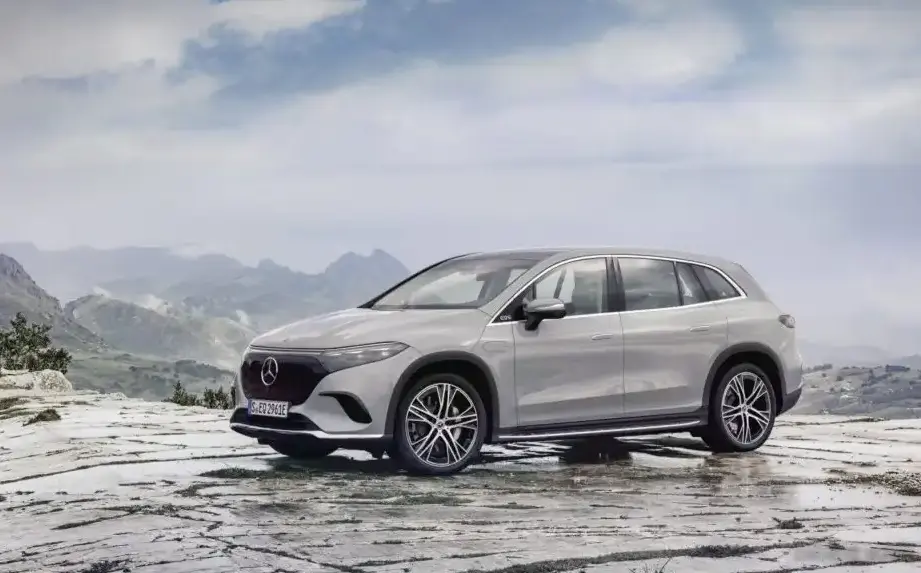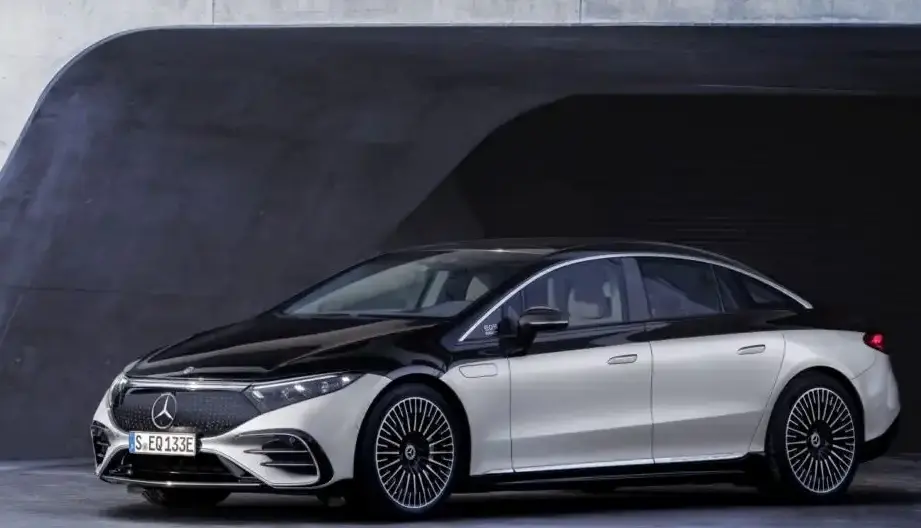
The Mercedes-Benz EQS 350 100 kWh (292 hp) is a fully electric liftback introduced in November 2021 as part of the V297 EQS generation. Positioned as an entry-level variant within the EQS lineup, it offered a balance of range, performance, and luxury, making it a compelling option in the burgeoning premium electric vehicle market. Production of this specific configuration concluded in May 2022, superseded by evolving trim levels and battery technologies within the EQS range. The EQS represents Mercedes-Benz’s initial foray into a dedicated electric platform, showcasing the brand’s commitment to electrification and advanced automotive technology.
Technical Specifications
| Brand | Mercedes-Benz |
| Model | EQS |
| Generation | EQS (V297) |
| Type (Engine) | EQS 350 100 kWh (292 Hp) |
| Start of production | November, 2021 |
| End of production | May, 2022 |
| Powertrain Architecture | BEV (Electric Vehicle) |
| Body type | Liftback |
| Seats | 5 |
| Doors | 5 |
| Fuel Type | Electricity |
| Acceleration 0 – 100 km/h | 6.6 sec |
| Acceleration 0 – 62 mph | 6.6 sec |
| Acceleration 0 – 60 mph | 6.3 sec |
| Maximum speed | 210 km/h (130.49 mph) |
| Weight-to-power ratio | 7.9 kg/Hp, 126.1 Hp/tonne |
| Weight-to-torque ratio | 4.1 kg/Nm, 244.1 Nm/tonne |
| Gross battery capacity | 100 kWh |
| Net (usable) battery capacity | 90.56 kWh |
| Battery technology | Lithium-ion (Li-Ion) |
| Battery location | Below the floor |
| All-electric range (WLTP) | 529-638 km (328.71 – 396.43 mi) |
| Average Energy consumption (WLTP) | 16.4-20 kWh/100 km (26.39 – 32.19 kWh/100 mi) |
| MPGe | 128 – 105 |
| km/kWh | 6.1 – 5 |
| mi/kWh | 3.8 – 3.1 |
| Electric motor power | 292 Hp |
| Electric motor Torque | 565 Nm (416.72 lb.-ft.) |
| Electric motor model/code | EM0027 |
| Electric motor location | Rear axle, Transverse |
| System power | 292 Hp |
| System torque | 565 Nm (416.72 lb.-ft.) |
| Kerb Weight | 2315 kg (5103.7 lbs.) |
| Max. weight | 2910 kg (6415.45 lbs.) |
| Max load | 595 kg (1311.75 lbs.) |
| Trunk (boot) space – minimum | 610 l (21.54 cu. ft.) |
| Trunk (boot) space – maximum | 1770 l (62.51 cu. ft.) |
| Max. roof load | 100 kg (220.46 lbs.) |
| Permitted trailer load with brakes (12%) | 750 kg (1653.47 lbs.) |
| Permitted trailer load without brakes | 750 kg (1653.47 lbs.) |
| Permitted towbar download | 75 kg (165.35 lbs.) |
| Length | 5216 mm (205.35 in.) |
| Width | 1926 mm (75.83 in.) |
| Width including mirrors | 2125 mm (83.66 in.) |
| Height | 1512 mm (59.53 in.) |
| Wheelbase | 3210 mm (126.38 in.) |
| Front track | 1667 mm (65.63 in.) |
| Rear (Back) track | 1682 mm (66.22 in.) |
| Front overhang | 915 mm (36.02 in.) |
| Rear overhang | 1091 mm (42.95 in.) |
| Ride height (ground clearance) | 134 mm (5.28 in.) |
| Minimum turning circle (turning diameter) | 10.9 m (35.76 ft.) |
| Drivetrain Architecture | One electric motor drives the rear wheels. |
| Drive wheel | Rear wheel drive |
| Number of gears and type of gearbox | 1 gears, automatic transmission |
| Front suspension | Independent multi-link suspension, Air suspension |
| Rear suspension | Independent multi-link suspension, Air suspension |
| Front brakes | Ventilated discs |
| Rear brakes | Ventilated discs |
| Assisting systems | ABS (Anti-lock braking system), 4-wheel steering (4WS, active rear steering) |
| Steering type | Steering rack and pinion |
| Power steering | Electric Steering |
| Tires size | 235/55 R19; 255/45 R20; 265/40 R21; 265/35 R22 |
| Wheel rims size | 8J x 19; 8.5J x 20; 9.5J x 21; 9.5J x 22 |
Powertrain & Engine Architecture
The EQS 350 utilizes a single rear-mounted electric motor, designated EM0027, producing 292 horsepower and 565 Nm (416.72 lb.-ft.) of torque. The powertrain is built around a 100 kWh lithium-ion battery pack positioned under the vehicle floor, providing a usable capacity of 90.56 kWh. The battery management system is sophisticated, incorporating thermal regulation to optimize performance and longevity. Unlike traditional internal combustion engines, the electric motor delivers instant torque, resulting in brisk acceleration. The single-speed automatic transmission is integral to the motor housing, providing seamless power delivery. The car supports DC fast charging, allowing for significant range replenishment in relatively short periods.
Driving Characteristics
The EQS 350 offers a refined and comfortable driving experience. Acceleration to 60 mph takes approximately 6.3 seconds, making it competitive within its segment. While not as overtly sporty as higher-performance EQS variants, the 350 provides ample power for everyday driving and highway merging. The rear-wheel drive configuration contributes to balanced handling, and the air suspension delivers a smooth ride, effectively isolating passengers from road imperfections. The single-speed transmission means there are no gear changes, contributing to the seamless power delivery. Compared to the EQS 450+ or 580 4MATIC models, the 350 offers a more accessible entry point into the EQS range, prioritizing efficiency and comfort over outright performance.
Equipment & Trim Levels
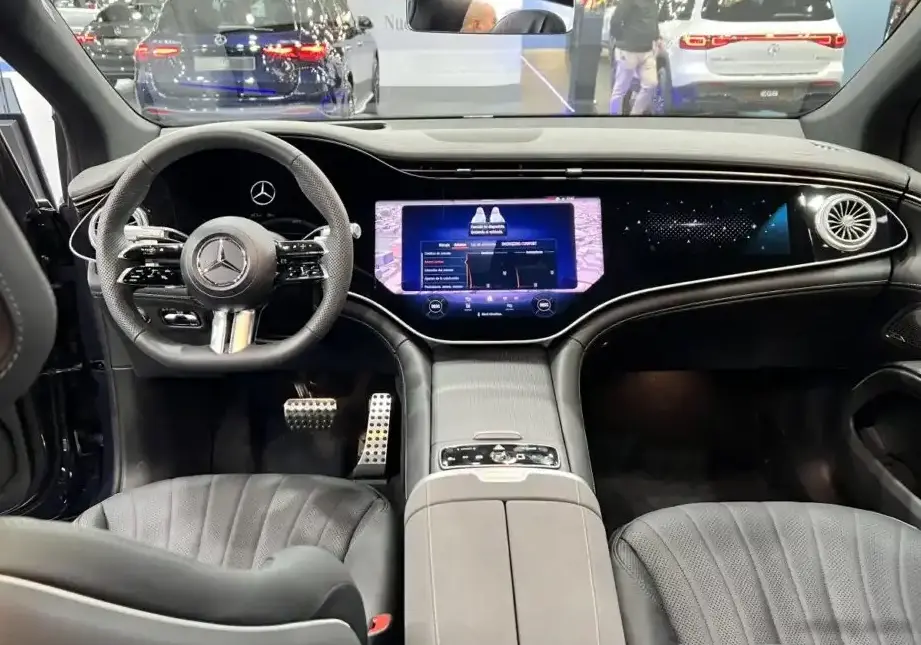
The EQS 350 came standard with a comprehensive suite of features, including the Mercedes-Benz User Experience (MBUX) infotainment system with a large touchscreen display, premium synthetic leather upholstery, heated front seats, and a panoramic sunroof. Standard safety features included automatic emergency braking, lane keeping assist, and adaptive cruise control. Optional extras included genuine leather upholstery, augmented reality navigation, a Burmester surround sound system, and rear-axle steering. The interior design emphasized minimalist luxury, with high-quality materials and a focus on technological integration.
Chassis & Braking
The EQS 350 features an independent multi-link suspension at both the front and rear, coupled with air suspension for enhanced ride comfort and adjustability. Ventilated disc brakes are employed on all four wheels, providing ample stopping power. The car is equipped with ABS (Anti-lock braking system) and electronic stability control. The relatively low curb weight of 2315 kg (5103.7 lbs.) contributes to agile handling. Available rear-axle steering further enhances maneuverability, particularly in urban environments.
Market Reception & Comparison
The EQS 350 was generally well-received by automotive critics, who praised its luxurious interior, smooth ride, and impressive range. However, some reviewers noted that its performance was not as exhilarating as that of higher-output EQS models. Compared to other luxury electric liftbacks, such as the Porsche Taycan or Tesla Model S, the EQS 350 offered a more traditional Mercedes-Benz driving experience, prioritizing comfort and refinement over outright sportiness. Its energy consumption of 16.4-20 kWh/100 km (26.39 – 32.19 kWh/100 mi) was competitive within its class.
Legacy
The EQS 350 100 kWh represents an important milestone in Mercedes-Benz’s transition to electric mobility. While its production run was relatively short, it established the EQS as a benchmark for luxury electric vehicles. The powertrain, while not the most powerful in the EQS lineup, has proven to be reliable, and used examples continue to hold their value. The EQS platform and technology have paved the way for future electric models from Mercedes-Benz, solidifying the brand’s commitment to a sustainable automotive future.