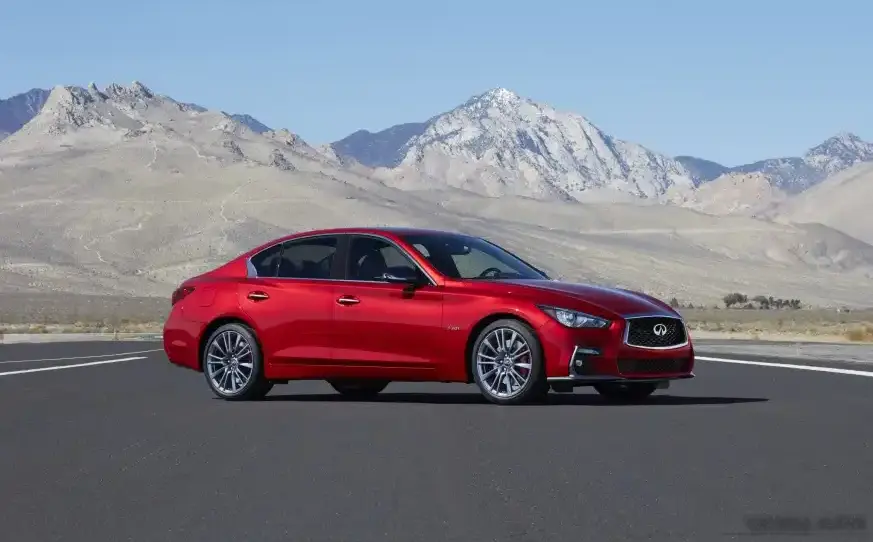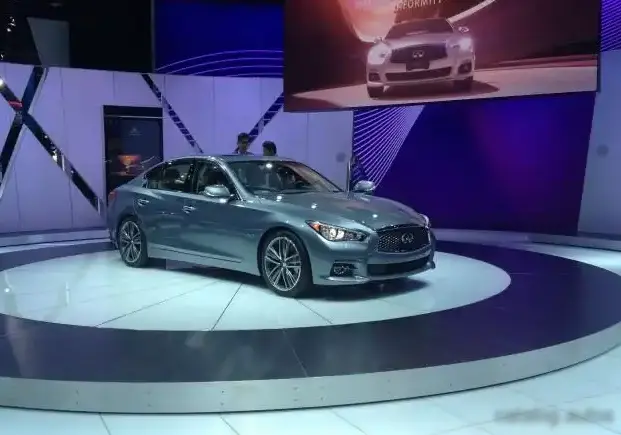
The Infiniti Q50 2.2D, produced between 2013 and 2017, represented a significant entry point into the luxury sports sedan segment for the Infiniti brand, particularly in European and Asian markets where diesel engines held greater appeal. This variant utilized a 2.2-liter turbocharged diesel engine producing 170 horsepower, paired with a six-speed manual transmission. It occupied the lower-mid range of the Q50 lineup, positioned below the more powerful 3.7-liter V6 and later, the twin-turbocharged 3.0-liter V6 models. The 2.2D aimed to provide a balance of fuel efficiency, reasonable performance, and luxury features at a more accessible price point.
Technical Specifications
| Brand | Infiniti |
| Model | Q50 |
| Generation | Q50 |
| Type (Engine) | 2.2D (170 Hp) |
| Start of production | 2013 |
| End of production | 2017 |
| Powertrain Architecture | Internal Combustion engine |
| Body type | Sedan |
| Seats | 5 |
| Doors | 4 |
| Fuel consumption (urban) | 5.6 l/100 km (42 US mpg, 50.4 UK mpg, 17.9 km/l) |
| Fuel consumption (extra urban) | 3.7 l/100 km (63.6 US mpg, 76.3 UK mpg, 27 km/l) |
| Fuel consumption (combined) | 4.4 l/100 km (53.5 US mpg, 64.2 UK mpg, 22.7 km/l) |
| CO2 emissions | 114 g/km |
| Fuel Type | Diesel |
| Acceleration 0 – 100 km/h | 8.7 sec |
| Acceleration 0 – 62 mph | 8.7 sec |
| Acceleration 0 – 60 mph | 8.3 sec |
| Maximum speed | 230 km/h (142.92 mph) |
| Weight-to-power ratio | 9.7 kg/Hp, 103.6 Hp/tonne |
| Power | 170 Hp |
| Power per litre | 79.3 Hp/l |
| Engine layout | Front, Longitudinal |
| Engine Model/Code | OM 651.930 |
| Engine displacement | 2143 cm3 (130.77 cu. in.) |
| Number of cylinders | 4 |
| Engine configuration | Inline |
| Fuel injection system | Diesel Commonrail |
| Engine aspiration | Turbocharger, Intercooler |
| Engine oil capacity | 6.5 l (6.87 US qt, 5.72 UK qt) |
| Coolant capacity | 9 l (9.51 US qt, 7.92 UK qt) |
| Kerb Weight | 1641 kg (3617.79 lbs) |
| Trunk (boot) space – minimum | 510 l (18.01 cu. ft) |
| Length | 4783 mm (188.31 in) |
| Width | 1824 mm (71.81 in) |
| Height | 1443 mm (56.81 in) |
| Wheelbase | 2850 mm (112.2 in) |
| Front track | 1519 mm (59.8 in) |
| Rear track | 1529 mm (60.2 in) |
| Drivetrain Architecture | Rear wheel drive |
| Number of gears and type of gearbox | 6 gears, manual transmission |
| Front suspension | Double wishbone |
| Rear suspension | Independent multi-link spring suspension with stabilizer |
| Front brakes | Ventilated discs |
| Rear brakes | Ventilated discs |
| Assisting systems | ABS (Anti-lock braking system) |
| Steering type | Steering rack and pinion |
| Power steering | Electric Steering |
| Tires size | 225/55 R17 |
| Wheel rims size | 17 |
Powertrain & Engine Architecture
The heart of the Q50 2.2D is the OM651.930, a 2.143-liter inline-four cylinder diesel engine developed by Mercedes-Benz and utilized by Infiniti under a collaborative agreement. This engine features a common-rail direct fuel injection system, delivering fuel at extremely high pressure for optimized combustion. A turbocharger with an intercooler is employed to boost power output and improve torque across the rev range. The engine utilizes a single overhead camshaft (SOHC) valvetrain, operating four valves per cylinder. The six-speed manual transmission was chosen to complement the engine’s torque characteristics, offering drivers a more engaging driving experience compared to the optional seven-speed automatic available on other Q50 models. The engine was designed to meet stringent European emission standards, incorporating a diesel particulate filter (DPF) and exhaust gas recirculation (EGR) system.
Driving Characteristics
The Q50 2.2D, with its 170 horsepower and 295 lb-ft of torque, provided adequate, though not exhilarating, performance. Acceleration from 0-60 mph took approximately 8.3 seconds, making it competitive with other diesel-powered sedans in its class. The manual transmission allowed for precise control and maximized the available torque, particularly useful for overtaking maneuvers. While not as sporty as the V6-powered Q50s, the 2.2D offered a comfortable and refined driving experience, with a focus on fuel efficiency. The gear ratios were tuned for optimal fuel economy, resulting in a slightly less responsive feel at higher speeds. Compared to the automatic transmission variants, the manual version offered a more direct connection to the engine and a more engaging driving experience.
Equipment & Trim Levels
The Q50 2.2D typically came standard with features such as automatic climate control, a seven-inch touchscreen display with Infiniti’s InTouch infotainment system, Bluetooth connectivity, and a rearview camera. Interior upholstery was generally cloth, with leather options available as upgrades. Standard safety features included ABS, electronic stability control, and multiple airbags. Higher trim levels offered features like premium audio systems, navigation, heated front seats, and advanced driver-assistance systems such as lane departure warning and blind-spot monitoring. The exterior styling was consistent across the Q50 range, with the 2.2D often distinguished by its smaller wheels (typically 17-inch alloys) and subtle badging.
Chassis & Braking
The Q50 2.2D utilized a front double wishbone and rear independent multi-link suspension system, providing a comfortable ride and good handling characteristics. The suspension was tuned to balance comfort and control, offering a stable and predictable driving experience. Braking duties were handled by ventilated discs on all four wheels, providing ample stopping power. The ABS system helped to prevent wheel lockup during hard braking, enhancing safety. The Q50’s chassis was designed to be relatively lightweight, contributing to its fuel efficiency and agility. A stabilizer bar was included on both the front and rear axles to reduce body roll during cornering.
Market Reception & Comparison
The Infiniti Q50 2.2D was generally well-received by automotive critics, who praised its fuel efficiency and comfortable ride. However, some reviewers noted that its performance was not as exciting as that of its V6 counterparts. Compared to other diesel-powered sedans in its class, such as the BMW 320d and Audi A4 TDI, the Q50 2.2D offered a competitive level of equipment and a more affordable price point. Its fuel economy figures were comparable to those of its rivals, and its reliability was generally considered to be good. The manual transmission was appreciated by driving enthusiasts, but some buyers preferred the convenience of an automatic gearbox.
Legacy
The OM651 diesel engine used in the Q50 2.2D has proven to be a durable and reliable powerplant, with many examples exceeding high mileage with proper maintenance. While the Q50 2.2D was not a high-volume seller in the US market, it remains a popular choice among those seeking a fuel-efficient and comfortable luxury sedan in Europe and Asia. On the used car market, these models are often sought after for their affordability and practicality. The Q50 2.2D represents a unique chapter in Infiniti’s history, showcasing the brand’s willingness to experiment with diesel technology to cater to diverse market demands.