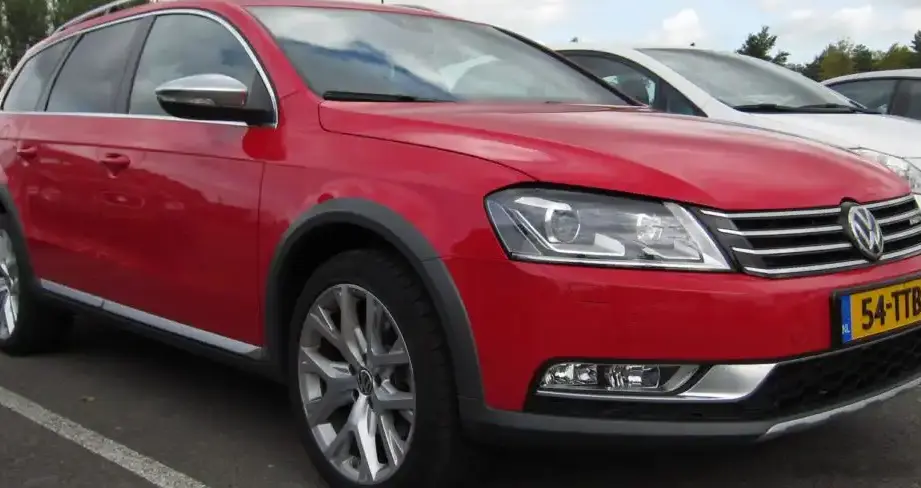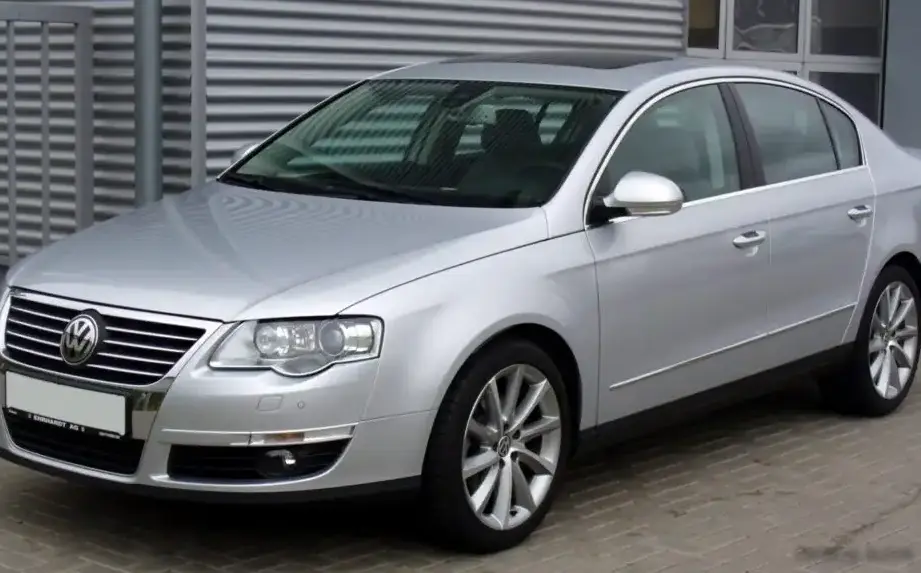
The Volkswagen Passat (B6) 2.0 TDI 8V (140 hp) PDE, produced between February 2005 and February 2008, represented a significant iteration of Volkswagen’s mid-size offering. Positioned as a popular choice within the B6 Passat range, this variant aimed to balance fuel efficiency with respectable performance, appealing to drivers seeking a practical and economical sedan. It was a key model in the European market, where diesel engines held a dominant share, and offered a more affordable entry point into the Passat lineup compared to the more powerful petrol or higher-output diesel options. The “PDE” designation refers to the Pump-nozzle (Unit Injector) fuel injection system, a defining characteristic of this engine generation.
Technical Specifications
| Brand | Volkswagen |
| Model | Passat |
| Generation | Passat (B6) |
| Type (Engine) | 2.0 TDI 8V (140 Hp) PDE |
| Start of production | February, 2005 |
| End of production | February, 2008 |
| Powertrain Architecture | Internal Combustion engine |
| Body type | Sedan |
| Seats | 5 |
| Doors | 4 |
| Fuel consumption (urban) | 7.9 l/100 km (29.8 US mpg, 35.8 UK mpg, 12.7 km/l) |
| Fuel consumption (extra urban) | 4.9 l/100 km (48 US mpg, 57.6 UK mpg, 20.4 km/l) |
| Fuel consumption (combined) | 5.9 l/100 km (39.9 US mpg, 47.9 UK mpg, 16.9 km/l) |
| Fuel Type | Diesel |
| Acceleration 0 – 100 km/h | 9.8 sec |
| Acceleration 0 – 62 mph | 9.8 sec |
| Acceleration 0 – 60 mph | 9.3 sec |
| Maximum speed | 209 km/h (129.87 mph) |
| Emission standard | Euro 4 |
| Weight-to-power ratio | 9.9 kg/Hp, 101.5 Hp/tonne |
| Weight-to-torque ratio | 4.3 kg/Nm, 232.1 Nm/tonne |
| Power | 140 Hp @ 4000 rpm |
| Power per litre | 71.1 Hp/l |
| Torque | 320 Nm @ 1750 rpm (236.02 lb.-ft. @ 1750 rpm) |
| Engine layout | Front, Transverse |
| Engine Model/Code | EA188 / BMP |
| Engine displacement | 1968 cm3 (120.09 cu. in.) |
| Number of cylinders | 4 |
| Engine configuration | Inline |
| Cylinder Bore | 81 mm (3.19 in.) |
| Piston Stroke | 95.5 mm (3.76 in.) |
| Compression ratio | 18.5:1 |
| Number of valves per cylinder | 2 |
| Fuel injection system | Pump-nozzle (Unit Injector) |
| Engine aspiration | Turbocharger, Intercooler |
| Valvetrain | SOHC |
| Engine oil capacity | 4 l (4.23 US qt | 3.52 UK qt) |
| Coolant | 8 l (8.45 US qt | 7.04 UK qt) |
| Kerb Weight | 1379 kg (3040.17 lbs.) |
| Max. weight | 2060 kg (4541.52 lbs.) |
| Max load | 681 kg (1501.35 lbs.) |
| Trunk (boot) space – minimum | 565 l (19.95 cu. ft.) |
| Trunk (boot) space – maximum | 1091 l (38.53 cu. ft.) |
| Fuel tank capacity | 70 l (18.49 US gal | 15.4 UK gal) |
| Max. roof load | 100 kg (220.46 lbs.) |
| Permitted trailer load with brakes (12%) | 1800 kg (3968.32 lbs.) |
| Permitted trailer load without brakes | 750 kg (1653.47 lbs.) |
| Permitted towbar download | 85 kg (187.39 lbs.) |
| Length | 4765 mm (187.6 in.) |
| Width | 1820 mm (71.65 in.) |
| Width including mirrors | 1991 mm (78.39 in.) |
| Height | 1472 mm (57.95 in.) |
| Wheelbase | 2709 mm (106.65 in.) |
| Front track | 1552 mm (61.1 in.) |
| Rear (Back) track | 1551 mm (61.06 in.) |
| Front overhang | 965 mm (37.99 in.) |
| Rear overhang | 1091 mm (42.95 in.) |
| Ride height (ground clearance) | 114 mm (4.49 in.) |
| Drag coefficient (Cd) | 0.281 |
| Minimum turning circle (turning diameter) | 11.4 m (37.4 ft.) |
| Approach angle | 14.4° |
| Departure angle | 12.6° |
| Ramp-over (brakeover) angle | 10.8° |
| Drivetrain Architecture | The Internal combustion engine (ICE) drives the front wheels of the vehicle. |
| Drive wheel | Front wheel drive |
| Number of gears and type of gearbox | 6 gears, manual transmission |
| Front suspension | Spring Strut |
| Rear suspension | Coil spring |
| Front brakes | Ventilated discs |
| Rear brakes | Disc |
| Assisting systems | ABS (Anti-lock braking system) |
| Steering type | Steering rack and pinion |
| Tires size | 215/55 R16 |
| Wheel rims size | 6.5J x 16 |
Powertrain & Engine Architecture
The heart of this Passat variant is the 2.0-liter inline-four cylinder diesel engine, specifically the EA188 series, identified by the engine code BMP. This engine utilized a sophisticated Pump-nozzle (PDE) fuel injection system developed by Bosch. Unlike common-rail systems, PDE injects fuel directly into the cylinder at extremely high pressure using individual pumps for each cylinder, resulting in improved combustion efficiency and reduced engine noise. The engine featured a single overhead camshaft (SOHC) operating two valves per cylinder. A turbocharger with an intercooler was employed to boost power output and improve torque across a wider RPM range. The 18.5:1 compression ratio is typical for a diesel engine, contributing to its efficiency. The engine produced 140 horsepower at 4000 rpm and 320 Nm (236 lb-ft) of torque at a relatively low 1750 rpm, providing good low-end grunt for everyday driving.
Driving Characteristics
The 2.0 TDI 8V (140 hp) with a manual transmission offered a balanced driving experience. Acceleration from 0-100 km/h (0-62 mph) took approximately 9.8 seconds, which was adequate for most driving situations but not particularly sporty. The engine’s strong low-end torque made it feel more responsive than the horsepower figure might suggest, particularly during overtaking maneuvers. Compared to the more powerful 2.0 TDI variants (often exceeding 170 hp), this version felt less eager to rev, prioritizing fuel economy over outright performance. The six-speed manual gearbox was well-matched to the engine’s characteristics, providing smooth shifts and allowing the driver to keep the engine in its optimal torque band. The front-wheel-drive configuration offered predictable handling, although it could exhibit some torque steer under hard acceleration.
Equipment & Trim Levels
The 2.0 TDI 8V (140 hp) typically occupied a mid-range position within the B6 Passat lineup. Standard equipment generally included air conditioning, power windows, central locking, and an audio system. Higher trim levels added features such as alloy wheels, upgraded upholstery, a multi-function steering wheel, and parking sensors. Optional extras included a sunroof, leather seats, and a navigation system. Interior upholstery was typically cloth, with the option of leather upgrades. The dashboard layout was functional and well-designed, with clear instrumentation and intuitive controls.
Chassis & Braking
The B6 Passat featured a MacPherson strut front suspension and a multi-link rear suspension, providing a comfortable and controlled ride. The suspension was tuned to prioritize comfort over sporty handling. Brakes consisted of ventilated discs at the front and solid discs at the rear. Anti-lock Braking System (ABS) was standard. The chassis was designed to provide good stability and handling characteristics, although it wasn’t particularly lightweight. Stabilizer bars were fitted to both the front and rear axles to reduce body roll during cornering.
Market Reception & Comparison
The 2.0 TDI 8V (140 hp) Passat was well-received in the European market, praised for its fuel efficiency, comfortable ride, and practical interior. Critics noted that it wasn’t the most exciting car to drive, but it offered a compelling combination of value and practicality. Compared to the higher-output TDI variants, this version offered better fuel economy but less performance. Compared to petrol-powered Passats, the 2.0 TDI provided significantly better fuel economy and torque, making it a popular choice for drivers covering long distances.
Legacy
The EA188 2.0 TDI engine, in its various iterations, proved to be a relatively reliable powertrain, although early versions of the PDE system were known to be susceptible to fuel injector failures. With proper maintenance, these engines could achieve high mileage. Today, the B6 Passat 2.0 TDI 8V (140 hp) can be found on the used car market at affordable prices. Its fuel efficiency and practicality continue to make it an attractive option for budget-conscious buyers. However, potential buyers should be aware of the potential for PDE injector issues and ensure that the vehicle has been well-maintained.