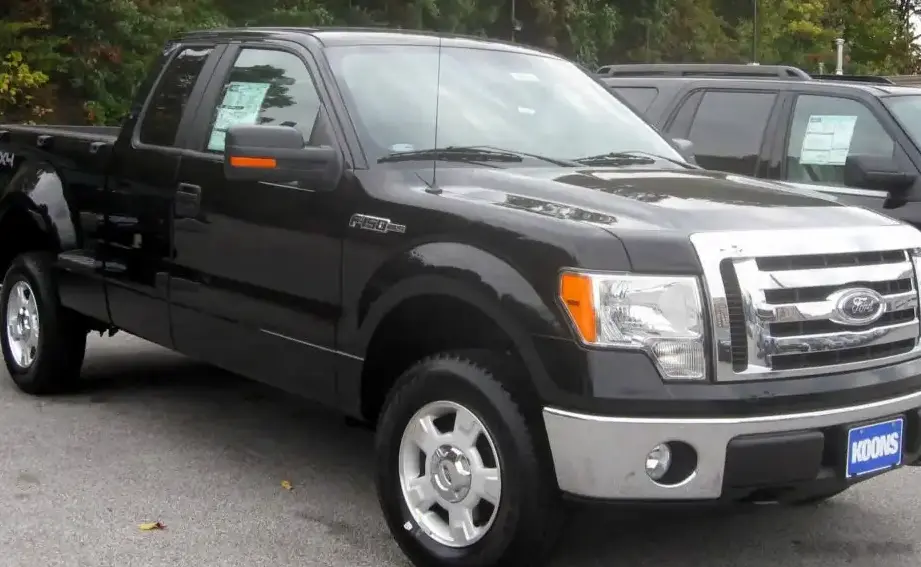
The Ford F-150 XII SuperCab, produced from 2008 to 2010, represents the twelfth generation of the iconic Ford F-Series pickup truck. This iteration continued the F-150’s dominance in the full-size pickup segment in North America, offering a blend of capability, comfort, and technology. The SuperCab configuration provided extended passenger space compared to the standard cab, making it a popular choice for families and those needing occasional rear-seat access. Among the various engine and drivetrain options available, the 5.4-liter V8 paired with a four-wheel drive system and automatic transmission was a common configuration, positioned as a strong performer balancing power and usability. This variant aimed to provide a robust towing and hauling experience without the higher price tag of the more powerful engines.
Technical Specifications
| Brand | Ford |
| Model | F-Series F-150 |
| Generation | F-Series F-150 XII SuperCab |
| Type (Engine) | 5.4 V8 (320 Hp) 4×4 Automatic |
| Start of production | October, 2008 |
| End of production | 2010 |
| Powertrain Architecture | Internal Combustion engine |
| Body type | Pick-up |
| Seats | 5-6 |
| Doors | 2 |
| Fuel consumption (urban) | 23.5 l/100 km (10 US mpg, 12 UK mpg, 4.3 km/l) |
| Fuel consumption (extra urban) | 18.1 l/100 km (13 US mpg, 15.6 UK mpg, 5.5 km/l) |
| Fuel Type | Petrol (Gasoline) |
| Power | 320 Hp @ 5200 rpm |
| Power per litre | 59.2 Hp/l |
| Torque | 529 Nm @ 3500 rpm (390.17 lb.-ft. @ 3500 rpm) |
| Engine layout | Front, Longitudinal |
| Engine displacement | 5408 cm3 (330.02 cu. in.) |
| Number of cylinders | 8 |
| Engine configuration | V-engine |
| Cylinder Bore | 90.17 mm (3.55 in.) |
| Piston Stroke | 105.66 mm (4.16 in.) |
| Compression ratio | 9.8:1 |
| Number of valves per cylinder | 3 |
| Fuel injection system | Multi-port manifold injection |
| Engine aspiration | Naturally aspirated engine |
| Valvetrain | SOHC, VCT |
| Engine oil capacity | 6.6 l (6.97 US qt | 5.81 UK qt) |
| Coolant | 19.6 l (20.71 US qt | 17.25 UK qt) |
| Max. weight | 3719 kg (8198.99 lbs.) |
| Trunk (boot) space – maximum | 2299 l (81.19 cu. ft.) |
| Fuel tank capacity | 98 l (25.89 US gal | 21.56 UK gal) |
| Permitted trailer load with brakes (12%) | 4990 kg (11001.07 lbs.) |
| Length | 6358 mm (250.31 in.) |
| Width | 2004 mm (78.9 in.) |
| Width with mirrors folded | 2123 mm (83.58 in.) |
| Width including mirrors | 2464 mm (97.01 in.) |
| Height | 1948 mm (76.69 in.) |
| Wheelbase | 4140 mm (162.99 in.) |
| Ride height (ground clearance) | 254 mm (10 in.) |
| Minimum turning circle (turning diameter) | 15.9 m (52.17 ft.) |
| Approach angle | 25.2° |
| Departure angle | 22.1° |
| Ramp-over (brakeover) angle | 18.7° |
| Drivetrain Architecture | The Internal combustion engine (ICE) drives the rear wheels permanently, and the front wheels are driven through an electrically or mechanically operated clutch if necessary. |
| Drive wheel | All wheel drive (4×4) |
| Number of gears and type of gearbox | 6 gears, automatic transmission |
| Front suspension | Double wishbone |
| Rear suspension | Leaf spring |
| Front brakes | Ventilated discs, 330 mm |
| Rear brakes | Ventilated discs, 348 mm |
| Assisting systems | ABS (Anti-lock braking system) |
| Steering type | Steering rack and pinion |
| Power steering | Electric Steering |
| Tires size | 255/70 R17; 275/65 R18; 275/55 R20 |
| Wheel rims size | 17; 18; 20 |
Powertrain & Engine Architecture
The heart of this F-150 variant is the 5.4-liter Triton V8 engine. This engine, designated with various codes depending on the specific year and calibration, utilizes a cast-iron block with aluminum cylinder heads. The engine employs a single overhead camshaft (SOHC) design with variable valve timing (VCT) on both intake and exhaust valves, enhancing both low-end torque and high-rpm power. Fuel delivery is managed by a multi-port fuel injection system, providing precise fuel metering for optimal combustion. The 5.4L Triton is known for its relatively simple design, contributing to its overall reliability. The engine is longitudinally mounted in the chassis, sending power to a six-speed automatic transmission. This transmission was designed to provide smooth shifting and efficient power delivery, with gear ratios optimized for both towing and everyday driving. The 4×4 system utilizes an electronically controlled transfer case, allowing the driver to seamlessly switch between two-wheel drive and four-wheel drive modes, including a low-range gear for challenging off-road conditions.
Driving Characteristics
The 5.4-liter V8 in the F-150 SuperCab delivers a respectable 320 horsepower and 390 lb-ft of torque. While not as quick as the higher-output engines offered in the F-150 lineup (like the 6.2L V8), this configuration provides ample power for most everyday tasks, including hauling and towing. The automatic transmission contributes to a comfortable driving experience, with smooth gear changes and a predictable power delivery. Compared to the manual transmission options, the automatic prioritizes convenience over outright performance. The 4×4 system provides enhanced traction in slippery conditions, making it a capable vehicle for both on-road and off-road use. However, the larger engine and four-wheel drive system do contribute to a higher curb weight, which can be felt during acceleration and braking. The ride quality is typical for a full-size pickup truck – firm but generally comfortable, especially when the bed is loaded.
Equipment & Trim Levels
The F-150 SuperCab 5.4L 4×4 Automatic was available in various trim levels, including XL, XLT, and Lariat. The base XL trim offered essential features such as air conditioning, a basic audio system, and vinyl upholstery. The XLT trim added features like power windows and locks, keyless entry, and upgraded interior materials. The Lariat trim, the most luxurious option, included leather upholstery, heated seats, a premium audio system, and additional chrome exterior trim. Standard safety features included anti-lock brakes (ABS) and front airbags. Optional extras included a navigation system, a sunroof, and a trailer towing package. The SuperCab configuration offered a split bench seat in the rear, providing seating for up to three passengers, although space can be limited for adults on longer journeys.
Chassis & Braking
The F-150’s chassis is based on a fully boxed frame, providing a strong and rigid foundation for the vehicle. The front suspension utilizes an independent double wishbone design, while the rear suspension employs a traditional leaf spring setup. This combination provides a good balance of ride comfort and load-carrying capacity. Braking duties are handled by ventilated disc brakes on all four wheels, providing ample stopping power. The ABS system helps to prevent wheel lockup during hard braking, enhancing stability and control. Steering is rack-and-pinion with power assist, offering precise and responsive handling. Tire sizes varied depending on the trim level and wheel size, ranging from 17 to 20 inches.
Market Reception & Comparison
The F-150 SuperCab 5.4L 4×4 Automatic was generally well-received by critics and consumers alike. It was praised for its strong towing capacity, comfortable ride, and spacious interior. However, its fuel economy was a common criticism, particularly compared to smaller pickup trucks and newer models with more advanced engine technologies. Compared to the 4.6-liter V8 option, the 5.4-liter engine offered a significant increase in power and torque, making it a better choice for those who frequently tow or haul heavy loads. Compared to the diesel options, the 5.4L V8 was less fuel-efficient but offered a lower initial purchase price and potentially lower maintenance costs.
Legacy
The 5.4-liter Triton V8 engine, while eventually superseded by newer engine designs, proved to be a durable and reliable powerplant. Many examples of the F-150 equipped with this engine are still on the road today, testament to its longevity. However, some owners have reported issues with spark plug breakage and timing chain wear, particularly in higher-mileage vehicles. In the used car market, the F-150 SuperCab 5.4L 4×4 Automatic remains a popular choice for those seeking a capable and affordable full-size pickup truck. Its combination of power, space, and four-wheel drive capability makes it a versatile vehicle for a wide range of applications.