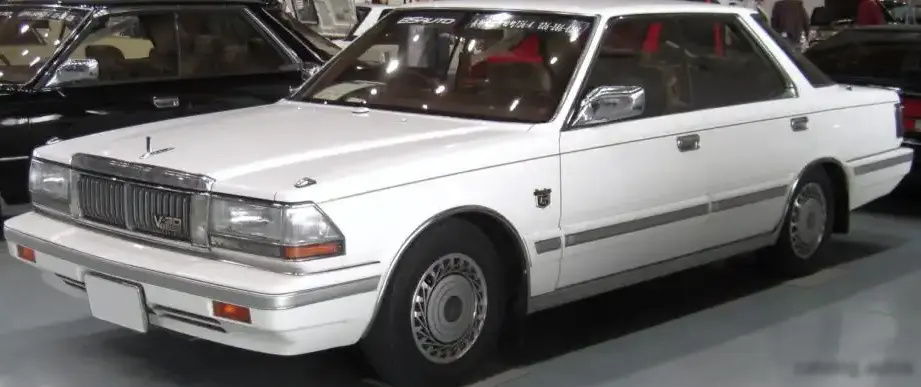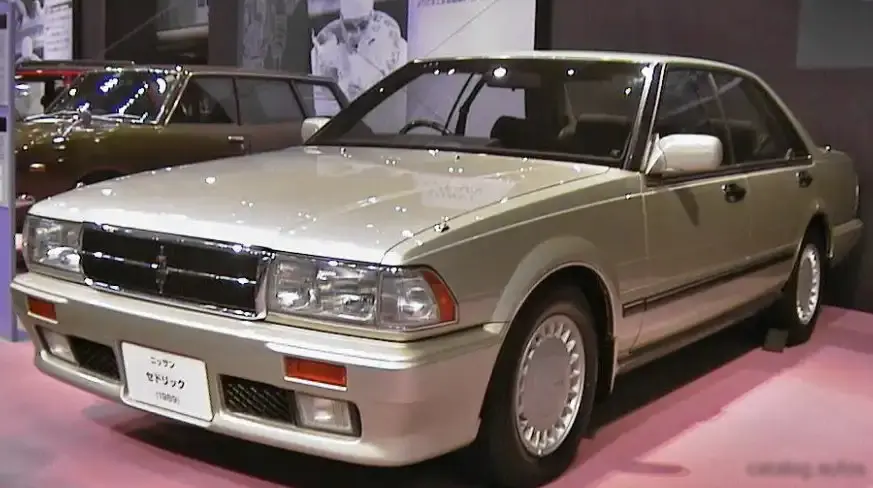
The Nissan Cedric Y33 3.0i V6 Automatic, produced between 1995 and 1997, represents a significant iteration of Nissan’s flagship sedan. Positioned as a premium offering within the Y33 generation (1995-1999), this variant catered to buyers seeking a blend of luxury, performance, and refinement. The Y33 Cedric, along with its sibling the Gloria, were traditionally aimed at the Japanese domestic market (JDM) as chauffeur-driven vehicles and executive transport, offering a spacious interior and comfortable ride. This 3.0i V6 Automatic model was one of the higher-spec trims available, sitting above the 2.0L and 2.5L variants and below the more exclusive, often long-wheelbase, versions.
Technical Specifications
| Brand | Nissan |
| Model | Cedric |
| Generation | Cedric (Y33) |
| Type (Engine) | 3.0i V6 (220 Hp) Automatic |
| Start of production | 1995 |
| End of production | 1997 |
| Powertrain Architecture | Internal Combustion engine |
| Body type | Sedan |
| Seats | 5 |
| Doors | 4 |
| Fuel consumption (combined) | 12.9 l/100 km (18.2 US mpg, 21.9 UK mpg, 7.8 km/l) |
| Fuel Type | Petrol (Gasoline) |
| Acceleration 0 – 100 km/h | 8.6 sec |
| Acceleration 0 – 62 mph | 8.6 sec |
| Acceleration 0 – 60 mph | 8.2 sec |
| Maximum speed | 215 km/h (133.59 mph) |
| Weight-to-power ratio | 7 kg/Hp, 143.8 Hp/tonne |
| Weight-to-torque ratio | 5.5 kg/Nm, 183 Nm/tonne |
| Power | 220 Hp @ 6400 rpm |
| Power per litre | 73.7 Hp/l |
| Torque | 280 Nm @ 4400 rpm (206.52 lb.-ft. @ 4400 rpm) |
| Maximum engine speed | 6500 rpm |
| Engine layout | Front, Longitudinal |
| Engine Model/Code | VQ30 |
| Engine displacement | 2987 cm3 (182.28 cu. in.) |
| Number of cylinders | 6 |
| Engine configuration | V-engine |
| Cylinder Bore | 93 mm (3.66 in.) |
| Piston Stroke | 73.3 mm (2.89 in.) |
| Compression ratio | 10:1 |
| Number of valves per cylinder | 4 |
| Fuel injection system | Multi-port manifold injection |
| Engine aspiration | Naturally aspirated engine |
| Valvetrain | DOHC |
| Kerb Weight | 1530 kg (3373.07 lbs.) |
| Fuel tank capacity | 80 l (21.13 US gal | 17.6 UK gal) |
| Ride height (ground clearance) | 150 mm (5.91 in.) |
| Drag coefficient (Cd) | 0.37 |
| Minimum turning circle | 11 m (36.09 ft.) |
| Drivetrain Architecture | Rear wheel drive |
| Drive wheel | Rear wheel drive |
| Number of gears and type of gearbox | 4 gears, automatic transmission |
| Front brakes | Ventilated discs |
| Rear brakes | Ventilated discs |
| Tires size | 205/65 R15 |
| Wheel rims size | 15 |
Powertrain & Engine Architecture
The heart of the Y33 3.0i is Nissan’s VQ30 engine, a 3.0-liter naturally aspirated V6. This engine is part of Nissan’s highly regarded VQ engine family, known for its smooth operation, reliability, and relatively high power output. The VQ30 features a 60-degree V-angle, dual overhead camshafts (DOHC), and four valves per cylinder. The multi-port fuel injection system delivers fuel directly into each intake port, optimizing combustion. The engine produces 220 horsepower at 6400 rpm and 280 Nm (206.52 lb-ft) of torque at 4400 rpm. The engine’s longitudinal mounting and rear-wheel-drive configuration were traditional for the Cedric, emphasizing a balanced driving experience. Paired with the VQ30 is a 4-speed automatic transmission. While not as sophisticated as modern transmissions, it was designed for smooth shifts and comfortable cruising, aligning with the Cedric’s intended role as a luxury vehicle.
Driving Characteristics
The Y33 3.0i Automatic offered a comfortable and refined driving experience. The 4-speed automatic transmission, while lacking the responsiveness of a manual, provided smooth gear changes and made the car easy to drive in urban environments. Acceleration to 60 mph in approximately 8.2 seconds was respectable for the mid-1990s, and the engine provided ample power for highway passing maneuvers. Compared to the 2.0L and 2.5L models, the 3.0i offered a noticeable performance advantage, while remaining more accessible and less expensive than the higher-end, often long-wheelbase, variants. The rear-wheel-drive layout contributed to balanced handling, although the Cedric was not designed to be a sporty car. The focus was on providing a comfortable and stable ride, which it achieved through its well-tuned suspension.
Equipment & Trim Levels
The 3.0i V6 Automatic trim typically included features such as power windows, power locks, power steering, air conditioning, and a high-quality audio system. Interior upholstery was typically cloth or velour, with higher-spec versions offering leather options. Dashboard appointments featured woodgrain trim, and the instrument cluster was comprehensive, providing information on speed, engine rpm, fuel level, and coolant temperature. Optional extras could include a sunroof, upgraded audio systems, and automatic climate control. The Y33 Cedric generally prioritized comfort and convenience features over cutting-edge technology.
Chassis & Braking
The Y33 Cedric utilized a traditional body-on-frame construction, contributing to its robust feel and comfortable ride. The suspension consisted of independent front suspension with MacPherson struts and a multi-link rear suspension. This setup provided a good balance between ride comfort and handling. Braking duties were handled by ventilated disc brakes on all four wheels, providing adequate stopping power for the car’s weight and performance. The 15-inch wheels were typically fitted with 205/65 R15 tires, offering a good compromise between ride comfort and grip.
Market Reception & Comparison
The Nissan Cedric Y33 3.0i V6 Automatic was well-received in the Japanese market as a comfortable and reliable luxury sedan. Critics praised its spacious interior, smooth ride, and refined engine. Compared to its main rivals, such as the Toyota Crown and Mitsubishi Debonair, the Cedric offered a competitive level of features and performance. Fuel economy, at 12.9 l/100 km, was typical for a large, naturally aspirated V6 engine of that era. Reliability was generally good, although maintenance costs could be higher than those of smaller, more economical cars. The 3.0i variant offered a sweet spot in the lineup, providing a significant performance upgrade over the base models without the added expense of the top-of-the-line trims.
Legacy
The Nissan Cedric Y33 3.0i V6 Automatic remains a popular choice among enthusiasts of classic Japanese cars. The VQ30 engine is known for its durability and relatively simple maintenance requirements. While finding parts can sometimes be challenging outside of Japan, the engine’s robust design and widespread use in other Nissan vehicles mean that components are generally available. Today, these Cedrics are appreciated for their classic styling, comfortable ride, and the smooth power delivery of the VQ30 engine. They represent a bygone era of Japanese automotive engineering, where luxury and reliability were prioritized above all else. The Y33 Cedric, particularly the 3.0i variant, continues to hold a special place in the hearts of many JDM enthusiasts.