Technical Specifications
| Brand | Dacia |
| Model | Sandero |
| Generation | Sandero II Stepway |
| Type (Engine) | 1.5 dCi (90 Hp) FAP |
| Start of production | 2012 |
| End of production | 2015 |
| Powertrain Architecture | Internal Combustion engine |
| Body type | Crossover |
| Seats | 5 |
| Doors | 5 |
| Fuel consumption (urban) | 4.6 l/100 km (51.1 US mpg, 61.4 UK mpg, 21.7 km/l) |
| Fuel consumption (extra urban) | 3.7 l/100 km (63.6 US mpg, 76.3 UK mpg, 27 km/l) |
| Fuel consumption (combined) | 4 l/100 km (58.8 US mpg, 70.6 UK mpg, 25 km/l) |
| CO2 emissions | 105 g/km |
| Fuel Type | Diesel |
| Acceleration 0 – 100 km/h | 11.8 sec |
| Acceleration 0 – 62 mph | 11.8 sec |
| Acceleration 0 – 60 mph | 11.2 sec |
| Maximum speed | 167 km/h (103.77 mph) |
| Emission standard | Euro 5 |
| Weight-to-power ratio | 12 kg/Hp, 83.1 Hp/tonne |
| Weight-to-torque ratio | 4.9 kg/Nm, 203.1 Nm/tonne |
| Power | 90 Hp @ 3750 rpm |
| Power per litre | 61.6 Hp/l |
| Torque | 220 Nm @ 1750 rpm (162.26 lb.-ft. @ 1750 rpm) |
| Engine layout | Front, Transverse |
| Engine Model/Code | K9K 612 |
| Engine displacement | 1461 cm3 (89.16 cu. in.) |
| Number of cylinders | 4 |
| Engine configuration | Inline |
| Cylinder Bore | 76 mm (2.99 in.) |
| Piston Stroke | 80.5 mm (3.17 in.) |
| Compression ratio | 15.5:1 |
| Number of valves per cylinder | 2 |
| Fuel injection system | Diesel Commonrail |
| Engine aspiration | Turbocharger, Intercooler |
| Valvetrain | SOHC |
| Engine oil capacity | 4.5 l (4.76 US qt | 3.96 UK qt) |
| Coolant capacity | 4.5 l (4.76 US qt | 3.96 UK qt) |
| Kerb Weight | 1083 kg (2387.61 lbs.) |
| Max. weight | 1600 kg (3527.4 lbs.) |
| Max load | 517 kg (1139.79 lbs.) |
| Trunk (boot) space – minimum | 320 l (11.3 cu. ft.) |
| Trunk (boot) space – maximum | 1200 l (42.38 cu. ft.) |
| Fuel tank capacity | 50 l (13.21 US gal | 11 UK gal) |
| Max. roof load | 80 kg (176.37 lbs.) |
| Permitted trailer load with brakes (12%) | 1100 kg (2425.08 lbs.) |
| Permitted trailer load without brakes | 575 kg (1267.66 lbs.) |
| Permitted towbar download | 75 kg (165.35 lbs.) |
| Length | 4080 mm (160.63 in.) |
| Width | 1757 mm (69.17 in.) |
| Width including mirrors | 1984 mm (78.11 in.) |
| Height | 1618 mm (63.7 in.) |
| Wheelbase | 2589 mm (101.93 in.) |
| Front track | 1497 mm (58.94 in.) |
| Rear track | 1486 mm (58.5 in.) |
| Front overhang | 835 mm (32.87 in.) |
| Rear overhang | 656 mm (25.83 in.) |
| Ride height (ground clearance) | 207 mm (8.15 in.) |
| Minimum turning circle | 10.5 m (34.45 ft.) |
| Drivetrain Architecture | Front wheel drive |
| Number of gears | 5 |
| Gearbox type | Manual transmission |
| Front suspension | Independent type McPherson, Transverse stabilizer |
| Rear suspension | Coil spring, Torsion |
| Front brakes | Ventilated discs, 258×22 mm |
| Rear brakes | Drum, 203 mm |
| Assisting systems | ABS (Anti-lock braking system) |
| Steering type | Steering rack and pinion |
| Power steering | Electric Steering |
| Tires size | 205/55 R16 |
| Wheel rims size | 6J x 16 |
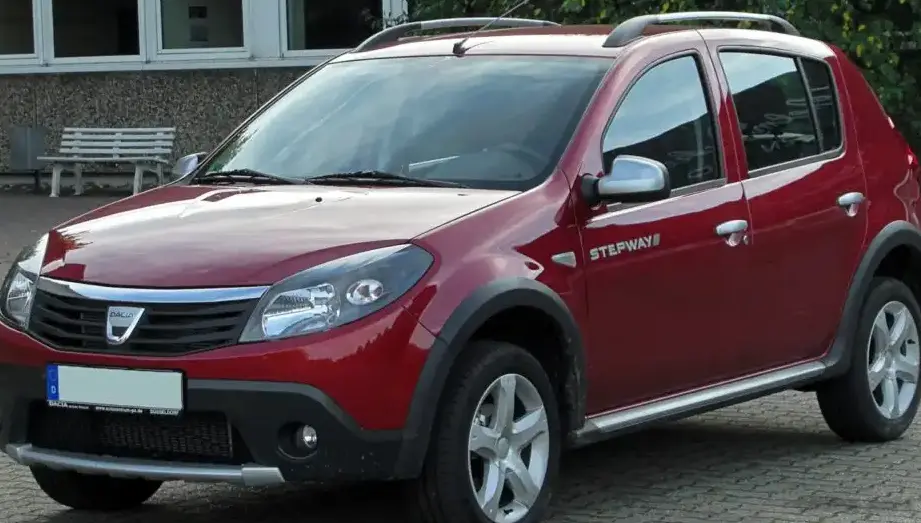
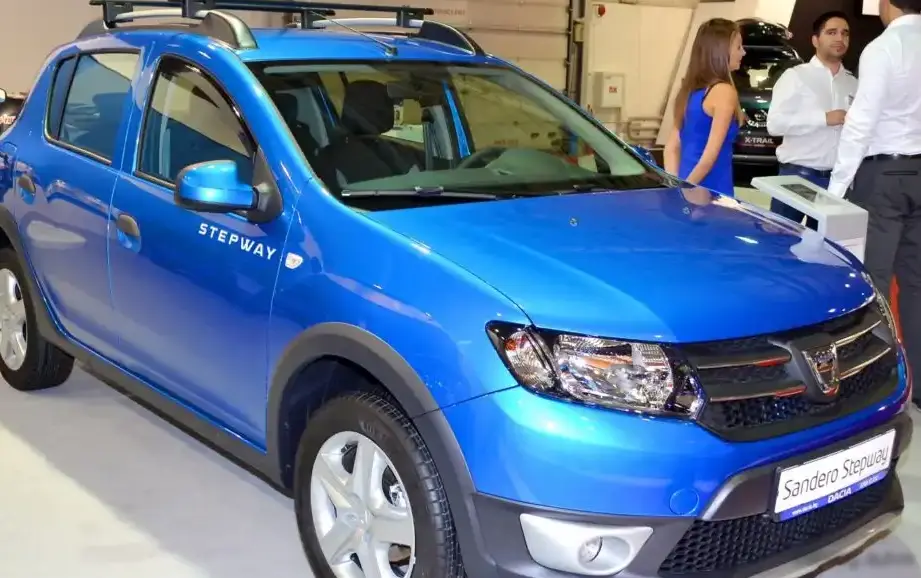
The Dacia Sandero II Stepway 1.5 dCi (90 hp) FAP, launched in 2012, was a key model in Dacia’s expansion across Europe. Building upon the success of the original Sandero, the Stepway variant offered increased ground clearance, rugged styling cues, and a more adventurous appeal. This particular version, equipped with the 1.5 dCi engine and a five-speed manual transmission, was designed to deliver exceptional fuel economy and low running costs, making it a popular choice for budget-conscious buyers and those covering long distances. The “FAP” designation indicates the presence of a Diesel Particulate Filter, complying with Euro 5 emissions standards.
Powertrain & Engine Architecture
At the heart of the Sandero II Stepway 1.5 dCi (90 hp) lies the K9K 612 engine, a 1.5-liter inline-four cylinder diesel. This engine is a common design within the Renault-Nissan-Dacia alliance, known for its robustness and efficiency. The K9K 612 utilizes a common rail direct injection system, delivering fuel directly into the combustion chamber at high pressure for optimized combustion. It features a single overhead camshaft (SOHC) operating two valves per cylinder. A turbocharger with an intercooler is employed to boost power output and improve torque delivery. The 90 horsepower is achieved at 3750 rpm, while peak torque of 220 Nm (162 lb-ft) is available from 1750 rpm. The five-speed manual transmission provides a straightforward and reliable means of transferring power to the front wheels. The gear ratios are tuned for fuel efficiency, with a relatively long final drive.
Driving Characteristics
The 90 hp 1.5 dCi engine, while not particularly powerful, provides adequate performance for everyday driving. Acceleration from 0-60 mph takes around 11.2 seconds, and the top speed is approximately 104 mph. The engine feels most comfortable in the mid-range, offering sufficient torque for overtaking maneuvers and climbing hills. The manual transmission allows for precise control, but the gear ratios are spaced to prioritize fuel economy over outright performance. Compared to higher-output versions of the Sandero Stepway, this variant feels noticeably slower, particularly when fully loaded. However, the trade-off is significantly improved fuel efficiency. The Stepway’s raised suspension provides a more comfortable ride than the standard Sandero, absorbing bumps and imperfections in the road surface effectively.
Equipment & Trim Levels
The 1.5 dCi (90 hp) Stepway typically came equipped with a reasonable level of standard features. These included power steering, electric front windows, central locking, and an audio system with USB connectivity. Safety features such as ABS and front airbags were also standard. Higher trim levels offered additional features like air conditioning, alloy wheels, rear electric windows, and a trip computer. Interior upholstery was typically cloth, with a durable and practical design. The dashboard layout was functional and straightforward, prioritizing ease of use over aesthetic flair.
Chassis & Braking
The Sandero II Stepway features a McPherson strut front suspension and a torsion beam rear suspension. The front suspension incorporates a transverse stabilizer bar to reduce body roll during cornering. The raised ride height of the Stepway, compared to the standard Sandero, provides increased ground clearance for navigating rough terrain. The braking system consists of ventilated discs on the front wheels and drum brakes on the rear. ABS (Anti-lock Braking System) is standard, enhancing braking performance and stability. The steering is a rack and pinion system with electric power assistance, providing light and precise steering feel.
Market Reception & Comparison
The Dacia Sandero II Stepway 1.5 dCi (90 hp) FAP was well-received by critics and consumers alike. It was praised for its affordability, fuel efficiency, and practicality. Compared to other trims in the Sandero Stepway lineup, this variant offered the best balance of economy and usability. The higher-output petrol engines provided more performance but at the expense of fuel consumption. The 1.5 dCi engine was considered a reliable and durable unit, although diesel engines generally require more frequent servicing than their petrol counterparts. Fuel economy figures of around 59 mpg (combined) were consistently reported, making it an attractive option for those seeking low running costs.
Legacy
The K9K 612 engine has proven to be a robust and reliable powertrain, and many examples of the Sandero II Stepway 1.5 dCi are still on the road today. While diesel engines have faced increased scrutiny in recent years due to emissions concerns, the K9K 612, particularly those equipped with a Diesel Particulate Filter (FAP), remain relatively clean and efficient. On the used car market, these models are often sought after for their affordability and low running costs. Regular maintenance, including oil changes and filter replacements, is crucial for ensuring the long-term reliability of this powertrain. The Sandero II Stepway 1.5 dCi (90 hp) FAP represents a practical and economical choice for those seeking a versatile and affordable crossover.