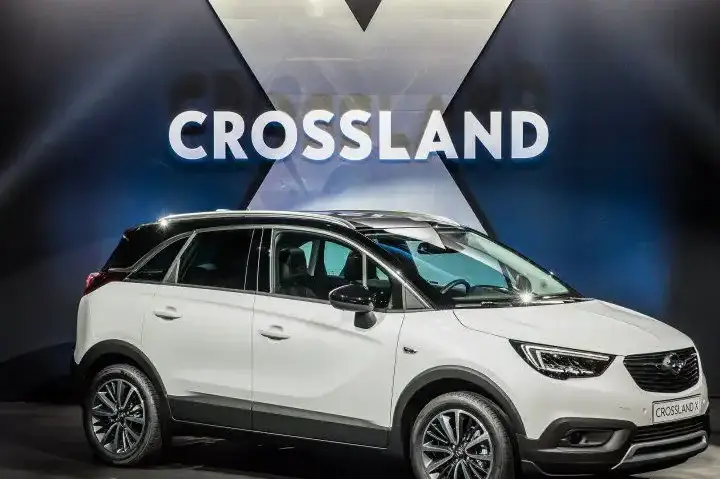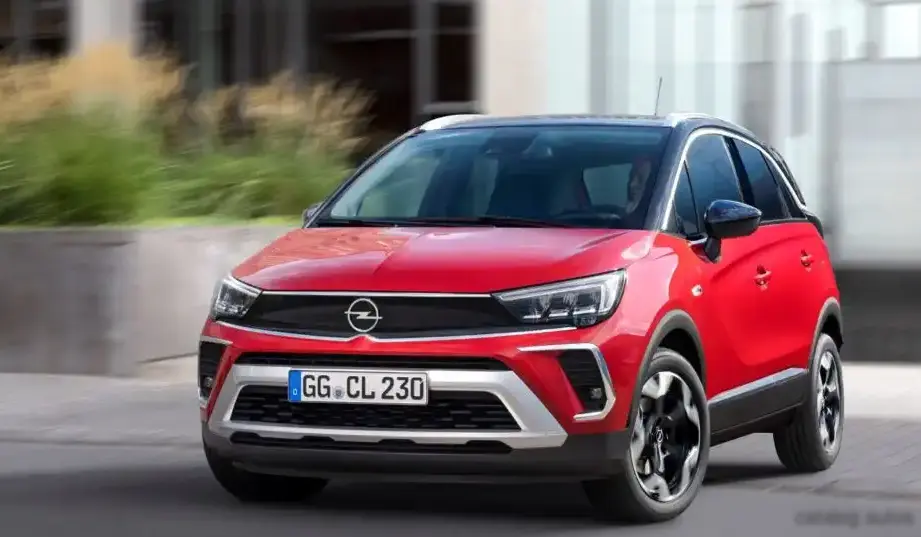
The Opel Crossland, particularly the 1.2i (83 hp) variant introduced with the 2020 facelift, represents an entry-level offering within the Crossland model range. Production began in October 2020, and this version aimed to provide an affordable and economical option in the highly competitive European subcompact SUV segment. Positioned as the base model, it catered to buyers prioritizing fuel efficiency and practicality over outright performance. The Crossland itself is built upon the PSA Group’s PF1 platform, shared with models like the Peugeot 2008 and Citroën C3 Aircross, reflecting Opel’s integration within the Stellantis automotive group.
Technical Specifications
| Brand | Opel |
| Model | Crossland |
| Generation | Crossland (facelift 2020) |
| Type (Engine) | 1.2i (83 Hp) |
| Start of production | October, 2020 |
| Powertrain Architecture | Internal Combustion engine |
| Body type | SUV |
| Seats | 5 |
| Doors | 5 |
| Combined fuel consumption (WLTP) | 5.8-6.1 l/100 km (40.6 – 38.6 US mpg, 48.7 – 46.3 UK mpg, 17.2 – 16.4 km/l) |
| CO2 emissions (WLTP) | 132-139 g/km |
| Fuel consumption (urban) | 5.4-5.6 l/100 km (43.6 – 42 US mpg, 52.3 – 50.4 UK mpg, 18.5 – 17.9 km/l) |
| Fuel consumption (extra urban) | 4.1-4.2 l/100 km (57.4 – 56 US mpg, 68.9 – 67.3 UK mpg, 24.4 – 23.8 km/l) |
| Fuel consumption (combined) | 4.6-4.7 l/100 km (51.1 – 50 US mpg, 61.4 – 60.1 UK mpg, 21.7 – 21.3 km/l) |
| CO2 emissions (NEDC) | 106-107 g/km |
| Fuel Type | Petrol (Gasoline) |
| Acceleration 0 – 100 km/h | 14.5 sec |
| Acceleration 0 – 62 mph | 14.5 sec |
| Acceleration 0 – 60 mph | 13.8 sec |
| Maximum speed | 170 km/h (105.63 mph) |
| Emission standard | Euro 6d |
| Weight-to-power ratio | 13.2 kg/Hp, 75.5 Hp/tonne |
| Weight-to-torque ratio | 9.3 kg/Nm, 107.4 Nm/tonne |
| Power | 83 Hp @ 5750 rpm |
| Power per litre | 69.2 Hp/l |
| Torque | 118 Nm @ 1750 rpm (87.03 lb.-ft. @ 1750 rpm) |
| Engine layout | Front, Transverse |
| Engine Model/Code | F12XE |
| Engine displacement | 1199 cm3 (73.17 cu. in.) |
| Number of cylinders | 3 |
| Engine configuration | Inline |
| Number of valves per cylinder | 4 |
| Fuel injection system | Multi-port manifold injection |
| Engine aspiration | Naturally aspirated engine |
| Engine oil capacity | 3.25 l (3.43 US qt, 2.86 UK qt) |
| Coolant capacity | 5 l (5.28 US qt, 4.4 UK qt) |
| Kerb Weight | 1099 kg (2422.88 lbs) |
| Max. weight | 1690 kg (3725.81 lbs) |
| Max load | 591 kg (1302.93 lbs) |
| Trunk (boot) space – minimum | 410 l (14.48 cu. ft.) |
| Trunk (boot) space – maximum | 1255 l (44.32 cu. ft.) |
| Fuel tank capacity | 45 l (11.89 US gal, 9.9 UK gal) |
| Max. roof load | 50 kg (110.23 lbs) |
| Permitted trailer load (braked) | 650 kg (1433 lbs) |
| Permitted trailer load (unbraked) | 560 kg (1234.59 lbs) |
| Permitted towbar download | 65 kg (143.3 lbs) |
| Length | 4217-4229 mm (166.02 – 166.5 in) |
| Width with mirrors folded | 1825 mm (71.85 in) |
| Width including mirrors | 1976 mm (77.8 in) |
| Height | 1605 mm (63.19 in) |
| Wheelbase | 2604 mm (102.52 in) |
| Front track | 1518 mm (59.76 in) |
| Rear track | 1491 mm (58.7 in) |
| Minimum turning circle | 11.2 m (36.75 ft) |
| Drivetrain | Front wheel drive |
| Number of gears | 5 |
| Gearbox type | Manual transmission |
| Front brakes | Disc |
| Rear brakes | Disc |
| Tire size | 195/65 R15 91T; 195/60 R16 89H; 215/50 R17 95V |
Powertrain & Engine Architecture
The heart of this Crossland variant is the 1.2-liter (1199 cc) three-cylinder petrol engine, designated F12XE. This engine belongs to Opel’s family of small displacement, turbocharged and naturally aspirated units. The F12XE is naturally aspirated, foregoing a turbocharger to prioritize fuel economy and simplicity. It utilizes multi-point fuel injection and a double overhead camshaft (DOHC) valvetrain with four valves per cylinder. This configuration helps optimize breathing and contributes to a reasonable power output for its size. The engine produces 83 horsepower at 5750 rpm and 118 Nm (87 lb-ft) of torque at 1750 rpm. The engine is transversely mounted at the front of the vehicle. Paired with the engine is a five-speed manual transmission, delivering power to the front wheels. This transmission choice reflects the entry-level positioning of the trim, as higher-spec models often featured automatic options.
Driving Characteristics
The 1.2i 83 hp Crossland offers modest performance. Acceleration from 0 to 100 km/h (0-62 mph) takes approximately 14.5 seconds, and top speed is limited to 170 km/h (105.63 mph). The engine’s torque peak at 1750 rpm provides adequate low-end grunt for everyday driving, but overtaking maneuvers require careful planning. The five-speed manual transmission is well-matched to the engine’s characteristics, with gear ratios designed to maximize fuel efficiency. Compared to higher-output versions of the Crossland, such as those equipped with more powerful petrol or diesel engines, this variant feels noticeably slower and less refined. However, its lighter weight and simpler mechanicals contribute to a more agile feel in urban environments.
Equipment & Trim Levels
The 1.2i trim typically included standard features such as air conditioning, a basic infotainment system with Bluetooth connectivity, power windows, and central locking. Safety features included ABS brakes, electronic stability control, and multiple airbags. Interior upholstery was typically cloth, and the dashboard featured a functional, if somewhat basic, design. Optional extras included alloy wheels, a more advanced infotainment system with touchscreen display, parking sensors, and a rearview camera. The trim level aimed to provide essential features at an affordable price point, making it attractive to budget-conscious buyers.
Chassis & Braking
The Crossland’s chassis features a MacPherson strut front suspension and a torsion beam rear suspension. This setup provides a comfortable ride quality, although it’s not particularly sporty. The front brakes are ventilated discs, while the rear brakes are solid discs. The steering is electrically assisted, providing light and easy steering feel. The suspension tuning is geared towards comfort and practicality, prioritizing ride quality over handling precision. Stabilizer bars are included to reduce body roll during cornering, but the overall handling characteristics are best described as safe and predictable rather than engaging.
Market Reception & Comparison
The 1.2i Crossland received mixed reviews. Critics praised its fuel efficiency and affordability but noted its lack of performance. Compared to other trims in the Crossland lineup, such as the 1.5 Diesel, the 1.2i offered significantly lower running costs but at the expense of power and refinement. Fuel economy figures of 5.8-6.1 l/100 km (40.6-38.6 US mpg) were competitive within the subcompact SUV segment. Reliability reports suggest that the F12XE engine is generally reliable, although regular maintenance is essential.
Legacy
The 1.2i Crossland, while not the most exciting variant in the range, served as an important entry point for buyers seeking an affordable and economical SUV. The F12XE engine, despite its modest power output, proved to be a durable and reliable unit. In the used car market, these models represent a good value proposition for buyers prioritizing fuel efficiency and low running costs. The Crossland, as a whole, helped Opel establish a foothold in the growing subcompact SUV segment, and the 1.2i variant played a key role in attracting budget-conscious customers.