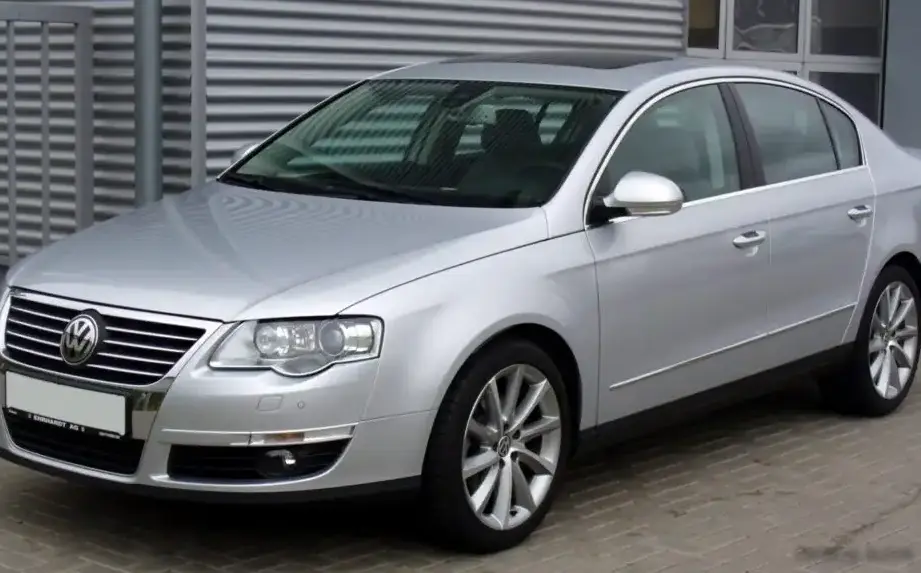
The Volkswagen Passat B6 2.0 TFSI, produced from September 2005 to December 2007, represented a significant step forward for Volkswagen’s mid-size sedan. Positioned as a performance-oriented variant within the B6 generation (2005-2010), it offered a compelling blend of power, refinement, and practicality. This model occupied the upper-mid range of the Passat lineup, sitting above the naturally aspirated 1.6 and 2.0 liter engines, but below the range-topping VR6 variants. It was primarily marketed in Europe and other global markets, offering a more engaging driving experience than its lower-powered siblings while remaining more accessible than the flagship VR6. The B6 Passat itself was a crucial model for Volkswagen, building upon the success of the B5 generation and introducing a more sophisticated design and improved technology.
Technical Specifications
| Brand | Volkswagen |
| Model | Passat |
| Generation | Passat (B6) |
| Type (Engine) | 2.0 TFSI (200 Hp) |
| Start of production | September, 2005 |
| End of production | December, 2007 |
| Powertrain Architecture | Internal Combustion engine |
| Body type | Sedan |
| Seats | 5 |
| Doors | 4 |
| Fuel consumption (economy) – urban | 11.2 l/100 km (21 US mpg, 25.2 UK mpg, 8.9 km/l) |
| Fuel consumption (economy) – extra urban | 6.3 l/100 km (37.3 US mpg, 44.8 UK mpg, 15.9 km/l) |
| Fuel consumption (economy) – combined | 8.1 l/100 km (29 US mpg, 34.9 UK mpg, 12.3 km/l) |
| CO2 emissions | 193 g/km |
| Fuel Type | Petrol (Gasoline) |
| Acceleration 0 – 100 km/h | 7.7 sec |
| Acceleration 0 – 62 mph | 7.7 sec |
| Acceleration 0 – 60 mph | 7.3 sec |
| Maximum speed | 234 km/h (145.4 mph) |
| Emission standard | Euro 4 |
| Weight-to-power ratio | 6.9 kg/Hp, 146 Hp/tonne |
| Weight-to-torque ratio | 4.9 kg/Nm, 204.4 Nm/tonne |
| Power | 200 Hp @ 5100-6600 rpm |
| Power per litre | 100.8 Hp/l |
| Torque | 280 Nm @ 1800-4700 rpm (206.52 lb.-ft. @ 1800-4700 rpm) |
| Engine layout | Front, Transverse |
| Engine Model/Code | AXX, BPY, BWA |
| Engine displacement | 1984 cm3 (121.07 cu. in.) |
| Number of cylinders | 4 |
| Engine configuration | Inline |
| Cylinder Bore | 82.5 mm (3.25 in.) |
| Piston Stroke | 92.8 mm (3.65 in.) |
| Compression ratio | 10.5:1 |
| Number of valves per cylinder | 4 |
| Fuel injection system | Direct injection |
| Engine aspiration | Turbocharger, Intercooler |
| Valvetrain | DOHC |
| Engine oil capacity | 4.6 l (4.86 US qt | 4.05 UK qt) |
| Coolant | 8 l (8.45 US qt | 7.04 UK qt) |
| Kerb Weight | 1370 kg (3020.33 lbs.) |
| Max. weight | 2050 kg (4519.48 lbs.) |
| Max load | 680 kg (1499.14 lbs.) |
| Trunk (boot) space – minimum | 565 l (19.95 cu. ft.) |
| Trunk (boot) space – maximum | 1091 l (38.53 cu. ft.) |
| Fuel tank capacity | 70 l (18.49 US gal | 15.4 UK gal) |
| Max. roof load | 100 kg (220.46 lbs.) |
| Permitted trailer load with brakes (12%) | 1600 kg (3527.4 lbs.) |
| Permitted trailer load without brakes | 750 kg (1653.47 lbs.) |
| Permitted towbar download | 85 kg (187.39 lbs.) |
| Length | 4765 mm (187.6 in.) |
| Width | 1820 mm (71.65 in.) |
| Height | 1472 mm (57.95 in.) |
| Wheelbase | 2709 mm (106.65 in.) |
| Front track | 1552 mm (61.1 in.) |
| Rear (Back) track | 1551 mm (61.06 in.) |
| Front overhang | 965 mm (37.99 in.) |
| Rear overhang | 1091 mm (42.95 in.) |
| Drag coefficient (Cd) | 0.281 |
| Minimum turning circle (turning diameter) | 11.4 m (37.4 ft.) |
| Drivetrain Architecture | The Internal combustion engine (ICE) drives the front wheels of the vehicle. |
| Drive wheel | Front wheel drive |
| Number of gears and type of gearbox | 6 gears, manual transmission |
| Front suspension | Spring Strut |
| Rear suspension | Coil spring |
| Front brakes | Ventilated discs |
| Rear brakes | Disc |
| Assisting systems | ABS (Anti-lock braking system) |
| Steering type | Steering rack and pinion |
| Tires size | 215/55 R16 |
| Wheel rims size | 7J x 16 |
Powertrain & Engine Architecture
The heart of the Passat 2.0 TFSI is the 1.984-liter, inline-four cylinder engine, designated with engine codes AXX, BPY, or BWA depending on the specific year and market. This engine is a member of Volkswagen’s EA888 family, known for its robust design and tuning potential. The “TFSI” designation stands for Turbocharged Fuel Stratified Injection, indicating the engine’s key technologies. It utilizes direct fuel injection, delivering fuel directly into the combustion chamber at high pressure, improving efficiency and reducing emissions. A single turbocharger, typically a K04, provides forced induction, boosting power output to 200 horsepower and 280 Nm (206.52 lb-ft) of torque. The engine features a double overhead camshaft (DOHC) valvetrain with four valves per cylinder, optimizing airflow for increased performance. The 6-speed manual transmission was standard, providing precise gear changes and a more engaging driving experience. While a six-speed automatic transmission (typically the 09G) was also available, it was often criticized for its slower shift speeds and less responsive feel compared to the manual.
Driving Characteristics
The 2.0 TFSI Passat offered a noticeable performance upgrade over the base engine options. Acceleration from 0 to 60 mph took approximately 7.3-7.7 seconds, making it a genuinely quick car for its class. The turbocharger provided a strong mid-range punch, delivering ample torque for effortless overtaking and highway cruising. The manual transmission allowed for full control over the engine’s power, while the automatic, though less engaging, offered convenience for daily commuting. The gear ratios were well-chosen, providing a balance between acceleration and fuel economy. Compared to the higher-output VR6 models, the 2.0 TFSI offered a more manageable power delivery and slightly better fuel efficiency, though it lacked the VR6’s distinctive exhaust note and ultimate performance. The front-wheel-drive configuration provided good traction in most conditions, but could exhibit some torque steer under hard acceleration.
Equipment & Trim Levels
The 2.0 TFSI Passat typically came equipped with a generous level of standard features. These included air conditioning, power windows and locks, a CD stereo system, and alloy wheels. Higher trim levels, such as the Sport or Highline, added features like leather upholstery, a sunroof, automatic climate control, and upgraded audio systems. Optional extras included navigation systems, parking sensors, and bi-xenon headlights. Interior upholstery was typically cloth on base models, with leather available as an upgrade. The dashboard layout was functional and well-designed, with clear instrumentation and intuitive controls.
Chassis & Braking
The Passat B6 utilized a MacPherson strut front suspension and a multi-link rear suspension, providing a comfortable ride and good handling characteristics. The suspension was tuned to balance comfort and control, offering a stable and predictable driving experience. Brakes consisted of ventilated discs at the front and solid discs at the rear, providing adequate stopping power for most driving situations. Anti-lock Braking System (ABS) was standard, enhancing safety and control during emergency braking. Stabilizer bars were fitted to both the front and rear axles, reducing body roll during cornering.
Market Reception & Comparison
The Passat 2.0 TFSI was generally well-received by automotive critics. It was praised for its strong performance, refined interior, and comfortable ride. However, some critics noted the automatic transmission’s sluggishness and the potential for oil consumption issues in some early engine iterations. Compared to rivals like the Ford Mondeo and Opel/Vauxhall Vectra, the Passat offered a more premium feel and a more sophisticated driving experience. Fuel economy was competitive for its class, averaging around 29 US mpg in combined driving. Reliability was generally good, although some owners reported issues with the turbocharger and fuel injectors over the long term.
Legacy
The Volkswagen Passat B6 2.0 TFSI remains a popular choice in the used car market today. Its combination of performance, practicality, and refinement makes it an appealing option for buyers seeking a well-rounded mid-size sedan. The EA888 engine, while known for potential oil consumption, is generally durable and can be reliably maintained with proper servicing. Parts availability is good, and the Passat benefits from a strong aftermarket support network. The B6 generation Passat, and particularly the 2.0 TFSI variant, has established itself as a solid and dependable vehicle, offering a compelling alternative to more modern competitors.