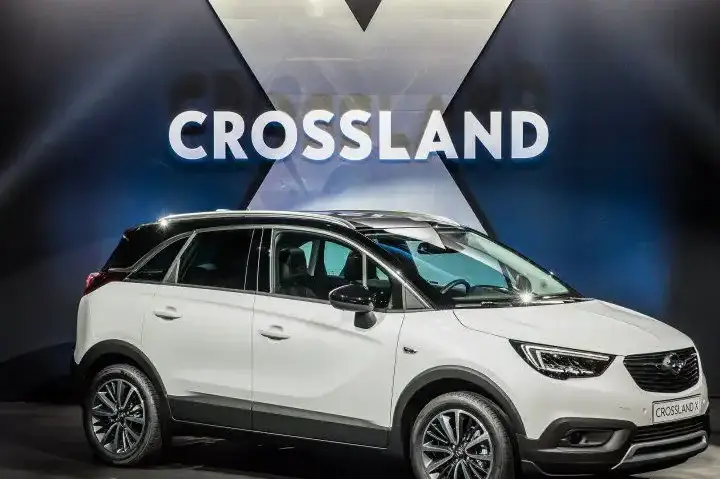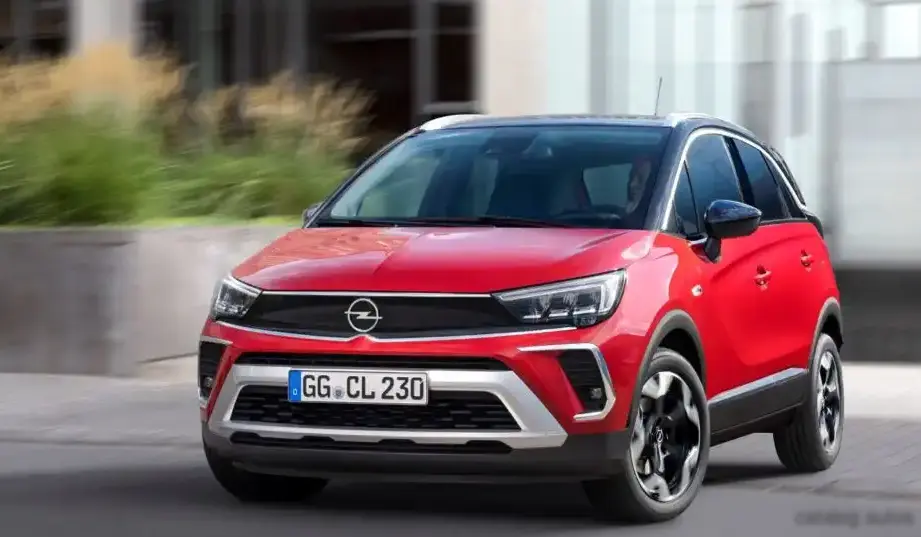
The Opel Crossland, particularly the facelifted version introduced in October 2020, represents Opel’s entry into the highly competitive subcompact SUV segment. This variant, equipped with the 1.2i Turbo engine producing 110 horsepower, aimed to balance affordability with modern features and fuel efficiency. Positioned as a mid-range offering within the Crossland lineup, it served as a step up from the base engine options while remaining more accessible than the higher-powered trims. The Crossland, developed under General Motors ownership before Opel’s acquisition by Stellantis, shares its platform with the Peugeot 2008 and Citroën C3 Aircross.
Technical Specifications
| Brand | Opel |
| Model | Crossland |
| Generation | Crossland (facelift 2020) |
| Type (Engine) | 1.2i Turbo (110 Hp) |
| Start of production | October, 2020 |
| Powertrain Architecture | Internal Combustion engine |
| Body type | SUV |
| Seats | 5 |
| Doors | 5 |
| Combined fuel consumption (WLTP) | 5.8-6.1 l/100 km (40.6 – 38.6 US mpg, 48.7 – 46.3 UK mpg, 17.2 – 16.4 km/l) |
| CO2 emissions (WLTP) | 131-138 g/km |
| Fuel consumption (urban) | 5.8-5.9 l/100 km (40.6 – 39.9 US mpg, 48.7 – 47.9 UK mpg, 17.2 – 16.9 km/l) |
| Fuel consumption (extra urban) | 4.1-4.2 l/100 km (57.4 – 56 US mpg, 68.9 – 67.3 UK mpg, 24.4 – 23.8 km/l) |
| Fuel consumption (combined) | 4.7-4.8 l/100 km (50 – 49 US mpg, 60.1 – 58.9 UK mpg, 21.3 – 20.8 km/l) |
| CO2 emissions (NEDC) | 108-109 g/km |
| Fuel Type | Petrol (Gasoline) |
| Acceleration 0 – 100 km/h | 10.9 sec |
| Acceleration 0 – 62 mph | 10.9 sec |
| Acceleration 0 – 60 mph | 10.4 sec |
| Maximum speed | 187 km/h (116.2 mph) |
| Emission standard | Euro 6d |
| Weight-to-power ratio | 10.6 kg/Hp, 94 Hp/tonne |
| Weight-to-torque ratio | 5.7 kg/Nm, 175.2 Nm/tonne |
| Power | 110 Hp @ 5500 rpm |
| Power per litre | 91.7 Hp/l |
| Torque | 205 Nm @ 1750 rpm (151.2 lb.-ft. @ 1750 rpm) |
| Engine layout | Front, Transverse |
| Engine Model/Code | F12XHL |
| Engine displacement | 1199 cm3 (73.17 cu. in.) |
| Number of cylinders | 3 |
| Engine configuration | Inline |
| Number of valves per cylinder | 4 |
| Fuel injection system | Direct injection |
| Engine aspiration | Turbocharger, Intercooler |
| Engine oil capacity | 3.5 l (3.7 US qt | 3.08 UK qt) |
| Coolant capacity | 5.7 l (6.02 US qt | 5.02 UK qt) |
| Kerb Weight | 1170 kg (2579.41 lbs.) |
| Max. weight | 1770 kg (3902.18 lbs.) |
| Max load | 600 kg (1322.77 lbs.) |
| Trunk (boot) space – minimum | 410 l (14.48 cu. ft.) |
| Trunk (boot) space – maximum | 1255 l (44.32 cu. ft.) |
| Fuel tank capacity | 45 l (11.89 US gal | 9.9 UK gal) |
| Max. roof load | 50 kg (110.23 lbs.) |
| Permitted trailer load (braked) | 840 kg (1851.88 lbs.) |
| Permitted trailer load (unbraked) | 600 kg (1322.77 lbs.) |
| Permitted towbar download | 65 kg (143.3 lbs.) |
| Length | 4217-4229 mm (166.02 – 166.5 in.) |
| Width with mirrors folded | 1825 mm (71.85 in.) |
| Width including mirrors | 1976 mm (77.8 in.) |
| Height | 1605 mm (63.19 in.) |
| Wheelbase | 2604 mm (102.52 in.) |
| Front track | 1518 mm (59.76 in.) |
| Rear track | 1491 mm (58.7 in.) |
| Minimum turning circle | 11.2 m (36.75 ft.) |
| Drivetrain | Front wheel drive |
| Number of gears | 6 |
| Gearbox type | Manual transmission |
| Front brakes | Disc |
| Rear brakes | Disc |
| Tire size | 195/65 R15 91T; 195/60 R16 89H; 215/50 R17 95V |
Powertrain & Engine Architecture
The heart of this Crossland variant is the F12XHL, a 1.2-liter turbocharged three-cylinder gasoline engine. This engine is part of Opel’s Small Engine Family (SEF), known for its compact design and efficiency. The engine utilizes direct fuel injection, a technology that improves combustion efficiency and reduces emissions. A single turbocharger with an intercooler provides forced induction, boosting power output. The engine’s valvetrain features four valves per cylinder, optimizing airflow for improved performance. The 110 horsepower and 205 Nm (151.2 lb-ft) of torque are respectable figures for a small displacement engine, providing adequate performance for everyday driving. The engine is paired with a six-speed manual transmission, delivering power to the front wheels. This transmission choice was common for this trim level, offering a balance between fuel economy and driver engagement.
Driving Characteristics
The 1.2i Turbo 110 hp Crossland offers a comfortable and practical driving experience. Acceleration from 0 to 100 km/h (0-62 mph) takes approximately 10.9 seconds, which is typical for a vehicle in this class. While not particularly sporty, the engine provides sufficient power for merging onto highways and overtaking slower traffic. The turbocharger does introduce a slight amount of turbo lag, but it’s generally well-managed. The six-speed manual transmission allows drivers to maintain optimal engine speed for efficiency or performance. Compared to higher-output versions of the Crossland, this variant feels less eager to accelerate, but it compensates with improved fuel economy. The gear ratios are well-chosen, providing a balance between responsiveness and cruising comfort.
Equipment & Trim Levels
The 1.2i Turbo 110 hp Crossland typically came equipped with a reasonable level of standard features. These included air conditioning, a touchscreen infotainment system with Bluetooth connectivity, power windows, and power door locks. Safety features such as ABS, electronic stability control, and multiple airbags were also standard. Higher trim levels offered additional features like alloy wheels, a rearview camera, parking sensors, and upgraded interior upholstery. Interior materials were generally durable and functional, reflecting the vehicle’s price point. Optional extras included a panoramic sunroof, navigation system, and advanced driver-assistance systems.
Chassis & Braking
The Crossland utilizes a front-wheel-drive chassis with a MacPherson strut suspension in the front and a torsion beam suspension in the rear. This suspension setup provides a comfortable ride quality, absorbing bumps and imperfections in the road. The steering is light and precise, making it easy to maneuver in urban environments. The braking system consists of disc brakes on all four wheels, providing adequate stopping power. ABS (Anti-lock Braking System) is standard, enhancing safety during emergency braking situations. The vehicle’s weight-to-power ratio of 10.6 kg/Hp contributes to its manageable handling characteristics.
Market Reception & Comparison
The Opel Crossland 1.2i Turbo 110 hp received generally positive reviews from automotive critics. It was praised for its fuel efficiency, comfortable ride, and practical interior space. However, some critics noted that the engine could feel underpowered when fully loaded or driving uphill. Compared to other trims in the Crossland lineup, this variant offered a more affordable entry point, making it attractive to budget-conscious buyers. Its fuel economy was notably better than the higher-powered versions, appealing to those prioritizing efficiency. In comparison to rivals like the Renault Captur and Nissan Juke, the Crossland offered a competitive package in terms of price, features, and practicality.
Legacy
The Opel Crossland 1.2i Turbo 110 hp has proven to be a relatively reliable vehicle in the used car market. The 1.2-liter turbo engine, while not without its quirks, has generally demonstrated good durability. Regular maintenance, including oil changes and timing belt replacements, is crucial for ensuring long-term reliability. Common issues reported by owners include occasional turbocharger problems and sensor failures. However, these issues are typically not major and can be addressed with relatively affordable repairs. The Crossland’s practicality and fuel efficiency continue to make it a popular choice among used car buyers seeking a versatile and economical subcompact SUV.