
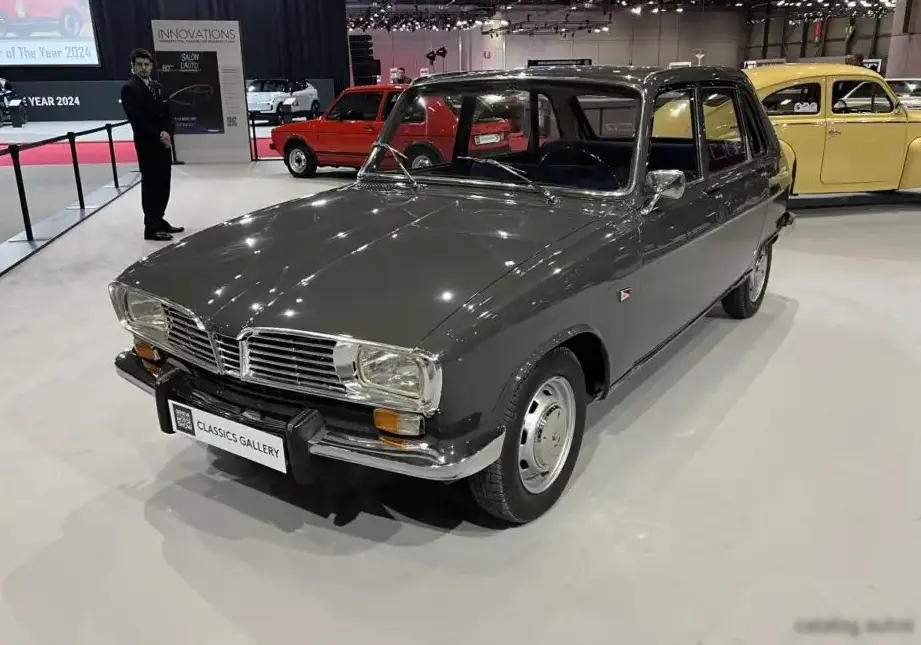
The Renault 16 1.6 TL (designated chassis codes 1152, 1153, and 1157) was a variant of the innovative Renault 16, produced between 1971 and 1980. This model represented a key part of the second generation (115 series) of the 16, building upon the original’s groundbreaking design while offering a more accessible engine option. The Renault 16, launched in 1965, was a pioneering vehicle, being one of the first front-wheel-drive family cars with a hatchback configuration. The 1.6 TL aimed to broaden the car’s appeal by providing a balance of practicality, comfort, and affordability within the Renault lineup.
Technical Specifications
| Brand | Renault |
| Model | 16 |
| Generation | 16 (115) |
| Type (Engine) | 1.6 TL (1152, 1153, 1157) (65 Hp) |
| Start of Production | 1971 |
| End of Production | 1980 |
| Powertrain Architecture | Internal Combustion Engine |
| Body Type | Hatchback |
| Seats | 5 |
| Doors | 5 |
| Fuel Type | Petrol (Gasoline) |
| Power | 65 Hp |
| Engine Model/Code | A2L 821 |
| Engine Aspiration | Naturally Aspirated |
| Engine Oil Capacity | 4 l (4.23 US qt | 3.52 UK qt) |
| Fuel Tank Capacity | 50 l (13.21 US gal | 11 UK gal) |
Powertrain & Engine Architecture
The Renault 16 1.6 TL was powered by the A2L 821 engine, a 1.6-liter (1596 cc) inline-four cylinder gasoline engine. This engine featured a cast iron block and an aluminum cylinder head. It utilized a single overhead camshaft (SOHC) valvetrain, operating two valves per cylinder. Fuel delivery was managed by a Solex carburetor, a common setup for the era. The engine produced 65 horsepower at 5,400 rpm and approximately 98 lb-ft of torque at 3,000 rpm. The engine was known for its relative simplicity and durability, though it wasn’t a performance powerhouse. The transmission paired with the 1.6 TL was a three-speed automatic gearbox. This automatic transmission, while offering convenience, was not particularly sophisticated by modern standards, and contributed to slightly lower fuel economy and acceleration compared to the available four-speed manual transmission.
Driving Characteristics
The 1.6 TL offered a comfortable, if not particularly sporty, driving experience. The automatic transmission provided smooth, if somewhat leisurely, gear changes. Acceleration was adequate for everyday driving, but overtaking maneuvers required careful planning. The front-wheel-drive layout contributed to good traction in most conditions, and the relatively light weight of the car (around 2,200 lbs) helped to mitigate the engine’s modest power output. The steering was light and precise, making the car easy to maneuver in urban environments. Compared to the more powerful 1.6 TS variant, the 1.6 TL felt noticeably slower, particularly at higher speeds. The manual transmission versions of the 1.6 offered a more engaging driving experience and slightly better fuel economy. The automatic’s gear ratios were optimized for fuel efficiency and smooth cruising rather than outright performance.
Equipment & Trim Levels
The 1.6 TL trim level occupied a mid-range position within the Renault 16 lineup. Standard equipment included cloth upholstery, a basic dashboard with analog gauges, and front and rear seat belts. The interior was functional and reasonably well-appointed for its time. Optional extras included a vinyl roof, upgraded upholstery, a radio, and heated rear window. The TL trim generally offered a step up in comfort and features compared to the base model, but lacked the sporty touches found on the TS variant. The dashboard layout was typical of early 1970s French cars, with a focus on practicality and ease of use. The steering wheel was a two-spoke design, and the seats offered reasonable support for longer journeys.
Chassis & Braking
The Renault 16 featured an independent front suspension with MacPherson struts and a torsion beam rear suspension. This suspension setup provided a comfortable ride and good handling characteristics for a family car of its era. The 1.6 TL typically came equipped with drum brakes on all four wheels, although some later models may have featured front disc brakes. The braking system was adequate for normal driving conditions, but lacked the stopping power of more modern systems. The car’s relatively light weight helped to compensate for the limitations of the drum brakes. Stabilizer bars were not standard equipment on the 1.6 TL, contributing to a slightly more pronounced body roll in corners compared to the TS model, which often included a front stabilizer bar.
Market Reception & Comparison
The Renault 16 1.6 TL was generally well-received by automotive critics as a practical and comfortable family car. It was praised for its spacious interior, innovative hatchback design, and relatively affordable price. However, the automatic transmission was sometimes criticized for its sluggish performance and lower fuel economy. Compared to other cars in its class, such as the Peugeot 504 and the Citroën DS, the Renault 16 offered a unique combination of practicality, comfort, and affordability. The 1.6 TL was positioned as a more accessible alternative to the more expensive and performance-oriented 1.6 TS. Fuel economy was typically around 25-30 mpg, depending on driving conditions. Reliability was generally good, although the carburetor required periodic adjustment and maintenance.
Legacy
The Renault 16, and the 1.6 TL variant specifically, holds a significant place in automotive history as a pioneering example of a modern family car. Its innovative design and practical features influenced many subsequent vehicles. Today, the Renault 16 is a popular classic car, appreciated by enthusiasts for its unique styling and engineering. The 1.6 TL, while not the most sought-after variant, remains a viable and affordable entry point into Renault 16 ownership. The A2L 821 engine is known for its durability, and well-maintained examples can still provide reliable transportation. Parts availability can be a challenge, but a dedicated community of Renault 16 owners and specialists exists to provide support and assistance. The car’s enduring appeal lies in its blend of practicality, comfort, and distinctive French charm.
