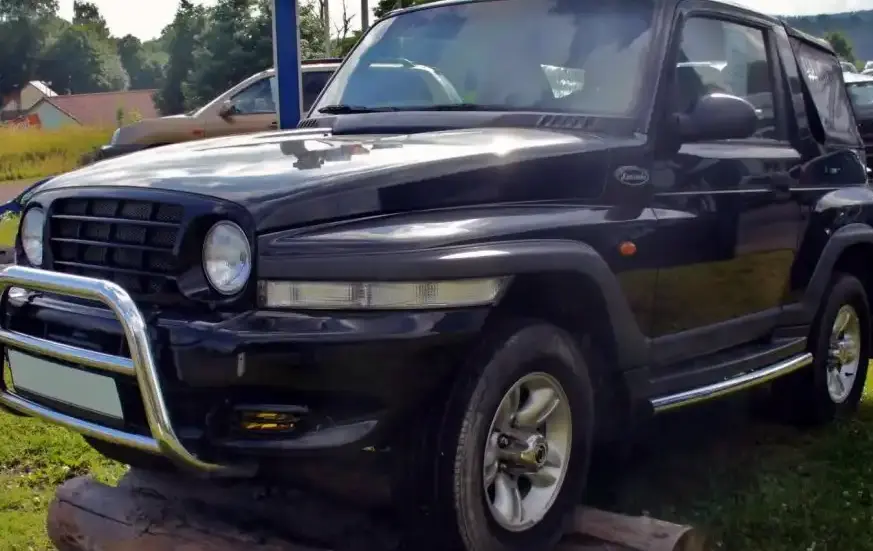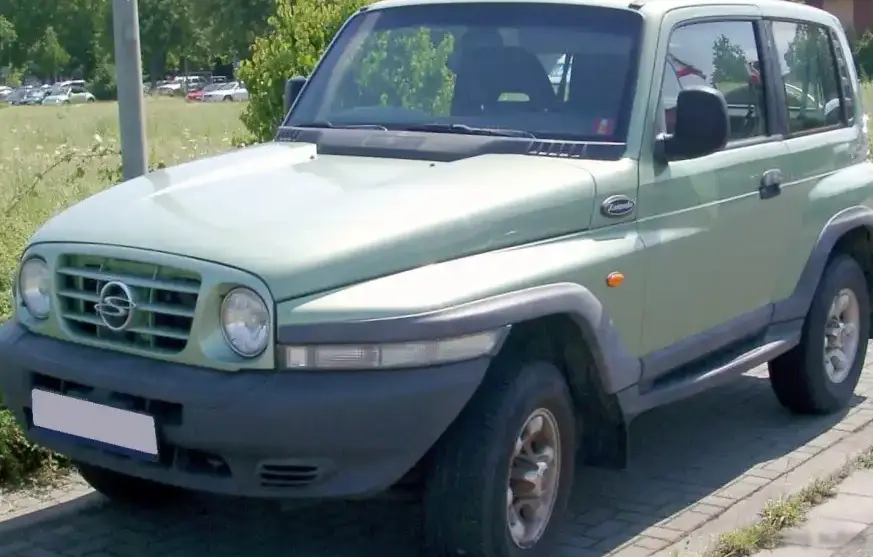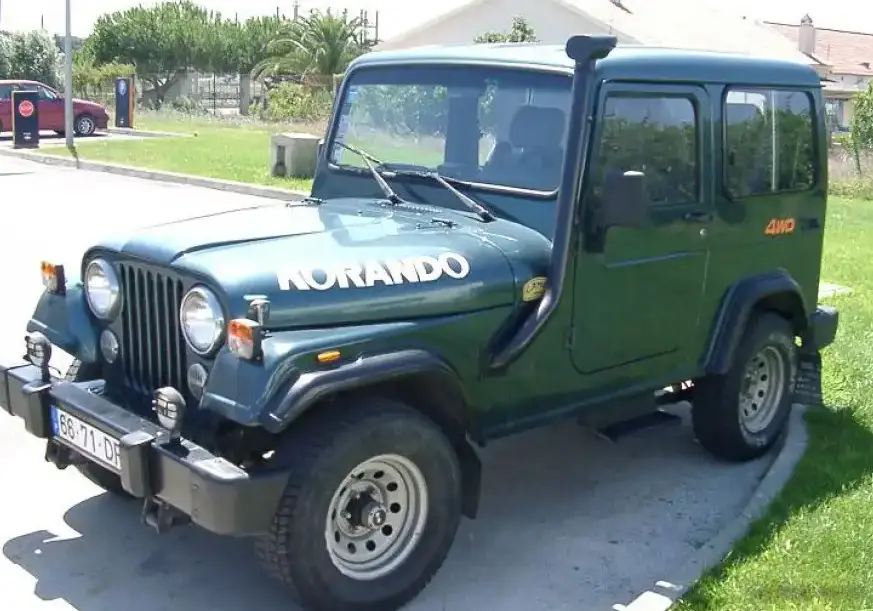
The SsangYong Korando I (K4) 2.2 D, producing 68 horsepower, was a significant model for the South Korean automaker, particularly during its production run from March 1982 to 1996. Positioned as an entry-level offering within the first generation Korando lineup, it aimed to provide affordable four-wheel-drive capability to a growing market. The Korando, derived from the Korean phrase “Kor-ea Can Do,” represented SsangYong’s ambition to establish itself as a capable automotive manufacturer. This variant played a crucial role in establishing the Korando’s reputation as a rugged and utilitarian vehicle, especially in its home market and export destinations. It was built upon a body-on-frame construction, a common practice for off-road vehicles of the era, and offered a practical alternative to more expensive and less capable vehicles.
Technical Specifications
| Brand | SsangYong |
| Model | Korando |
| Generation | Korando I (K4) |
| Type (Engine) | 2.2 D (68 Hp) |
| Start of production | March, 1982 |
| End of production | 1996 |
| Powertrain Architecture | Internal Combustion engine |
| Body type | Off-road vehicle |
| Seats | 5 |
| Doors | 3 |
| Fuel consumption (urban) | 14 l/100 km (16.8 US mpg, 20.2 UK mpg, 7.1 km/l) |
| Fuel consumption (extra urban) | 10 l/100 km (23.5 US mpg, 28.2 UK mpg, 10 km/l) |
| Fuel Type | Diesel |
| Maximum speed | 125 km/h (77.67 mph) |
| Weight-to-power ratio | 23.4 kg/Hp, 42.8 Hp/tonne |
| Weight-to-torque ratio | 11.1 kg/Nm, 89.9 Nm/tonne |
| Power | 68 Hp @ 4000 rpm |
| Power per litre | 30.4 Hp/l |
| Torque | 143 Nm @ 2000 rpm (105.47 lb.-ft. @ 2000 rpm) |
| Engine layout | Front, Longitudinal |
| Engine displacement | 2238 cm3 (136.57 cu. in.) |
| Number of cylinders | 4 |
| Engine configuration | Inline |
| Cylinder Bore | 88 mm (3.46 in.) |
| Piston Stroke | 92 mm (3.62 in.) |
| Compression ratio | 21:1 |
| Number of valves per cylinder | 2 |
| Fuel injection system | Precombustion chamber injection |
| Engine aspiration | Naturally aspirated engine |
| Kerb Weight | 1590 kg (3505.35 lbs.) |
| Max. weight | 2050 kg (4519.48 lbs.) |
| Max load | 460 kg (1014.13 lbs.) |
| Fuel tank capacity | 70 l (18.49 US gal | 15.4 UK gal) |
| Length | 3860 mm (151.97 in.) |
| Width | 1700 mm (66.93 in.) |
| Height | 1850 mm (72.83 in.) |
| Wheelbase | 2390 mm (94.09 in.) |
| Front track | 1310 mm (51.57 in.) |
| Rear track | 1270 mm (50 in.) |
| Drive wheel | All wheel drive (4×4) |
| Number of gears and type of gearbox | 5 gears, manual transmission |
| Front suspension | Torsion |
| Rear suspension | Torsion |
| Front brakes | Ventilated discs |
| Rear brakes | Drum |
| Assisting systems | ABS (Anti-lock braking system) |
| Steering type | Steering rack and pinion |
| Power steering | Hydraulic Steering |
| Tires size | 215/75 R15 |
Powertrain & Engine Architecture
The heart of the Korando I 2.2 D was a naturally aspirated, inline-four cylinder diesel engine. Displacing 2238 cc (136.57 cubic inches), this engine produced 68 horsepower at 4000 rpm and 143 Nm (105.47 lb-ft) of torque at 2000 rpm. It utilized a precombustion chamber injection system, a common diesel technology of the time, which involved injecting fuel into a small chamber within the cylinder head before the main combustion chamber. This design aided in cold-starting and reduced engine noise compared to direct injection systems. The engine featured a relatively low compression ratio of 21:1 and two valves per cylinder. The engine was mounted longitudinally in the front of the vehicle. The standard transmission was a five-speed manual gearbox, chosen for its durability and suitability for off-road driving. An automatic transmission was not offered with this engine.
Driving Characteristics
The 2.2-liter diesel engine in the Korando I delivered modest performance. Acceleration was slow, and the vehicle was not designed for high-speed driving. However, the engine’s torque output provided adequate pulling power for off-road excursions and hauling loads. The five-speed manual transmission allowed drivers to select appropriate gear ratios for varying terrain and driving conditions. Compared to potential future upgrades or larger engine options, this 68 hp variant prioritized fuel efficiency and durability over outright speed. The Korando’s four-wheel-drive system, coupled with the engine’s torque, made it a capable off-road vehicle, able to navigate challenging terrain. The relatively simple mechanicals of the engine and transmission contributed to its reliability, but also meant that maintenance was essential to keep it running smoothly.
Equipment & Trim Levels
The Korando I 2.2 D was typically equipped with basic, utilitarian features. Interior appointments were functional rather than luxurious, with vinyl or cloth upholstery and a simple dashboard layout. Standard equipment included a heater, basic instrumentation, and manually operated windows and door locks. Optional extras were limited, but could include features like a radio, upgraded seating, and additional exterior trim. The focus was on providing a robust and affordable vehicle, so creature comforts were kept to a minimum. The trim level was generally considered the base model, with more luxurious trims featuring larger engines and more amenities.
Chassis & Braking
The Korando I utilized a traditional body-on-frame construction, providing a robust and durable chassis. Suspension consisted of torsion bars front and rear, offering a reasonable balance between ride comfort and off-road capability. The front brakes were ventilated discs, providing adequate stopping power, while the rear brakes were drums. An anti-lock braking system (ABS) was available, though not standard on all models. The steering system was a rack and pinion setup with hydraulic power assistance, making it relatively easy to maneuver, even in challenging conditions. The vehicle rode on 215/75 R15 tires, chosen for their durability and all-terrain capability.
Market Reception & Comparison
The SsangYong Korando I 2.2 D was generally well-received as a capable and affordable off-road vehicle. Critics praised its rugged construction, four-wheel-drive system, and fuel efficiency. However, the engine’s limited power output was often noted as a drawback. Compared to other trims in the Korando lineup, such as those equipped with larger gasoline engines, the 2.2 D offered a more economical option, but at the expense of performance. It competed with other small to mid-size SUVs and off-road vehicles of the era, such as the Suzuki Samurai and the early Jeep Cherokee, offering a unique blend of Korean engineering and affordability.
Legacy
The SsangYong Korando I 2.2 D powertrain, while not known for blistering performance, proved to be remarkably durable and reliable. Many examples remain on the road today, a testament to its robust design and construction. In the used car market, these Korandos are often sought after by enthusiasts and those looking for a simple, rugged, and affordable off-road vehicle. The engine’s simplicity makes it relatively easy to maintain and repair, and parts availability, while diminishing, is still reasonable. The Korando I 2.2 D laid the foundation for SsangYong’s continued development of capable and affordable SUVs, and remains a significant chapter in the company’s history.