
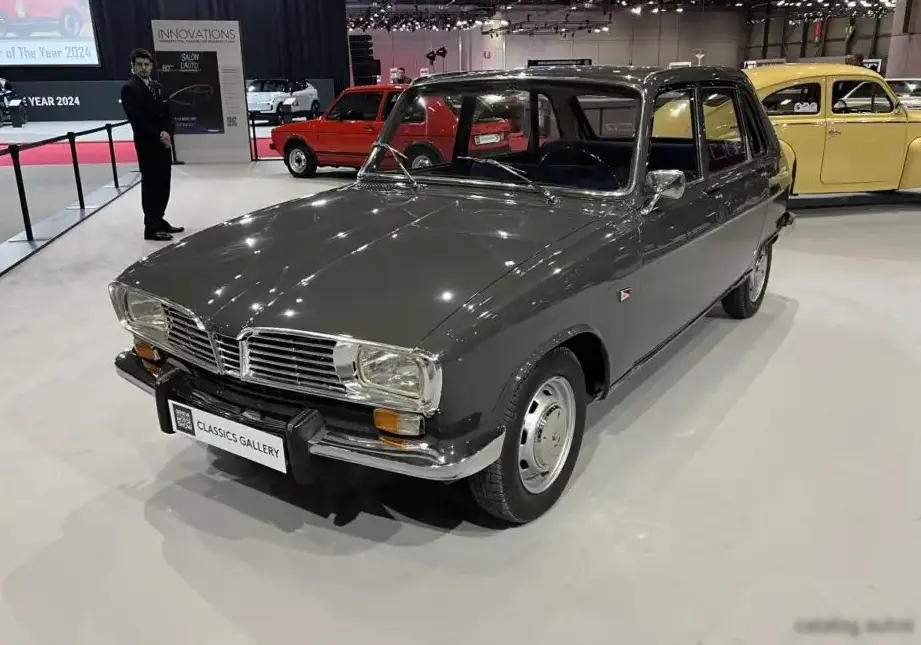
The Renault 16 1.6 TL, produced between 1975 and 1980, represents a significant iteration of Renault’s innovative family car. Part of the 115 series, this variant occupied a middle-ground position within the broader Renault 16 lineup, offering a balance between affordability and practicality. The Renault 16, launched in 1965, was a groundbreaking vehicle, being one of the first front-wheel-drive family cars with a hatchback configuration. The 1.6 TL specifically aimed to provide a comfortable and economical option for families, particularly in European markets where fuel efficiency and space were highly valued. It built upon the original’s design, offering a slightly larger engine and refined interior appointments compared to the base models.
Technical Specifications
| Brand | Renault |
| Model | 16 |
| Generation | 16 (115) |
| Type (Engine) | 1.6 TL (54 Hp) |
| Start of production | 1975 |
| End of production | 1980 |
| Powertrain Architecture | Internal Combustion engine |
| Body type | Hatchback |
| Seats | 5 |
| Doors | 5 |
| Fuel Type | Petrol (Gasoline) |
| Power | 54 Hp |
| Engine Model/Code | A2L 821 |
| Engine aspiration | Naturally aspirated engine |
| Engine oil capacity | 4 l (4.23 US qt | 3.52 UK qt) |
| Coolant capacity | 6.6 l (6.97 US qt | 5.81 UK qt) |
| Fuel tank capacity | 50 l (13.21 US gal | 11 UK gal) |
Powertrain & Engine Architecture
The Renault 16 1.6 TL was powered by the A2L 821 engine, a 1.6-liter (1596 cc) inline-four cylinder petrol engine. This engine featured a naturally aspirated configuration, meaning it did not employ a turbocharger or supercharger. The engine utilized a single overhead camshaft (SOHC) valvetrain, operating two valves per cylinder. Fuel delivery was managed by a Solex carburetor, a common setup for vehicles of this era. While not particularly powerful by modern standards, the A2L 821 was known for its reliability and relatively smooth operation. The engine produced 54 horsepower (40 kW) at 5,000 rpm and approximately 87 lb-ft (118 Nm) of torque at 3,000 rpm. The transmission paired with the 1.6 TL was a three-speed automatic gearbox. This automatic transmission, while offering convenience, was not known for its performance or efficiency. It was a relatively simple hydraulic automatic, lacking the sophistication of later electronically controlled units.
Driving Characteristics
The driving experience in the Renault 16 1.6 TL was characterized by comfort and ease of use rather than outright performance. The 54 horsepower engine, coupled with the three-speed automatic transmission, resulted in modest acceleration. The car was geared towards relaxed cruising and city driving, rather than spirited performance. The automatic transmission’s gear ratios were spaced to prioritize fuel economy and smooth transitions, but this came at the expense of responsiveness. Compared to the manual transmission versions of the Renault 16, the 1.6 TL automatic was noticeably slower. The manual versions, even with the same 1.6-liter engine, offered a more engaging driving experience and better fuel economy. The front-wheel-drive layout provided decent handling, but the suspension was tuned for comfort, resulting in some body roll during cornering. Steering was relatively light, making it easy to maneuver in urban environments.
Equipment & Trim Levels
The Renault 16 1.6 TL occupied a mid-range position in the Renault 16 lineup. As such, it came equipped with a reasonable level of standard features. The interior typically featured cloth upholstery, although vinyl options were available. The dashboard was constructed from durable plastic and featured a straightforward layout with analog gauges for speed, fuel level, and coolant temperature. The 1.6 TL included features such as a heater, windscreen wipers, and basic instrumentation. Optional extras included a radio, upgraded upholstery, and a sunroof. The trim level “TL” denoted “Tous Luxe” (All Luxury) and indicated a slightly more refined interior compared to the base models. The seats were generally more comfortable, and the interior trim was of a higher quality.
Chassis & Braking
The Renault 16 1.6 TL utilized a monocoque chassis construction, providing a good balance of strength and weight. The front suspension consisted of independent coil springs and wishbones, while the rear suspension employed a torsion beam setup. This suspension configuration prioritized ride comfort over handling precision. The braking system featured disc brakes on the front wheels and drum brakes on the rear wheels. This was a common setup for cars of this era and price point. The brakes were adequate for normal driving conditions, but lacked the stopping power of more modern braking systems. Steering was rack and pinion, providing reasonable precision and feedback. The car’s relatively light weight helped to compensate for the modest braking performance.
Market Reception & Comparison
The Renault 16 1.6 TL was generally well-received by critics and consumers alike. It was praised for its spacious interior, comfortable ride, and innovative hatchback design. However, the automatic transmission was often criticized for its lack of responsiveness and fuel efficiency. Compared to other cars in its class, such as the Citroën GS or the Peugeot 504, the Renault 16 offered a unique combination of practicality and affordability. The 1.6 TL variant was positioned as a more comfortable and convenient option than the base models, but it came at a slight premium in terms of price and fuel consumption. The manual transmission versions of the Renault 16 were generally preferred by driving enthusiasts, while the automatic versions appealed to those seeking a more relaxed driving experience.
Legacy
The Renault 16, and the 1.6 TL variant specifically, holds a significant place in automotive history as a pioneer of the modern family car. Its innovative design and practical features influenced many subsequent vehicles. The A2L 821 engine, while not a high-performance unit, proved to be remarkably durable and reliable. Many examples of the Renault 16 1.6 TL are still on the road today, a testament to its robust construction. In the used car market, these vehicles are often sought after by collectors and enthusiasts who appreciate their classic styling and historical significance. While maintenance can be challenging due to the age of the vehicle, parts availability is generally good, and the Renault 16 remains a relatively affordable classic car. The automatic transmission, however, can be a potential source of issues, and finding a well-maintained example is crucial.
