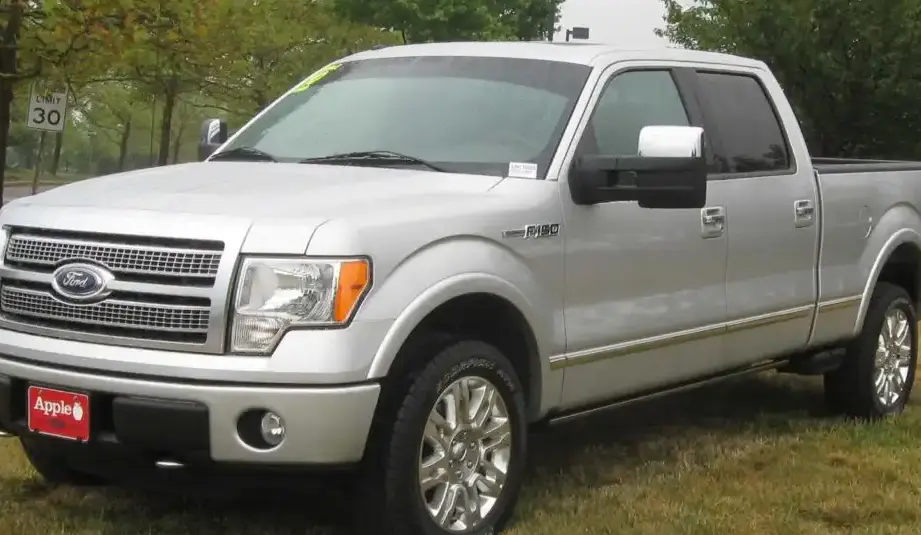
The Ford F-150 XII SuperCrew, produced from 2011 to 2014, represented a significant evolution in the popular F-Series lineup. This generation, internally designated as the F-150 XII, introduced a new level of refinement and capability, particularly with the introduction of the 3.5L EcoBoost V6 engine. The SuperCrew configuration, denoting a four-door, extended cab, offered increased passenger space and comfort, making it a versatile option for both work and family use. This specific variant, equipped with the 3.5L EcoBoost engine producing 365 horsepower and paired with a six-speed automatic transmission, occupied a mid-to-upper position within the F-150 range, bridging the gap between the base V6 and the more powerful V8 options.
Technical Specifications
| Brand | Ford |
| Model | F-Series F-100/F-150 |
| Generation | F-Series F-150 XII SuperCrew |
| Type (Engine) | 3.5 V6 EcoBoost (365 Hp) Automatic |
| Start of production | 2011 |
| End of production | 2014 |
| Powertrain Architecture | Internal Combustion engine |
| Body type | Pick-up |
| Seats | 5-6 |
| Doors | 4 |
| Fuel consumption (urban) | 14.7 l/100 km (16 US mpg, 19.2 UK mpg, 6.8 km/l) |
| Fuel consumption (extra urban) | 10.7 l/100 km (22 US mpg, 26.4 UK mpg, 9.3 km/l) |
| Fuel consumption (combined) | 13.1 l/100 km (18 US mpg, 21.6 UK mpg, 7.6 km/l) |
| Fuel Type | Petrol (Gasoline) |
| Weight-to-power ratio | 6.6 kg/Hp, 152 Hp/tonne |
| Weight-to-torque ratio | 4.2 kg/Nm, 236.9 Nm/tonne |
| Power | 365 Hp @ 5000 rpm |
| Power per litre | 104.1 Hp/l |
| Torque | 569 Nm @ 2500 rpm (419.67 lb.-ft. @ 2500 rpm) |
| Engine layout | Front, Longitudinal |
| Engine displacement | 3507 cm3 (214.01 cu. in.) |
| Number of cylinders | 6 |
| Engine configuration | V-engine |
| Compression ratio | 10:1 |
| Number of valves per cylinder | 4 |
| Fuel injection system | Direct injection |
| Engine aspiration | Twin-Turbo, Intercooler |
| Valvetrain | DOHC, Ti-VCT |
| Engine oil capacity | 5.7 l (6.02 US qt | 5.02 UK qt) |
| Coolant capacity | 15.6 l (16.48 US qt | 13.73 UK qt) |
| Kerb Weight | 2402-2519 kg (5295.5 – 5553.44 lbs.) |
| Max. weight | 3719 kg (8198.99 lbs.) |
| Max load | 1200-1317 kg (2645.55 – 2903.49 lbs.) |
| Fuel tank capacity | 98 l (25.89 US gal | 21.56 UK gal) |
| Permitted trailer load with brakes (12%) | 5126 kg (11300.9 lbs.) |
| Length | 5890-6195 mm (231.89 – 243.9 in.) |
| Width | 2012 mm (79.21 in.) |
| Width including mirrors | 2464 mm (97.01 in.) |
| Height | 1895-1905 mm (74.61 – 75 in.) |
| Wheelbase | 3670-3975 mm (144.49 – 156.5 in.) |
| Front track | 1702 mm (67.01 in.) |
| Rear track | 1702 mm (67.01 in.) |
| Minimum turning circle | 14.3-15.4 m (46.92 – 50.52 ft.) |
| Drivetrain Architecture | Rear wheel drive |
| Number of gears | 6 |
| Gearbox type | Automatic transmission |
| Front suspension | Double wishbone |
| Rear suspension | Leaf spring |
| Front brakes | Ventilated discs, 351×34 mm |
| Rear brakes | Ventilated discs, 348×25 mm |
| Assisting systems | ABS (Anti-lock braking system) |
| Steering type | Steering rack and pinion |
| Power steering | Electric |
| Tires size | 255/70 R17; 265/60 R18; 275/55 R20 |
| Wheel rims size | 7.5J x 17; 7.5J x 18; 8.5J x 20 |
Powertrain & Engine Architecture
The heart of this F-150 variant is the 3.5L EcoBoost V6, designated as the 3.5L Ti-VCT. This engine, part of Ford’s EcoBoost family, utilizes a twin-turbocharged configuration to deliver a substantial increase in power and torque compared to naturally aspirated engines of similar displacement. The engine employs direct fuel injection, optimizing combustion efficiency and contributing to improved fuel economy. The valvetrain features double overhead camshafts (DOHC) with variable valve timing (Ti-VCT), further enhancing performance and responsiveness. The six-speed automatic transmission, specifically tuned for the EcoBoost engine, provides smooth and efficient gear changes. This transmission features a wide gear ratio spread, optimizing both acceleration and highway cruising.
Driving Characteristics
The 3.5L EcoBoost-equipped F-150 SuperCrew offered a noticeably different driving experience compared to the base V6 or the larger V8 engines. The twin-turbochargers provide a broad torque curve, delivering strong acceleration from low RPMs. While not as immediately responsive as a naturally aspirated V8, the EcoBoost engine offers a unique blend of power and efficiency. The six-speed automatic transmission contributes to a comfortable driving experience, with well-spaced gear ratios. Compared to manual transmission versions, the automatic prioritizes ease of use and convenience, making it ideal for daily driving and towing. The weight of the SuperCrew cab, combined with the engine’s torque, allowed for substantial towing and hauling capabilities.
Equipment & Trim Levels
The F-150 SuperCrew with the 3.5L EcoBoost engine was typically offered in XLT and Lariat trim levels. The XLT trim included standard features such as air conditioning, power windows and locks, a basic audio system, and cloth upholstery. The Lariat trim added features like leather upholstery, heated front seats, a premium audio system, and additional chrome exterior trim. Optional extras included a navigation system, a sunroof, and various driver-assistance technologies. The SuperCrew configuration itself provided a spacious cabin with ample room for passengers and cargo.
Chassis & Braking
The F-150 XII SuperCrew utilized a body-on-frame construction, providing a robust and durable platform. The front suspension featured an independent double wishbone design, while the rear suspension employed a traditional leaf spring setup. This configuration balanced ride comfort with load-carrying capacity. Braking duties were handled by ventilated disc brakes on all four wheels, providing adequate stopping power for the vehicle’s weight. An Anti-lock Braking System (ABS) was standard equipment, enhancing safety and control during emergency braking situations.
Market Reception & Comparison
The 3.5L EcoBoost engine was widely praised for its innovative technology and impressive performance. Critics noted its ability to deliver V8-like power with improved fuel economy compared to traditional gasoline engines. The F-150 SuperCrew with the EcoBoost engine appealed to buyers who wanted a capable and comfortable truck without sacrificing fuel efficiency. Compared to the 5.0L V8, the EcoBoost offered similar horsepower but significantly more torque, making it a better choice for towing and hauling. The 3.5L EcoBoost also offered better fuel economy than the V8 options. However, some critics noted that the EcoBoost engine could be more complex and potentially more expensive to repair than the traditional V8 engines.
Legacy
The 3.5L EcoBoost engine proved to be a game-changer for the Ford F-150, establishing a new benchmark for performance and efficiency in the full-size pickup truck segment. The powertrain, while generally reliable, has been known to exhibit issues with spark plug fouling and turbocharger failures in some cases, particularly with neglected maintenance. However, with proper care and maintenance, these engines have proven to be durable and long-lasting. Today, used F-150 SuperCrew models equipped with the 3.5L EcoBoost engine remain popular choices for buyers seeking a capable and versatile truck with a modern powertrain.