
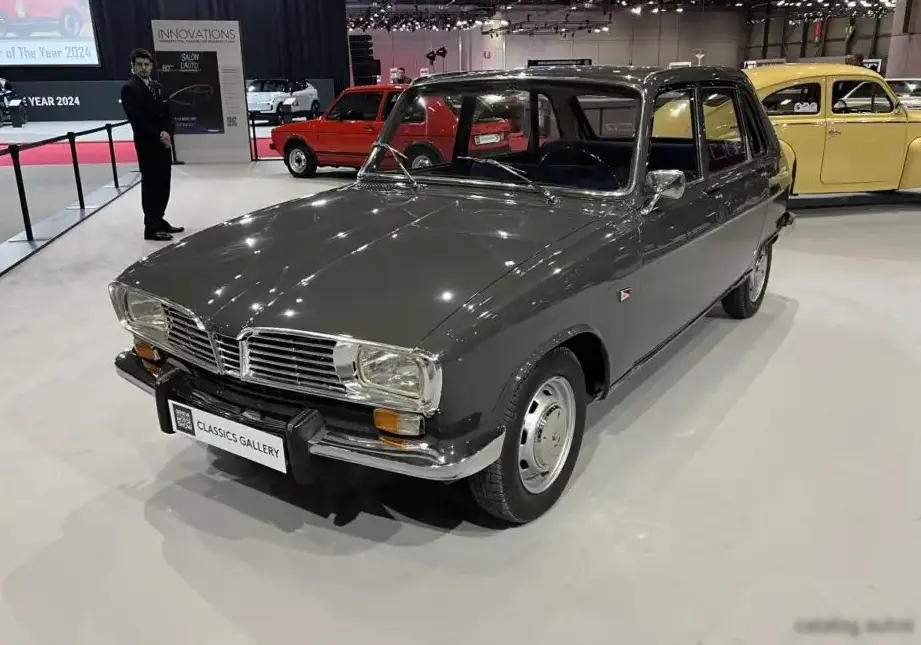
The Renault 16 1.6 TS (Type 115, engine codes 1151 and 1154) was a significant variant of the innovative Renault 16, produced between 1968 and 1980. This model represented a step up in performance from the base 1.5L engine, offering 83 horsepower and aimed at buyers seeking a more refined driving experience. The Renault 16, launched in 1965, was a groundbreaking vehicle, being one of the first front-wheel-drive family cars with a hatchback configuration. The 1.6 TS occupied a mid-range position within the lineup, bridging the gap between the more economical base models and the later, more luxurious versions.
Technical Specifications
| Brand | Renault |
| Model | 16 |
| Generation | 16 (115) |
| Type (Engine) | 1.6 TS (1151, 1154) (83 Hp) |
| Start of Production | 1968 |
| End of Production | 1980 |
| Powertrain Architecture | Internal Combustion Engine |
| Body Type | Hatchback |
| Seats | 5 |
| Doors | 5 |
| Fuel Type | Petrol (Gasoline) |
| Power | 83 Hp |
| Engine Model/Code | A2L 807 |
| Engine Aspiration | Naturally Aspirated |
| Engine Oil Capacity | 4 l (4.23 US qt | 3.52 UK qt) |
| Coolant Capacity | 6.8 l (7.19 US qt | 5.98 UK qt) |
| Fuel Tank Capacity | 50 l (13.21 US gal | 11 UK gal) |
Powertrain & Engine Architecture
The Renault 16 1.6 TS was powered by the A2L 807 engine, a 1,648 cc inline-four cylinder, naturally aspirated gasoline engine. This engine featured a cast iron block and an aluminum cylinder head. It utilized a single overhead camshaft (SOHC) valvetrain, operating two valves per cylinder. Fuel delivery was managed by a Solex carburetor, a common setup for the era. The 1.6 TS engine produced 83 horsepower at 5,800 rpm and 99 lb-ft of torque at 3,500 rpm. The engine was known for its relatively smooth operation and decent power output for its displacement. The transmission paired with the 1.6 TS was typically a three-speed automatic, although a four-speed manual was also available. The automatic transmission, while providing convenience, was not particularly sophisticated by modern standards, featuring relatively wide gear ratios.
Driving Characteristics
The Renault 16 1.6 TS with the automatic transmission offered a comfortable, if not particularly sporty, driving experience. Acceleration was adequate for the time, with a 0-60 mph time estimated around 14-16 seconds. The automatic transmission, while making city driving easier, did detract from the engine’s potential. The gear ratios were spaced to prioritize fuel economy and smooth cruising rather than rapid acceleration. Compared to the manual transmission versions, the automatic 1.6 TS felt noticeably slower, especially during overtaking maneuvers. The front-wheel-drive layout provided good traction in most conditions, and the relatively light weight of the vehicle contributed to its nimble handling. The suspension, consisting of independent front suspension with torsion bars and a twist-beam rear axle, provided a comfortable ride, although it could feel somewhat soft in corners.
Equipment & Trim Levels
The 1.6 TS trim level offered a step up in features compared to the base Renault 16 models. Standard equipment typically included cloth upholstery, a wood-trimmed dashboard, and a more comprehensive instrument cluster. Features like a radio were often optional extras. The interior was designed with practicality in mind, offering ample space for passengers and luggage. The hatchback design provided easy access to the cargo area, making the Renault 16 a versatile family vehicle. Optional extras included a sunroof, upgraded upholstery, and power steering (though power steering was rare on these models). The 1.6 TS was positioned as a comfortable and well-equipped family car, appealing to buyers who wanted a bit more refinement than the base models offered.
Chassis & Braking
The Renault 16 featured a monocoque chassis construction, providing a good balance of strength and lightness. The front suspension utilized independent torsion bar springs, while the rear suspension employed a twist-beam axle with trailing arms. Braking was initially accomplished with drum brakes on all four wheels, but later models (particularly towards the end of production) often featured front disc brakes for improved stopping power. Steering was a rack-and-pinion system, providing relatively precise control. The 1.6 TS models generally received slightly upgraded suspension components compared to the base models, offering a more controlled ride. Stabilizer bars were often included as standard equipment on the 1.6 TS, further enhancing handling.
Market Reception & Comparison
The Renault 16 1.6 TS was generally well-received by automotive critics. It was praised for its innovative design, comfortable ride, and practical hatchback configuration. The 1.6 TS engine was considered a good compromise between performance and fuel economy. However, the automatic transmission was sometimes criticized for its lack of responsiveness. Compared to other cars in its class, such as the Peugeot 504 or the Ford Cortina, the Renault 16 offered a unique combination of features and a distinctive style. The 1.6 TS was more expensive than the base models, but it offered a noticeable improvement in performance and refinement. Fuel economy was reasonable for the time, averaging around 25-30 mpg. Reliability was generally good, although maintenance could be somewhat complex due to the car’s advanced (for the era) engineering.
Legacy
The Renault 16, and particularly the 1.6 TS variant, holds a significant place in automotive history as a pioneering family car. Its innovative design and front-wheel-drive layout influenced many subsequent vehicles. The A2L 807 engine, while not a high-performance unit, proved to be relatively durable and reliable. Today, the Renault 16 1.6 TS is a sought-after classic car, appreciated by enthusiasts for its unique character and historical significance. Finding well-maintained examples can be challenging, and parts availability can be limited. However, the Renault 16 1.6 TS remains a testament to Renault’s engineering ingenuity and its commitment to innovation. The automatic transmission versions, while less desirable to some enthusiasts, offer a comfortable and easy-to-drive classic car experience.
