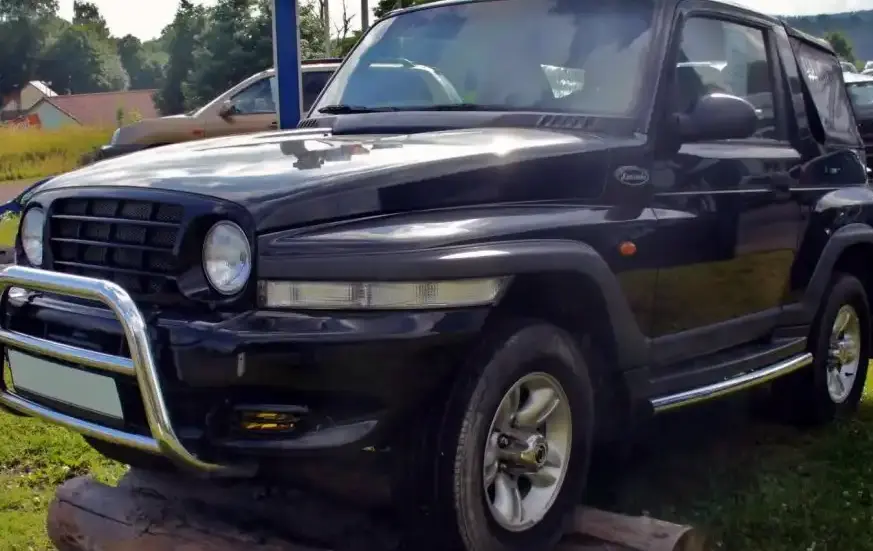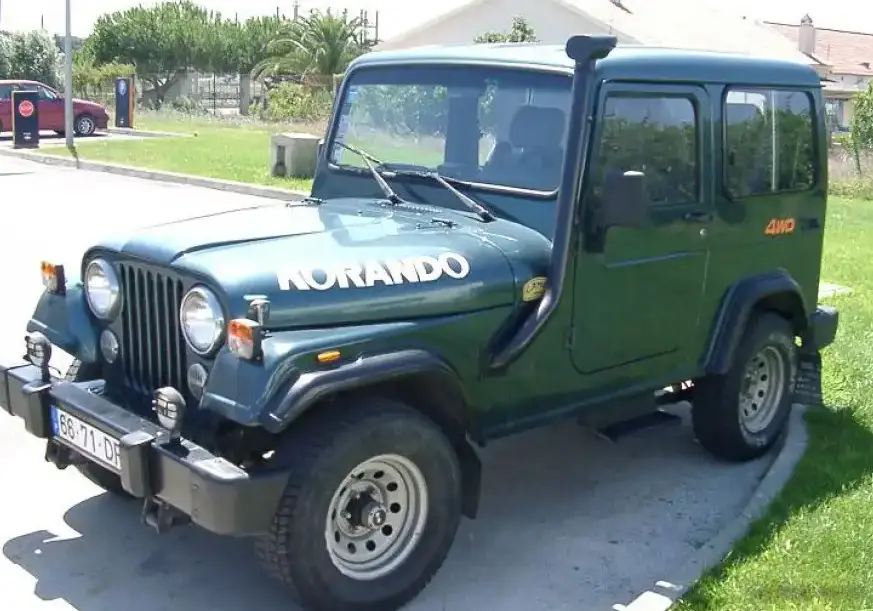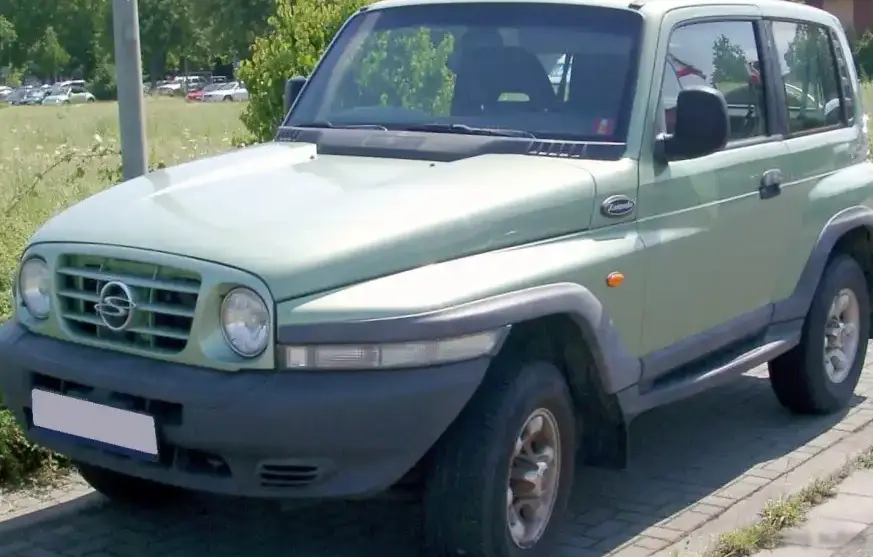
The SsangYong Korando II (KJ) 2.3 D, producing 80 horsepower, was a mainstay of the South Korean automaker’s lineup from 1996 to 2006. Positioned as an entry-level offering within the broader Korando II range, this variant catered to buyers seeking a rugged, affordable, and capable SUV, particularly in markets where fuel efficiency wasn’t the primary concern. The Korando II, built upon a traditional body-on-frame construction, aimed to provide a practical and durable vehicle for both on-road and off-road use. This specific 2.3-liter diesel engine and five-speed manual transmission combination represented a significant portion of the Korando II sales, especially in Europe and developing markets.
Technical Specifications
| Brand | SsangYong |
| Model | Korando |
| Generation | Korando II (KJ) |
| Type (Engine) | 2.3 D (80 Hp) |
| Start of production | 1996 |
| End of production | 2006 |
| Powertrain Architecture | Internal Combustion engine |
| Body type | SUV |
| Seats | 5 |
| Doors | 3 |
| Fuel consumption (urban) | 12.1 l/100 km (19.4 US mpg) |
| Fuel consumption (extra urban) | 7.9 l/100 km (29.8 US mpg) |
| Fuel Type | Diesel |
| Acceleration 0 – 100 km/h | 25 sec |
| Acceleration 0 – 62 mph | 25 sec |
| Acceleration 0 – 60 mph | 23.8 sec |
| Maximum speed | 130 km/h (80.78 mph) |
| Weight-to-power ratio | 21.8 kg/Hp |
| Weight-to-torque ratio | 11.6 kg/Nm |
| Power | 80 Hp @ 4000 rpm |
| Torque | 150 Nm @ 2300 rpm (110.63 lb.-ft. @ 2300 rpm) |
| Engine layout | Front, Longitudinal |
| Engine displacement | 2299 cm3 (140.29 cu. in.) |
| Number of cylinders | 4 |
| Engine configuration | Inline |
| Cylinder Bore | 89 mm (3.5 in.) |
| Piston Stroke | 92.4 mm (3.64 in.) |
| Compression ratio | 22:1 |
| Number of valves per cylinder | 2 |
| Fuel injection system | Precombustion chamber injection |
| Engine aspiration | Naturally aspirated engine |
| Valvetrain | OHC |
| Engine oil capacity | 6.5 l (6.87 US qt | 5.72 UK qt) |
| Kerb Weight | 1740 kg (3836.04 lbs.) |
| Max. weight | 2515 kg (5544.63 lbs.) |
| Max load | 775 kg (1708.58 lbs.) |
| Trunk (boot) space – minimum | 130 l (4.59 cu. ft.) |
| Trunk (boot) space – maximum | 1200 l (42.38 cu. ft.) |
| Fuel tank capacity | 70 l (18.49 US gal | 15.4 UK gal) |
| Length | 4330 mm (170.47 in.) |
| Width | 1841 mm (72.48 in.) |
| Height | 1940 mm (76.38 in.) |
| Wheelbase | 2480 mm (97.64 in.) |
| Front track | 1510 mm (59.45 in.) |
| Rear (Back) track | 1520 mm (59.84 in.) |
| Drive wheel | All wheel drive (4×4) |
| Number of gears and type of gearbox | 5 gears, manual transmission |
| Front suspension | Torsion |
| Rear suspension | Rigid axle suspension |
| Front brakes | Ventilated discs |
| Rear brakes | Disc |
| Assisting systems | ABS (Anti-lock braking system) |
| Steering type | Steering rack and pinion |
| Power steering | Hydraulic Steering |
| Tires size | 235/75 R15 |
Powertrain & Engine Architecture
The heart of this Korando II variant was the SsangYong-developed 2.3-liter inline-four diesel engine. Designated with engine codes varying by market, it utilized a precombustion chamber injection system – a common technology for diesel engines of the era. This system involved injecting fuel into a precombustion chamber connected to the main cylinder, promoting more complete combustion and reducing noise. The engine featured an overhead camshaft (OHC) valvetrain operating two valves per cylinder. While relatively simple in design, this engine prioritized durability and low-end torque over outright horsepower. The five-speed manual transmission was the standard offering, providing a direct connection between the engine and the all-wheel-drive system. The transmission’s gear ratios were geared towards maximizing torque delivery for off-road capability and towing, rather than achieving rapid acceleration.
Driving Characteristics
The 80-horsepower output and 150 Nm (110.63 lb-ft) of torque resulted in modest performance. Acceleration from 0 to 100 km/h (0-62 mph) took approximately 25 seconds, and the top speed was limited to 130 km/h (80.78 mph). Compared to higher-output Korando II models, such as those equipped with more powerful diesel engines or gasoline options, this variant felt noticeably slower. However, the engine’s strong low-end torque made it reasonably capable for everyday driving and off-road excursions. The manual transmission allowed for precise control, but the gear ratios were spaced to prioritize usability over sporty performance. The all-wheel-drive system provided enhanced traction on slippery surfaces, making it a suitable choice for rural areas or challenging weather conditions.
Equipment & Trim Levels
The 2.3 D variant of the Korando II typically represented the base trim level. Standard equipment generally included basic steel wheels, vinyl or cloth upholstery, and a simple dashboard layout. Power steering and ABS were often included, but air conditioning and power windows were typically optional extras. Interior appointments were functional rather than luxurious, reflecting the vehicle’s affordable positioning. Optional extras could include upgraded audio systems, alloy wheels, and a sunroof, allowing buyers to customize their vehicle to some extent.
Chassis & Braking
The Korando II utilized a traditional body-on-frame construction, providing a robust and durable chassis. The front suspension employed a torsion bar setup, while the rear suspension featured a rigid axle configuration. This setup prioritized off-road capability and load-carrying capacity over refined on-road handling. The braking system consisted of ventilated discs at the front and discs at the rear, providing adequate stopping power for the vehicle’s weight and performance. The all-wheel-drive system was typically part-time, allowing drivers to switch between two-wheel drive and four-wheel drive as needed.
Market Reception & Comparison
The SsangYong Korando II 2.3 D was generally well-received as a practical and affordable SUV, particularly in markets where off-road capability and durability were highly valued. Critics acknowledged its rugged construction and capable all-wheel-drive system, but noted its relatively slow acceleration and basic interior appointments. Compared to other trims in the Korando II lineup, such as the more powerful 2.9-liter diesel or gasoline versions, the 2.3 D offered a more economical entry point, but at the expense of performance. Fuel economy was reasonable for a vehicle of its size and type, but not exceptional. Reliability was generally good, although maintenance costs could be higher due to the diesel engine and all-wheel-drive system.
Legacy
The SsangYong Korando II 2.3 D has established a reputation as a durable and reliable workhorse. While not known for its speed or luxury, it remains a popular choice among enthusiasts seeking a rugged and affordable SUV. In the used car market, these vehicles are often sought after for their off-road capability and simple mechanical design. The 2.3-liter diesel engine, while not particularly powerful, is known for its longevity and relatively straightforward maintenance. Parts availability can be a challenge in some regions, but a dedicated community of owners and enthusiasts helps to keep these vehicles on the road. The Korando II 2.3 D represents a significant chapter in SsangYong’s history, showcasing the automaker’s commitment to building durable and capable vehicles for a wide range of customers.