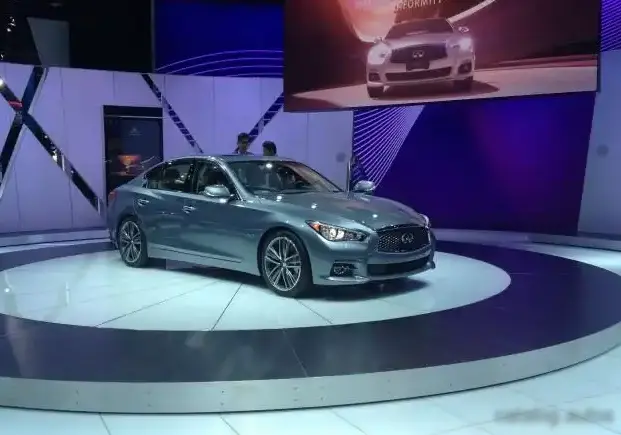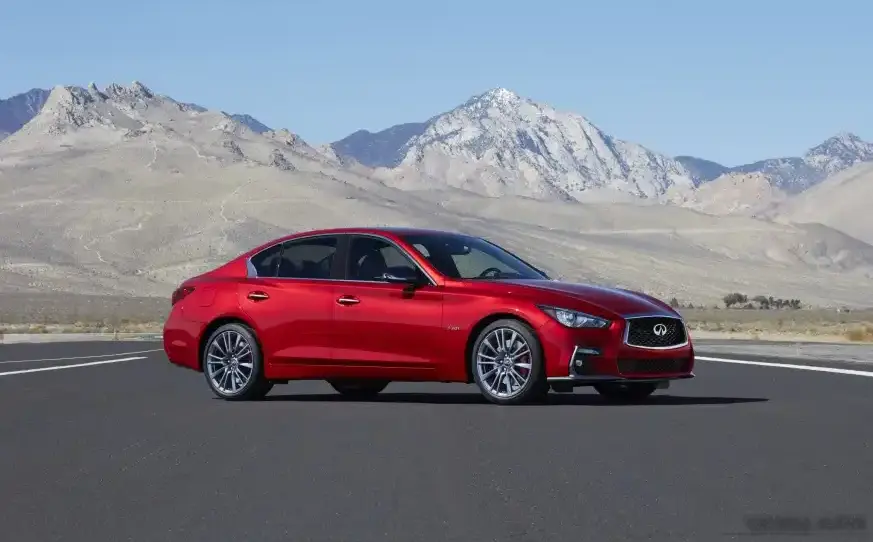
The Infiniti Q50 2.2d, introduced with the 2017 facelift, represented a significant expansion of the Q50 lineup, particularly for markets outside of North America where diesel engines held greater appeal. Positioned as a more fuel-efficient alternative to the gasoline-powered variants, the 2.2d offered a blend of luxury, performance, and economy. Production spanned from 2017 onwards, fitting into the broader Q50 (A3 platform) generation which began in 2013. This variant aimed to attract buyers seeking a refined driving experience with lower running costs, competing with European luxury sedans offering similar diesel powertrains.
Technical Specifications
| Brand | Infiniti |
| Model | Q50 |
| Generation | Q50 (facelift 2017) |
| Type (Engine) | 2.2d (170 Hp) Automatic |
| Start of production | 2017 |
| Powertrain Architecture | Internal Combustion engine |
| Body type | Sedan |
| Seats | 5 |
| Doors | 4 |
| Fuel consumption (urban) | 5.7 l/100 km (41.3 US mpg, 49.6 UK mpg, 17.5 km/l) |
| Fuel consumption (extra urban) | 3.9-4.0 l/100 km (60.3 – 58.8 US mpg, 72.4 – 70.6 UK mpg, 25.6 – 25 km/l) |
| Fuel consumption (combined) | 4.5-4.6 l/100 km (52.3 – 51.1 US mpg, 62.8 – 61.4 UK mpg, 22.2 – 21.7 km/l) |
| CO2 emissions | 119-123 g/km |
| Fuel Type | Diesel |
| Acceleration 0 – 100 km/h | 8.7 sec |
| Acceleration 0 – 62 mph | 8.7 sec |
| Acceleration 0 – 60 mph | 8.3 sec |
| Maximum speed | 230 km/h (142.92 mph) |
| Emission standard | Euro 6 |
| Weight-to-power ratio | 9.5 kg/Hp, 105.4 Hp/tonne |
| Weight-to-torque ratio | 4 kg/Nm, 248 Nm/tonne |
| Power | 170 Hp @ 3200-4000 rpm |
| Power per litre | 79.3 Hp/l |
| Torque | 400 Nm @ 1600-2800 rpm (295.02 lb.-ft. @ 1600-2800 rpm) |
| Engine layout | Front, Longitudinal |
| Engine Model/Code | OM 651.930 |
| Engine displacement | 2143 cm3 (130.77 cu. in.) |
| Number of cylinders | 4 |
| Engine configuration | Inline |
| Number of valves per cylinder | 4 |
| Fuel injection system | Diesel Commonrail |
| Engine aspiration | Turbocharger, Intercooler |
| Engine oil capacity | 6.5 l (6.87 US qt | 5.72 UK qt) |
| Coolant capacity | 9 l (9.51 US qt | 7.92 UK qt) |
| Kerb Weight | 1613-1796 kg (3556.06 – 3959.5 lbs.) |
| Trunk (boot) space | 450 l (15.89 cu. ft.) |
| Fuel tank capacity | 74 l (19.55 US gal | 16.28 UK gal) |
| Permitted trailer load (braked) | 1500 kg (3306.93 lbs.) |
| Permitted trailer load (unbraked) | 750 kg (1653.47 lbs.) |
| Length | 4810 mm (189.37 in.) |
| Width | 1820 mm (71.65 in.) |
| Width (with mirrors) | 2084 mm (82.05 in.) |
| Height | 1445 mm (56.89 in.) |
| Wheelbase | 2850 mm (112.2 in.) |
| Drag coefficient (Cd) | 0.26-0.27 |
| Drivetrain | Rear wheel drive |
| Number of gears | 7 |
| Gearbox type | Automatic transmission |
| Front brakes | Ventilated discs |
| Rear brakes | Ventilated discs |
INTRODUCTION
The Infiniti Q50 2.2d, launched in 2017 following a mid-cycle refresh, was a key addition to the Q50 range, particularly aimed at European and Asian markets. The facelift brought revised styling, updated technology, and the introduction of this diesel engine option. Built on the Nissan/Infiniti A3 platform, shared with models like the Nissan 370Z and the Q60 coupe, the Q50 sought to blend sporty handling with luxurious comfort. The 2.2d variant specifically targeted buyers prioritizing fuel efficiency and lower emissions without sacrificing the Q50’s overall driving experience. It occupied a middle ground in the Q50 lineup, positioned below the more powerful 3.0-liter twin-turbo V6 models and above any base engine options available in certain markets.
Powertrain & Engine Architecture
At the heart of the Q50 2.2d lies the OM651.930, a 2.143-liter inline-four cylinder diesel engine developed by Mercedes-Benz and supplied to Infiniti under a strategic partnership. This engine is a robust and well-regarded unit known for its durability and efficiency. It features a common-rail direct injection system, delivering fuel at extremely high pressure for optimized combustion. The engine utilizes a single turbocharger with an intercooler to boost power and torque. The valvetrain employs four valves per cylinder, contributing to improved breathing and performance. Paired with the engine is a 7-speed automatic transmission, providing smooth and responsive gear changes. This transmission, while not a dual-clutch unit, was tuned for both comfort and efficiency, with gear ratios optimized for maximizing fuel economy and providing adequate acceleration. The transmission also featured adaptive shift logic, adjusting shift points based on driving style and conditions.
Driving Characteristics
The Q50 2.2d Automatic offered a comfortable and refined driving experience. While not as overtly sporty as the V6-powered models, the 170 horsepower and 400 Nm (295 lb-ft) of torque provided ample power for everyday driving and highway cruising. Acceleration from 0-60 mph took approximately 8.3 seconds, which was respectable for a diesel-powered luxury sedan. The automatic transmission contributed to a relaxed driving experience, with smooth gear changes and a willingness to downshift when needed. The rear-wheel-drive configuration provided a balanced feel, although it wasn’t as engaging as some of its competitors with all-wheel drive. The gear ratios were tuned for efficiency, meaning the engine didn’t always feel particularly eager to rev, but it delivered strong low-end and mid-range torque, making it well-suited for overtaking maneuvers. Compared to the higher-output Q50 variants, the 2.2d prioritized fuel economy and refinement over outright performance.
Equipment & Trim Levels
The Q50 2.2d typically came well-equipped, reflecting Infiniti’s focus on luxury. Standard features often included leather upholstery, dual-zone automatic climate control, a touchscreen infotainment system with navigation, and a suite of safety technologies such as automatic emergency braking and lane departure warning. Higher trim levels added features like premium audio systems, heated and ventilated front seats, and advanced driver-assistance systems like adaptive cruise control and blind-spot monitoring. Interior upholstery options typically included black or grey leather. Dashboard configurations were generally consistent across the Q50 range, featuring a dual-screen setup with an upper display for infotainment and a lower display for vehicle settings. Optional extras included a panoramic sunroof, upgraded wheels, and various cosmetic enhancements.
Chassis & Braking
The Q50 2.2d utilized a MacPherson strut front suspension and a multi-link rear suspension, providing a comfortable ride and good handling characteristics. The suspension was tuned to balance comfort and control, offering a compliant ride over uneven surfaces while still providing a stable feel in corners. Braking duties were handled by ventilated discs on all four wheels, providing ample stopping power. Anti-lock braking system (ABS) and electronic brake-force distribution (EBD) were standard features. The Q50 2.2d’s weight, ranging from 1613 to 1796 kg (3556 to 3959 lbs), influenced the suspension tuning and braking system requirements. Stabilizer bars were used front and rear to reduce body roll during cornering.
Market Reception & Comparison
The Infiniti Q50 2.2d was generally well-received by automotive critics, who praised its fuel efficiency, comfortable ride, and luxurious interior. However, some reviewers noted that the diesel engine lacked the refinement of some of its European competitors. Compared to the Q50 3.0t models, the 2.2d offered significantly better fuel economy – around 52.3 mpg combined versus the V6’s 25-28 mpg – but at the expense of performance. The 2.2d also offered a more affordable entry point into the Q50 range. In terms of reliability, the OM651 diesel engine had a proven track record, but like any complex engine, it required regular maintenance to ensure longevity. The Q50 2.2d competed with models like the BMW 320d, Audi A4 TDI, and Mercedes-Benz C220d.
Legacy
The Infiniti Q50 2.2d, while not a massive sales success in all markets, established Infiniti as a contender in the diesel luxury sedan segment. The OM651 engine proved to be a reliable and durable powertrain, and well-maintained examples continue to offer a compelling value proposition in the used car market. The Q50 2.2d’s focus on fuel efficiency and refinement has made it a popular choice for drivers seeking a comfortable and economical luxury car. As with any used vehicle, prospective buyers should carefully inspect the maintenance history and condition of the engine and transmission before making a purchase. The availability of parts and qualified technicians for the OM651 engine remains good, ensuring that these vehicles can be kept on the road for many years to come.