
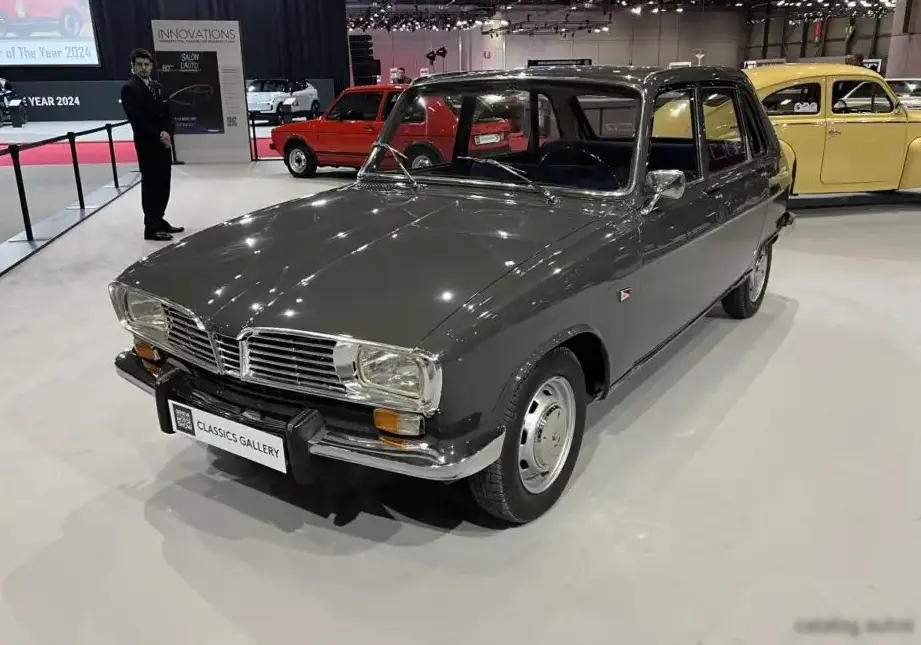
The Renault 16 1.6 TX (1156), produced between 1974 and 1980, represents a significant iteration of Renault’s innovative family car. Part of the 115 series, this variant occupied a mid-range position within the broader Renault 16 lineup, offering a balance between performance and affordability. The Renault 16, launched in 1965, was a groundbreaking vehicle, being one of the first front-wheel-drive family cars with a hatchback configuration. The 1.6 TX aimed to broaden the car’s appeal by providing a more powerful engine option alongside the existing lower-displacement models, while maintaining the practicality and spaciousness that defined the Renault 16.
Technical Specifications
| Brand | Renault |
| Model | 16 |
| Generation | 16 (115) |
| Type (Engine) | 1.6 TX (1156) (93 Hp) |
| Start of production | 1974 |
| End of production | 1980 |
| Powertrain Architecture | Internal Combustion engine |
| Body type | Hatchback |
| Seats | 5 |
| Doors | 5 |
| Fuel Type | Petrol (Gasoline) |
| Power | 93 Hp |
| Engine Model/Code | A2M 843 |
| Engine aspiration | Naturally aspirated engine |
| Engine oil capacity | 4 l (4.23 US qt | 3.52 UK qt) |
| Coolant capacity | 6.8 l (7.19 US qt | 5.98 UK qt) |
| Fuel tank capacity | 50 l (13.21 US gal | 11 UK gal) |
Powertrain & Engine Architecture
The heart of the Renault 16 1.6 TX is the A2M 843 engine, a 1.6-liter (1596 cc) inline-four cylinder gasoline engine. This engine produced 93 horsepower, a notable increase over the lower-displacement engines available in other Renault 16 variants. The engine featured a cast iron block and an aluminum cylinder head, a common configuration for the era. Fuel delivery was managed by a Solex carburetor, typical for European cars of the 1970s. The valvetrain employed a single overhead camshaft (SOHC) design, operating two valves per cylinder. The engine’s design prioritized reliability and ease of maintenance over outright performance. The 1.6 TX was typically paired with a three-speed automatic transmission, although a four-speed manual gearbox was also available. The automatic transmission, while offering convenience, was known for its relatively slow shift times and tendency to hunt for gears, especially under heavy load.
Driving Characteristics
The Renault 16 1.6 TX with the automatic transmission offered a comfortable, if not particularly sporty, driving experience. The 93 horsepower engine provided adequate power for everyday driving, allowing for reasonably brisk acceleration and comfortable cruising speeds on highways. However, the automatic transmission’s gear ratios were geared towards fuel economy rather than performance, resulting in a noticeable delay when requesting sudden bursts of power. Compared to the manual transmission versions, the automatic 1.6 TX felt somewhat sluggish, particularly when overtaking. The front-wheel-drive layout contributed to predictable handling, but the relatively soft suspension setup resulted in noticeable body roll during cornering. The steering, while not overly heavy, lacked the precision found in some contemporary European cars.
Equipment & Trim Levels
The 1.6 TX trim level represented a step up in terms of standard equipment compared to the base Renault 16 models. Standard features typically included cloth upholstery, a basic AM/FM radio, and a heater. The dashboard featured a straightforward layout with analog gauges for speed, fuel level, coolant temperature, and battery voltage. Optional extras included a sunroof, upgraded upholstery materials, and a more sophisticated radio with additional features. The interior was designed with practicality in mind, offering ample space for passengers and luggage. The hatchback configuration provided easy access to the cargo area, making the Renault 16 a versatile vehicle for families and those needing to transport larger items.
Chassis & Braking
The Renault 16 1.6 TX utilized an independent front suspension with MacPherson struts and a torsion beam rear suspension. This suspension setup provided a comfortable ride, absorbing bumps and imperfections in the road surface effectively. The braking system consisted of disc brakes on the front wheels and drum brakes on the rear wheels. While adequate for normal driving conditions, the drum brakes on the rear wheels were less effective than disc brakes, particularly during hard braking. The car’s relatively light weight helped to compensate for the limitations of the rear drum brakes. Steering was rack and pinion, providing reasonable precision and feedback.
Market Reception & Comparison
The Renault 16 1.6 TX was generally well-received by automotive critics and buyers alike. It was praised for its spacious interior, comfortable ride, and innovative hatchback design. However, the automatic transmission was often criticized for its sluggish performance and tendency to hunt for gears. Compared to other cars in its class, such as the Peugeot 304 and the Volkswagen Golf, the Renault 16 offered a unique combination of practicality, comfort, and affordability. The 1.6 TX variant positioned itself as a middle-ground option, appealing to buyers who wanted more power than the base models but didn’t require the performance of the more expensive, higher-spec trims. Fuel economy was reasonable for the era, but not exceptional, averaging around 25-30 miles per gallon.
Legacy
The Renault 16 1.6 TX, and the Renault 16 as a whole, holds a significant place in automotive history as a pioneering family car. Its innovative design and front-wheel-drive layout influenced many subsequent vehicles. The A2M 843 engine, while not known for its high performance, proved to be a reliable and durable powerplant. Today, the Renault 16 1.6 TX is a sought-after classic car, particularly among enthusiasts who appreciate its unique design and historical significance. Parts availability can be challenging, but a dedicated community of owners and restorers helps to keep these cars on the road. The automatic transmission variants, while less desirable to some purists, offer a comfortable and convenient driving experience, making them a viable option for those seeking a classic car that is easy to live with.
