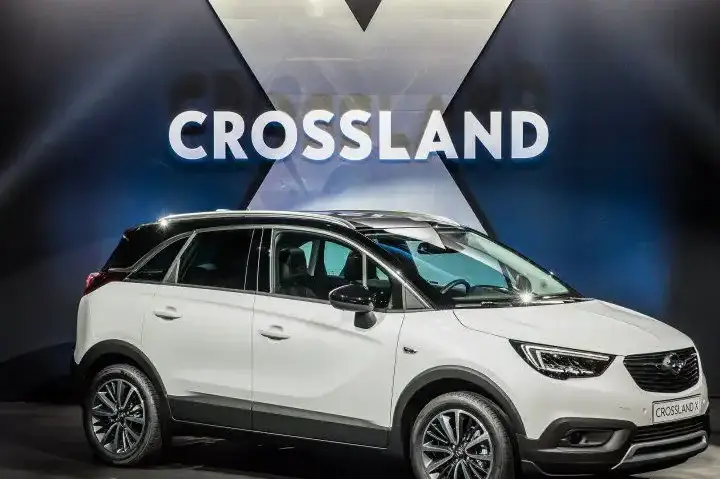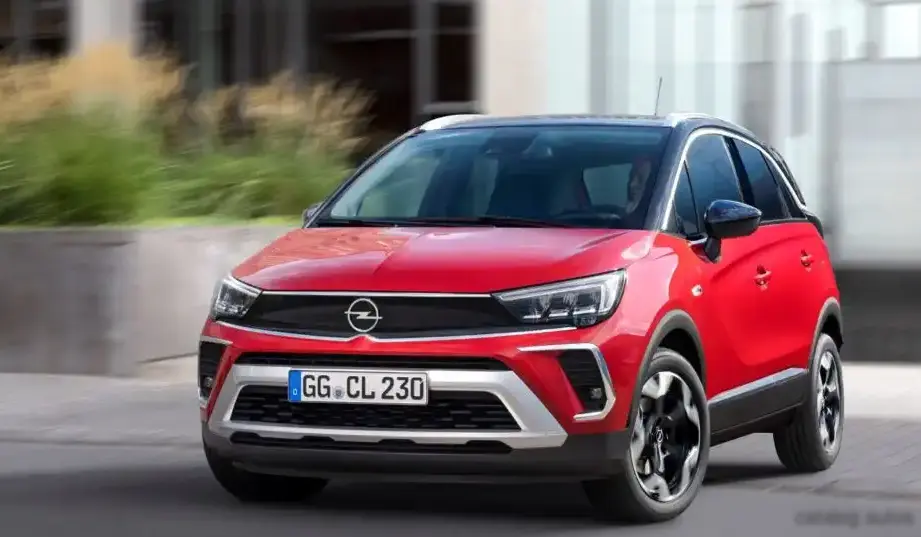
The Opel Crossland, particularly the facelifted version introduced in October 2020, represents Opel’s entry into the subcompact SUV segment. This variant, equipped with a 1.5-liter turbocharged diesel engine producing 120 horsepower and paired with a six-speed automatic transmission, aimed to offer a balance of fuel efficiency, practicality, and ease of driving. Positioned as a mid-range offering within the Crossland lineup, it catered to buyers seeking a comfortable and economical vehicle for daily commutes and family use. The Crossland, while not a groundbreaking vehicle, played a significant role in bolstering Opel’s sales in the European market, offering a competitive alternative to established players like the Renault Captur and Peugeot 2008.
Technical Specifications
| Brand | Opel |
| Model | Crossland |
| Generation | Crossland (facelift 2020) |
| Type (Engine) | 1.5d (120 Hp) Automatic |
| Start of production | October, 2020 |
| Powertrain Architecture | Internal Combustion engine |
| Body type | SUV |
| Seats | 5 |
| Doors | 5 |
| Combined fuel consumption (WLTP) | 4.9-5.2 l/100 km (48 – 45.2 US mpg, 57.6 – 54.3 UK mpg, 20.4 – 19.2 km/l) |
| CO2 emissions (WLTP) | 128-136 g/km |
| Fuel consumption (urban) | 4.4 l/100 km (53.5 US mpg, 64.2 UK mpg, 22.7 km/l) |
| Fuel consumption (extra urban) | 3.7-3.8 l/100 km (63.6 – 61.9 US mpg, 76.3 – 74.3 UK mpg, 27 – 26.3 km/l) |
| Fuel consumption (combined) | 3.8-3.9 l/100 km (61.9 – 60.3 US mpg, 74.3 – 72.4 UK mpg, 26.3 – 25.6 km/l) |
| CO2 emissions (NEDC) | 101-103 g/km |
| Fuel Type | Diesel |
| Acceleration 0 – 100 km/h | 11.5 sec |
| Acceleration 0 – 62 mph | 11.5 sec |
| Acceleration 0 – 60 mph | 10.9 sec |
| Maximum speed | 183 km/h (113.71 mph) |
| Emission standard | Euro 6d |
| Weight-to-power ratio | 10.7 kg/Hp, 93.3 Hp/tonne |
| Weight-to-torque ratio | 4.3 kg/Nm, 233.3 Nm/tonne |
| Power | 120 Hp @ 3750 rpm |
| Torque | 300 Nm @ 1750 rpm (221.27 lb.-ft. @ 1750 rpm) |
| Engine layout | Front, Transverse |
| Engine Model/Code | F15DTH |
| Engine displacement | 1499 cm3 (91.47 cu. in.) |
| Number of cylinders | 4 |
| Engine configuration | Inline |
| Number of valves per cylinder | 4 |
| Fuel injection system | Diesel Commonrail |
| Engine aspiration | Turbocharger, Intercooler |
| Engine oil capacity | 4 l (4.23 US qt | 3.52 UK qt) |
| Kerb Weight | 1286 kg (2835.14 lbs.) |
| Max. weight | 1855 kg (4089.57 lbs.) |
| Max load | 569 kg (1254.43 lbs.) |
| Trunk (boot) space – minimum | 410 l (14.48 cu. ft.) |
| Trunk (boot) space – maximum | 1255 l (44.32 cu. ft.) |
| Fuel tank capacity | 45 l (11.89 US gal | 9.9 UK gal) |
| AdBlue tank | 15 l (3.96 US gal | 3.3 UK gal) |
| Max. roof load | 50 kg (110.23 lbs.) |
| Permitted trailer load with brakes (12%) | 870 kg (1918.02 lbs.) |
| Permitted trailer load without brakes | 650 kg (1433 lbs.) |
| Permitted towbar download | 65 kg (143.3 lbs.) |
| Length | 4217-4229 mm (166.02 – 166.5 in.) |
| Width with mirrors folded | 1825 mm (71.85 in.) |
| Width including mirrors | 1976 mm (77.8 in.) |
| Height | 1605 mm (63.19 in.) |
| Wheelbase | 2604 mm (102.52 in.) |
| Front track | 1518 mm (59.76 in.) |
| Rear track | 1491 mm (58.7 in.) |
| Front overhang | 901-905 mm (35.47 – 35.63 in.) |
| Rear overhang | 712-720 mm (28.03 – 28.35 in.) |
| Minimum turning circle | 11.2 m (36.75 ft.) |
| Drivetrain Architecture | Front wheel drive |
| Number of gears and type of gearbox | 6 gears, automatic transmission |
| Front brakes | Disc |
| Rear brakes | Disc |
| Tires size | 195/60 R16 89H; 215/50 R17 95V |
| Wheel rims size | 6.5J x 16; 6.5J x 17 |
Powertrain & Engine Architecture
The heart of this Crossland variant is the 1.5-liter, four-cylinder diesel engine, identified by the code F15DTH. This engine belongs to Opel’s modern diesel family, featuring a cast iron block and aluminum cylinder head. It utilizes a common-rail direct fuel injection system, delivering fuel at extremely high pressures for optimized combustion. A turbocharger with an intercooler is employed to boost power and torque, providing 120 horsepower at 3750 rpm and a substantial 300 Nm (221 lb-ft) of torque at a low 1750 rpm. The engine also incorporates a diesel particulate filter (DPF) to meet stringent Euro 6d emission standards, and a Start & Stop system to further improve fuel economy. The engine is transversely mounted in the front of the vehicle. The six-speed automatic transmission is a conventional torque converter type, chosen for its smoothness and ease of use, particularly in urban driving conditions. While not the sportiest transmission, it was well-suited to the engine’s torque characteristics.
Driving Characteristics
The 1.5-liter diesel automatic Crossland offers a comfortable and relaxed driving experience. The engine’s strong low-end torque makes it feel responsive in everyday driving situations, with ample power for overtaking and merging onto highways. However, it’s not a particularly quick vehicle; the 0-100 km/h (0-62 mph) acceleration takes around 11.5 seconds. The automatic transmission shifts smoothly, but can sometimes feel hesitant when downshifting. Compared to the more powerful petrol versions of the Crossland, this diesel automatic prioritizes fuel economy over outright performance. The gear ratios are tuned for efficiency, rather than spirited acceleration. Compared to a manual transmission version of the same engine, the automatic offers greater convenience, but at the expense of some driver engagement and potentially slightly lower fuel economy.
Equipment & Trim Levels
The 1.5d Automatic Crossland typically came equipped with a respectable level of standard features. These included air conditioning, a touchscreen infotainment system with Bluetooth connectivity, power windows and mirrors, and a suite of safety features such as ABS, ESP (Electronic Stability Program), and multiple airbags. Higher trim levels added features like alloy wheels, a rear-view camera, parking sensors, cruise control, and upgraded interior upholstery. Interior materials were generally of good quality for the segment, with a focus on durability and practicality. Optional extras included a panoramic sunroof, heated seats, and a more advanced navigation system.
Chassis & Braking
The Crossland’s chassis is based on the PSA Group’s PF1 platform (shared with the Peugeot 2008 and Citroën C3 Aircross). The suspension consists of MacPherson struts at the front and a torsion beam setup at the rear. The torsion beam is a cost-effective solution, but it doesn’t offer the same level of sophistication as a multi-link suspension. Braking is handled by disc brakes on all four wheels, providing adequate stopping power for the vehicle’s weight and performance. The steering is electrically assisted, offering a light and easy feel, although it lacks significant feedback.
Market Reception & Comparison
The Opel Crossland 1.5d Automatic was generally well-received by automotive critics as a practical and economical choice in the subcompact SUV segment. It was praised for its comfortable ride, spacious interior, and fuel efficiency. However, some reviewers noted its uninspiring driving dynamics and relatively modest performance. Compared to the petrol-powered Crossland variants, the diesel offered significantly better fuel economy, but at a higher purchase price. Against competitors like the Renault Captur and Peugeot 2008, the Crossland held its own in terms of value for money and practicality, but lacked the brand cachet of some rivals.
Legacy
The 1.5-liter diesel engine and six-speed automatic transmission combination proved to be relatively reliable in the Opel Crossland. While diesel particulate filters can be prone to clogging with frequent short journeys, proper maintenance and occasional highway driving can mitigate this issue. On the used car market, these Crosslands represent a good value proposition for buyers seeking an economical and practical SUV. The engine’s durability and the transmission’s smoothness contribute to a positive ownership experience, making it a sensible choice for those prioritizing fuel efficiency and low running costs.