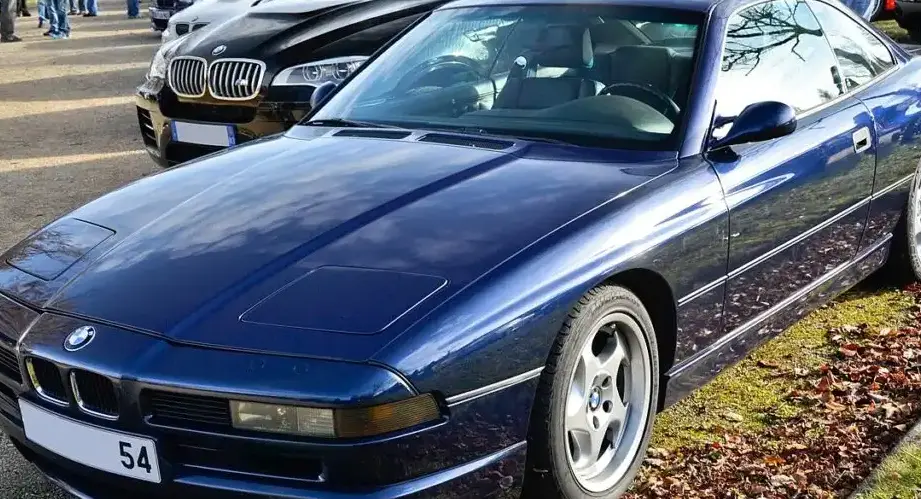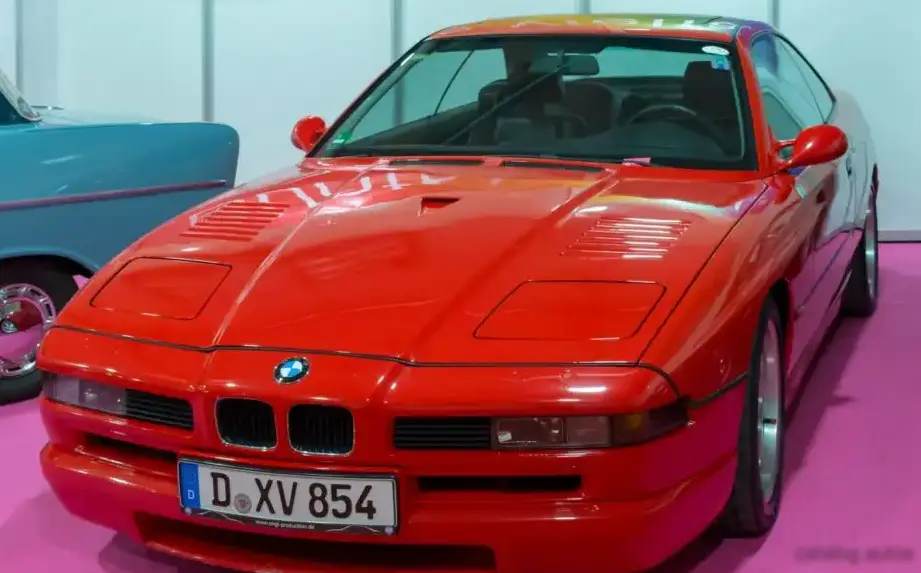
The BMW 840Ci, produced between 1995 and 1999, represents a compelling blend of luxury and performance within the E31 8 Series generation. Positioned as a mid-range offering in the 8 Series lineup, it slotted between the 830i and the flagship 850Ci, offering a significant step up in power and refinement. This variant combined a naturally aspirated 4.4-liter V8 engine with a five-speed automatic transmission, targeting buyers who desired a grand touring experience without the added complexity (and cost) of the 850Ci’s V12. The E31 platform, known for its advanced engineering and sleek design, aimed to redefine the luxury coupe segment, and the 840Ci played a crucial role in that ambition.
Technical Specifications
| Brand | BMW |
| Model | 8 Series |
| Generation | 8 Series (E31) |
| Type | 840Ci 4.4 V8 (286 Hp) Automatic |
| Start of production | 1995 |
| End of production | 1999 |
| Powertrain Architecture | Internal Combustion engine |
| Body type | Coupe |
| Seats | 4 |
| Doors | 2 |
| Fuel consumption (urban) | 19.1 l/100 km (12.3 US mpg, 14.8 UK mpg, 5.2 km/l) |
| Fuel consumption (extra urban) | 9.1 l/100 km (25.8 US mpg, 31 UK mpg, 11 km/l) |
| Fuel consumption (combined) | 12.8 l/100 km (18.4 US mpg, 22.1 UK mpg, 7.8 km/l) |
| CO2 emissions | 304 g/km |
| Fuel Type | Petrol (Gasoline) |
| Acceleration 0 – 100 km/h | 7 sec |
| Acceleration 0 – 62 mph | 7 sec |
| Acceleration 0 – 60 mph | 6.7 sec |
| Maximum speed | 250 km/h (155.34 mph), Electronically limited |
| Emission standard | Euro 2 |
| Weight-to-power ratio | 6.4 kg/Hp, 157.1 Hp/tonne |
| Weight-to-torque ratio | 4.3 kg/Nm, 230.8 Nm/tonne |
| Power | 286 Hp @ 5700 rpm |
| Power per litre | 65 Hp/l |
| Torque | 420 Nm @ 3900 rpm (309.78 lb.-ft. @ 3900 rpm) |
| Engine layout | Front, Longitudinal |
| Engine Model/Code | M62B44 |
| Engine displacement | 4398 cm3 (268.38 cu. in.) |
| Number of cylinders | 8 |
| Engine configuration | V-engine |
| Cylinder Bore | 92 mm (3.62 in.) |
| Piston Stroke | 82.7 mm (3.26 in.) |
| Compression ratio | 10:1 |
| Number of valves per cylinder | 4 |
| Fuel injection system | Multi-port manifold injection |
| Engine aspiration | Naturally aspirated engine |
| Valvetrain | DOHC |
| Engine oil capacity | 7.5 l (7.93 US qt | 6.6 UK qt) |
| Coolant | 12.5 l (13.21 US qt | 11 UK qt) |
| Kerb Weight | 1820 kg (4012.41 lbs.) |
| Max. weight | 2240 kg (4938.35 lbs.) |
| Max load | 420 kg (925.94 lbs.) |
| Trunk (boot) space – minimum | 320 l (11.3 cu. ft.) |
| Fuel tank capacity | 90 l (23.78 US gal | 19.8 UK gal) |
| Max. roof load | 75 kg (165.35 lbs.) |
| Permitted trailer load with brakes (8%) | 1800 kg (3968.32 lbs.) |
| Permitted trailer load with brakes (12%) | 1600 kg (3527.4 lbs.) |
| Permitted trailer load without brakes | 750 kg (1653.47 lbs.) |
| Permitted towbar download | 90 kg (198.42 lbs.) |
| Length | 4780 mm (188.19 in.) |
| Width | 1855 mm (73.03 in.) |
| Width including mirrors | 2037 mm (80.2 in.) |
| Height | 1340 mm (52.76 in.) |
| Wheelbase | 2684 mm (105.67 in.) |
| Front track | 1554 mm (61.18 in.) |
| Rear (Back) track | 1562 mm (61.5 in.) |
| Drag coefficient (Cd) | 0.29 |
| Drivetrain Architecture | The Internal combustion engine (ICE) drives the rear wheels of the vehicle. |
| Drive wheel | Rear wheel drive |
| Number of gears and type of gearbox | 5 gears, automatic transmission |
| Front suspension | Spring Strut, Transverse stabilizer |
| Rear suspension | Independent multi-link suspension, Transverse stabilizer, Coil spring |
| Front brakes | Ventilated discs |
| Rear brakes | Ventilated discs |
| Assisting systems | ABS (Anti-lock braking system) |
| Steering type | Steering rack and pinion |
| Power steering | Hydraulic Steering |
| Tires size | 235/50 R16 |
| Wheel rims size | 7.5J x 16 |
Powertrain & Engine Architecture
The heart of the 840Ci is the M62B44 engine, a 4.4-liter naturally aspirated V8. This engine, a significant upgrade from the earlier M60 and M62 engines, featured all-aluminum construction, contributing to a lighter overall weight. It utilized a dual-VANOS system (Variable Valve Timing) for both intake and exhaust valves, optimizing performance and fuel efficiency across the rev range. Fuel delivery was handled by a Bosch Motronic 1.7 engine management system and multi-port fuel injection. The five-speed automatic transmission (5HP30) was a crucial component, offering smooth shifts and a comfortable driving experience. While not as sporty as a manual transmission, the automatic was well-suited to the 840Ci’s grand touring character.
Driving Characteristics
The 840Ci Automatic offered a refined and powerful driving experience. While the 0-60 mph time of around 6.7 seconds wasn’t groundbreaking, the engine’s 420 Nm (309.78 lb-ft) of torque delivered strong acceleration in any gear. The automatic transmission, while smooth, did introduce some power loss compared to the manual versions. The gear ratios were tuned for comfortable cruising, making long highway journeys effortless. Compared to the 830i, the 840Ci provided a noticeable boost in performance, while remaining more accessible and less demanding to drive than the flagship 850Ci.
Equipment & Trim Levels
The 840Ci came standard with a generous array of luxury features, including leather upholstery, power-adjustable seats with memory function, automatic climate control, and a high-end sound system. Wood trim adorned the interior, enhancing the sense of opulence. Optional extras included a sunroof, upgraded sound systems, and various customization options for the interior trim and exterior paint. The 840Ci generally offered a higher level of standard equipment than the base 830i, reflecting its position as a mid-range model.
Chassis & Braking
The E31 8 Series boasted a sophisticated chassis design. The 840Ci utilized a fully independent suspension system, with MacPherson struts at the front and a multi-link setup at the rear. This provided a comfortable ride while maintaining good handling characteristics. Braking duties were handled by ventilated disc brakes on all four wheels, assisted by ABS (Anti-lock Braking System). The 840Ci’s weight, around 1820 kg (4012.41 lbs), necessitated a robust braking system to ensure adequate stopping power.
Market Reception & Comparison
The 840Ci was generally well-received by automotive critics. It was praised for its powerful engine, luxurious interior, and refined driving experience. However, some critics noted that the automatic transmission dulled the engine’s performance slightly. Fuel economy, at around 18.4 US mpg combined, was typical for a V8-powered luxury coupe of the era, but not particularly impressive. Compared to the 830i, the 840Ci offered a significant performance upgrade, justifying its higher price tag. Against the 850Ci, it provided a more accessible entry point into the 8 Series range, sacrificing some ultimate performance for a lower cost of ownership.
Legacy
The M62B44 engine, found in the 840Ci, is generally considered a reliable powerplant when properly maintained. Common issues include oil leaks and occasional VANOS system problems, but these are typically addressable with routine maintenance. Today, the 840Ci is a sought-after classic, appreciated for its elegant design and engaging driving experience. Well-maintained examples command a premium in the used car market, appealing to collectors and enthusiasts who value a blend of luxury, performance, and timeless style. The 840Ci represents a high point in BMW’s grand touring heritage, and its enduring appeal is a testament to its engineering excellence.