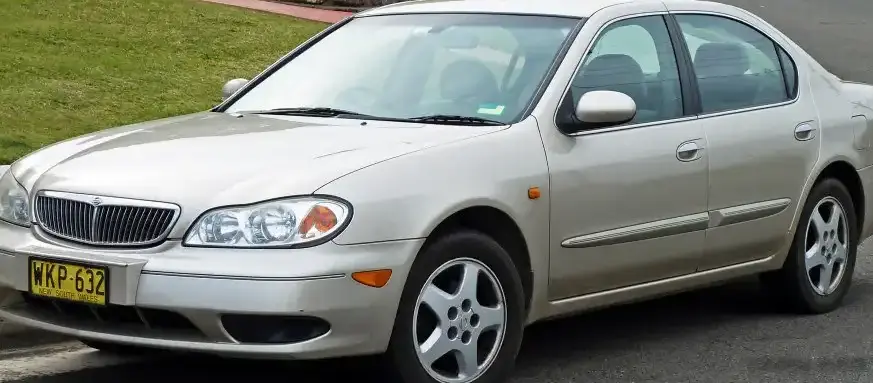
The Nissan Cefiro (32), produced between 1994 and 1999, represented a significant evolution in Nissan’s mid-size sedan offerings. Positioned as a more upscale and comfortable alternative to the Sentra and Altima in many markets, the Cefiro aimed to provide a blend of performance, refinement, and spaciousness. The 2.0 i V6 24V variant, equipped with a 155 horsepower engine, occupied a middle ground within the Cefiro 32 lineup, offering a balance between affordability and driving enjoyment. It was primarily sold in markets like Japan, Australia, and parts of Asia, and was not officially offered in the United States.
Technical Specifications
| Brand | Nissan |
| Model | Cefiro |
| Generation | Cefiro (32) |
| Type (Engine) | 2.0 i V6 24V (155 Hp) |
| Start of production | 1994 |
| End of production | 1999 |
| Powertrain Architecture | Internal Combustion engine |
| Body type | Sedan |
| Seats | 5 |
| Doors | 4 |
| Fuel consumption (extra urban) | 7.1 l/100 km (33.1 US mpg, 39.8 UK mpg, 14.1 km/l) |
| Fuel consumption (combined) | 10 l/100 km (23.5 US mpg, 28.2 UK mpg, 10 km/l) |
| Fuel Type | Petrol (Gasoline) |
| Weight-to-power ratio | 8.3 kg/Hp, 120.2 Hp/tonne |
| Weight-to-torque ratio | 6.9 kg/Nm, 144.2 Nm/tonne |
| Power | 155 Hp @ 6400 rpm |
| Power per litre | 77.6 Hp/l |
| Torque | 186 Nm @ 4400 rpm (137.19 lb.-ft. @ 4400 rpm) |
| Engine layout | Front, Longitudinal |
| Engine displacement | 1998 cm3 (121.93 cu. in.) |
| Number of cylinders | 6 |
| Engine configuration | V-engine |
| Cylinder Bore | 78 mm (3.07 in.) |
| Piston Stroke | 69.7 mm (2.74 in.) |
| Compression ratio | 9.5:1 |
| Number of valves per cylinder | 4 |
| Fuel injection system | Multi-port manifold injection |
| Engine aspiration | Naturally aspirated engine |
| Valvetrain | DOHC |
| Kerb Weight | 1290 kg (2843.96 lbs.) |
| Max. weight | 1565 kg (3450.23 lbs.) |
| Max load | 275 kg (606.27 lbs.) |
| Trunk (boot) space – minimum | 265 l (9.36 cu. ft.) |
| Fuel tank capacity | 70 l (18.49 US gal | 15.4 UK gal) |
| Length | 4760 mm (187.4 in.) |
| Width | 1770 mm (69.69 in.) |
| Height | 1410 mm (55.51 in.) |
| Wheelbase | 2700 mm (106.3 in.) |
| Front track | 1530 mm (60.24 in.) |
| Rear (Back) track | 1510 mm (59.45 in.) |
| Drivetrain Architecture | The Internal combustion engine (ICE) drives the front wheels of the vehicle. |
| Drive wheel | Front wheel drive |
| Number of gears and type of gearbox | 5 gears, manual transmission |
| Front suspension | Wishbone |
| Rear suspension | Coil spring |
| Front brakes | Ventilated discs |
| Rear brakes | Disc |
| Assisting systems | ABS (Anti-lock braking system) |
| Steering type | Steering rack and pinion |
| Power steering | Hydraulic Steering |
| Tires size | 195/65 R15 |
Powertrain & Engine Architecture
The heart of the Cefiro 2.0 i was the Nissan KA24DE engine, a 2.0-liter V6. This engine was a naturally aspirated, 24-valve design featuring a double overhead camshaft (DOHC) valvetrain. The KA24DE utilized multi-port fuel injection, contributing to its relatively smooth power delivery and acceptable fuel efficiency for the time. The engine’s 9.5:1 compression ratio was a common figure for engines of this era, balancing performance and reliability. The 155 horsepower output, while not groundbreaking, was sufficient for comfortable highway cruising and everyday driving. The engine was mounted longitudinally in the front of the vehicle, driving the front wheels. The 5-speed manual transmission offered a direct and engaging driving experience, although a 4-speed automatic transmission was also available, and more common in this trim.
Driving Characteristics
The Cefiro 2.0 i with the 5-speed manual transmission provided a reasonably engaging driving experience. The engine’s torque curve, peaking at 186 Nm (137.19 lb-ft) at 4400 rpm, meant that usable power was available across a broad range of engine speeds. However, it wasn’t a particularly high-revving engine, and the power began to taper off noticeably above 6000 rpm. The automatic transmission, while offering convenience, did diminish the overall responsiveness. Gear ratios were tuned for comfort and fuel economy rather than outright acceleration. Compared to the more powerful VQ30DE V6 found in higher-spec Cefiros, the 2.0-liter engine felt noticeably less potent, especially when fully loaded with passengers and cargo. The front-wheel-drive configuration, while common for its class, could exhibit some torque steer under hard acceleration.
Equipment & Trim Levels
The 2.0 i trim level of the Cefiro 32 typically included features such as power windows, power steering, central locking, and an AM/FM radio with cassette player. Air conditioning was standard in most markets. Interior upholstery was typically cloth, although leather options were available as upgrades. Dashboard design was functional and straightforward, prioritizing usability over flashy aesthetics. Optional extras included a sunroof, upgraded audio systems, and alloy wheels. The Cefiro aimed for a comfortable and well-equipped interior, but it didn’t quite reach the luxury levels of some of its European competitors.
Chassis & Braking
The Cefiro 32 utilized a front independent suspension with wishbone configuration, providing a comfortable ride quality. The rear suspension employed a coil spring setup. Braking duties were handled by ventilated discs at the front and solid discs at the rear. Anti-lock braking system (ABS) was standard, enhancing safety. Steering was rack and pinion with hydraulic power assistance, offering a reasonable level of feel and responsiveness. The 195/65 R15 tires provided a good balance between ride comfort and grip. The chassis was designed to prioritize comfort and stability over sporty handling.
Market Reception & Comparison
The Nissan Cefiro 2.0 i was generally well-received as a comfortable and reliable mid-size sedan. Critics praised its spacious interior, smooth ride, and relatively fuel-efficient engine. However, it was often criticized for its somewhat bland styling and lack of sporting pretensions. Compared to the higher-spec Cefiro variants with the VQ30DE engine, the 2.0 i offered a more affordable entry point into the Cefiro range, but at the expense of performance. Fuel economy was competitive for its class, averaging around 10 liters per 100 kilometers (23.5 US mpg). Reliability was generally good, although routine maintenance was essential to prevent issues with the engine and transmission.
Legacy
The Nissan Cefiro 32, and particularly the 2.0 i variant, has developed a modest following among enthusiasts. The KA24DE engine is known for its durability and relative simplicity, making it a popular choice for engine swaps and modifications. The Cefiro 32 is now considered a classic car in many markets, and well-maintained examples are becoming increasingly collectible. While not as iconic as some of its contemporaries, the Cefiro 32 represents a significant chapter in Nissan’s history, offering a blend of comfort, reliability, and affordability that appealed to a wide range of buyers.