
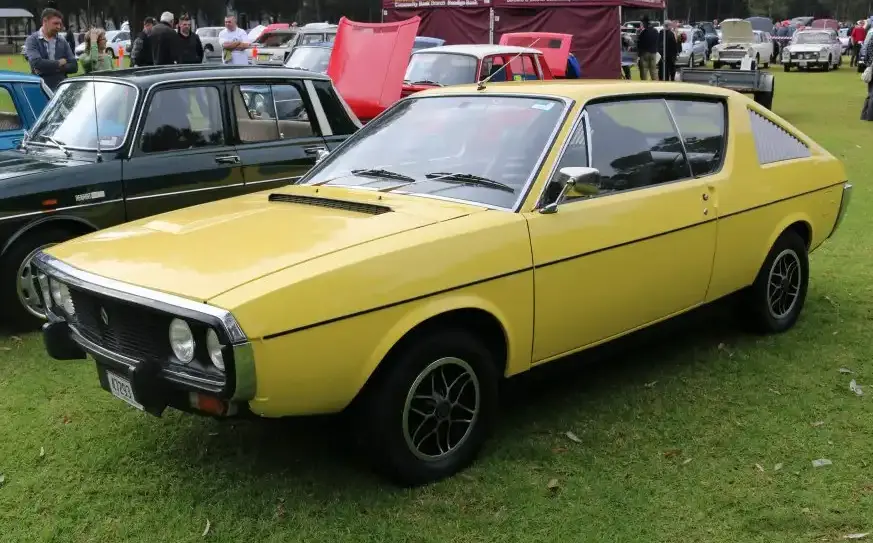
The Renault 17 Gordini, produced between 1974 and August 1979, represents a performance-oriented variant of the Renault 17, a compact coupe that was a significant model for the French automaker. Positioned as the top-tier trim level, the Gordini capitalized on the Renault 17’s modern (for its time) front-wheel-drive layout and stylish design with a more powerful engine and sporty enhancements. It was a key player in Renault’s efforts to appeal to a younger, more enthusiastic driver in the European market, offering a blend of practicality and accessible performance. The Gordini name itself carried significant weight within Renault, referencing the company’s racing heritage and association with legendary tuner Amédée Gordini.
Technical Specifications
| Brand | Renault |
| Model | 17 |
| Generation | 17 |
| Type (Engine) | 1.6 Gordini (108 Hp) |
| Start of Production | 1974 |
| End of Production | August, 1979 |
| Powertrain Architecture | Internal Combustion Engine |
| Body Type | Coupe |
| Seats | 5 |
| Doors | 3 |
| Fuel Type | Petrol (Gasoline) |
| Power | 108 Hp |
| Engine Model/Code | A3L 844-12 |
| Engine Aspiration | Naturally Aspirated |
| Engine Oil Capacity | 4.8 l (5.07 US qt | 4.22 UK qt) |
| Coolant Capacity | 5.5 l (5.81 US qt | 4.84 UK qt) |
| Fuel Tank Capacity | 55 l (14.53 US gal | 12.1 UK gal) |
Powertrain & Engine Architecture
The heart of the Renault 17 Gordini is its 1.6-liter, naturally aspirated inline-four cylinder engine, designated the A3L 844-12. This engine represents a significant upgrade over the standard Renault 17’s 1.3-liter and 1.5-liter options. The 1.6-liter unit featured a cast iron block and an aluminum cylinder head, a common configuration for the era. It utilized a single overhead camshaft (SOHC) valvetrain, operating two valves per cylinder. Fuel delivery was managed by a Weber 32 DMSA carburetor, a relatively simple but effective system for the time. While not featuring the sophistication of fuel injection, the Weber carburetor was tuned to provide a responsive throttle and adequate power for the vehicle’s weight. The engine produced 108 horsepower at 6000 rpm and approximately 102 lb-ft of torque at 4000 rpm. The engine was paired exclusively with a four-speed manual transmission, chosen for its direct connection and sporty feel, aligning with the Gordini’s performance aspirations. The transmission featured a relatively short throw, enhancing the driving experience. The engine’s design prioritized simplicity and maintainability, making it relatively easy to service with basic mechanical knowledge.
Driving Characteristics
The Renault 17 Gordini offered a noticeably more engaging driving experience than its standard counterparts. The increased power output, combined with the four-speed manual transmission, allowed for brisk acceleration. While not a sports car in the modern sense, the Gordini could achieve a 0-60 mph time of around 9.5 seconds, respectable for a vehicle of its size and era. The front-wheel-drive layout provided good traction, particularly on dry surfaces, and the relatively light weight of the car (around 2,100 lbs) contributed to its nimble handling. The suspension, while utilizing a conventional setup with MacPherson struts at the front and a torsion beam rear axle, was tuned for a slightly firmer ride, reducing body roll during cornering. The four-speed gearbox, while lacking the versatility of a five-speed, was well-matched to the engine’s powerband, providing adequate ratios for both city driving and highway cruising. Compared to the standard Renault 17, the Gordini felt significantly more responsive and capable, offering a more rewarding driving experience. The steering was direct and communicative, providing the driver with a good sense of feel for the road. The overall driving experience was characterized by a balance of performance and practicality, making the Gordini a fun and engaging car to drive on a daily basis.
Equipment & Trim Levels
The Gordini trim level was distinguished by a number of visual and interior enhancements. Exterior features included distinctive black and yellow racing stripes along the sides of the body, a black front spoiler, and often, black wheels with polished rims. Inside, the Gordini featured sport seats upholstered in a combination of black vinyl and yellow cloth, providing improved lateral support. A three-spoke steering wheel, often with a yellow center, was also standard. The dashboard featured a revised instrument cluster with additional gauges, including an ammeter and oil pressure gauge. While not lavishly equipped by modern standards, the Gordini offered a reasonable level of comfort and convenience for its time, including features such as a heater, demister, and basic audio system. Optional extras included a sunroof and upgraded audio equipment. The interior trim was designed to complement the exterior styling, creating a cohesive and sporty aesthetic. The use of bright colors and contrasting materials helped to create a more vibrant and engaging cabin environment.
Chassis & Braking
The Renault 17 Gordini utilized a monocoque chassis construction, providing a good balance of strength and lightness. The front suspension employed MacPherson struts with coil springs and an anti-roll bar, while the rear suspension featured a torsion beam axle. Braking was handled by disc brakes at the front and drum brakes at the rear. While the front discs provided adequate stopping power, the rear drums were a limitation, particularly under heavy braking. The braking system was not assisted by ABS, which was not yet common on vehicles of this era. The steering was a rack-and-pinion system, providing precise and responsive handling. The tires were typically 165/80 SR13, offering a reasonable compromise between grip and ride comfort. The chassis was designed to provide a stable and predictable handling platform, while the suspension was tuned to offer a balance of comfort and control. The overall chassis and braking setup was adequate for the vehicle’s performance capabilities, but it was not without its limitations.
Market Reception & Comparison
The Renault 17 Gordini was generally well-received by automotive critics, who praised its sporty handling, responsive engine, and distinctive styling. It was seen as a viable alternative to other small coupes of the time, such as the Ford Capri and Opel Manta. However, some critics noted the limitations of the rear drum brakes and the relatively basic interior. Compared to the standard Renault 17, the Gordini offered a significant performance upgrade, but at a higher price point. The 1.3-liter and 1.5-liter versions of the Renault 17 were more fuel-efficient and affordable, appealing to a broader range of buyers. The Gordini, however, targeted enthusiasts who prioritized driving enjoyment over practicality and economy. Fuel economy for the Gordini was around 25-30 mpg, depending on driving conditions. The Gordini’s appeal was further enhanced by its association with the legendary tuner Amédée Gordini, which added a layer of prestige and desirability to the model.
Legacy
The Renault 17 Gordini remains a popular classic car among enthusiasts, particularly in Europe. The A3L 844-12 engine is generally considered to be a reliable unit, although regular maintenance is essential. Parts availability can be a challenge, but a dedicated network of suppliers and enthusiasts helps to keep these cars on the road. The Gordini’s combination of sporty styling, engaging driving dynamics, and relative affordability has ensured its enduring appeal. Today, well-maintained examples command a premium in the used car market, reflecting their status as a desirable and collectible classic. The Renault 17 Gordini serves as a reminder of a time when Renault was actively involved in motorsport and produced cars that were both practical and fun to drive. Its influence can be seen in subsequent Renault performance models, which have continued to build on the brand’s racing heritage.
