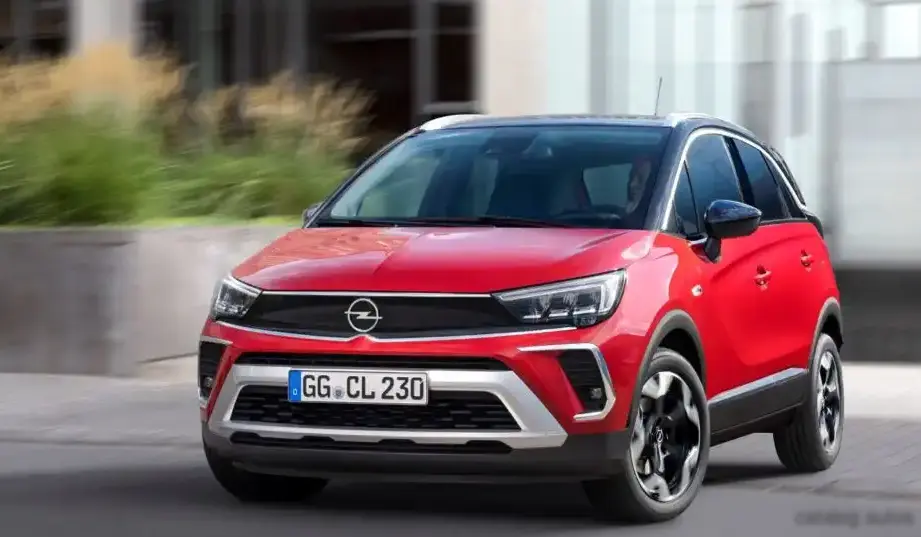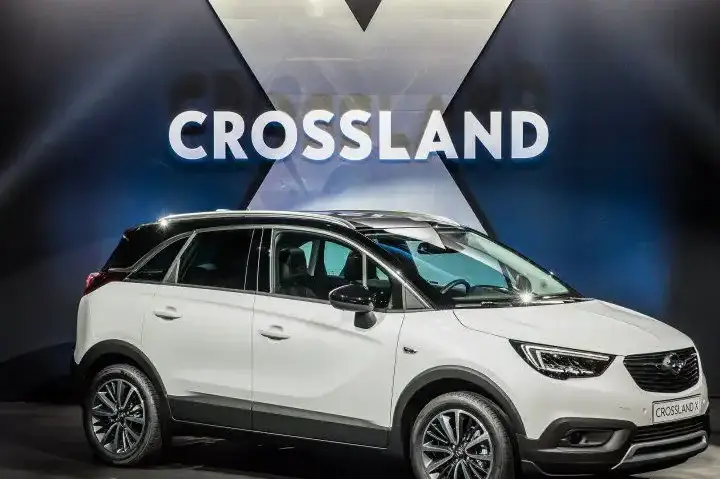
The Opel Crossland X 1.2 (83 hp) was a subcompact SUV produced from June 2018 to June 2019, primarily aimed at the European market. Positioned as an entry-level offering within the Crossland X range, it provided an affordable and practical option for buyers seeking a small, versatile vehicle. It was part of the broader Crossland generation (internally designated as the P24) which shared its platform with the Peugeot 2008 and Citroën C3 Aircross, a result of the PSA Group’s (now Stellantis) collaborative engineering efforts. This variant represented a focus on fuel efficiency and lower running costs, appealing to budget-conscious consumers and urban drivers.
Technical Specifications
| Brand | Opel |
| Model | Crossland |
| Generation | Crossland X |
| Type (Engine) | 1.2 (83 Hp) |
| Start of production | June, 2018 |
| End of production | June, 2019 |
| Powertrain Architecture | Internal Combustion engine |
| Body type | SUV |
| Seats | 5 |
| Doors | 5 |
| Fuel consumption (urban) | 6.1-6.2 l/100 km (38.6 – 37.9 US mpg) |
| Fuel consumption (extra urban) | 4.4-4.5 l/100 km (53.5 – 52.3 US mpg) |
| Fuel consumption (combined) | 5.1 l/100 km (46.1 US mpg) |
| CO2 emissions | 116-117 g/km |
| Fuel Type | Petrol (Gasoline) |
| Acceleration 0 – 100 km/h | 14.5 sec |
| Acceleration 0 – 62 mph | 14.5 sec |
| Acceleration 0 – 60 mph | 13.8 sec |
| Maximum speed | 170 km/h (105.63 mph) |
| Emission standard | Euro 6d-Temp |
| Weight-to-power ratio | 13.2 kg/Hp |
| Weight-to-torque ratio | 9.3 kg/Nm |
| Power | 83 Hp @ 5750 rpm |
| Torque | 118 Nm @ 2750 rpm (87.03 lb.-ft. @ 2750 rpm) |
| Engine layout | Front, Transverse |
| Engine Model/Code | D12XE |
| Engine displacement | 1199 cm3 (73.17 cu. in.) |
| Number of cylinders | 3 |
| Engine configuration | Inline |
| Cylinder Bore | 75 mm (2.95 in.) |
| Piston Stroke | 90.5 mm (3.56 in.) |
| Compression ratio | 11:1 |
| Engine aspiration | Naturally aspirated engine |
| Engine oil capacity | 3.25 l (3.43 US qt | 2.86 UK qt) |
| Coolant | 5 l (5.28 US qt | 4.4 UK qt) |
| Kerb Weight | 1099 kg (2422.88 lbs.) |
| Max. weight | 1690 kg (3725.81 lbs.) |
| Max load | 591 kg (1302.93 lbs.) |
| Trunk (boot) space – minimum | 410 l (14.48 cu. ft.) |
| Trunk (boot) space – maximum | 1255 l (44.32 cu. ft.) |
| Fuel tank capacity | 45 l (11.89 US gal | 9.9 UK gal) |
| Max. roof load | 50 kg (110.23 lbs.) |
| Permitted trailer load with brakes (12%) | 650 kg (1433 lbs.) |
| Permitted trailer load without brakes | 560 kg (1234.59 lbs.) |
| Permitted towbar download | 50 kg (110.23 lbs.) |
| Length | 4212 mm (165.83 in.) |
| Width | 1765 mm (69.49 in.) |
| Width including mirrors | 1976 mm (77.8 in.) |
| Height | 1605 mm (63.19 in.) |
| Wheelbase | 2604 mm (102.52 in.) |
| Front track | 1513 mm (59.57 in.) |
| Rear (Back) track | 1491 mm (58.7 in.) |
| Minimum turning circle | 11.2 m (36.75 ft.) |
| Drivetrain Architecture | Front wheel drive |
| Drive wheel | Front wheel drive |
| Number of gears and type of gearbox | 5 gears, manual transmission |
| Front brakes | Disc |
| Rear brakes | Disc |
| Assisting systems | ABS (Anti-lock braking system) |
| Steering type | Steering rack and pinion |
| Power steering | Electric Steering |
| Tires size | 195/65 R15 |
| Wheel rims size | 6.5J x 15 |
Powertrain & Engine Architecture
The Crossland X 1.2 (83 hp) was powered by the D12XE engine, a 1.2-liter, three-cylinder naturally aspirated gasoline engine. This engine is part of Opel/PSA’s “PureTech” family, known for its compact design and relatively efficient operation. The D12XE features a single overhead camshaft (SOHC) valvetrain with four valves per cylinder. Fuel delivery is managed by multi-point fuel injection. The engine’s modest output is a result of its smaller displacement and naturally aspirated design. It’s designed for efficiency rather than outright performance. The engine was typically paired with a five-speed manual transmission, although an automatic transmission was also available as an option. The automatic transmission was a conventional torque converter type, prioritizing smooth shifts over sporty responsiveness.
Driving Characteristics
The 1.2-liter, 83 hp engine in the Crossland X delivered modest performance. Acceleration was leisurely, with a 0-60 mph time of around 13.8 seconds. In real-world driving, this meant that overtaking maneuvers required careful planning, and the engine felt strained when climbing hills or carrying a full load. The five-speed manual transmission helped to keep the engine in its optimal power band, but the limited horsepower was still noticeable. The automatic transmission, while providing convenience, further dulled acceleration due to its less efficient power transfer and programming. Compared to the more powerful 1.6-liter diesel or 1.2-liter turbocharged gasoline options available in the Crossland X range, this variant prioritized fuel economy over performance.
Equipment & Trim Levels
The 1.2 (83 hp) Crossland X typically served as the entry point to the model range. Standard equipment generally included air conditioning, power windows, central locking, and a basic audio system with Bluetooth connectivity. Safety features such as ABS, electronic stability control, and multiple airbags were also standard. Interior upholstery was typically cloth, and the dashboard featured a functional but relatively basic design. Optional extras included alloy wheels, a touchscreen infotainment system with navigation, parking sensors, and a rearview camera. Higher trim levels added features like automatic climate control, upgraded upholstery, and more advanced driver-assistance systems.
Chassis & Braking
The Crossland X utilized a front-wheel-drive chassis with a MacPherson strut suspension at the front and a torsion beam suspension at the rear. The torsion beam setup was a cost-effective solution for the rear suspension, prioritizing simplicity and space efficiency. Braking consisted of disc brakes on all four wheels, providing adequate stopping power for the vehicle’s weight and performance. The steering was electrically assisted, offering light and easy maneuverability, particularly useful in urban environments. Stabilizer bars were included at both the front and rear to reduce body roll during cornering.
Market Reception & Comparison
The Opel Crossland X 1.2 (83 hp) was generally well-received as an affordable and practical small SUV. Critics praised its fuel efficiency and comfortable ride, but noted its lack of outright performance. Compared to the more powerful engine options in the Crossland X lineup, this variant offered a lower price point and better fuel economy, making it attractive to budget-conscious buyers. However, it lacked the punch and responsiveness of the turbocharged engines. Against competitors like the Renault Captur and Nissan Juke, the Crossland X 1.2 offered a competitive level of equipment and space for its price.
Legacy
The D12XE engine, while not known for its high performance, proved to be a relatively reliable unit. Common issues were generally minor and related to routine maintenance items. On the used car market, the Crossland X 1.2 (83 hp) represents a good value proposition for buyers seeking an affordable and economical small SUV. Its simple engine design and readily available parts contribute to relatively low maintenance costs. However, potential buyers should be aware of its limited power output and consider whether it meets their driving needs. The Crossland X itself was replaced by the Mokka in 2021, but the 1.2-liter engine continues to be used in other Stellantis vehicles.